


A slow CO leak from a basement furnace or a mis-routed water heater vent is the kind of problem nobody notices until someone gets a headache. Low level CO alarms are built to catch those creeping concentrations before standard thresholds trip, which makes them genuinely useful in older homes, tightly sealed new builds, and anywhere you run combustion appliances near sleeping areas. If you’ve been wondering whether your current setup is sensitive enough, this roundup lays out nine detectors worth knowing about. The list mixes sealed-battery units, plug-in models, smart connected alarms, RV-specific gear, and portable meters for travel and workshop use, so you can match the right tool to the right room.
Your Options, Compared
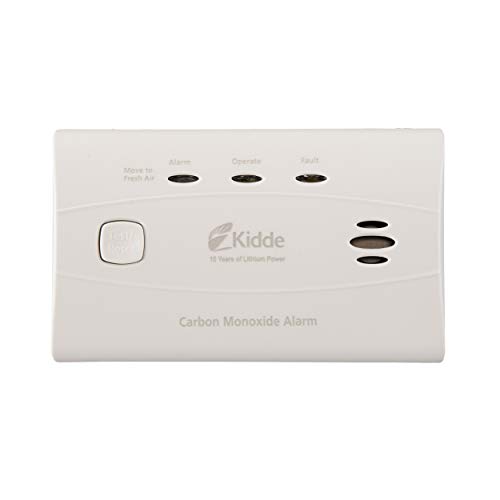
Kidde Worry-Free Carbon Monoxide Detector Alarm with 10 Year Sealed Battery | Model C3010

Kidde Plug-In CO Detector with 9-Volt Battery Backup, 2 Pack

TOPTES CT-580 Portable CO Detector with TFT Display
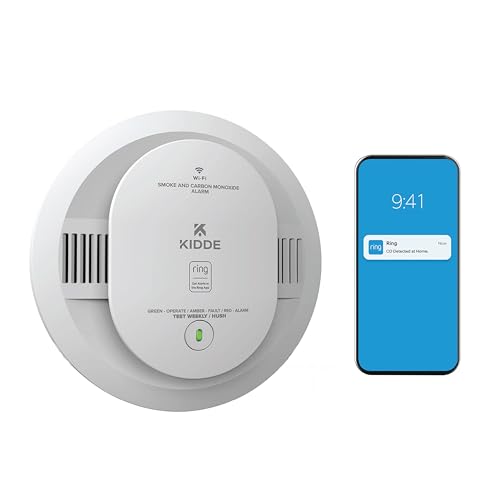
Kidde Smart Smoke & CO Detector with Ring, RGCUDR-RW

Kidde Nighthawk KN-COB-B-LP Battery CO Alarm

Kidde Smart CO Detector and Indoor Air Quality Monitor
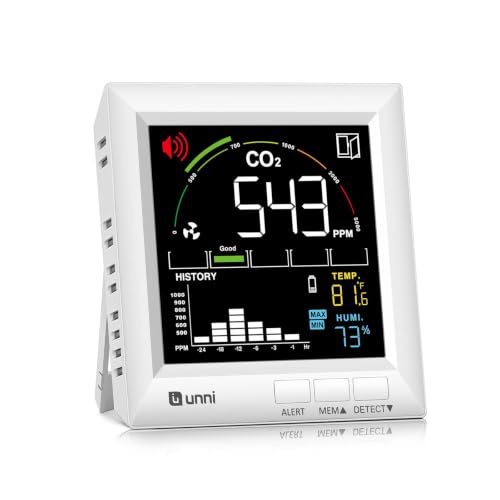
UNNI CO2 Monitor with Photoacoustic Sensor

Safe T Alert 35 Series Dual LP/CO Alarm 35-741-BL

Forensics CO Meter with NIST Calibration, USB Recharge
The Details Behind The Selections
The Kidde C3010 takes the most common CO ownership headache, battery swaps, and removes it from the equation for a full decade. A sealed lithium cell runs the unit for ten years, which lines up perfectly with the alarm’s end-of-life cycle, so you replace the device and the power source at the same time.
It mounts on a wall or ceiling without wiring, which makes it friendly for rentals and finished basements where running a new outlet isn’t an option. A green LED flashes roughly every 30 seconds to confirm normal operation, and a red LED pulses when CO concentrations climb into the danger zone. If you want a set-and-forget detector for a hallway or bedroom, this is the kind of unit that does its job without ever asking for attention.
Positive Takeaways
- Sealed lithium cell eliminates low-battery chirps at 3 a.m. and works out well for tenants who can’t (or won’t) replace batteries on schedule.
- Ten-year service life matches the alarm’s built-in end-of-life signal, so you plan one replacement, not several.
- No wiring required, so installation stays friendly for renters and older homes with limited outlets near sleeping areas.
Worth Noting
- No digital display for live CO readings, so you only know the concentration when the alarm trips.
- Once the ten years are up, the whole unit goes in the trash, which adds a small step compared with models that accept a fresh battery.
At A Glance
Who It Suits Best
Landlords, renters, and anyone who wants a detector they can install once and stop thinking about for a decade.
Consider Something Else When
Shoppers who want a live PPM readout should look at the Kidde Plug-In CO Detector with 9-Volt Battery Backup, 2 Pack, which adds a digital display.
Where the C3010 trades features for simplicity, the Kidde plug-in pair adds a digital LED display that shows real-time CO concentration. Plugging straight into any standard 120V outlet, the unit pulls constant power from the wall, and a 9-volt backup battery (included) takes over if the power cuts out during a storm.
That dual-power design makes these a natural fit for a finished basement, a bedroom, and a kitchen nook where you want a quick glance at ambient CO levels rather than just an on-off warning. The two-pack format also gives you matching coverage upstairs and down without juggling different SKUs.
What It Does Well
- Digital readout gives a visible PPM value, which helps you tell a passing whiff of outdoor CO from a sustained indoor leak.
- Battery backup keeps the alarm active during outages, when backup generators and indoor grills are most likely to push CO upward.
- Two-pack pricing supports whole-home coverage on a single purchase, and you don’t have to think about separate inventory.
Points To Keep In Mind
- Lower-wall outlet placement means the detector occupies a socket, so you may want to plan around furniture placement.
- The 9-volt cell still needs periodic replacement, which is one more maintenance task than sealed-lithium units.
Right Fit For
Households that want a live CO readout in two priority rooms without managing separate orders.
A Better Fit Elsewhere
For a single-room, no-maintenance setup, the Kidde Worry-Free C3010 sidesteps the backup battery entirely.
The TOPTES CT-580 leaves the wall behind and moves with you. A rechargeable battery, a pocketable form, and a TFT color display set it apart from the wall-bound units earlier in the list, and a vibration alarm gives you a tactile nudge when sound alone isn’t practical.
That trifecta of visual, audible, and vibration alerts makes it useful in loud environments like a workshop or a roadside campsite, and the 0 to 1000 PPM range covers everything from indoor air quality concerns to industrial spot-checks. Travelers who sleep in hotels, cabins, and unfamiliar rentals get a small but genuine safety net in the luggage.
Strong Points
- Vibration alert adds a silent signal layer for noisy spaces and for users with hearing differences.
- Rechargeable battery cuts down on disposables, which works out well for frequent travelers and field techs.
- Wide 0 to 1000 PPM range handles both ambient indoor readings and higher-concentration industrial checks.
Some Limits To Know
- Handheld form means it can be set down, knocked over, or forgotten, so a dedicated wall unit still makes sense as a primary home alarm.
- You’ll want to keep it on a charger before trips, and the runtime between charges is shorter than a wall-powered detector.
Best Suited To
Travelers, campers, and field workers who want portable CO sensing alongside their stationary home alarms.
Look Elsewhere When
For permanent whole-home coverage, the Kidde Plug-In CO Detector with 9-Volt Battery Backup, 2 Pack offers a more set-and-forget wall solution.
The RGCUDR-RW folds smoke and carbon monoxide detection into a single ceiling-mount unit, then ships alerts straight to the Ring app on your phone. It runs on two AA batteries, so installation is a quick mount and snap, and you skip the wiring step entirely.
The real value shows up when you’re away from home and need to know whether the basement furnace just kicked out a CO spike. Notifications arrive without a subscription, though an optional Ring monitoring plan layers in 24/7 professional response if you want it. Compared with the Kidde C3010 above, this model trades decade-long battery silence for connected visibility.
Where It Excels
- Combined smoke and CO sensing reduces wall clutter, which helps in hallways with limited ceiling real estate.
- App notifications travel with you, so a CO event at an empty house still reaches your pocket.
- Battery-powered design keeps installation simple for older homes without interconnected alarm wiring.
Factors To Consider
- Dependence on Wi-Fi means a router outage can delay app alerts, even though the in-room siren still works.
- Full benefit requires a Ring-compatible ecosystem, so users on other smart home platforms may not get the most out of it.
Who Should Grab It
Existing Ring households and frequent travelers who want remote visibility into smoke and CO events at home.
Swap It Out When
For households that prefer a sealed-battery unit with no app dependency, the Kidde Worry-Free C3010 is a quieter match.
The Nighthawk is a long-standing battery-only CO alarm that runs on three AAs, which makes it friendly for spots with no nearby outlet and unaffected by power outages. A single test-reset button on the front handles both routine checks and silencing nuisance chirps, and a seven-year end-of-life signal cues the replacement.
Unlike the C3010 above, the Nighthawk uses replaceable cells, so a household that prefers to swap batteries rather than discard the whole unit every decade will feel right at home here. It fits naturally in bedrooms, hallways, and finished attics where a low-profile, no-frills alarm is the right answer.
Useful Touches
- Front-mounted test-reset button makes monthly checks a one-finger job, even on a ceiling mount.
- Battery-only operation continues to protect during outages, which matters in storm-prone regions.
- Seven-year end-of-life signal gives a clear replacement date without vague guessing.
Honest Caveats
- AA cells need periodic replacement, so you trade longer service for a slightly higher maintenance touch.
Quick Facts
Made For
Bedrooms, hallways, and finished attics where a simple battery-only CO alarm is the right call.
Not Your Match When
Shoppers who want a sealed decade-long battery should look at the Kidde Worry-Free C3010 instead.
The Kidde Smart CO and Indoor Air Quality Monitor pulls double duty as a CO alarm and an air quality sensor in a single plug-in unit. It connects over Wi-Fi, sends app alerts, and even plays a voice warning that announces the type of hazard in plain language, which is more helpful than a generic tone at 2 a.m.
For households already running a smart home, the device slots in alongside other connected products and gives both push notifications and voice announcements. Compared with the Ring-equipped Kidde above, this unit leans more toward indoor air quality visibility than smoke detection, so the right pick depends on which data you care about most.
The Practical Payoff
- Two-in-one sensing adds indoor air quality trends to a standard CO alarm, which helps you spot ventilation problems before they escalate.
- Voice alerts spell out the hazard, so kids and guests understand the warning even before they reach their phone.
- Plug-in design with battery backup keeps protection active through power cuts.
Practical Considerations
- App and voice features require a stable Wi-Fi connection, so a router reboot becomes part of your alarm troubleshooting.
- Air quality sensing adds cost, which may not pay off for shoppers who only want a basic CO alarm.
Perfect Match For
Smart home users who want CO sensing and indoor air quality data from a single outlet-mounted device.
Another Choice May Suit
For a simpler wall-plug CO alarm without the air quality layer, the Kidde Plug-In CO Detector with 9-Volt Battery Backup, 2 Pack keeps things focused.
The UNNI uses a Swiss-made photoacoustic sensor, a tech that measures gas concentration by listening for the sound light makes when it hits CO2 molecules, to deliver precise indoor readings alongside temperature and humidity data. The result is a multi-purpose desktop monitor that fits naturally in a home office or bedroom.
Three adjustable alarm levels let you set the threshold to match your environment, whether that’s a quiet bedroom or a busy kitchen during a dinner party. Bear in mind that CO2 monitors track carbon dioxide, not carbon monoxide, so this unit is best understood as a complement to a dedicated CO alarm rather than a replacement.
A Strong Showing
- Photoacoustic sensing offers a step up in CO2 accuracy over basic metal-oxide detectors, which is useful in home offices and bedrooms.
- Triple-readout display shows CO2, temperature, and humidity at a glance, which helps you tune ventilation habits.
- Adjustable alarm thresholds let you match sensitivity to a quiet bedroom or a crowded living room.
Room For Improvement
- Measures CO2, not CO, so you still want a dedicated carbon monoxide alarm like the Kidde Nighthawk KN-COB-B-LP alongside it.
Who Will Love This
Remote workers and light sleepers who want to monitor indoor air freshness and ventilation in real time.
Reach For A Different Pick When
For actual carbon monoxide sensing, the Kidde Worry-Free C3010 is a more direct answer.
The Safe T Alert 35 Series combines propane (LP) gas detection with carbon monoxide sensing in a single surface-mount unit designed for RVs. It runs on your coach’s 12V DC system, which means no batteries to swap and no risk of a low-battery chirp on a holiday weekend.
The flush-mount form factor is a direct replacement for the older Safe-T-Alert 30-442 and many CCI Controls units, which simplifies upgrades on Class A, B, and C motorhomes along with travel trailers and fifth wheels. A low-voltage warning and power-conserving circuitry help protect your coach battery during storage. Compared with the household units earlier, this alarm speaks the RV electrical language directly.
Everyday Advantages
- Dual LP and CO sensing covers the two most common combustion risks in an RV kitchen and heating system in one device.
- Direct 12V operation eliminates battery swaps and works with existing RV wiring on most Class A through fifth wheel layouts.
- Direct replacement form factor for older 30-442 units means no panel cutting or rewiring during upgrade.
Worth Bearing In Mind
- Hardwired to 12V, so it needs RV-style electrical know-how for installation, which may be more than casual DIYers want to take on.
- Surface-mount design is purpose-built for RVs, not a natural fit for a stationary home wall.
Built With In Mind
RV owners and travel trailer enthusiasts who want LP and CO protection from a single dashboard-friendly unit.
Skip It When
Stationary homeowners are better served by the Kidde Nighthawk KN-COB-B-LP, which skips the propane sensor and the 12V wiring.
The Forensics CO Meter is built for users who care about traceable numbers rather than just an alarm tone. It ships with USA NIST calibration, which means the readings tie back to a national standards reference, and 1 PPM resolution lets you watch concentration climb in fine increments rather than coarse steps.
Audio, visual, and vibration alarms let you tailor the alert to the environment, and the dust- and explosion-proof housing holds up in workshops, mechanical rooms, and HVAC diagnostics. USB charging and a 0 to 1000 PPM range round out a tool that fits an inspector’s bag as comfortably as a serious DIYer’s shelf.
A Few Strong Suits
- NIST-traceable calibration supports credible documentation, which matters for inspection reports and HVAC diagnostics.
- Ruggedized housing stands up to dust, drops, and rough handling in mechanical rooms and field calls.
- USB charging cuts down on disposable batteries and keeps the meter ready between jobs.
Where It May Fall Short
- Professional-grade pricing makes it overkill for a household that just needs a basic bedroom alarm like the Kidde Worry-Free C3010.
- Handheld form means it relies on you remembering to charge it, unlike a wall-plug unit that runs on household current.
Feature Snapshot
Whose Shelf It Belongs On
HVAC technicians, home inspectors, and serious DIYers who want calibrated CO readings rather than a basic alarm.
Where A Sibling Pick Shines
For everyday home protection without the pro-grade price, the Kidde Nighthawk KN-COB-B-LP is a friendlier fit.
What Matters Most Before Choosing Low Level CO Alarms
Sensor Type and Sensitivity
The electrochemical sensor in most household CO alarms is tuned to detect dangerous concentrations at the 70 to 400 PPM range, which is where the standard UL 2034 alarm thresholds kick in. A “low level” CO alarm is generally one that either reads closer to ambient baseline or has tighter thresholds for earlier warning. If you live in a tightly sealed home or have chronic low-grade sources like a wood stove, look for a unit with a digital display so you can see the trend, not just the alarm event.
Power Source and Backup
Power decisions ripple through the whole ownership experience. Sealed lithium cells like the Kidde C3010 run a full decade and remove low-battery chirps from your life. Plug-in models with a 9V backup, like the Kidde two-pack, give you a real-time display and protection during power cuts. Hardwired 12V RV units, like the Safe T Alert 35 Series, slot into your coach’s electrical system and skip batteries entirely.
Form Factor and Placement
Where you mount the alarm changes which form factor makes sense. Hallways and bedrooms favor ceiling-mounted or wall-plug units. Kitchens and basements with high humidity can be tough on cheaper sensors, so look for a unit rated for the environment. Workshops, RVs, and travel situations push you toward portable meters like the TOPTES CT-580 or the Forensics CO Meter.
Smart Features and Connectivity
Connected CO alarms send alerts to your phone, which is useful when you travel or maintain a rental property. The trade-off is dependency on Wi-Fi and an app ecosystem, so if the network drops during a power cut, your visibility drops too. Decide whether remote alerts are worth that complexity or if a simple in-room siren is enough.
Key Considerations Across These Picks
Common Shopping Slip Ups
Placing a CO alarm right next to a fuel-burning appliance produces false alarms and shortens sensor life, so give it a few feet of breathing room. Treating any CO alarm as a 30-year investment is another common mistake, since most units have a five to ten year end-of-life window. Buying a single detector for a two-story home is also risky, since CO can build up in one area while staying low in another.
Why Top Tier Costs More
Premium CO alarms earn their higher price through tighter sensor calibration, NIST-traceable documentation, ruggedized housings, and dual-gas detection. The Forensics CO Meter ships with traceable calibration, while the Safe T Alert 35 Series adds propane sensing for RV kitchens. For most households, a mid-tier plug-in unit covers the bases, and the upgrade makes sense once you need professional-grade numbers or specialized RV wiring.
Frequently Asked Questions
How often should a low level CO alarm be replaced?
Most CO alarms have an end-of-life signal at five to ten years, depending on the model. Sealed lithium units like the Kidde C3010 align the battery and sensor lifespans to ten years, while battery-only units like the Nighthawk use replaceable cells but still need replacement at the sensor’s end of life.
Where should a low level CO alarm be installed?
Place a CO alarm outside each sleeping area and on every level of the home, ideally five feet off the ground and away from fuel-burning appliances. Avoid placing them in dead-air corners, behind furniture, or directly above a stove or furnace vent.
Do smart CO alarms need a subscription to work?
No, the core alarm function works without a subscription. The Kidde Smart Smoke and CO Detector, for example, sends app notifications for smoke, CO, and low battery without a paid plan, while an optional subscription adds 24/7 professional monitoring.
Is a CO2 monitor the same as a CO alarm?
No, they measure different gases. Carbon dioxide (CO2) monitors like the UNNI track exhaled breath and ventilation quality, while carbon monoxide (CO) alarms like the Kidde Nighthawk detect the toxic byproduct of incomplete combustion. A CO2 monitor complements a CO alarm but does not replace it.
Can portable CO meters replace a home alarm?
Portable meters like the TOPTES CT-580 and the Forensics CO Meter are useful for travel, workshops, and diagnostics, but they are not a substitute for a permanently mounted home alarm. A dedicated wall unit gives you continuous, hands-free protection in a fixed location.
Wrap Up
The right low level CO alarm depends on where it lives and how you want to interact with it. Sealed-battery units like the Kidde C3010 make sense for hands-off, decade-long coverage, while plug-in models with digital displays give you real-time visibility. Travelers and RV owners get the most from portable meters and dual-gas alarms, and anyone working in HVAC or home inspection will appreciate the calibrated numbers from a professional-grade meter. Pick the model that fits the room, mount it correctly, and test it monthly, and you’ve covered the basics that matter most.




