


Most electricians learn fast that one tool is never enough. A wire stripper sits on the bench, a tester lives in a different pocket, and the crimper always migrates to the truck. The right multitool collapses that chaos into something you can actually carry, clip to a belt, and trust on a live panel. These nine picks cover the spectrum: dedicated strippers for daily panel work, folding multi-tools that travel well, and high-end pliers that double as a workbench. Each one earns its place for a different reason, and the differences show up fast once you start using them.
The Essentials At A Glance
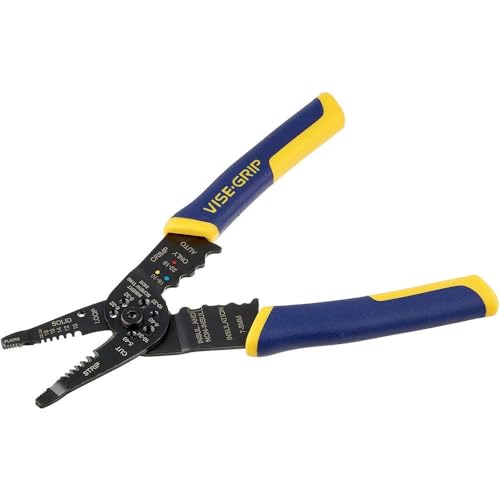
IRWIN Vise-Grip Wire Stripper 8-Inch (2078309)

18-in-1 Folding Electrician Pliers & Wire Stripper

LAOA 8-in-1 Wire Stripper with Voltage Tester
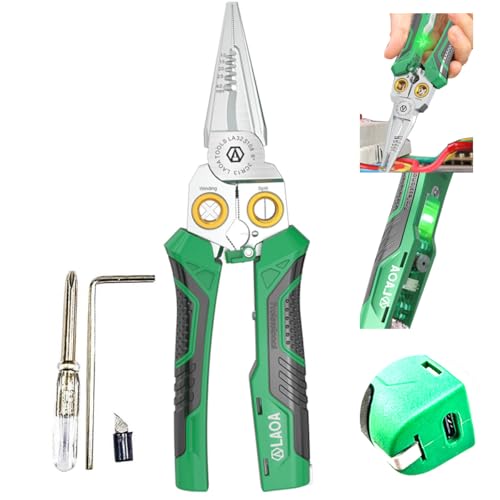
LAOA 8-in-1 USB-C Rechargeable Wire Stripper
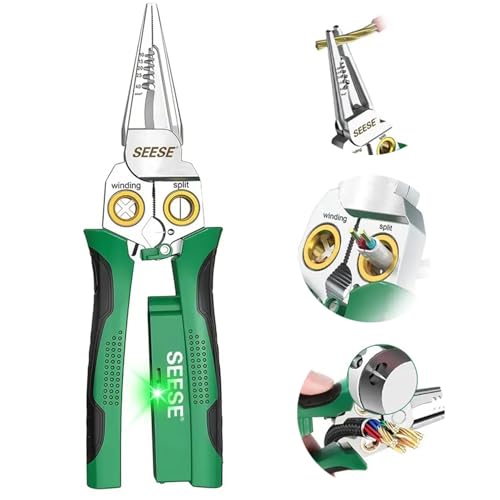
SEESE 8-in-1 Wire Stripper Pliers

Performance Tool W86506 13-in-1 Multi-Tool

KNIPEX Nexstrip Multi-Tool 190 mm (12 72 190)

MOSSY OAK 27-in-1 CNC-Machined Multitool

RoverTac 15-in-1 Multitool Knife
More On The Choices That Made The List
The IRWIN Vise-Grip 8-inch stripper is the kind of tool that quietly stays in rotation long after newer gadgets hit the drawer. It covers 10-22 AWG wire, which means everything from thermostat leads to branch circuit conductors, and the plier-style nose makes looping bends at the box feel natural. In a real apprentice kit, this is often the first dedicated wire tool a new hire buys and the last one they replace.
The ProTouch grips reduce hand fatigue during repetitive strip-and-crimp cycles, and the built-in bolt cutter handles common machine screws cleanly. For someone running residential rough-in all day, the dedicated focus pays off compared to the folding multi-tools below, which trade precision for portability.
The Value In It
- Wide 10-22 AWG range covers most residential and light commercial work
- Plier-style nose pulls and loops wire without switching tools
- ProTouch handles reduce grip strain on long runs
- Crimps both insulated and non-insulated terminals
- Induction-hardened cutting edge holds up to daily use
Trade-Offs Worth Knowing
- No built-in voltage detection, so a separate tester is still required
- Bolt cutter section is handy but limited to smaller hardware
Who It Suits Best
Apprentices and journeymen who strip and terminate wire all day and want a dedicated tool that simply works.
Where Another Pick Suits Better
For travel or off-grid troubleshooting, the LAOA 8-in-1 with Voltage Tester adds live-wire detection in a single tool.
This 18-in-1 folding multi-tool crams a wide spread of functions into a single pocket-sized frame, which is the entire appeal for field techs bouncing between job sites. The collapsible high-carbon steel pliers anchor the build, and the folding bits keep the profile slim until you actually need a screwdriver or file. Compared to the IRWIN Vise-Grip above, it sacrifices some single-purpose comfort for serious versatility.
For service vans, remote installs, and anyone who hates packing a full pouch, the trade-off makes sense. Owners commonly report that the tool feels dense in the hand, a sign of the steel content, and the bit selection covers most panel and outlet hardware.
Good Reasons To Consider
- Eighteen functions in one folding body
- High-carbon steel pliers resist deformation
- Collapsible design saves belt space
- Useful for both electrical and general repair calls
Possible Compromises
- Each function is less refined than a dedicated tool
- Bit changes can slow down repetitive termination work
- Brand transparency and warranty support are limited
Right Fit For
Traveling technicians and mobile electricians who want one tool that handles a wide range of unexpected fixes.
Consider Something Else When
High-volume panel shops will get cleaner crimps from the KNIPEX Nexstrip Multi-Tool 190 mm further down the list.
What makes the LAOA 8-in-1 interesting is the built-in voltage tester, a feature most dedicated strippers skip. The dual-mode AC/DC detection covers 12V to 250V, which handles everything from low-voltage doorbell circuits up through standard branch wiring. The audible beep and red flash give you a quick confirmation before you touch a conductor, which is genuinely useful on unfamiliar service calls.
It also covers wire cutting, stripping, splitting, twisting, pulling, clamping, and crimping in one tool, plus a bonus screwdriver. For someone starting out or building a compact kit, that’s a lot of capability for one pouch slot.
The Helpful Details
- Integrated non-contact voltage detection saves pocket space
- Covers 12-250V AC/DC for broad diagnostic use
- Eight wire-handling functions in one chassis
- Replaceable blades extend usable life
- Includes a bonus screwdriver
Points To Keep In Mind
- Voltage tester is a screening tool, not a replacement for a meter
- Replaceable blades mean keeping spares on hand
Built With In Mind
Service electricians and serious DIYers who want a stripper that also confirms whether a wire is live before contact.
Look Elsewhere When
Crews running control panel builds all day will find the KNIPEX Nexstrip Multi-Tool 190 mm more efficient for ferrule work.
The sibling of the LAOA above trades replaceable batteries for a built-in USB-C rechargeable cell. For shops or van setups where charging cables are already on the bench, that removes one ongoing cost and one source of downtime mid-job. The function list matches the other LAOA closely, including stripping, cutting, splitting, pulling, crimping, and non-contact voltage detection.
This is a practical upgrade for anyone tired of hunting for coin cells before a service call. The trade-off shows up in long-term battery health, since built-in cells eventually lose capacity, but the convenience during the first several years of ownership is hard to beat.
Practical Advantages
- USB-C charging fits modern shop and van setups
- Same eight-function versatility as the non-rechargeable LAOA
- Non-contact voltage detection built in
- No battery swaps during a job
Details To Watch
- Internal battery cannot be replaced once it degrades
- Must be charged ahead of remote service calls
Made For
Shop-based electricians and van-equipped contractors who already keep USB-C cables on hand.
Skip It When
Rough field work with no charging access may favor the replaceable-battery LAOA 8-in-1 with Voltage Tester listed earlier.
The SEESE 8-in-1 aims at homeowners and light commercial users who do occasional outlet swaps, fixture replacements, and small repairs. The compact frame fits comfortably in a back pocket or kitchen drawer, and the function set covers the basics: stripping, cutting, crimping, twisting, and a short-circuit test. For someone buying a first electrical tool, the all-in-one approach reduces the learning curve.
Where the dedicated IRWIN at the top of this list feels like a pro’s daily driver, the SEESE feels like a sensible starter. The honest read is that heavy daily use will expose its limits faster than the bigger names, but for occasional work, the value proposition is solid.
Where It Excels
- Lightweight and pocket-friendly for casual users
- Eight functions cover most home repair scenarios
- Short-circuit test adds a layer of diagnostic value
- Lower complexity for first-time tool owners
Where It Is Less Suited
- Less durable than pro-grade strippers under constant load
- Limited brand ecosystem for replacement parts
Whose Shelf It Belongs On
Homeowners and DIYers tackling outlet installs, ceiling fan swaps, and similar residential repairs a few times a year.
Reach For A Different Pick When
Working electricians will get more consistent results from the IRWIN Vise-Grip Wire Stripper covered at the top of the list.
The Performance Tool W86506 covers 13 functions in a folding chassis, anchored by a set of long-nose pliers and a spring-loaded jaw. The stainless steel handles give it a solid feel, and the wire stripper handles 10-18 AWG solid and stranded wire, plus 12-20 AWG stranded. For a shop environment where electrical and general tasks overlap, the included slotted and Phillips screwdrivers, files, serrated blade, and even a bottle opener cover a wide spread of small jobs.
This tool won’t replace a dedicated stripper for someone running panels every day, but as a bench-and-truck companion for mixed work, it pulls its weight. Compared to the SEESE above, it’s built more sturdily and has a longer function list, at the cost of pocket weight.
Where It Delivers
- Thirteen functions cover electrical, mechanical, and general tasks
- Stainless steel handles resist corrosion in shop environments
- Spring-loaded jaws speed repetitive cutting
- Wire stripper covers both solid and stranded gauges
Some Limits To Know
- Heavier than simpler pocket tools, which adds belt fatigue
- Some functions (serrated blade, awl) are basic compared to dedicated versions
Best Suited To
Shop electricians, maintenance techs, and serious DIYers who want one tool that bridges electrical and general repair work.
A Better Fit Elsewhere
For pure ferrule crimping on control panels, the KNIPEX Nexstrip Multi-Tool 190 mm further down is in a different class.
The KNIPEX Nexstrip sits in a different category than everything else here. It’s a 190 mm (roughly 7.5-inch) specialist tool focused on stripping and square-crimp ferrule work to DIN 46228 standards. The self-adjusting stripper adapts automatically to wire diameters from 0.25 to 4 mm², and the ratcheting crimper delivers consistent pressure for clean, repeatable terminations.
For control panel builders, automation technicians, and anyone running repetitive ferrule work, this tool earns its place on the bench. It does not pretend to be a folding multi-tool, and that’s the point. Compared to the all-purpose picks above, the Nexstrip trades breadth for a level of ferrule precision that cheaper tools can’t match.
Real Benefits
- Ratcheting square crimp meets DIN 46228 ferrule standards
- Self-adjusting stripper handles 0.25-4 mm² wire without manual setting
- Adjustable length stop keeps stripping consistent
- Multi-component grips stay comfortable during long runs
What To Weigh
- Higher cost than general-purpose strippers
- Single-purpose focus means carrying a separate tool for other functions
Who Should Grab It
Panel builders, industrial electricians, and automation techs who do repetitive ferrule terminations and need consistent results.
Swap It Out When
General residential work without ferrule demands may get more versatility from the Performance Tool W86506 13-in-1 Multi-Tool.
The MOSSY OAK 27-in-1 leans into the everyday-carry and outdoor side of the category. The CNC-machined stainless steel plier head gives the tool a more refined build than most folding multi-tools at this function count, and the self-locking mechanism keeps the pliers steady when you need to grip a wire or a small fastener. Beyond the electrical basics, it includes a knife, fire starter, whistle, saw, file, and bit driver, which broadens the use case well past the panel.
For lineworkers, rural electricians, or anyone whose workday sometimes bleeds into trail or campsite territory, the broader tool set makes sense. Where pure precision matters, the KNIPEX above will outclass it, but as a single tool for unpredictable environments, the breadth is the appeal.
A Few Strong Suits
- Twenty-seven functions cover electrical, outdoor, and emergency use
- CNC-machined plier head adds rigidity over stamped alternatives
- Self-locking pliers free up hand pressure during work
- Includes fire starter and whistle for off-grid situations
Honest Caveats
- Heavier than dedicated electrical tools due to the broad function set
- Wire stripper is functional but not as precise as single-purpose models
Perfect Match For
Field electricians, lineworkers, and outdoor-oriented pros who need a multi-use tool that handles both wiring and rough environments.
Another Choice May Suit
Clean shop environments with repetitive strip-and-crimp cycles will get more consistency from the IRWIN Vise-Grip Wire Stripper at the top of this list.
The RoverTac 15-in-1 is a folding pocket knife with wire strippers, a wire cutter, and nine screwdrivers packed into the handle. It’s built for light work: small repairs, camping, hobby electronics, and quick fixes around the house. The stainless steel body keeps the price accessible, and the pocketable form factor means it lives in a jacket or glove box rather than a tool belt.
It’s not a primary electrician’s tool, and that’s fine. The honest read is that this is a useful backup or gift-grade option rather than a daily driver, and it fills a different role than the heavy-duty picks above. For someone who occasionally needs to strip a speaker wire or tighten a wall plate screw, it’s plenty.
Practical Pluses
- Compact folding knife format fits pockets and glove boxes
- Fifteen functions including stripper, cutter, and nine drivers
- Stainless steel body resists everyday corrosion
- Accessible price for backup or hobbyist use
Worth Bearing In Mind
- Not built for daily professional electrical loads
- Wire stripper gauges are limited compared to dedicated tools
Who Will Love This
Hobbyists, homeowners, and gift-givers looking for a pocket-friendly tool that covers light electrical and general tasks.
Not Your Match When
Working electricians need the daily reliability of the IRWIN Vise-Grip Wire Stripper covered at the top of this roundup.
What To Weigh Before Choosing A Multitool For Electrical Work
Picking a multitool for electrical work comes down to matching the tool to the job you actually do most days. Residential electricians running wire through studs and terminating outlets benefit from a dedicated stripper with comfortable grips and a wide AWG range, like the IRWIN Vise-Grip covered earlier. Industrial techs working with ferrules and control wiring need ratcheting crimp precision, which is where a tool like the KNIPEX Nexstrip pays back its cost quickly. Field service work shifts the priority toward portability and voltage detection, so a compact multi-function tool with a built-in tester fits the bill.
Material and build quality matter more than function counts. A folding tool with a stamped plier head flexes under load, while a CNC-machined or forged steel head holds alignment over time. The honest read is that adding more functions often means each one is less refined, so resist the urge to chase the highest number on the box. Think about how the tool sits in your hand during a repetitive task, because comfort compounds over a full workday. Wire gauge coverage, the presence of a non-contact voltage tester, and the availability of replacement parts round out the key variables to weigh.
Key Considerations Across These Picks
Pitfalls Shoppers Hit
The most common mistake is buying a folding multi-tool for high-volume panel work and expecting it to match a dedicated stripper. Each function on a folding tool is a compromise, and under daily use, those compromises show up as misaligned cuts, sore hands, and stripped screws. Another trap is ignoring AWG range. Some multi-tools only cover a narrow slice of wire gauges, which forces you to grab a second tool for the rest of your work, defeating the purpose of buying a multi-tool in the first place.
What The Higher Tier Buys
Stepping up to a premium tool like the KNIPEX Nexstrip buys repeatable precision. The ratcheting crimp mechanism delivers the same pressure on every termination, the self-adjusting stripper removes a manual step, and the build holds calibration over years. For anyone running repetitive ferrule work, the upgrade pays off in less fatigue, fewer rejected terminations, and faster job completion. The case for spending up gets stronger as the workload gets more consistent and the cost of a bad connection gets more visible.
Frequently Asked Questions
What is the most useful function to look for in a multitool for electricians?
A reliable wire stripper with broad AWG coverage is the foundation, because every other function depends on clean, consistent prep. Built-in voltage detection is a strong second, since it adds safety without adding bulk.
Can a multitool replace a dedicated wire stripper for daily work?
A dedicated stripper like the IRWIN Vise-Grip remains the better choice for high-volume daily work, because each function is optimized rather than compromised. Multi-tools work best as supplements or for varied, less repetitive tasks.
Are folding multi-tools durable enough for jobsite use?
Mid- and higher-tier folding tools with stainless steel or CNC-machined heads hold up well in light-to-moderate jobsite use, but stamped steel heads tend to flex over time under heavy load.
What is non-contact voltage detection, and do I need it?
Non-contact voltage detection senses AC voltage through the tool’s tip without touching the conductor, giving a quick audible or visual alert. It is a valuable safety add for unfamiliar panels but does not replace a meter for precise readings.
How do I maintain a multitool so it lasts?
Wipe the tool down after use, keep the pivot points lightly oiled, and replace stripping blades or bits as they wear. Storing it dry in a pouch prevents corrosion, especially on stainless models used in damp or outdoor environments.
Final Verdict
The right multitool for you depends entirely on what fills your workday. Dedicated strippers win for daily panel work, folding multi-tools cover varied service calls, and specialist tools like the KNIPEX Nexstrip earn their cost on repetitive ferrule jobs. Pick the tool that matches the work you do most, and your pouch gets lighter without your capability shrinking.




