


Hanging a gallery wall, aligning kitchen cabinets, or setting forms for a concrete pour all share the same headache: you need a reference line that doesn’t drift, sag, or lie to you. A solid laser level turns guesswork into a confident mark on the wall, and the right one saves you from re-drawing the same line three times. Across the picks below, you’ll find options for quick home projects, full-room renovations, and outdoor job sites where a 50-foot line just isn’t long enough.
The Main Contenders

SKIL 50ft Self-Leveling Cross Line Laser Level (LL932301)

Johnson Level & Tool 40-6184 Magnetic Torpedo Laser Level
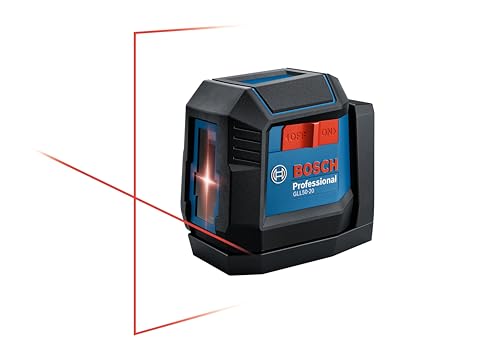
BOSCH PRO GLL50-20 Self-Leveling Cross-Line Laser

Coobeast Digital Angle Finder with Dual Laser 4-Side Magnetic Gauge

SKIL 100ft Self-Leveling Green Cross Line Laser (LL9322G-01)

Johnson Level & Tool 40-6517 Self-Leveling Rotary Laser System

Topcon RL-H5A Self-Leveling Construction Laser w/LS-80 Receiver

DEWALT 20V MAX 3×360 Green Laser Level Kit (DCLE34030G)

PREXISO 30Ft Handheld Wall Laser Level with LED Spirit Level
The Details Behind The Selections
If you’re hanging a single row of frames, leveling a floating shelf, or installing a bathroom mirror, the SKIL LL932301 handles the job without overcomplicating things. It projects a red cross line up to 50 feet and self-levels automatically, so you spend less time fiddling and more time marking.
The integrated rechargeable battery charges through a micro-USB port, which means a phone charger or power bank keeps you working when the battery runs low mid-project. A clamp and carry bag come in the box, so the unit moves easily between rooms. Compared to the larger SKIL green-beam model later in this list, this one trades visibility for portability, and most indoor users won’t notice the difference.
Advantages To Know
- Self-leveling with intuitive out-of-level indicators reduces setup time for new users
- Built-in rechargeable Lithium-Ion battery eliminates ongoing alkaline battery costs
- USB charging port lets you top off with common cables most households already own
- Included clamp and carry bag support quick repositioning between mounting tasks
Points To Keep In Mind
- Red beam is harder to see in bright sunlight or across long outdoor distances
- Owners commonly report that the clamp works best on thinner trim rather than thick lumber
Who It Suits Best
First-time laser buyers tackling weekend home projects and renters who want a simple, no-fuss cross line.
Look Elsewhere When
You need a green beam for sunny or wide rooms, in which case the SKIL 100ft green cross line laser is the smarter move.
The Johnson 40-6184 takes a different approach from the self-leveling cross line units above. It’s a torpedo-style tool that pairs four traditional bubble vials (plumb, level, 45-degree, and cross-check) with a single laser beam, giving you a hybrid reading system for cramped spots where a tripod-mounted unit simply won’t fit.
The magnetic base sticks to steel studs, conduit, and pipe, which is a real advantage when you’re working in electrical or plumbing rough-in. Three perpendicular beams project up to 100 feet, useful when you need a level reference across a basement or long hallway. The tradeoff is the laser here isn’t self-leveling, so you set it manually, but for tight mechanical rooms that’s often a plus.
What Earns Its Place
- Four bubble vials provide redundant confirmation alongside the laser line
- Magnetic edge clings to metal framing, freeing both hands for marking
- Compact torpedo shape fits inside a tool pouch and reaches tight corners easily
Honest Caveats
- Manual leveling means no automatic correction if the unit gets bumped mid-task
- Single-beam design lacks the cross-line convenience of dedicated cross lasers
- No rechargeable battery option, so you’ll want spares on hand
Whose Shelf It Belongs On
Tradespeople and serious DIYers who frequently work around metal framing, conduit, or plumbing.
Swap It Out When
You mostly need a hands-free cross line in open rooms, where the SKIL LL932301 or BOSCH GLL50-20 will feel more intuitive.
The BOSCH GLL50-20 lands in a comfortable middle spot. It projects both horizontal and vertical red lines out to 50 feet, which is enough for most bedrooms, kitchens, and garage builds. Where it gets interesting is the power flexibility: you can run it on the included AA batteries or step up to a Bosch 3.7V Lithium-Ion pack for longer sessions.
Accuracy sits at 5/16 inch at 30 feet, so a careful eye can trust the line for tile layout or cabinet runs. Unlike the SKIL LL932301, this model accepts the same battery platform Bosch uses across many of its tools, which matters if you already own the ecosystem. The cross-line mode also makes ceiling-mounted reference work less awkward.
Practical Advantages
- Cross-line mode projects horizontal and vertical lines simultaneously for faster layout
- Compatible with both AA batteries and a rechargeable Bosch 3.7V Lithium-Ion pack
- Tool can run while charging with the Bosch Li-Ion pack, reducing project downtime
Less Ideal Details
- Red beam can wash out in sunlit rooms or outdoor environments
- Rechargeable battery is sold separately, adding to the total spend
Best Suited To
Remodelers and trim installers who want a dependable cross line and already use Bosch cordless tools.
Consider Something Else When
You need a green beam for brighter spaces, in which case the SKIL 100ft green cross line laser reads more clearly.
The Coobeast angle finder sits in a different lane than the rest of this list. Rather than a wide cross line, it focuses on measuring and transferring specific angles, with a digital readout that gives you a numeric value instead of estimating against a bubble vial. Strong magnets on all four sides hold it firmly to metal stock.
Three buttons control the red laser, value hold, unit switching, and zeroing for relative measurements. That makes it useful for saw setups, miter checks, and pipefitting where you need a known reference angle. For general wall layout, however, it doesn’t replace a cross line tool, and that’s an honest trade-off worth knowing upfront.
What Pays Off
- Digital readout removes guesswork from setting precise angles like miters and bevels
- Four-sided magnets keep the unit attached to pipes, saws, and metal stock
- Relative measurement zeroing simplifies repeat cuts to a known reference
Trade-Offs To Consider
- Single-purpose tool, not designed for whole-room layout like cross-line lasers
- Digital caliper-style display may be harder to read quickly in direct sunlight
Right Fit For
Metalworkers, welders, and woodworkers who need exact angle references rather than room-scale lines.
Reach For A Different Pick When
You need a long horizontal reference for hanging cabinets, where the DEWALT 3×360 covers full rooms with multiple planes.
Step up to the SKIL LL9322G-01 and the upgrade shows up the moment you turn it on. The green beam is dramatically easier to see in well-lit rooms and across longer distances, projecting a continuous 360-degree horizontal line up to 100 feet in diameter. That makes whole-room layout, like chair-rail height or ceiling drops, much less of a juggling act.
The rechargeable Lithium-Ion battery charges through a micro-USB port, and tri-color LEDs on the unit show remaining capacity so you’re not caught guessing. A tripod and carry bag come in the box, so the tool is genuinely ready to use out of the package. Compared to the SKIL red-beam LL932301, this is the same form factor with a more readable beam and broader reach.
Everyday Advantages
- Green beam stays visible in sunlit rooms where red beams fade
- 360-degree horizontal line covers a full room from a single setup point
- Tripod and carry bag included, removing the need for separate accessory purchases
- Tri-color battery indicator prevents mid-project power surprises
Small Caveats
- Green diodes typically draw more power, shortening runtime versus red-beam models
- Larger tripod footprint takes up more floor space in tight rooms
Who Should Grab It
Whole-home renovators and serious DIYers who layout multiple reference lines across open spaces.
A Better Fit Elsewhere
For very long outdoor runs, the Topcon RL-H5A rotary laser reaches job-site distances that no cross line can match.
The Johnson 40-6517 introduces you to a different kind of laser: a rotary unit. Instead of a static line, the head spins to create a continuous 360-degree reference plane that any wall in the room can read. That’s exactly what you want when pouring a slab, setting floor heights, or checking grade across a yard.
The kit ships as a 29-by-7-inch package, which is a sizable carry case. That’s the kind of tool you haul to a site, not a bedroom project. For indoor room layout, the SKIL 100ft green laser is a friendlier fit. But for outdoor work where a single line needs to wrap around a property, this is where rotary technology earns its keep.
Practical Pluses
- Rotating head projects a continuous level plane around the entire work area
- Class IIIa laser output (5mW or less) provides a strong, visible beam at distance
- Self-leveling capability reduces manual setup errors on uneven ground
Points To Note
- Larger case and overall footprint make it overkill for small indoor tasks
- Rotary units typically cost more than cross-line lasers at similar accuracy
Made For
Concrete crews, landscapers, and contractors who need a level reference plane across a large footprint.
Skip It When
You mostly work indoors at room scale, where the BOSCH GLL50-20 covers the job with less gear to lug.
The Topcon RL-H5A is the kind of tool crews bring to commercial sites. It covers a job site up to 2,600 feet in diameter with 1/16-inch accuracy at 100 feet, which is the precision excavators and concrete form setters rely on. The LS-80 receiver included in the kit picks up the beam at distances where your eyes simply can’t.
Self-leveling kicks in within plus or minus 5 degrees, and an H.I. (height of instrument) alert flags the laser receiver if the unit gets disturbed, a small detail that prevents costly re-work. Up to 100 hours of battery life means a long weekend of layout without recharging. The honest read is this is overkill for a single-room remodel, but on a graded site, it pays for itself fast.
Good Reasons To Consider
- 2,600-foot working diameter covers large commercial and grading sites
- 1/16-inch accuracy at 100 feet handles precision grading and form work
- H.I. alert tells the receiver if the unit shifts, preventing layout errors
- Up to 100 hours of battery life supports multi-day remote work
Trade Offs
- LS-80 receiver adds complexity for first-time rotary users
- Premium price tier reflects professional-grade build and reach
Perfect Match For
Surveyors, excavation crews, and contractors running multi-acre layout and grading work.
Not Your Match When
You only need room-scale interior reference, where the SKIL LL9322G-01 covers the same work at a smaller scale.
The DEWALT DCLE34030G is the most ambitious layout tool on this list. Three 360-degree green planes (one horizontal, two vertical) let you set up ceiling, floor, and two wall references from a single position. That’s a genuine time-saver when you’re framing walls, dropping ceiling grids, or aligning tile across multiple planes at once.
Range hits 230 feet visible and up to 330 feet with a detector, and accuracy is 1/8 inch at 30 feet. The 20V MAX battery platform means anyone already invested in DEWALT’s cordless system can drop in a pack they already own. The fine-adjust knob helps with precision placement, which is the kind of feature that makes a long day less tiring.
Standout Benefits
- Three full 360-degree planes cover floor, ceiling, and both walls simultaneously
- Green beam maintains visibility across longer indoor distances
- 20V MAX battery compatibility integrates with existing DEWALT tool kits
- Fine-adjust knob supports precise positioning without re-leveling the whole unit
Some Limits To Know
- Premium price tier puts it out of reach for casual weekend projects
- Detector for the full 330-foot range is sold separately
Best Suited To
Commercial finish carpenters, tile setters, and contractors running multi-room fit-outs with shared battery platforms.
Consider Something Else When
You only need a single room reference, where the SKIL 100ft green cross line laser delivers similar visibility at a lower spend.
The PREXISO 30Ft is the most pocketable option here, a handheld unit you can toss in a kitchen drawer. It combines a 30-foot horizontal laser line with two traditional bubble vials, plus LED lighting that illuminates the vials for dark workspaces. The Class II laser output stays below 1mW, which is the standard safety tier for consumer laser tools.
The lightweight ABS frame keeps the unit comfortable to hold for extended marking sessions, and the magnetic backing sticks to metal surfaces. It’s not going to replace a self-leveling cross line for cabinet installation, but for a quick shelf, a gallery wall, or a wallpaper border, it earns its place. Compared to the SKIL LL932301, you trade self-leveling and range for portability and price.
Strong Points
- Compact handheld form fits in a tool drawer and travels easily
- LED-illuminated bubble vials support accurate reading in low-light spaces
- Magnetic backing adheres to metal studs, appliances, and toolboxes
- Lower price point suits occasional users who don’t need full self-leveling
Worth Bearing In Mind
- 30-foot range limits usefulness in larger rooms and outdoor settings
- Manual leveling means you set the unit by eye against the bubble vials
Who Will Love This
Casual DIYers and renters who need a quick reference for short wall projects and small craft builds.
Not Your Match When
You need automatic leveling or a longer reach, in which case the SKIL LL932301 or SKIL LL9322G-01 are stronger choices.
What To Weigh Before Choosing a Laser Level
Range vs. Room Size
A 30-foot laser handles a small bedroom, but anything past a mid-size living room benefits from 50 feet or more. For outdoor grading and large commercial spaces, a rotary laser with a receiver is the realistic option. Always check the working diameter, not just the visible beam range, since distance affects accuracy.
Beam Color and Visibility
Red beams cost less and run longer on a charge, but they fade quickly in sunlit rooms. Green beams cost more, draw more power, and stay visible across longer distances and brighter environments. If most of your work happens in finished interiors with natural light, green earns its higher price.
Self-Leveling vs. Manual
Self-leveling tools (like the SKIL LL932301 or BOSCH GLL50-20) compensate for slight surface unevenness automatically and indicate when they’re out of range. Manual units (like the Johnson torpedo or PREXISO) require you to set the line by eye against a bubble vial, which is fine for short jobs but error-prone on long layouts.
Power Source and Runtime
Rechargeable Lithium-Ion batteries save on alkaline costs and let you top off with common USB cables. AA compatibility is convenient when you can swap in fresh cells, but long jobs benefit from a rechargeable pack. For multi-day job site use, a tool that runs while charging is a quiet advantage.
Key Considerations Across These Picks
Common Shopping Slip Ups
A frequent mistake is buying a cross-line laser for outdoor work, then finding the beam invisible in daylight. Match the tool to the environment. Another trap is ignoring mounting compatibility: many lasers need a specific tripod thread or bracket, and a tool without a magnetic base forces you to buy extra accessories. Always confirm the mounting options before checkout.
What The Higher Tier Buys
Spending more on a tool like the DEWALT 3×360 or Topcon RL-H5A typically buys longer range, higher accuracy, three-plane coverage, and ruggedized housings. The upgrade pays off for contractors and remodelers who use the tool weekly. For occasional shelf hanging, the price gap rarely justifies itself, and a mid-tier unit like the SKIL green-beam model covers the same task without the premium.




