


Cutting drywall with the wrong blade leaves ragged edges, dusty work, and a tool that throws dust in your face. A proper oscillating blade handles plunge cuts around outlet boxes, scores clean openings for patches, and trims doorways without the vibration of a jigsaw. The picks below cover DIY patch jobs, full remodel work, and people who want one kit that handles wood, metal, and drywall without swapping brands mid-project.
An Overview Of The Picks

POWERTEC Oscillating Tool Blade 3pc Set (14503)
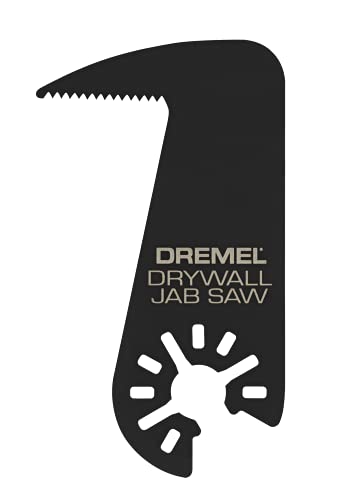
Dremel MM435 Drywall Jab Saw Accessory
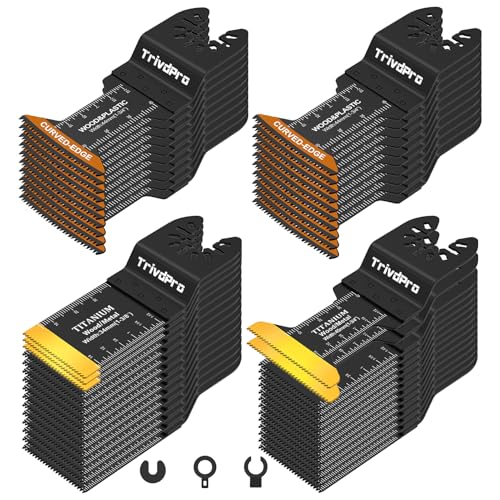
TrivdPro 50-Piece Multi Tool Blades Kit

Dremel MM450B Wood & Drywall 3-Pack

BBYPP 7-Piece Semi-Circular Blades 88mm

Diagtree 20-Piece Titanium Blades
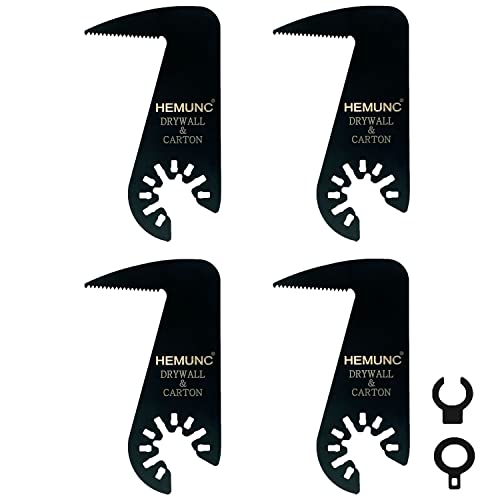
HEMUNC Drywall Blade 4-Pack for Multitools

HEMUNC 118-Piece Oscillating Blades Kit
More Details On Our Top Picks
Remodelers who push through wood with hidden nails, drywall, and the occasional soft-metal transition reach for a blade that won’t snap on the first pass. The POWERTEC 3-piece set leans into that reality, with a 2-inch cutting depth and a rigid 1/16-inch blade thickness that holds its line under pressure. Where the Dremel MM435 favors tight jab cuts, this set trades some of that finesse for deeper reach and longer cuts in mixed materials.
For weekend remodelers pulling old trim and opening up walls, that depth matters. You plunge into a stud bay and walk the blade along the cut without flipping the tool. The bi-metal construction flexes just enough to survive angled cuts in tight corners.
A Few Strong Suits
- 2-inch cutting depth handles deeper wall openings in a single pass
- Bi-metal body resists heat during long cuts through nailed lumber
- 1/16-inch thickness keeps the cut straight on long runs
- Three-blade starter spread covers drywall, wood, and trim work
- Flush-cut geometry trims baseboards flat against the wall
Trade Offs
- Heavier feel than half-moon jab saws, so handheld control takes practice
- Three-blade count means frequent reorder for shop users
- Bi-metal edges dull faster than carbide when crossing masonry
Who It Suits Best
Remodelers and serious DIYers cutting through nailed wood, drywall, and trim in mixed-material walls benefit most from the depth and rigidity.
Where Another Pick Suits Better
For quick electrical box cutouts where a smaller jab saw excels, the Dremel MM435 is a more direct fit.
For tight cutouts around outlet boxes and switch plates, a half-moon jab saw shape punches through drywall faster than any straight blade. The Dremel MM435 fits that role, designed as a quick plunge-and-trim attachment that mimics the geometry of a traditional jab saw, the kind of handheld tool that drywallers have carried for decades. Compared to the broader POWERTEC set, this one trades long cutting depth for short, controlled punches in finished walls.
You plunge at an angle, then sweep the cut open in a curve to follow the box outline. The shape handles curved and straight work without forcing you to swap attachments.
What Makes Sense
- Jab-saw geometry plunges directly into drywall without a pilot hole
- Compact shape traces electrical box outlines with a single pass
- Lightweight body reduces arm fatigue on overhead ceiling cuts
- Quick-fit interface swaps onto Dremel and compatible multitools
Points To Note
- Short profile limits use on long, straight wall runs
- Specialty role means you keep another blade on hand for full cuts
- Not designed for materials harder than standard drywall
Feature Snapshot
Made For
Electricians, drywall finishers, and homeowners installing outlet boxes or patching small wall openings benefit most from this specialty profile.
A Better Fit Elsewhere
For users cutting long runs of drywall across an entire wall, the HEMUNC 4-pack jab saw set covers more ground per purchase.
Shop owners and serious DIYers burn through blades faster than they care to admit, and a 50-piece assortment covers months of mixed-material cutting in one purchase. The TrivdPro kit pairs titanium-coated blades, curved-edge variants, and a high-carbon steel assortment in a single box, fitting a wide range of multitool brands. Where the POWERTEC 3-pack targets a specific job, this kit acts as a full drawer of options.
For a garage workshop that handles drywall patches in the morning and metal trimming in the afternoon, having every common shape on hand keeps the project moving.
Useful Touches
- 50-piece count covers months of varied cutting without reordering
- Titanium and high-carbon steel options in one assortment
- Curved and straight profiles both included for different cut shapes
- Broad compatibility with Dewalt, Milwaukee, Ryobi, Fein, and Bosch multitools
Honest Caveats
- Not every blade gets used equally, so a portion of the kit sits idle
- Storage case adds bulk in a small toolbox drawer
- Entry-level price reflects mixed quality across the assortment
Best Suited To
Garage workshop owners and remodelers handling a variety of materials benefit most from the breadth of shapes and blade types.
Consider Something Else When
For users who only cut drywall and want sharper, longer-lasting edges, the Diagtree 20-piece titanium set is a more focused option.
When a cut needs to follow a precise line, blade geometry matters more than blade count. The Dremel MM450B uses a 3.5-inch half-moon profile in black oxide, designed for accurate cuts in wood flooring, drywall, and PVC. Compared to the TrivdPro kit, this 3-pack trades volume for sharper, more focused performance in flooring and trim work.
For installers opening vents in wood flooring or restoring window glazing, the universal quick-fit interface lands on most major multitool brands without hunting for an adapter.
The Case For It
- Black oxide finish resists corrosion during storage between jobs
- Half-moon shape carves clean openings in wood flooring and drywall
- Universal quick-fit interface works with Bosch, Makita, Milwaukee, and Rockwell
- 3.5-inch length balances reach and control in tight spaces
Worth Noting
- Three-blade count runs out quickly on big renovation jobs
- Not designed for cutting hard metals or masonry
Quick Facts
Right Fit For
Floor installers, window restorers, and trim carvers who need clean, controlled cuts in wood and drywall benefit most from this geometry.
Look Elsewhere When
For deeper plunge cuts reaching past 2 inches into a stud bay, the POWERTEC 3-piece set offers more reach.
First-time multitool owners often want a starter set that handles the common jobs without overspending. The BBYPP 7-piece pack delivers that, with 3-1/2-inch (88mm) semi-circular blades in high-carbon steel and a quick-release design. Where the Dremel MM450B targets precision flooring work, this set covers basic drywall, plastic, and soft-metal cuts at a more approachable entry tier.
You get seven blades and two c-clip adapters, which fits most major multitool brands and lets you swap between cuts without a tool change.
Points In Its Favor
- Seven-blade count outlasts smaller 3-packs on first projects
- Quick-release design speeds up blade swaps between cuts
- Included c-clip adapters broaden fit across tool brands
- High-carbon steel body handles wood, plastic, and soft metal
Less-Strong Areas
- Not designed for cutting hard wood flooring or metal with nails
- High-carbon steel dulls faster than bi-metal on tougher jobs
Feature Snapshot
Perfect Match For
First-time multitool owners and renters handling occasional drywall patches benefit most from the approachable price and adapter bundle.
Skip It When
For remodelers who push through nailed wood daily, the POWERTEC bi-metal 3-pack holds up better over time.
Heat resistance separates blades that survive a long workday from those that soften mid-cut. The Diagtree 20-piece kit uses titanium coating, a thin surface layer that reduces friction and helps the edge hold up during repeated drywall and wood passes. Compared to the BBYPP set, this one targets users who would rather pay a bit more and replace blades less often.
Three included adapters cover most non-Starlock multitools, so installation is fast across the major brands. The quick-change design locks in without wobble, which keeps long cuts on line.
Notable Gains
- Titanium coating improves heat resistance during long cutting sessions
- Three adapters fit roughly 98% of common multitool mounts
- 20-piece count covers most project spans without reordering
- Quick-change interface swaps blades without extra tools
Practical Considerations
- Not compatible with Starlock-style tool mounts
- Higher tier than entry-level high-carbon steel kits
At A Glance
Who Will Love This
Frequent remodelers and finish carpenters who run blades through heavy use on drywall, wood, and metal benefit most from the upgraded coating.
Not Your Match When
For users on a Starlock multitool, the Diagtree adapters will not seat, so the TrivdPro kit is the safer call.
Cutting holes for recessed lighting demands a blade that reaches the ceiling without forcing your wrist into a bad angle. The HEMUNC 4-pack uses an offset hole pattern, a small shift in the mounting holes that tilts the cutting edge into a more natural attack angle during overhead work. Compared to the Dremel MM435, this set brings the same drywall focus but bundles four blades at once.
For electricians and ceiling installers running multiple recessed light cutouts in a single session, having spares on hand keeps the workflow moving.
What Pays Off
- Offset hole pattern improves the cut angle on ceiling work
- Four-blade count outlasts single-blade drywall attachments
- Wide compatibility across Dremel, Dewalt, Fein, Bosch, Makita, and more
- Jab-saw profile punches directly into drywall with no pilot cut
Small Caveats
- Specialty drywall focus means it sits unused on non-drywall projects
- Offset angle takes a few cuts to feel natural if you have used a straight blade
Built With In Mind
Electricians, ceiling installers, and homeowners cutting multiple recessed light openings benefit most from the offset geometry and four-blade count.
Another Choice May Suit
For a single-blade starter that also handles general drywall patches, the Dremel MM435 covers a more rounded role.
Whole-house renovation days involve cutting metal, wood, plastic, carpet, shingles, and drywall, often before lunch. The HEMUNC 118-piece kit assembles sanding sheets, wood blades, titanium bi-metal saws, scrapers, carbide blades, drywall attachments, and knife blades into a single case. Compared to the HEMUNC 4-pack reviewed above, this version trades depth for breadth, covering every common multitool task.
For project homeowners tackling a long punch list, having one kit that handles sanding, scraping, and cutting means fewer trips to the hardware store mid-project.
Everyday Perks
- 118-piece spread covers cutting, sanding, scraping, and grinding
- Titanium bi-metal blades handle both wood and metal in one pass
- Carbide and drywall attachments included for specialized cuts
- Storage case keeps the assortment organized between projects
Practical Considerations
- Bulk kit adds clutter if you only cut drywall
- Quality varies across so many blade types
Feature Snapshot
The Right Fit
Project homeowners and remodelers running long punch lists across multiple materials benefit most from the all-in-one spread.
Swap It Out When
For drywall-only work, the HEMUNC 4-pack keeps the toolkit lighter and more focused.
What To Weigh Before Buying Oscillating Blades for Drywall
A blade’s cutting profile is its personality, and choosing the wrong shape turns a clean patch job into a fight with the tool. Plunge cutting means pushing the blade directly into the material without a pilot hole, a motion that half-moon jab saws handle naturally. Cutting depth, measured in inches, controls how far into a stud bay the blade reaches before you need to back out and reposition. Together, those two specs shape almost every drywall job.
Tooth pitch and material matter just as much. Fine-tooth blades cut drywall cleanly but clog fast on wood, while coarse bi-metal teeth chew through nailed lumber at the cost of edge life on soft sheet goods. Carbide-grit edges last longer on abrasive materials but cut slower on clean wood. If you only cut drywall, a half-moon profile with moderate teeth handles the workload without burning through blades. Users cutting wood, metal, and drywall in the same week want bi-metal or titanium-coated options that flex between materials.
Mounting interface is the part most people forget until a blade refuses to seat. Most multitools use a universal quick-fit clamp, but Starlock systems require a proprietary mount. Confirm your tool’s interface before ordering a kit, because adapters help with universal clamps and do nothing for Starlock.
Blade count affects how long the kit lasts before a reorder. Three-piece starter sets cover small jobs. Twenty-piece kits span remodeling weeks. A 50-piece or 118-piece assortment suits shop owners who treat blades as consumables. Match the count to your project load so you are not stuck mid-cut waiting on a delivery.
What the Higher Tier Buys and Common Shopping Slip Ups
What Separates Premium From Basic
Premium blades, like the Diagtree titanium set, use coatings that resist heat and friction. The result is longer edge life, fewer blade swaps, and cleaner cuts in dense materials. Basic high-carbon steel blades cost less up front but dull faster, especially on wood with hidden nails. The honest trade-off is upfront spend versus replacement frequency, and frequent remodelers usually come out ahead paying for the upgrade.
Pitfalls Shoppers Hit
The most common mistake is choosing a blade by tooth count alone and ignoring the mounting interface. A kit that does not fit your tool sits in a drawer. The second trap is assuming a universal adapter covers every multitool, since Starlock mounts reject standard adapters entirely. Lastly, shopping by piece count without checking blade quality leads to boxes of soft steel that dull in a single afternoon. Look for bi-metal or titanium construction in any blade you plan to use more than once.




