IT service management gets noisy fast. Picking through product listings, platform tutorials, and credentialing books can leave you cycling between overkill frameworks and surface-level overviews. The right toolkit depends on whether you run a small internal help desk, ship enterprise incidents at scale, or simply want to read your own metrics without spreadsheets full of guesswork. The picks below mix physical tooling for the IT bench with books and platform guides that pair naturally with day-to-day service management work. Each entry was chosen for a clear reason, and each one trades something for what it offers, so the right match depends on your role and the gap you’re trying to close.
Your Options, Compared

Klein Tools 32753SD SDS Demolition Screwdriver 3-Piece

Klein Tools 32755SD SDS Plus Hammer Drill Chisel Bit Set

VISE IT System Chang IT Tool
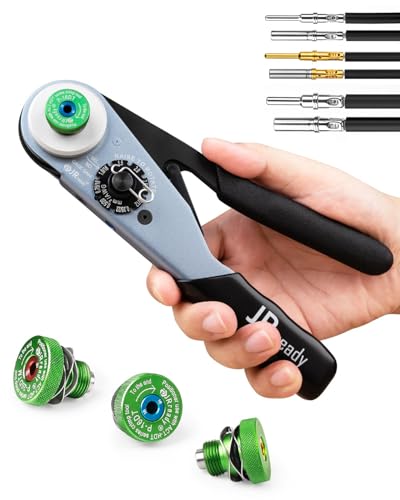
JRready ST2169 Deutsch Crimp Tool with Positioners
ServiceNow ITSM Implementation and Best Practices by R. Parvin

Servicing Itsm Handbook by Randy A. Steinberg

ServiceNow ITSM Implementation Guide Kindle Edition

Measuring Itsm by Randy A. Steinberg

ServiceDesk Plus Installation Guide Japanese Edition
The Strengths Of Each Pick
The 32753SD sits in that hybrid zone between a hand tool and a small rotary hammer accessory. It uses SDS Plus shanks, a system that locks bits into compatible hammer drills and rotary hammers, so the same handle swings between a flat chisel, a bull point, and a manual pry-bar role. For IT and AV technicians, that flexibility means less kit clutter when you’re pulling a stuck rack, prying a floor box, or scoring drywall for a new cable run.
The flared handle reads familiar to anyone who already owns a Klein Cushion-Grip screwdriver, which makes the transition painless. The metal strike cap on the back takes hammer blows without deforming, so you can use it as a punch in a pinch. In most repair environments, that’s the kind of redundancy that saves a trip back to the van.
What Works In Its Favor
- SDS Plus compatibility lets it double as a rotary hammer bit and a hand tool in one.
- Bull point and flat chisel cover both scoring and breaking tasks in demolition work.
- Oversized metal strike cap absorbs hammer blows, extending the tool’s working life.
- Compact three-piece set fits a standard tech bag without a dedicated case.
Trade Offs
- SDS Plus shanks require a compatible chuck, so this isn’t a drop-in for a standard drill.
- Three pieces leave room for the more thorough six-piece set, depending on workload.
Best Suited To
Field techs and AV installers who already own an SDS Plus rotary hammer and want a single multi-use teardown tool.
Reach For A Different Pick When
You need a wider bit range for varied demolition jobs, in which case the Klein Tools 32755SD kit offers more configurations in one case.
Where the 32753SD is a focused three-piece driver, the 32755SD broadens that idea into a more capable six-piece kit. The set includes a nail puller, a 5/16-inch keystone blade, SDS Plus chisels, a 1/4-inch bit adapter, and a universal SDS Plus demolition handle, all in a single carrying case. For technicians who stage job carts or maintain shared shop space, the case keeps the parts together and ready to grab.
Compared to the 32753SD, this set trades some pocketability for versatility. The keystone blade and bit adapter add real screwdriving reach, and the nail puller solves a problem most demolition drivers don’t address. For most repair workbenches, the trade reads as worth it.
Well-Handled Touches
- Six-piece layout covers prying, chiseling, and screwdriving without swapping kits.
- Carrying case keeps bits organized, a quiet win in shared shop environments.
- Nail puller and keystone blade extend use cases beyond basic chipping work.
- Bit adapter lets the demolition handle run standard hex drivers when needed.
Honest Caveats
- More pieces mean more weight and a bigger footprint than the 3-piece set.
- SDS Plus requirement still applies, so the kit assumes you own a rotary hammer.
Key Product Details
Whose Shelf It Belongs On
Service technicians and shop maintainers who want one organized kit for the most common teardown and prying jobs.
A Better Fit Elsewhere
If you rarely use a rotary hammer and want something simpler for handheld prying, the 32753SD three-piece set is a leaner choice.
The VISE tool is the most narrowly focused item on this list, and that’s exactly its appeal. It’s a small key-style instrument used to install and remove interchangeable thumb inserts, and it works across brands. If you depend on those inserts, owning a dedicated tool keeps the swap simple, and a wrong-sized substitute can chew up the insert.
For anyone managing adaptive equipment day to day, this kind of purpose-built key saves a lot of fiddling with improvised tools. The compact form slips into a pocket, so the tool is there when an insert needs to come out in the middle of a task, not back in a drawer.
Where It Delivers
- Brand-agnostic design works with multiple interchangeable insert systems.
- Pocketable form makes insert swaps practical in the field, not just at a bench.
- Dedicated geometry reduces the risk of stripping insert hardware.
Worth Noting
- Niche role means it offers little value if you don’t use interchangeable inserts.
- Small form makes it easy to misplace, so a dedicated spot in the kit helps.
Made For
People who routinely change thumb inserts and want a tool sized for the job rather than an improvised substitute.
Look Elsewhere When
Your work is centered on IT service processes rather than physical adaptive hardware, in which case the ServiceNow and ServiceDesk Plus guides will serve you better.
The JRready ST2169 is a closed-barrel crimp tool aimed squarely at Deutsch DT, DTM, and DTP connectors, plus the matching Amphenol AT and ATM series. It ships with three color-coded positioners for size 12, 16, and 20 contacts, so the same frame handles most automotive and industrial sealed-connector work without buying extra turrets. For harness builders and field techs, that consolidation is a quiet but real time saver.
The detachable positioner design uses a corrugated spring anti-loose system, which speeds up size changes and reduces the trial-and-error that plagues cheaper crimpers. Compared to a basic four-indent tool, the positioner ensures the contact sits at the correct height every cycle, so crimp quality stays consistent across a long harness build.
What Earns Its Place
- Three included positioners cover the most common sealed-connector sizes.
- Detachable design with anti-loose spring keeps position changes fast and repeatable.
- Closed-barrel geometry supports Deutsch and Amphenol series without modification.
Points To Keep In Mind
- Positioners cover size 12, 16, and 20, so larger contacts require a different frame.
- Specialty use case means this tool earns its keep only with regular sealed-connector work.
Feature Snapshot
Right Fit For
Harness builders, robotics techs, and field service engineers who regularly terminate Deutsch-style sealed connectors.
Skip It When
Your connector work is mostly open-barrel or RF, in which case the Klein Tools 32755SD set is a better match for general bench tasks.
This paperback by R. Parvin reads like a first-week playbook for ServiceNow admins. It walks through incident, problem, change, and the other core ITSM processes, framing each in language a new platform owner can follow. For someone transitioning from a smaller ticketing tool or starting an admin role, the book is a low-friction way to build a working mental model before tackling formal training.
Compared to the Randy A. Steinberg titles later in this list, Parvin’s book is lighter on process design theory and heavier on platform-specific configuration. The trade-off is that the advice ages faster as ServiceNow releases shift, so you may find the Kindle edition more practical to refresh than a hardcover.
Strengths Worth Knowing
- Plain-language walkthrough of ServiceNow’s core ITSM modules.
- Process-focused structure helps new admins link concepts to platform features.
- Print format makes it easy to flip between sections while working in the platform.
Some Limits To Know
- Light on measurement and executive reporting, so pair it with the Steinberg metrics book for that layer.
- ServiceNow releases evolve quickly, so specific UI screenshots may shift over time.
Who Should Grab It
New ServiceNow administrators and IT process owners who want a readable introduction to the platform’s ITSM surface.
Consider Something Else When
You need the same content in a digital-first format, in which case the Kindle edition of Parvin’s guide fits that workflow better.
Steinberg’s “Servicing Itsm” reads like a working catalog rather than a textbook. The book lays out service descriptions that IT service managers can adapt, plus guidance on building those descriptions from scratch. For a team standing up a service catalog or refreshing an existing one, having a structured starting point saves weeks of blank-page effort.
Where Parvin’s book leans platform-specific, this one stays deliberately framework-agnostic. That makes it useful regardless of whether you run ServiceNow, ServiceDesk Plus, or a homegrown tool. The honest read is that the catalog is a strong skeleton you adapt, not a finished product you copy verbatim.
The Practical Payoff
- Service description templates cut the time needed to draft a usable catalog.
- Framework-agnostic content applies across tools, including ServiceNow and ServiceDesk Plus.
- Manager-level scope matches the daily reality of running an ITSM practice.
Where It Is Less Suited
- Limited coverage of platform-specific configuration steps.
- Templates work best when adapted, so expect real editing work before publishing.
Perfect Match For
IT service managers building or refreshing a service catalog who want a structured starting point rather than a blank document.
Not Your Match When
You need a platform-specific walkthrough, in which case the ServiceNow ITSM book by R. Parvin offers that layer.
This is the same R. Parvin book as the paperback above, delivered as a Kindle edition. The content tracks the print version, so the choice really comes down to how you prefer to read. For platform admins who carry a tablet or work primarily from a laptop, the Kindle format means searchable text and no shelf space required.
The practical upside is that you can search the book directly while working in ServiceNow, which is faster than flipping pages back to a process diagram. The honest trade is that complex ITSM diagrams sometimes read better in print, so the format choice depends on your reading style.
Everyday Advantages
- Searchable text speeds up cross-referencing while working in the platform.
- Same content as the paperback, so nothing is lost in the digital conversion.
- Tablet and phone support means the book travels with you on site or in transit.
Things To Consider
- Diagrams and screenshots can feel cramped on smaller phone screens.
- You depend on the Kindle ecosystem for access, which may not suit every reader.
Who It Suits Best
ServiceNow admins who prefer digital reading and want the same Parvin content in a searchable, portable format.
Swap It Out When
You read more comfortably in print or want a physical reference on the shelf, in which case the paperback Parvin guide is the better fit.
“Measuring Itsm” is the other Steinberg book on this list, and it focuses on the executive layer. It covers how to measure, report, and model the metrics that matter most to IT senior leaders, which makes it a different read than the service-catalog handbook. For IT directors building a quarterly business review or modeling service performance, the book offers a structured way to think about which numbers actually move decisions.
Compared to the “Servicing Itsm” title, this one assumes a more senior audience. The honest read is that the modeling chapters are more useful once you already have a stable service catalog in place, so the two Steinberg books tend to work as a pair rather than a swap.
The Case For It
- Targets executive-level metrics, which most ITSM books leave underspecified.
- Modeling guidance helps connect day-to-day operations to leadership reporting.
- Pairs naturally with the “Servicing Itsm” catalog handbook in the same author’s series.
Where It May Fall Short
- Less useful before a service catalog is in place, since the metrics depend on stable services.
- Modeling chapters assume a comfort level with spreadsheets and basic data work.
Who Will Love This
IT directors and senior managers who need to translate ITSM activity into metrics that hold up in executive conversations.
Another Choice May Suit
Service desk leads and process owners will get more immediate value from the “Servicing Itsm” handbook in this same list.
This Japanese-language Kindle guide is a focused walkthrough of ServiceDesk Plus, ManageEngine’s ITSM platform. It covers installation and basic operation, so it serves as a structured onboarding read for Japanese-speaking teams that have chosen ServiceDesk Plus as their ITSM tool. For a shop standardizing on that platform, having a native-language setup reference removes a real friction point.
Compared to the ServiceNow books on this list, this one is platform-specific by design. The trade-off is that the content is most useful if you have already committed to ServiceDesk Plus, since it isn’t written to help you choose between platforms.
Practical Advantages
- Native Japanese walkthrough lowers the language barrier for first-time installers.
- Platform-specific scope means the steps align with the actual ServiceDesk Plus interface.
- Kindle format lets the guide travel alongside the install team on a tablet or phone.
Factors To Consider
- Language-specific content limits the audience to Japanese-speaking readers.
- Platform-specific focus means the book isn’t a comparison aid for choosing an ITSM tool.
Built With In Mind
Japanese-speaking IT teams rolling out ServiceDesk Plus who want a native-language installation and operation reference.
Where A Sibling Pick Shines
Teams on ServiceNow will find the R. Parvin books more directly relevant than this ServiceDesk Plus-focused guide.
What To Weigh Before Choosing Itsm Tools
Your role shapes the right starting point more than the tool count on the shelf. Platform admins moving into ServiceNow for the first time usually want a structured walkthrough that connects process language to configuration steps, which is where the Parvin paperback or Kindle edition earns its keep. Service managers focused on catalog quality benefit more from Steinberg’s handbook, while senior leaders reporting upward get the most from the metrics book. If your work is closer to the physical bench, the Klein demolition sets and the JRready crimper address real day-to-day repair tasks that ITSM books don’t cover.
Match the format to how you actually read. Print works well for slow, chapter-by-chapter study, while a Kindle edition makes sense when you plan to search the book while working in a platform. If your team has standardized on a specific tool like ServiceDesk Plus, a platform-specific guide in your working language reduces friction faster than a generic framework title. The book format and the tool choice should reinforce each other, not fight for attention.
Finally, consider the physical side honestly. ITSM work often happens at a bench, on a ladder, or in a cramped server room, and the right demolition and crimp tools prevent small jobs from becoming big ones. If your work splits between process and physical infrastructure, mixing a Steinberg or Parvin book with a Klein demolition set covers both ends of the day without redundancy.
Smart Choices Across This Category
Common Shopping Slip Ups
The most common mistake is grabbing a framework book before committing to a platform, or vice versa. A general ITSM text reads well but leaves you guessing at configuration, while a platform-specific guide may not survive a migration. Picking both a process-level book and a platform-level book for the same tool tends to age better than picking two books that overlap.
Why Top Tier Costs More
Specialty tools like the JRready crimper and the Klein demolition sets cost more because they consolidate three or four separate tools into one frame, and the positioner or shank systems cost more to machine than a basic screwdriver. On the book side, executive-level content carries a higher price because the audience is smaller and the modeling work takes more research. The honest case for paying up is consolidation and accuracy; for occasional use, a basic tool is often enough.