


When you need air on demand, the right 12v setup saves time and cuts the mess of borrowing a shop compressor or waiting on a roadside service. This roundup focuses on portable tire inflators, onboard air systems, and horn-ready units, so you can match the tool to your vehicle and your routine.
You’ll see compact inflators for daily driving, dual-cylinder units for faster fills, and tanked kits for horn or suspension use. The trade-off is simple, speed and capacity usually bring more size, more noise, or more setup work.
Quick Look At The Shortlist

VEVOR 12V Air Compressor 1.6-Gal Tank Kit

Vixen Horns Heavy Duty Onboard Air Compressor VXC8301

VIAIR 450C Industrial Air Compressor 45040

CRAFTSMAN Portable 12V Tire Inflator with Digital Gauge

VIAIR Digital EVC88P Portable Tire Inflator

VEVOR 10.6 CFM Dual-Cylinder Air Compressor
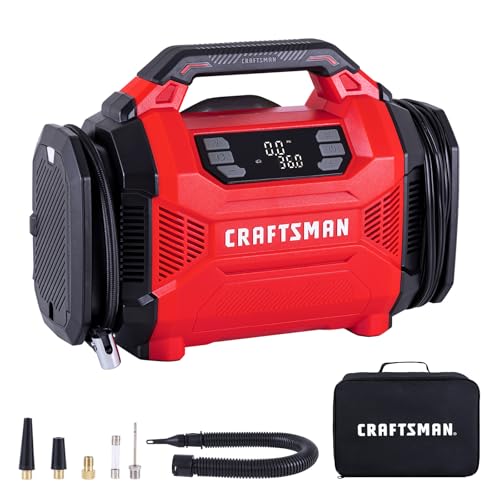
CRAFTSMAN Dual Power Tire Inflator with Digital Gauge

200PSI Heavy Duty Train Horn Compressor 12V

Medium Duty Onboard Air System Kit 150 PSI
More Details On Our Top Picks
Tank-based kits like this tend to make more sense for garages, trailers, or custom vehicle setups than for glovebox carry. The 1.6-gallon tank gives you a stored-air buffer, so horn use and quick top-offs feel less stop-start than a tiny inflator.
Compared with the simpler CRAFTSMAN inflator later in the list, this VEVOR leans into capacity and mounting-style use. You’ll want room for installation, and that’s the honest trade-off, but the steel tank and coated finish should suit a setup that stays in one place.
What We Like
- The tank adds reserve air, which helps for repeated horn bursts or short inflation jobs.
- The 90 to 120 psi range keeps pressure control more orderly than bare-bones pumps.
- A gauge on the unit gives you live pressure feedback during use.
- The steel body with anti-rust coating fits long-term mounting better than lighter plastic housings.
- The drainage plug makes routine moisture release easier after steady use.
Worth Noting
- The tank-and-compressor format takes more space than a simple portable tire inflator.
- At 1.6 gallons, the storage volume is useful, but not meant for very large air-demand systems.
- Owners who need carry-anywhere convenience may find the setup more involved than expected.
Feature Rundown
Who It Suits Best
You’ll get the most from this setup in a vehicle build, garage bay, or horn installation where the compressor can live in one place.
A Better Fit Elsewhere
CRAFTSMAN Portable 12V Tire Inflator with Digital Gauge suits commuters and garage users who want a simpler grab-and-go pump.
Vixen Horns leans hard into higher-pressure onboard use, so it fits custom vehicles that stay set up for suspension, bags, or horn systems. That 200 psi ceiling gives you more headroom than the VEVOR tank kit, though the right installation space and wiring planning still matter.
For most truck or semi-style builds, the appeal is less about portability and more about dependable onboard readiness. The trade-off is simple: you’re getting a focused component rather than a casual all-purpose inflator.
Highlights
- 200 psi capability leaves extra pressure room for demanding onboard jobs.
- It works as a replacement-style unit for several 12V vehicle setups.
- The compact compressor format fits custom installs more neatly than tank-heavy kits.
Small Caveats
- You’ll need a suitable install plan, so this is not a grab-and-go tool.
- The unit makes the most sense in a purpose-built vehicle system.
- Routine mounting checks matter, since onboard gear can loosen with vibration over time.
Quick Facts
Who It Suits Best
You’ll appreciate this most in a truck, pickup, or custom build that already has a plan for onboard air hardware.
Where A Sibling Pick Shines
VEVOR 12V Air Compressor 1.6-Gal Tank Kit is the friendlier match for anyone who wants a tank included with the compressor.
This VIAIR model sits in a more industrial lane than the horn-focused picks above. A continuous duty cycle means it’s designed to keep running for longer stretches, which is exactly why it makes sense for drilling, spraying, nailing, and OEM-style air systems.
The 150 psi rating and support for tanks up to 5 gallons put it closer to workshop thinking than roadside thinking. You give up some portability, but that’s the point, and the silver finish keeps the package straightforward rather than flashy.
Reasons To Buy
- Continuous-duty design suits longer tasks better than stop-and-go tire pumps.
- It fits use cases like air brushing and nailing, not just vehicle inflation.
- Support for tanks up to 5 gallons gives the system more working range.
- The 12V format still lets you build around vehicle power instead of a wall outlet.
Room For Improvement
- This is not the easiest pick for casual carry or emergency trunk storage.
- Its more specialized role means it may feel like overkill for simple tire top-offs.
- Installation planning matters, especially in compact engine bays or tight service spaces.
Spec Overview
Who Should Grab It
You’ll get the best fit here in a workshop, custom build, or mobile setup that needs longer air sessions and more than basic inflation.
Another Choice May Suit
VIAIR Digital EVC88P is the easier handoff for truck and SUV owners who want a portable inflator with preset shutoff.
This CRAFTSMAN inflator is the plainspoken option in the group, and that’s a strength for everyday drivers. The digital gauge and auto shut-off make tire topping less fussy, especially in a driveway after work or in a grocery lot before a weekend run.
Compared with the tanked VEVOR and the more industrial VIAIR 450C, this one keeps the footprint compact and the intent simple. The LED light helps during early morning checks, though you still need to manage the cord and air hose like any 12V portable pump.
Strong Points
- Digital pressure readout makes topping off a bit easier to follow.
- Auto shut-off reduces the need to babysit the inflation process.
- The 12V car plug keeps it aligned with trunk or garage use.
- The built-in light helps during dim roadside or driveway checks.
Points To Note
- This is a portable tire tool, so it is not aimed at onboard air builds.
- The compact format is convenient, but it does not bring a storage tank.
- Owners commonly keep the hose and power cord tidy to avoid tangles in the trunk.
At A Glance
Made For
You’ll like this most for car maintenance, weekend errands, and simple garage inflation jobs.
Swap It Out When
CRAFTSMAN Dual Power Tire Inflator with Digital Gauge is the better call for home users who want both wall and vehicle power.
VIAIR gives you a more tuned portable inflator than the basic CRAFTSMAN unit, and the preset automatic shut-off is the detail most people will notice first. That matters on larger tires, where a set pressure target keeps the task more controlled and less tedious.
The car, truck, SUV, and RV fit makes this a broader travel tool, though it still stays in the portable-inflator lane rather than the onboard-air lane. You may find the digital controls especially handy during repeated top-offs, but the lighter format means it is still about convenience, not tank capacity.
Upsides
- Preset shutoff helps you stop at a chosen pressure without overthinking it.
- The fit across cars, trucks, SUVs, and RVs widens the use case.
- Digital controls suit drivers who like a clearer inflation workflow.
- The 12V format keeps it travel-friendly for trunk storage.
Areas To Watch
- It still depends on vehicle power, so it is not meant for home-wall use.
- This model stays portable, which also means no built-in air tank.
- Longer fills on larger tires can feel slower than dual-cylinder units.
Details At A Glance
The Right Fit
You’ll get the most from this in a trunk, trailer, or RV setup where preset shutoff makes regular tire checks less tedious.
Look Elsewhere When
CRAFTSMAN Dual Power Tire Inflator with Digital Gauge suits home users better because it can run from both 12V DC and 120V AC.
This VEVOR is clearly aimed at faster inflation, and the dual-cylinder layout is the reason. Two cylinders share the work, so the unit is better suited to larger off-road tires, truck use, or any garage task where you’d rather not wait around.
Compared with the single-cylinder CRAFTSMAN models, it trades simplicity for speed and bulk. The included adapters broaden the fit for trucks, SUVs, 4x4s, and RVs, though you’ll want a bit more storage room and a little more patience during setup.
Bright Spots
- The 10.6 CFM output points to brisk air delivery for a portable unit.
- Dual cylinders are a real advantage for larger tires and repeated fills.
- The 30-second inflation claim signals a speed-focused design.
- Adapters for several vehicle types make it more flexible than a narrow-use pump.
- It fits off-road ownership better than commuter-only inflators.
Trade Offs
- The faster setup usually means more size than a simple emergency inflator.
- This feels more purpose-built for larger vehicles than for tiny carry kits.
- Moving parts and extra body volume can make storage less tidy.
Core Details
Built With In Mind
You’ll get the best match here for off-road drivers and larger-vehicle owners who value faster inflation over pocket-size portability.
Consider Something Else When
CRAFTSMAN Portable 12V Tire Inflator is the simpler pick for commuters who want a compact pump that stays easy to store.
Dual power is the obvious reason to look at this CRAFTSMAN, because it solves the home-versus-car problem in one tool. The 12V DC plug handles driveway and road use, while the 120V AC option makes garage inflation feel a lot less tied to the vehicle.
That flexibility separates it from the portable 12V-only CRAFTSMAN above, and it suits households that keep one inflator in a closet or workshop. The honest read is that dual-power convenience matters most for routine use, not for anyone chasing the fastest fill possible.
Best Bits
- Two power options make it easier to use at home or in the car.
- The digital gauge gives you clearer pressure feedback.
- Auto shut-off helps reduce overfilling on routine tire checks.
- The LED light adds practical visibility during low-light setups.
Softer Spots
- The broader power setup is useful, but it also makes the unit less minimal.
- It still remains an inflator, not a tanked onboard-air system.
- Owners who want the fastest off-road fills may prefer a dual-cylinder design.
Technical Sheet
Who Will Love This
You’ll like this most if you keep one inflator for both garage chores and travel backup.
Where Another Pick Shines
VIAIR Digital EVC88P is a better fit for drivers who want a more travel-focused portable inflator.
This CNRAQR compressor sits in the same custom-vehicle space as the Vixen Horns unit, but the 1/4NPT connection and suspension focus make it feel more install-specific. That threaded fitting is helpful because it gives you a standard pneumatic connection point, which matters in air ride and horn systems that use matched fittings.
It makes the most sense in a build where the compressor stays mounted and part of a larger air setup. You do give up casual portability, but that is normal for a unit meant to live under a hood or in a system bay.
Positives
- The 200 psi ceiling gives plenty of room for demanding onboard air work.
- 1/4NPT threading helps with common pneumatic connections.
- It fits horn and air ride suspension use, not just tire inflation.
Honest Caveats
- This is a build component, so it asks for proper mounting and planning.
- It is not the right tool for a trunk-friendly emergency inflator.
- Regular checks on fittings and lines make sense in vibration-prone vehicle setups.
Feature Card
Whose Shelf It Belongs On
You’ll get the best fit here in a modified car or truck that already has air ride or horn hardware planned.
A Better Fit Elsewhere
VEVOR 12V Air Compressor 1.6-Gal Tank Kit suits anyone who wants a tank included instead of a bare compressor.
LLNSEAUTO gives you a middle ground between a simple inflator and a more specialized horn compressor. The 2.5-gallon tank is larger than the VEVOR 1.6-gallon kit, so you get a bit more reserve air for train horns or general onboard use.
That extra tank space makes it a sensible step for weekend builders who want more versatility without jumping straight into a highly specialized industrial setup. The system still asks for installation space, and that is the price of carrying more air on board.
What We Like
- The 2.5-gallon tank gives you more stored air than smaller onboard kits.
- 150 psi support leaves enough ceiling for many vehicle-air projects.
- It works as a middle-ground choice between casual and highly specialized setups.
- The onboard format suits horns and air tools better than handheld inflators.
Minor Gripes
- The tanked setup takes more installation planning than a trunk inflator.
- Owners who need a tiny emergency pump may find it more involved than needed.
- Keeping the mounting hardware tidy matters because onboard systems live with vibration.
Core Details
Best Suited To
You’ll appreciate this most if you want a mounted compressor with a little more reserve than the smallest tank kits.
Reach For A Different Pick When
CRAFTSMAN Portable 12V Tire Inflator with Digital Gauge is better for drivers who want a compact pump for the trunk.
How To Choose The Right 12v Air Compressors
Match The Compressor To The Job
The first split is between portable inflators and onboard systems. A digital tire pump fits roadside checks, driveway maintenance, and regular top-offs, while a tank kit or horn compressor belongs in a vehicle build or a fixed install. That difference matters more than brand names, because the wrong format feels awkward no matter how strong the motor looks on paper.
Truck owners, RV users, and off-road drivers usually need more airflow or a bigger pressure reserve than sedan owners do. A compact 12V plug-in unit can be enough for a commuter, but a dual-cylinder design or a tanked setup serves larger tires and repeat use more comfortably. Think about the task first, then the hardware.
Read Pressure And Airflow Together
PSI means pounds per square inch, which is the pressure level the compressor can reach, but PSI alone does not tell you how fast air moves. Airflow, often shown as CFM, or cubic feet per minute, speaks to delivery speed. For larger tires or frequent fills, a higher airflow number usually feels more useful than a high ceiling with slow output.
That’s why the VIAIR 450C and the VEVOR dual-cylinder unit serve different jobs even though both look serious on a listing page. One is built for longer-duty work and the other leans into speed for portable inflation. For most garages, a balanced mix of pressure and flow beats chasing a single headline number.
Look At Power, Storage, And Installation
12V units are handy because they tie into a vehicle, but that convenience comes with cord routing and storage considerations. Portable inflators should fit neatly in a trunk, while mounted kits need a clean location, secure hardware, and enough room for the tank or compressor body. A good setup feels organized, not improvised.
Noise, moisture handling, and maintenance also matter. Metal tanks and drainage plugs help with routine upkeep, and anti-rust coatings matter more than they sound like they should once the unit lives around damp roads or garage humidity. The easier the layout is to reach, the more likely you are to keep it in good shape.
Things Worth Knowing First
Common Shopping Slip Ups
A lot of shoppers focus only on maximum pressure and miss the bigger question of how the compressor will actually be used. A 200 psi onboard unit is overkill for a driver who only wants to top off sedan tires in the driveway.
Another common miss is storage. A tanked system gives you more capacity, but it also asks for room, mounting time, and a little upkeep around drainage and fittings.
When Paying More Pays Off
Higher-tier models usually cost more because they add speed, capacity, or duty-cycle support. Dual cylinders, larger tanks, and more stable housings all take more material and more engineering than a simple plug-in inflator.
The upgrade makes sense for truck, RV, or off-road use, and it also makes sense for anyone using air more than once in a while. For a weekend vehicle or a small garage, the simpler unit may be the smarter spend.
Frequently Asked Questions
What’s The Difference Between A Portable Inflator And An Onboard Air System?
A portable inflator plugs into your vehicle and stays easy to move and store. An onboard system is usually mounted in place and built for regular use with more hardware.
Is A Higher PSI Always Better?
Not really, because PSI only tells you the pressure ceiling, not the fill speed or fit for your use case. A well-matched 150 psi unit can be a better everyday tool than a bigger-number model with more setup than you need.
Why Does Airflow Matter So Much?
Airflow affects how quickly the compressor can move air, which matters on larger tires or repeated fills. A strong airflow rating often saves time more visibly than a higher pressure ceiling alone.
Do You Need A Tank?
A tank helps when you want reserve air for horns or repeated bursts. For simple tire inflation, a tankless portable inflator is usually easier to store and use.
What Should You Check Before Mounting One?
Look at space, power routing, and how you’ll access the drain or fittings later. A neat install is easier to maintain than a cramped one tucked behind other hardware.
Closing Thoughts
You get the best result from a 12V air compressor when the shape of the tool matches the job, not just the pressure number on the page. A compact CRAFTSMAN inflator suits routine tire checks, the VEVOR and Vixen Horns models suit onboard builds, and the VIAIR 450C pushes into more serious air work. For most people, the right pick is the one that fits the vehicle, the storage space, and the way you actually use air day to day.




