


Dead batteries and low tires tend to show up at the wrong time, usually when you’re already running late. A combo unit helps you cover both problems with one compact tool, which matters in a daily driver, a weekend truck, or a garage that does double duty. You’ll also notice the difference in storage, since one device takes less room than two separate ones.
Quick Look At The Shortlist

Tyrell Chenergy 2200 Amp Jump Starter with Air Compressor

ACMOUNT D18 6000A Jump Starter with Air Compressor

DEWALT DXAEPS14 2000 Amp Portable Battery Jump Starter with Compressor
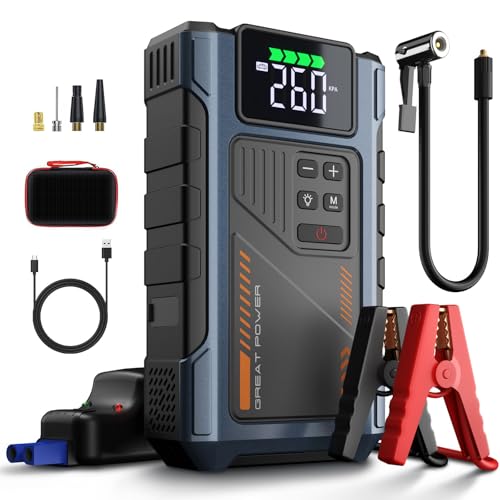
Geeneu Car Battery Charger Jump Starter with Air Compressor 4500A
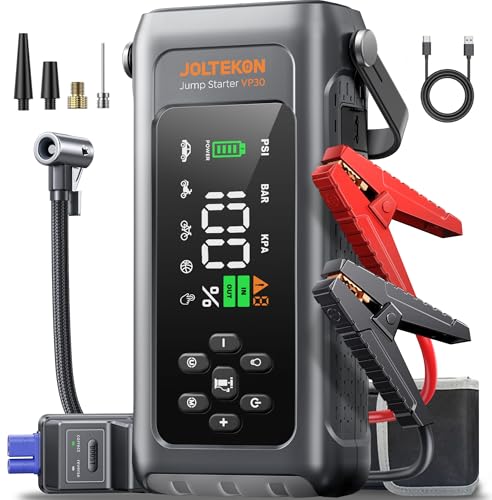
Joltekon Car Battery Jump Starter with Air Compressor 4500A

BRPOM 8000A Jump Starter with Air Compressor

ANFLAG Car Jump Starter with Air Compressor 7000A

YaberAuto 16-in-1 Jump Starter with Air Compressor 8000A
More Details On Our Top Picks
Tyrell Chenergy takes a more all-in-one approach than the simpler inflator-first units in this list. You get a 2200 amp jump starter, a 260 PSI inflator, a 400W power inverter, dual AC/DC ports, and a 2.1A USB output, so the kit feels built for a trunk, garage shelf, or road-trip box.
The trade-off is that the feature mix can make it feel less travel-light than a barebones emergency starter. For commuting drivers who want one piece of gear for starts, top-offs, and basic charging, that balance makes sense, though the battery clamp setup and inverter use will take a little more space and attention than a simpler model.
Strong Points
- 2200 amp output gives you a practical starting cushion for everyday cars.
- 260 PSI inflator handles tires, sports gear, and small seasonal top-offs.
- 400W inverter adds useful backup power for small AC devices in a pinch.
- Dual AC/DC ports make it easier to organize charging around your car kit.
- 2.1A USB support helps keep phones and accessories powered on the move.
Things To Consider
- The multi-function layout takes more storage room than a basic jump pack.
- AC inverter use usually makes the learning curve a little steeper for first-time owners.
- The wider feature set also means more parts to keep track of in the trunk.
Feature Snapshot
Who It Suits Best
You’re a strong match for this pick if you want one roadside unit that handles starting, inflating, and light charging without carrying separate accessories.
Where A Sibling Pick Shines
DEWALT DXAEPS14 suits you better when workshop-style charging and a more brand-familiar tool layout matter more than the extra inflator flexibility here.
The D18 leans hard into starting strength, and that makes it easy to place above the more general-purpose Tyrell Chenergy model for drivers with larger engines. You also get an 800-lumen flashlight, which is bright enough to help in a dim driveway, a roadside shoulder, or a late-night garage check.
That extra power comes with a practical trade-off, since the unit is less about light-duty convenience and more about being ready for bigger gas engines and 10.0L diesel use. For tow rigs, work vehicles, and households with mixed vehicles, the stronger stance is useful, though the bigger footprint and heavier-duty focus may feel like too much for a small sedan.
What We Like
- 6000A output gives you a wide margin for demanding starts.
- Supports all gas engines and 10.0L diesel use, which broadens fit.
- 150 PSI inflator is a practical tire helper without adding clutter.
- 800-lumen light helps in dark parking areas and roadside situations.
- Power bank function adds another layer of backup for mobile gear.
Small Caveats
- The stronger-duty format may feel oversized for small-car trunks.
- The broader feature set can make storage a little less tidy.
- Light-duty shoppers may not need this much starting overhead.
Core Details
Who Should Grab It
You fit this model best if your driveway holds bigger engines, mixed vehicle types, or a work vehicle that needs serious starting margin.
Another Choice May Suit
Geeneu’s 4500A jump starter makes more sense for households that want strong output without stepping all the way into the D18’s heavier-duty lane.
DEWALT’s layout feels closer to a work tool than a pure emergency gadget, and that difference matters in a garage or jobsite vehicle. Along with the 2000 amp jump function and built-in compressor, you get 500W AC power plus 15W USB-A and 25W USB charging, so the unit can support a small mix of gear.
The honest read is that this one fits organized users best, because the device does more than simply rescue a dead battery. Compared with Tyrell Chenergy’s broader inverter-first setup, the DEWALT model reads as cleaner and more workbench-friendly, though it offers less of the all-purpose roadside bundle that some families want.
Upsides
- 2000 amp jump rating covers regular passenger-vehicle starts with confidence.
- 500W AC power supports modest corded equipment and charging needs.
- USB-A and USB charging give you two common device options.
- Compressor adds useful tire support in one compact unit.
- Brand styling and layout suit garage storage and work-truck use.
Room For Improvement
- The feature mix is practical, but it is not the lightest setup to carry.
- Owners who only want jump-start duty may not use the AC side much.
- The more tool-like format can feel overbuilt for a small commuter car.
Technical Sheet
Best Suited To
You’ll get the most from this pick in a garage, workshop, or work vehicle where charging flexibility matters as much as jump-start power.
Skip It When
BRPOM’s 8000A unit is the better fit for drivers who care more about raw starting margin and an LCD screen than AC power.
Geeneu splits the difference between everyday convenience and heavier reserve power, which is exactly why it lands well for family garages. The 4500A rating, 150 PSI inflator, battery pack layout, and jumper cables give you a broad roadside kit without moving into the fully loaded territory of the YaberAuto option.
In most homes, that balance makes it easier to store and easier to explain to anyone else who may need it in a pinch. You still want to keep the unit charged and the hoses organized, though, because combo tools always work best when the accessories stay in one place.
Reasons To Buy
- 4500A output gives you a strong margin for common vehicle starts.
- 150 PSI inflator helps with tire maintenance and light inflation tasks.
- Battery pack format keeps the tool self-contained for roadside storage.
- Includes jumper cables, so you’re not hunting for separate basics.
- Fits family use well, especially for mixed daily-driver vehicles.
Points To Note
- The unit works best when the cable set is stored neatly.
- Heavier-duty focus may be more than a small car strictly needs.
- Combo designs usually ask for a bit more shelf or trunk space.
Feature Rundown
Made For
You’re looking at the right kind of setup for a household that wants one portable kit to cover jump starts, tire top-offs, and basic roadside readiness.
Reach For A Different Pick When
ANFLAG’s 7000A model is the smarter fit for you if maximum reserve power matters more than a simpler, more compact setup.
Joltekon keeps the same 4500A and 150 PSI foundation as Geeneu, but the auto-shutoff inflator changes the day-to-day feel. That feature is handy for quick driveway top-offs, because you’re less likely to overthink the pump process while balancing a grocery run, school pickup, or a pre-trip check.
The practical trade-off is that simpler ownership usually means more careful attention to small details like hose storage and keeping the light in the kit. Still, for drivers who want a straightforward combo unit with an easier inflation routine, this one is an approachable fit.
Bright Spots
- Auto-shutoff inflator makes tire top-offs less fussy.
- 4500A output gives the unit a useful power cushion.
- 150 PSI inflator supports normal car tire maintenance.
- Jump cables and light add practical roadside coverage.
- Works well for routine household vehicle care.
Areas To Watch
- Accessory storage matters, since loose parts are easy to misplace.
- The feature set is practical, but not especially flashy.
- Very large vehicle owners may want a stronger reserve model.
Details At A Glance
Who Will Love This
You’ll appreciate this model most if you want a low-fuss jump starter that keeps tire inflation simple in an everyday driveway.
Look Elsewhere When
Tyrell Chenergy is the better match for you if you’d rather have a built-in inverter and more charging ports in the same box.
BRPOM pushes further on starting strength, and that’s useful for drivers who want more reserve than the midrange picks offer. The LCD screen and 600-lumen emergency light help the unit feel more usable in a dark parking lot, which is a small but real comfort during roadside work.
Compared with Geeneu and Joltekon, this one leans more toward visibility and control than just basic portable function. You may find that extra information helpful in a messy trunk setup, though the feature spread also means the unit asks for a little more familiarity before it feels second nature.
Positives
- 8000A output gives you a large starting cushion.
- 160 PSI inflator broadens the tire-use range.
- LCD screen makes status checking easier at a glance.
- 600-lumen light helps in dim parking and roadside conditions.
- Works with all petrol and 12L diesel vehicles.
Softer Spots
- The feature depth can make setup feel a bit busier.
- Storage organization matters more with multiple accessories involved.
- Light-duty commuters may not need this much reserve power.
Spec Overview
The Right Fit
This one suits you best when you want high reserve power, a screen, and emergency lighting in the same carryable unit.
A Better Fit Elsewhere
DEWALT DXAEPS14 makes more sense for you if AC power and a more work-focused layout matter more than maximum jump-start output.
ANFLAG feels built for the driver who wants a more complete trunk emergency box, not just a jump pack. Along with 7000A and a 160 PSI inflator, you get a 26800mAh power bank, LED lights, and a safety hammer, so the kit covers several common roadside needs in one place.
That extra gear helps a lot on long commutes or in a winter trunk, though it also makes the unit feel more like a prepared-car kit than a minimal carry item. The strong starting output places it above the lower-output choices here, but the broader bundle will only matter to you if you actually want those extra tools handy.
Best Bits
- 7000A output gives the unit serious starting headroom.
- 26800mAh power bank adds meaningful backup charging capacity.
- 160 PSI inflator supports regular tire work.
- LED lighting helps in dark parking spaces and roadside stops.
- Safety hammer adds another practical layer to the kit.
Minor Gripes
- The accessory load is higher than on simpler jump starters.
- More included tools means more pieces to store neatly.
- Some drivers may only use part of the bundle regularly.
Core Details
Built With In Mind
You’re the right fit for this one if you want a packed emergency kit that stays ready in the car and covers several roadside jobs.
Swap It Out When
Joltekon is the cleaner fit for you if you want a simpler inflation routine and do not need the extra emergency accessories.
YaberAuto is the most gear-heavy choice in this group, and that’s the main reason it stands apart from the simpler jump starters earlier in the list. The 16-in-1 layout, 8000A output, 160 PSI compressor, emergency tool kit, and gloves make it feel aimed at owners who like having everything in one organized pack.
The trade-off is obvious, though: a fuller kit asks for more storage discipline and a bit more patience during setup. For road-trip cars, family SUVs, and drivers who want a complete trunk companion, that extra organization pays off more than it would in a bare commuter hatchback.
Highlights
- 16-in-1 layout reduces the need for separate emergency gear.
- 8000A output gives you a wide starting buffer.
- 160 PSI compressor adds practical tire support.
- Emergency tool kit and gloves make the pack feel ready to use.
- Good fit for drivers who like a fully packed trunk kit.
Worth Noting
- The broader kit benefits from tidy storage and regular organization.
- Some owners will use only part of the included tools.
- Compact-car drivers may find the full bundle more than they need.
At A Glance
Whose Shelf It Belongs On
You’re the best fit for this pick if you want a high-output, all-in-one trunk kit and don’t mind keeping the pieces organized.
Not Your Match When
Tyrell Chenergy is the easier fit for you if you want a simpler all-rounder with a power inverter instead of a larger emergency bundle.
How To Choose The Right Battery Jump Starters With Air Compressor
Start With Your Vehicle And Your Routine
Engine size matters, but daily use matters just as much. A commuter sedan usually does fine with a midrange unit, while larger SUVs, trucks, and diesel setups benefit from stronger starting reserve. Tire top-offs, winter pressure checks, and roadside use in dim parking lots also shape which features feel useful instead of ornamental.
Think about where the unit will live. A glove box tool, a trunk emergency pack, and a garage shelf unit each reward a different balance of size, power, and accessory count. You’ll be happier with a simpler model when space is tight and with a fuller kit when you want everything in one place.
Separate Starting Power From Tire Support
Jump-start output and compressor pressure do different jobs, so they should be judged separately. A higher amp rating helps with starting confidence, while PSI, meaning pounds per square inch, tells you how much air pressure the inflator can provide for tires and other inflatables.
That split matters because some combo units lean heavily toward one side. A strong starter with a modest inflator works fine for many drivers, while a more balanced model is better for households that want one tool to handle both roadside problems.
Look Closely At Charging And Lighting Extras
USB ports, AC outlets, and inverter features turn a jump starter into a more useful travel companion. A power inverter changes the unit’s battery power into household-style AC power, which helps for small corded devices, but it also adds bulk and usually a little more complexity.
Lighting deserves the same attention. A bright built-in lamp helps in a dark driveway, but it only matters when the beam is placed well and the controls are easy to find with cold hands.
Plan For Storage And Upkeep
Combo units work best when cables, clamps, and hoses stay bundled together. Loose accessories turn a tidy emergency kit into a frustrating hunt, especially after a few months in the trunk.
Keeping the unit charged and checking the inflator hose for kinks also goes a long way. That routine is simple, yet it separates a tool you can trust from one that just sits there looking prepared.
What To Weigh Before You Commit
Wrong Turns To Avoid
Many people focus only on the highest amp number and ignore the rest of the package. That leads to oversized units with weak lighting, awkward storage, or compressors that feel fine on paper but clumsy in daily use.
Another common miss is forgetting the vehicle type in the driveway. A compact car and a diesel truck do not need the same reserve, so a mismatch can leave you paying for power you’ll never use.
Where The Extra Money Goes
Higher-tier models often buy you stronger output, brighter lights, better screens, and more complete emergency bundles. You also tend to get easier status checks and a cleaner experience in the dark or in bad weather.
That upgrade makes sense for family garages, work vehicles, or long-trip setups. For a short-hop commuter car, a simpler unit can be enough, and the extra features may sit unused most of the year.
Frequently Asked Questions
How much jump-start power do you really need?
Most everyday gas cars do well with a midrange model, while larger engines benefit from a stronger reserve. Diesel owners usually want to stay on the higher-output end of this category.
Does a higher PSI compressor always matter more?
Not always, because many drivers only need a reasonable tire-inflation range. A clear display and easy hose handling can matter just as much in normal use.
Are combo units harder to store?
They can be, since the inflator hose, clamps, and cable set all need a place. A good storage routine makes the difference between a tidy trunk kit and a tangled mess.
What extra features are actually useful?
USB charging, a bright light, and a clear screen tend to earn their keep. AC power and larger accessory kits help more in garage or travel setups than in a bare emergency stash.
Should you choose the biggest kit available?
Only when you’ll use the extras and have room to store them. A leaner model often fits daily driving better and stays easier to manage.
Closing Thoughts
Your best match depends on how you drive and how much gear you want in one place. A compact commuter benefits from a simpler, easier-to-store unit, while a truck, SUV, or family car may justify a fuller kit with stronger reserve and better roadside support. Tyrell Chenergy, Geeneu, and YaberAuto each cover a different level of preparedness, so you can choose with your trunk space, engine size, and comfort level in mind. Pick the one that fits your routine, and the roadside feels a lot less awkward.




