


Knife making rewards control more than brute force, and the wrong sander can turn careful shaping into a messy grind. This roundup focuses on tools and guides that help you manage bevels, maintain angles, and work with a steadier hand in a garage, workshop, or small bench setup. You’ll also see a few broader sanding picks, since many makers want one tool for profile work and another for finishing. The goal is simple, pick the tool that matches your pace, your space, and how much control you want over the edge.
The Shortlist At A Glance

Jellas Handheld Belt Sander 7Amp, 3 x 21 Inch
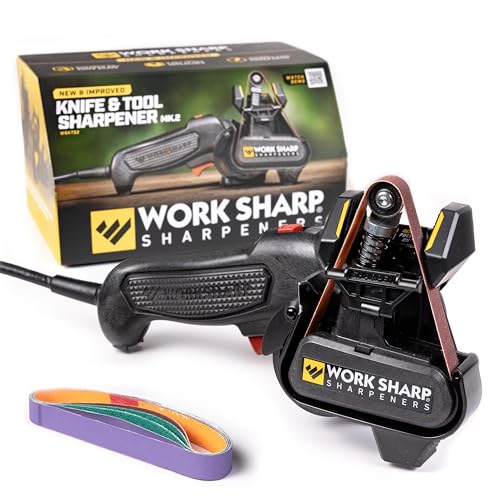
Work Sharp MK2 Electric Knife Sharpener

Dong Cheng 5-Inch Random Orbital Sander 3 Amp

SCOTTCHEN Hardened File Guide Knife Making Tool

Mini Belt Sander 15° Electric Knife Sharpener Bench Grinder

Belt Sander Angle Guide KSAG2

Belt Grinder Knife Jig 7-3/4'' Long
More Details On Our Top Picks
This handheld Jellas model makes sense for rough shaping before you move to finer control tools. The 3 x 21 inch belt format gives you enough surface contact for stock removal, while the variable speed control helps you slow things down on delicate knife work.
The 10-foot cord gives you more reach around a bench than many short-cord tools, and the dust bag plus vacuum adapter help keep grit from spreading across a small shop. For makers who also sand wood projects, that flexibility is handy, though the size and power make it feel more like a general sanding tool than a dedicated finishing specialist.
Strong Points
- Variable speed gives you more control over heat and bite.
- The longer cord helps in workshops with awkward outlet placement.
- Dust collection support can keep your bench cleaner between passes.
- Handheld form suits profile shaping and edge cleanup.
Things To Consider
- Handheld belt sanders take a steady touch, especially near blade edges.
- It leans broader in use, so fine knife finishing still needs care.
- Dust bags need regular emptying to stay useful.
Feature Snapshot
Who It Suits Best
You get the most value here as a hobbyist who wants one handheld sander for shaping, cleanup, and general shop work.
A Better Fit Elsewhere
WORK SHARP MK2 Electric Knife Sharpener suits you better for knife-only sharpening, since it focuses more directly on edge maintenance than the Jellas handheld tool.
This one shifts the focus from broad sanding to knife-specific sharpening, which is why it stands apart from the Jellas handheld sander. The adjustable two-speed setup gives you room to move between quicker material removal and slower edge refinement, and that matters when you’re working across kitchen knives, pocket knives, or even tools that need a careful touch.
The replacement belts add practical value because sharpening systems live or die by consumables, not just the motor. You may find it especially useful in a home shop where one machine needs to handle several edge tools, though the broader versatility also means it asks for a bit more attention to belt choice and angle discipline.
What We Like
- Two-speed control helps you match the task to the belt action.
- Knife-focused design makes edge work feel more direct.
- Works across several tool types, not just kitchen blades.
- Replacement belts make ongoing use easier to manage.
Worth Noting
- Multi-tool flexibility can be more than you need for a single knife bench.
- Consumable belts mean you’ll want to keep spares nearby.
- Angle control still depends on your setup and technique.
Core Details
Built With In Mind
You’ll appreciate this most as a home cook, hobby maker, or tool owner who wants one sharpening system for several blade types.
Where A Sibling Pick Shines
SCOTTCHEN Hardened File Guide Knife Making Tool fits better for a maker who wants a simpler, manual guide while shaping bevels on a belt sander.
Compared with the belt-style picks above, this Dong Cheng orbital sander is the smoother-finishing option for cleanup work. The random-orbit motion helps reduce visible swirl patterns, which is useful after rough shaping or varnish removal on handles, jigs, and shop furniture.
The 3 amp motor and six speed levels give it a more controlled feel for light-to-medium sanding jobs, especially in a small shop where finish quality matters as much as speed. The trade-off is simple, an orbital sander helps with refinement, but it won’t replace a true belt system for aggressive knife shaping.
Highlights
- Random-orbit action helps leave a smoother finish.
- Six speeds make the tool more adaptable across materials.
- Detachable dust bag supports cleaner bench work.
- The included sandpaper gets you started right away.
Areas To Watch
- It’s a finish sander, not a dedicated knife-making shaping machine.
- Dust bags still need periodic emptying and reattachment checks.
- Broad sanding jobs can take longer than with a belt machine.
At A Glance
Who Will Love This
You’ll like this most for finishing passes, refinishing furniture, and cleanup after knife-related shaping work.
Look Elsewhere When
ONECHOI Belt Grinder Knife Jig suits you better when you want a more structured jig for setting grinding angles on a belt machine.
This guide is more about control than power, and that makes it a smart companion to a belt sander rather than a standalone machine. The hardened metal construction, rated up to 55 on the hardness scale, suggests a tougher wear surface for repeated use at the bench, which matters when you want consistent bevel work.
Because it’s a guide rather than a powered tool, your results depend on the hand tool and belt setup around it. That’s the trade-off, it’s compact and simple, but you’ll want a bit of patience and a stable workspace to get the benefit from it.
Best Bits
- Guide-based control helps keep bevels more consistent.
- Hardened metal should handle repeated bench use well.
- Small footprint makes storage easy.
- Pairs well with common belt sander setups.
Minor Gripes
- It depends on the rest of your sharpening setup.
- Manual guidance asks for patience and steady hands.
- Cleaning and storage matter more because it’s a precision accessory.
Details At A Glance
Right Fit For
You’re the best match for this tool when you already own a belt sander and want more consistent bevel control.
Another Choice May Suit
Belt Grinder Knife Jig, 7-3/4’’ Long works better for you if you want a more adjustable locating jig with press plates built around belt-grinding setup work.
This mini belt sander feels built for a small sharpening station where you want the tool to stay put and do focused work. The 15-degree setup makes it especially relevant for knife edge shaping, while the seven-speed adjustment gives you room to dial the action up or down.
It also leans into metal and jewelry polishing, so the tool has a broader bench role than a single-task knife jig. For most home workshops, that flexibility is useful, though the larger lesson is that a compact machine still needs careful setup to keep results consistent.
Upsides
- Seven speed settings give you useful control over the grind.
- The 15-degree angle setup fits knife sharpening work neatly.
- Bench grinder format supports a more fixed workspace.
- Low-noise positioning can suit shared home spaces better.
Small Caveats
- Bench placement matters more than with a handheld tool.
- It may feel like more machine than some casual sharpeners need.
- Keeping the belt and working area clean helps preserve consistency.
Quick Facts
Whose Shelf It Belongs On
You’ll get the most from this as a hobbyist setting up a compact bench for knife sharpening and light grinding.
Skip It When
Dong Cheng 5-Inch Random Orbital Sander 3 Amp makes more sense for you when the job is finishing, not edge grinding.
After the larger machines, this KFMK guide feels refreshingly focused. It’s made for 2-inch belt sanders, so the whole point is repeatable angle control rather than raw power, which is exactly the kind of help many knife makers want during bevel work.
The small size makes it easier to store and keep within reach, and that matters more than people often expect in a crowded shop. The trade-off is obvious, it only earns its place when your belt sander size and workflow match the guide.
Standout Traits
- Designed for 2-inch belt sanders, so the fit is specific.
- Angle guidance supports more repeatable grinding passes.
- Small footprint is easy to stash between projects.
Points To Note
- Compatibility is narrow, so setup matching matters.
- It’s an accessory, not a replacement for a belt machine.
- Precision parts deserve careful handling and storage.
Feature Card
Made For
You’re the right match for this guide if your belt sander is already set up and you want tighter angle repeatability.
Swap It Out When
Belt Grinder Knife Jig, 7-3/4’’ Long is a better fit when you want a longer locating jig with a wider angle range.
This ONECHOI jig is the most angle-focused pick in the group, and that’s useful when you want repeatability more than speed. The adjustable range from -5° to 25° gives you room to experiment with bevel geometry, while the dual press plates should help keep the knife steadier during grinding.
At 7-3/4 inches long, it has enough body to feel purposeful on a belt grinder without becoming overly bulky. That said, you’ll want a belt sander or grinder setup that matches its job, because this kind of jig shines when paired with an already organized sharpening workflow.
Positives
- Wide angle range supports more bevel styles.
- Dual press plates add stability during setup.
- Length gives the jig a solid, practical feel.
- Useful for makers who want repeatable grinding positions.
Honest Caveats
- It depends on a compatible belt grinder setup.
- Angle jigs work best with patient setup and consistent technique.
- Storing it carefully helps keep alignment parts in good shape.
Core Details
Who Should Grab It
You’ll get the best fit here as a knife maker or sharpener who wants a more adjustable jig for belt grinder work.
Another Choice May Suit
SCOTTCHEN Hardened File Guide Knife Making Tool suits you better when you want a simpler guide paired with a belt sander rather than a full jig.
How To Choose The Right Belt Sanders For Knife Making
Belt Size, Shape, And Control
For knife making, belt width affects how much of the blade you touch at once. Wider belts move material faster, while narrower setups usually feel easier to control around plunges, tips, and detailed bevel work. A handheld sander like the Jellas gives you flexibility, but a jig such as the ONECHOI model makes repeatable angles easier to maintain.
The right choice depends on whether you are shaping stock, refining an edge, or doing both in the same shop. Broad sanding tools help with rough work, yet jigs and guides matter more once you want consistency from blade to blade.
Speed Settings And Heat Management
Variable speed is a big help because blade steel and handle materials do not all want the same pace. Slower settings can give you more control during delicate passes, while faster settings help on heavier stock removal.
That flexibility matters in a garage setup where you may switch from a knife blank to a wooden handle scale in the same session. A machine with fewer settings can still work, but you give up some room to adapt the touch.
Guides, Jigs, And Repeatability
Dedicated guides solve a very practical problem, keeping your angle steady when your hands get tired. The SCOTTCHEN file guide and the KFMK angle guide are good examples of accessories that help a belt sander act more like a controlled sharpening station.
Jigs matter most for makers who want the same bevel angle across several blades. They are not a substitute for practice, but they can take a lot of guesswork out of the process.
Dust, Space, And Workflow
Knife making creates fine debris, so dust handling is not a minor detail. A bag, vacuum adapter, or cleaner bench layout keeps grit from spreading into other parts of the shop.
Space matters too. A handheld sander suits a flexible workspace, while a bench unit or fixed jig fits better when you have a dedicated corner and want your setup to stay consistent.
Things Worth Knowing First
Traps First Timers Fall Into
Many people focus on motor power and forget about angle control. In knife work, that usually matters more than raw speed, because a steady bevel saves time later.
Another common mistake is choosing a tool that is too broad for fine edge work. A general sander can still help, but you’ll want a guide or jig nearby for cleaner results.
Where The Extra Money Goes
Higher-tier options usually cost more because they add repeatability, better adjustability, or sturdier parts. That matters in knife making, where tiny angle shifts can show up quickly along the edge.
You also pay for setup convenience. A jig that keeps a blade stable or a tool that handles multiple sharpening tasks can save time across many sessions, especially in a busy home shop.
Frequently Asked Questions
Can a regular belt sander work for knife making?
Yes, a regular belt sander can handle shaping and edge work. You’ll get better results with an angle guide or jig to keep the bevel even.
What belt size is easiest to manage?
Narrower belt setups often feel easier to control for knife work. Wider belts can still help with stock removal and broader sanding tasks.
Do you need variable speed?
Variable speed helps when you switch between rough shaping and careful finishing. It gives you more room to match the belt action to the material.
Why use a jig instead of freehand sanding?
A jig helps keep your angle more consistent, which is useful for repeatable bevels. Freehand work can still work well, but it usually asks for more experience.
What should you clean most often?
Dust collection parts and belt areas need regular attention. Clean tools tend to stay more predictable and easier to control.
Closing Thoughts
The best choice depends on how you make knives, not just how strong the motor looks on paper. A handheld sander helps with shaping, a jig adds repeatability, and a knife-specific sharpener keeps edge work focused. For a first setup, choose the tool that solves your biggest pain point, then build around it. That keeps your bench calmer and your results steadier.




