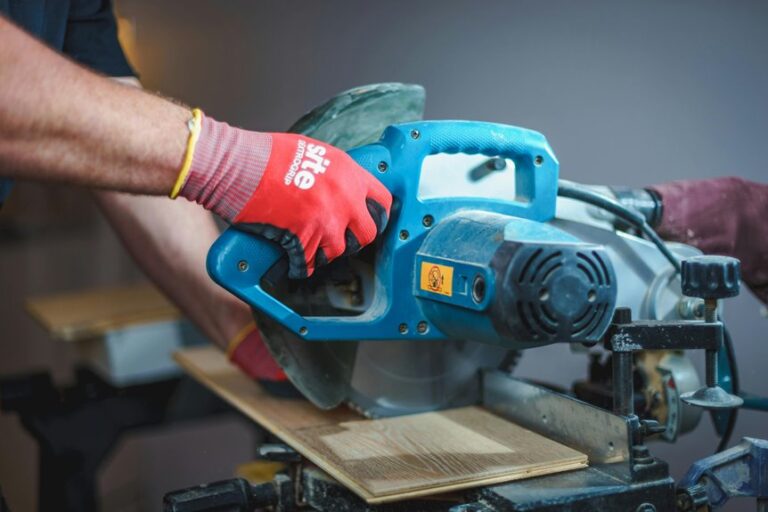
Benchtop table saws earn their place when space is tight but straight, repeatable cuts still matter. You may be setting up a garage shop, handling weekend trim work, or building a portable setup that doesn’t eat the whole room. This roundup also includes a few related accessories and portable saw alternatives, because the right cutting setup is sometimes a saw plus the support gear around it.
Quick Look At Our Shortlist
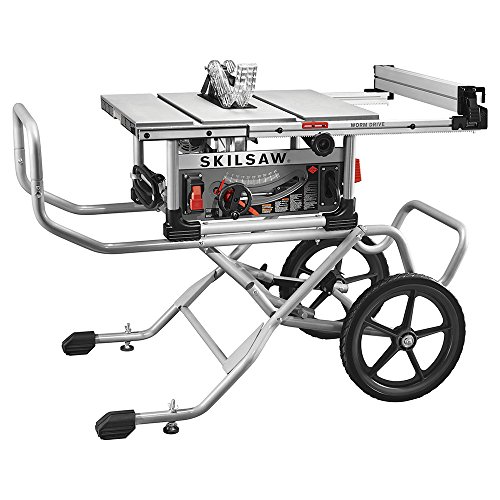
SKIL 10 Inch Worm Drive Table Saw

BORA Portacube Miter Saw Stand PM-8000

Saker Thin Rip Jig Table Saw Jig Guide

Metabo HPT 10-Inch Single Bevel Compound Miter Saw C10FCG2
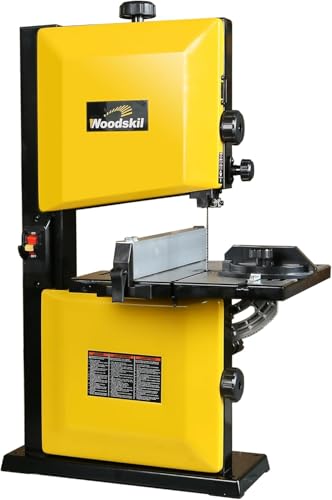
WOODSKIL 9-Inch Benchtop Bandsaw

Dremel Blueprint Portable Saw Station CS12V-S1C
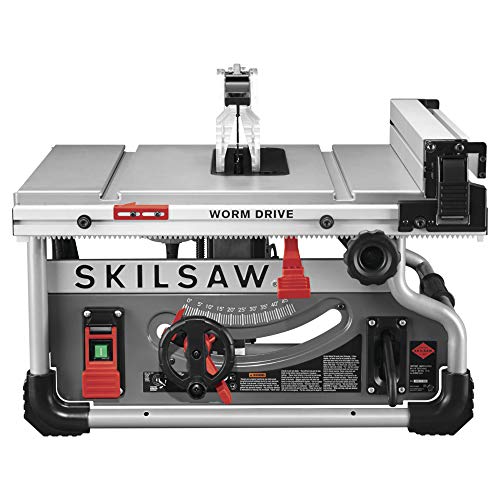
SKIL 8-1/4 Portable Worm Drive Table Saw

POWERTEC Deluxe Push Stick 2PK 71338
More Details On Our Top Picks
The worm-drive layout gives this saw a clear personality: it’s aimed at tougher ripping jobs, not light hobby use. The included stand matters too, because you’re not just buying a saw, you’re buying a more settled setup for a garage or jobsite corner.
Compared with the lighter SKIL 8-1/4 model below, this one leans harder into heavy work and a more anchored footprint. That makes it attractive for remodel work and repeated sheet-good cuts, though the trade-off is a less casual carry-and-go feel.
Strong Points
- Worm drive gearing is built for torque, which helps when you’re pushing through denser stock.
- The stand turns the saw into a more stable work station, which helps in a busy garage.
- It suits ripping tasks better than many lighter portable saws.
- Owners looking for a serious home-shop anchor get a clear fit here.
Things To Consider
- The stand adds convenience, but it also adds bulk during storage and transport.
- This style makes more sense for dedicated cutting space than quick grab-and-go tasks.
Feature Rundown
Who It Suits Best
You’ll get the most from this one in a garage shop, on remodel work, or anywhere ripping power matters more than ultra-light handling.
Where A Sibling Pick Shines
SKIL 8-1/4 Portable Worm Drive Table Saw fits better for a contractor who wants easier carrying and a smaller footprint.
This one shifts the conversation from the saw itself to the workspace around it. A rotating top workbench on wheels is useful in a garage that changes shape often, because you can reposition the setup instead of working around it.
Compared with the SKIL table saws, this isn’t a cutting machine, it’s the support structure that makes those machines easier to live with. For people who move between tasks or shared spaces, that flexibility can matter more than another tool with more power.
Positives
- Wheels make repositioning easier in tighter shops.
- The rotating top adds layout flexibility for different tasks.
- It supports a more organized work area, which helps during longer projects.
- Useful for spaces where one station has to serve several roles.
Softer Spots
- It takes up more room than a simple stand or cart.
- The best fit depends on how much open floor space your shop has.
Core Details
Who Should Grab It
Shop setups that change often, especially shared garages and multipurpose work areas, get the most value here.
Another Choice May Suit
SKIL 10 Inch Worm Drive Table Saw suits someone who wants the cutting machine and stand together in one heavy-duty package.
Narrow rip cuts can get fiddly fast, and that’s exactly where a jig like this earns attention. The 3/4 inch by 3/8 inch slot fit makes it relevant to common table saw, band saw, and router table setups, which broadens its usefulness in a small shop.
Compared with the stand and saw picks above, this is a control accessory, not a machine. That means it won’t replace cutting capacity, but it can make repetitive strip work feel far less awkward for hobby builds, trim stock prep, or edge details.
Highlights
- Made for repetitive narrow cuts, which helps keep strip work more orderly.
- Fits multiple tool types, so it can move between shop stations.
- Useful for detailed stock prep where consistent spacing matters.
Room For Improvement
- It only helps with a specific cutting style, not general saw work.
- Storage is simple, but you still need to keep track of another accessory.
Feature Card
Built With In Mind
Home woodworkers who make lots of narrow strips or repeat the same cut pattern will get the most from it.
Swap It Out When
POWERTEC Deluxe Push Stick for Table Saw, Router Table, Band Saw & Jointer is the better call when you need hand guidance and stock control rather than a rip jig.
Angle work gets easier to trust when the layout is plain and the sight line is clear. The Xact Cut shadow line helps with that, and the single-bevel range from 0 to 45 degrees covers a lot of trim and framing tasks without making the saw feel overly complicated.
Compared with the SKIL table saw entries, this is a different tool family, but it still belongs in a compact cutting setup because many shops need both crosscuts and rip cuts. The lighter build should suit people who move between rooms or job sites, though a saw this size still makes more sense for trim and finish work than large sheet ripping.
What We Like
- The shadow line helps you line up cuts more confidently than a plain blade guard setup.
- Single-bevel movement covers many common angle cuts.
- Lightweight construction helps during transport and storage.
- It fits well in setups that handle trim, casing, and other angle-heavy work.
Points To Note
- Single bevel means you work on one side only, which is a real trade-off for more complex trim layouts.
- It’s more angled-cut focused than a table saw, so it serves a different role in the shop.
At A Glance
Whose Shelf It Belongs On
Trim installers and remodel helpers who need clean angle cuts in a portable package will feel the fit quickly.
Reach For A Different Pick When
SKIL 10 Inch Worm Drive Table Saw fits better for ripping-heavy shop work that stays closer to one station.
This bandsaw leans toward small-shop woodworking where space is precious and curved cuts still need to happen cleanly. The cast aluminum table and steel base give the machine a more grounded feel than a flimsy benchtop tool, which matters in a cramped shop where every wobble is obvious.
Compared with the table saws in this roundup, it handles a different kind of cut entirely, so it makes sense alongside a rip saw rather than in place of one. The honest read is that this is a better fit for shaping and smaller stock work than for broad straight-line cutting.
Best Bits
- Blade speed is set up for brisk woodworking cuts.
- The 3-1/2 inch cutting depth covers a useful range for smaller shop projects.
- The 9-inch width gives you space for compact stock handling.
- The metal table and base help the saw feel more stable on a bench.
Worth Noting
- It’s a bandsaw, so it won’t replace the straight-rip workflow of a table saw.
- Blade changes and alignment are part of ownership, so it rewards routine upkeep.
Quick Facts
Perfect Match For
Small woodworking shops and hobbyists making curves, resaw-style cuts, or compact stock shapes will get the most from it.
Look Elsewhere When
SKIL 8-1/4 Portable Worm Drive Table Saw suits you better for portable straight ripping and faster setup changes.
This setup is built around portability first, which makes it a different kind of answer from the heavier workshop gear above. A brushless motor, meaning a motor design that avoids traditional brushes inside the housing, usually points to smoother efficiency and less routine wear inside the tool.
For apartment storage, small repairs, or travel between project sites, the multi-purpose cutting case gives the whole setup a cleaner carrying story. The trade-off is that you’re buying a compact saw system, not a large benchtop cutting platform, so big material handling stays outside its lane.
Upsides
- Portable saw station format is easy to store and move.
- The brushless motor design suits users who want a more modern compact tool layout.
- The included cutting case helps keep the parts together between jobs.
- Good for small fixes, offsite tasks, and cramped storage areas.
Areas To Watch
- It’s more compact saw station than full benchtop saw replacement.
- Material size limits matter more here than with a larger saw body.
Details At A Glance
The Right Fit
You’ll appreciate this most for light carpentry, portable repair work, and tight-space storage.
Where A Sibling Pick Shines
BORA Portacube Miter Saw Stand PM-8000 makes more sense for a shop that needs a movable base rather than a compact saw station.
Among portable saws, this one is easy to picture on an active jobsite because the worm-drive gearing is built for ripping force. The rack-and-pinion fence system is the part that stands out for everyday use, since it lets the fence move more smoothly and usually feels less fussy than a basic slide setup.
Compared with the heavier SKIL 10-inch model, this saw trades some station-like heft for easier movement and a smaller footprint. That balance should appeal to contractors and dedicated DIYers who move tools often but still want strong cut capacity.
Bright Spots
- Worm drive gearing gives the saw real ripping character.
- Rack-and-pinion fence adjustment helps with faster setup and cleaner alignment.
- The compact footprint makes it easier to load, store, and carry.
- The 2-5/8 inch depth of cut and 25 inch rip capacity cover useful everyday stock sizes.
Minor Gripes
- Portable strength usually means a little more setup and transport attention than a fixed bench tool.
- The larger the sheet goods, the more space you still need around the saw.
Spec Overview
Who Will Love This
You’ll like this most for repeated jobsite cuts, garage setups, and projects that need a portable saw with serious rip manners.
Not Your Match When
WOODSKIL 9-Inch Benchtop Bandsaw fits better for curved cuts and smaller bench-based shaping work.
A good push stick disappears into the task, and that’s the appeal here. Dual ergonomic handles with max grip make this accessory feel more deliberate in hand, which matters when you’re feeding narrow stock through a saw, router table, band saw, or jointer.
Compared with every saw in this roundup, this is the smallest purchase by far, but the job it fills is still important. For a compact shop that handles narrow rips or frequent edge control, it’s the kind of accessory that keeps the workflow calmer and more controlled.
Positives
- Dual handles give you a steadier hold during feeding.
- Works across several shop tools, so it earns space more easily.
- Useful for narrow stock where hand placement gets awkward.
Small Caveats
- It’s an accessory, so it supports the workflow rather than replacing any tool.
- You still need to keep track of it in the shop so it’s ready when needed.
Core Details
Built With In Mind
Anyone running a table saw, router table, or jointer on a regular basis can put these to work quickly.
Another Choice May Suit
Saker Thin Rip Jig Table Saw Jig Guide is the better fit when your goal is consistent narrow strip cuts rather than hand-fed stock control.
How To Choose The Right Benchtop Table Saws
Cutting Style Comes First
You’ll get better results by matching the saw to the cut you make most often. Straight ripping points you toward a table saw with a stable fence and enough rip room, while angle-heavy trim work belongs with a miter saw instead of forcing a table saw to do everything.
Benchtop bandsaws earn their keep for curves, small shaping work, and smaller stock, not long straight rips. That split matters, because the wrong machine can feel underpowered even when the real issue is mismatch.
Space And Mobility Change The Game
Bench space, floor space, and transport matter more than many product pages admit. A saw with a stand or wheels makes sense in a garage that doubles as storage, while a lighter portable model suits a contractor who loads out daily.
Compact tools are easier to store, but they usually ask you to accept a smaller work envelope. That trade-off is fine for trim, repairs, and weekend projects, though it becomes obvious fast on sheet goods.
Fence Control And Setup Speed Matter Too
A fence that moves cleanly saves time and reduces frustration, especially on repeated cuts. Rack-and-pinion adjustment, for example, means the fence moves in a controlled way instead of wandering while you tighten it down.
Look for a setup that fits your habit: quick adjustments for jobsite work, steadier anchoring for a home shop, and clear sight lines for angle work. The right hardware feels boring in a good way, because you spend less time fighting it.
Accessory Fit Can Save A Lot Of Fuss
Push sticks, thin rip jigs, and mobile stands all solve different problems. A small accessory can sharpen control at the blade, while a stand or cart solves the bigger headache of storage and layout.
You’ll usually be happiest when the saw and the support gear fit the same workflow. A capable saw with awkward handling still feels awkward, while a modest saw paired with the right jig can feel far more useful than the specs suggest.
A Quick Reality Check Before You Choose
Mistakes Worth Dodging
One common mistake is buying for motor talk alone and ignoring capacity. Rip width, cut depth, and the space around the saw decide what you can really do in a garage or on a jobsite.
Another slip is overlooking support gear. A strong saw with no good fence feel, no stable stand, or no way to control narrow stock can turn into a chore fast.
The Upgrade Payoff
Higher-tier models usually cost more because of better drive systems, steadier frames, improved fence hardware, and nicer transport features. Those parts do not sound flashy, but they shape how long the saw stays pleasant to use.
Paying up makes sense for daily use, repeated sheet work, or any shop where setup speed matters. For occasional repairs, a simpler saw can be enough, and the extra money may be better spent on a better blade, stand, or jig.
Frequently Asked Questions
What makes a benchtop saw different from a full-size cabinet saw?
A benchtop saw is built to save space and stay portable. A cabinet saw usually offers more mass and a more permanent shop presence.
Can a portable table saw handle sheet goods?
Yes, many can manage sheet-good ripping, especially with a capable fence and enough rip capacity. You still need room to support the material on both sides of the blade.
Do you need a stand for a benchtop saw?
You do not always need one, but a stand can make setup safer and more comfortable. It also helps in shops where the saw needs a fixed home between uses.
Why does fence adjustment matter so much?
A fence that shifts cleanly makes repeated cuts faster and more consistent. Poor fence behavior often turns a simple cut into a slow reset.
Is a bandsaw a good substitute for a table saw?
Not really, because each tool serves a different cutting style. A bandsaw handles curves and shaped work better, while a table saw is built around straight, repeatable cuts.
Closing Thoughts
The best setup depends less on one spec and more on the kind of work you keep repeating. Heavy ripping points you toward the SKIL worm-drive models, while small-shops often get more value from compact tools, jigs, and a thoughtful stand. The right choice should feel steady, easy to place, and suited to the room you actually have. Pick for your real workflow, and the tool will earn its spot without taking over the shop.