


Sorting out a check engine light feels a lot easier when you have the right scanner in hand. The six picks below cover simple fault-code reading, deeper system access, and service resets, so you can match the tool to your car work instead of guessing. That matters whether you handle routine upkeep in a home garage, keep a family vehicle on the road, or want a stronger shop-style tool for more involved diagnosis.
The Shortlist At A Glance

TOPDON AD800BT 2 OBD2 Scanner
AUCELI OBD2 Scanner Code Reader

VDIAGTOOL VD30 Pro Car Code Reader
INNOVA 5310 OBD2 Scanner

FOXWELL NT614 Elite OBD2 Scanner
Autel MaxiCOM MK900BT Bidirectional Tool
More Details On Our Top Picks
TOPDON’s AD800BT 2 sits in the deeper end of this list, with bidirectional control, which means the tool can send commands to certain vehicle systems instead of only reading data. That kind of access matters in a driveway diagnosis, because you can trace problems farther than a basic code reader can go. The trade-off is that this much capability asks more from you, so it fits hands-on work better than casual check-light scanning.
Compared with the simpler AUCELI and VDIAGTOOL picks, this one is built for people who want broad system coverage and service work in one place. The FCA AutoAuth support, CAN-FD compatibility, and 28-plus reset functions point to newer cars and more involved maintenance tasks, while the two years of free updates help keep the tool useful as vehicle platforms change. For a home mechanic who wants room to grow, that’s a strong mix, though the learning curve is real.
Strong Points
- Bidirectional control supports deeper troubleshooting than a plain code reader.
- All-system coverage helps you look beyond the engine light.
- CAN-FD and FCA AutoAuth support suit newer vehicle setups.
- 28-plus reset functions cover a wide range of upkeep tasks.
- Two years of updates add staying power for changing cars.
Things To Consider
- The extra depth can feel busy for first-time scanner owners.
- Its feature set makes more sense when you actually handle maintenance work.
- Like any handheld diagnostic tool, storage and cable care matter over time.
Feature Snapshot
Who It Suits Best
You’ll get the most out of this tool in a home garage or small repair setup where deeper diagnostics and reset work come up often.
A Better Fit Elsewhere
INNOVA 5310 suits you better for simpler maintenance tasks, ABS and SRS checks, and a lighter learning curve.
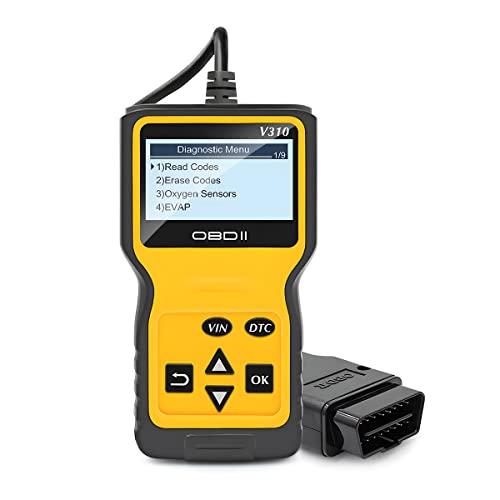
This yellow AUCELI unit keeps things refreshingly plain, which is exactly the point for a driver who just wants to know why the check engine light is on. It reads and clears fault codes, and it also checks emission monitor status, so you get a practical snapshot without app setup or extra hardware. That simplicity makes it easy to keep in the glove box, though it’s not the tool for deeper system work.
Compared with TOPDON’s AD800BT 2, this one stays focused on the basics and stays friendly to beginners. The 16-pin standard connection and broad OBDII coverage after the usual regional cutoff years mean it fits a huge spread of daily drivers, which is handy when you only need a fast answer after a dash warning. You may find that limited scope is a feature, not a flaw, because it keeps the learning curve low.
What We Like
- Reads and clears codes without any app pairing.
- Emission monitor checks help you gauge readiness after repairs.
- Works with a very wide range of OBDII vehicles.
- The simple layout suits quick roadside or driveway checks.
Minor Gripes
- It stays focused on basic scan-reader duties.
- Deeper modules and reset work belong to more advanced tools.
- The yellow housing is easy to spot, but it still needs normal cable storage.
Details At A Glance
Who Will Love This
You’re the best fit for this scanner when you want a simple tool for occasional warning-light checks and basic code clearing.
Look Elsewhere When
FOXWELL NT614 Elite makes more sense for you once ABS, SRS, and reset functions become part of your regular work.
VDIAGTOOL’s VD30 Pro stays in the sensible middle ground, with check engine code reading and reset functions that cover the kind of work most home garages actually face. It also shows I/M readiness, which means inspection monitor status, so you can see whether the vehicle’s emissions-related checks have finished after a repair. The honest read is that it does a focused job well, but it stops short of system-level diagnostics.
Relative to AUCELI’s simpler reader, this one gives you a little more room to act on what you find, while still avoiding the bulk of a full diagnostic tablet. The clear limitation is spelled out plainly, too, since it does not handle ABS, SRS, TPMS, or airbag systems, and it also skips TPMS reset. That makes it a sensible step up for basic engine work, not a stand-in for an all-systems tool like TOPDON or Autel.
Positives
- Check engine reading and reset functions keep the focus on common jobs.
- I/M readiness helps you judge inspection status after repairs.
- The narrower feature set makes day-to-day use straightforward.
Small Caveats
- ABS, SRS, TPMS, and airbag systems are outside its scope.
- TPMS reset is not part of the feature set.
- A compact scanner still deserves careful storage so the connector stays clean.
Core Details
The Right Fit
You’ll like this most when you want a tidy, no-drama scanner for engine-light work and readiness checks.
Swap It Out When
Autel MaxiCOM MK900BT is the better call for more advanced troubleshooting, active tests, and heavier service use.
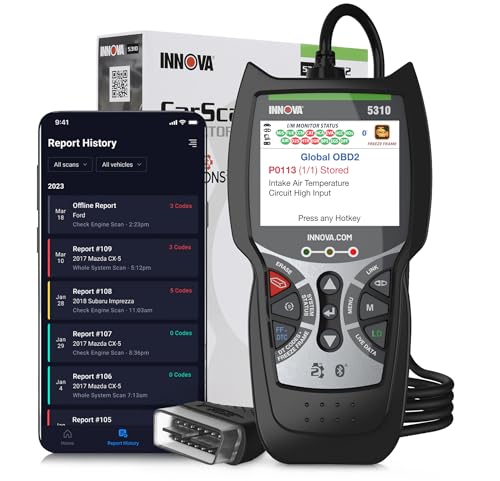
INNOVA’s 5310 opens the door to a more practical mix of everyday diagnostic work, because it adds ABS and SRS code reading alongside the check engine light. ABS stands for anti-lock braking system, and SRS means supplemental restraint system, so this pick reaches into safety-related warning lamps that basic readers skip. The trade-off is that it still feels closer to a smart handheld than a full workshop tablet, which suits most driveway mechanics just fine.
Compared with the VDIAGTOOL VD30 Pro, this one does more for people who want to follow more than engine faults, especially when battery condition and oil reset matter. Live data adds another layer, since you can watch running values while the car is operating rather than relying only on stored trouble codes. That extra visibility is useful in a busy garage, though the more features you use, the more you’ll want a calm, organized workflow.
Upsides
- ABS and SRS code reading expands the diagnostic picture.
- Battery testing helps you check another common trouble source.
- Oil reset support makes routine maintenance easier after service.
- Live data can help you track how a vehicle behaves in real time.
Worth Noting
- It asks for a bit more know-how than a bare-bones reader.
- Live data is useful, but only when you know what to compare.
- Keep the unit and cable tidy, because extra use invites extra wear.
Feature Rundown
Best Suited To
You’re in the sweet spot for this scanner when you want a stronger all-around tool for routine maintenance and warning-light checks.
Consider Something Else When
TOPDON AD800BT 2 suits you better once bidirectional commands and broader service depth become important.
FOXWELL’s NT614 Elite is aimed at the person who has outgrown basic code readers and wants a cleaner path into service functions. Its four-system coverage and five resets cover engine, ABS, SRS, and transmission fault codes, while the listed reset work spans ABS bleeding, EPB, oil, SAS, and throttle. That spread makes it more useful in a real garage rhythm, though it also means you’ll spend more time learning where each function lives.
Compared with INNOVA 5310, this model leans harder into reset work and system coverage instead of battery testing and live data. EPB stands for electronic parking brake, and SAS means steering angle sensor, so the feature set reaches into maintenance jobs that show up after brake, steering, and throttle service. For the DIYer who keeps more than one vehicle in the family stable, that balance can make a lot of sense.
Bright Spots
- Four-system coverage broadens what you can check and clear.
- Five reset types support more maintenance tasks.
- ABS bleeding and SAS functions help with more advanced upkeep.
- Engine, ABS, SRS, and transmission coverage gives the tool useful range.
Areas To Watch
- More functions also mean more menus to learn.
- It makes the most sense once your maintenance work is already fairly hands-on.
- Keeping the unit clean and organized matters more as the workflow grows.
Spec Overview
Whose Shelf It Belongs On
You’ll appreciate this most in a home garage that already handles resets, brake work, and multi-system code checks.
Where A Sibling Pick Shines
AUCELI OBD2 Scanner Code Reader fits better for quick, low-effort code reads without the extra layers.
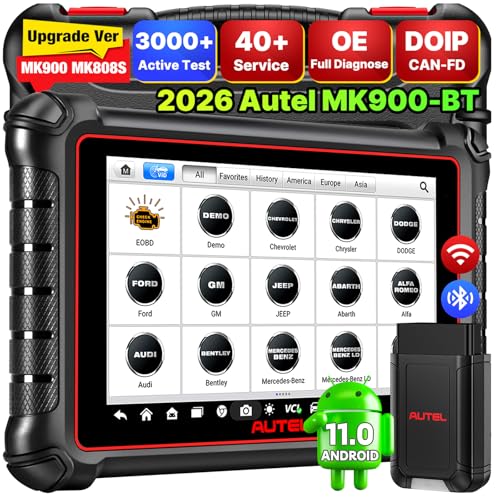
Autel’s MaxiCOM MK900BT is the heavyweight in this group, with bidirectional control, more than 40 service functions, and 3000-plus active tests listed for deeper diagnostic work. CAN-FD and DOIP support point it toward newer, data-heavy vehicle networks, while FCA 11OS support adds another compatibility note for certain models. That depth is impressive, but it really pays off only when you plan to use a lot of it.
Stack it next to TOPDON’s AD800BT 2 and the difference is mostly scale and breadth, not direction. Both aim at serious diagnostics, but this Autel brings a larger service list and broader active-test language, so it suits someone who wants a more shop-like tool for repeated use. You may find it a bit much for a one-car household, yet for someone who works on several vehicles, the extra reach feels earned.
Reasons To Buy
- Bidirectional control supports deeper, more active diagnosis.
- More than 40 service functions cover a wide maintenance spread.
- 3000-plus active tests suggest broad command capability.
- CAN-FD and DOIP support suit newer networked vehicles.
Softer Spots
- It brings a lot of tool to the table, which can outgrow casual needs.
- Most useful when you already know your way around diagnostic menus.
- With more capability comes more need for careful organization and storage.
Key Specs
Built With In Mind
You’re the best match for this scanner if you want a serious all-systems tool for regular diagnostic and service work.
Another Choice May Suit
VDIAGTOOL VD30 Pro makes more sense for simpler engine-light checks and a lighter learning curve.
How To Choose The Right Car Diagnostic Tool Auto Scanners
Start With The Work You Actually Do
Basic code readers fit drivers who mainly want to clear a warning light and confirm whether a fault comes back. More advanced tools make sense once you start handling reset work, module checks, or recurring problems that need live data and deeper system access.
That difference matters because a scanner can feel brilliant on paper and still be awkward in your driveway. The right match is the one that fits your habits, not the flashiest menu count.
Match Coverage To The Vehicle Fleet
OBDII support is the baseline for most vehicles in this roundup, but newer cars can ask for more, especially with CAN-FD, DOIP, or FCA-specific access. Drivers keeping newer models should pay close attention to those compatibility notes, since they shape how far the tool can go.
Households with mixed cars often benefit from broader all-system coverage. A tool like that saves you from buying a second scanner later, though it also costs more in money and learning time.
Think About Reset Functions And Active Tests
Reset functions handle post-service steps such as oil, brake, steering angle, or electronic parking brake work. Active tests go a step farther, letting the scanner command parts of the vehicle during diagnosis, which is useful for tracing stubborn faults.
Those features sound similar, but they serve different jobs. Reset support helps you finish maintenance, while active testing helps you isolate a problem, and that split is worth keeping straight before you spend up.
Choose The Level Of Complexity You’ll Actually Use
A simple handheld reader is easy to carry, store, and live with. A tablet-style scanner with multi-system menus and deeper access gives you more room to grow, but it asks for patience and a bit of practice.
For occasional driveway checks, simplicity wins. For anyone who maintains multiple vehicles or works through regular repairs, a fuller tool can pay back the extra setup time.
Things Worth Knowing First
Mistakes Worth Dodging
One common slip is buying a basic code reader when the car needs ABS, SRS, or reset functions. Another is ignoring compatibility notes, especially on newer platforms where support details matter more than the headline feature list.
It also helps to avoid stacking features you’ll never use. A lean tool is often the smarter move for casual checks, while deeper models belong with more involved maintenance routines.
What The Higher Tier Buys
Higher-tier scanners usually cost more because they add broader system access, more service resets, and bidirectional or active-test control. They also tend to support newer communication standards, which makes them more useful on late-model vehicles.
That extra spend makes sense when you keep cars long term, handle your own upkeep, or need one tool for several jobs. For quick code reads a few times a year, the upgrade can be more capability than you really need.
Frequently Asked Questions
What Does OBD2 Mean?
OBD2 stands for onboard diagnostics, second generation, the standard most modern car scanners use. It lets the tool read trouble codes and other vehicle data through the diagnostic port.
Can A Basic Scanner Clear The Check Engine Light?
Yes, many basic scanners can read and clear engine-related fault codes. The light can return if the underlying issue is still there.
Why Do Some Scanners Mention ABS And SRS?
ABS and SRS are separate vehicle systems, so not every scanner can see them. Tools with that coverage give you a wider diagnostic view than engine-only readers.
What Is A Reset Function?
A reset function helps finish service tasks after maintenance, such as oil or brake-related procedures. It’s handy when you want the vehicle’s service reminders or system status to match the work done.
Do You Need A Bidirectional Scanner For Home Use?
Most home drivers do not need bidirectional control. It becomes useful when you want deeper troubleshooting or more involved service work on a regular basis.
Final Thoughts
The right scanner depends on how far you want to go after the warning light appears. A simple reader is enough for quick checks, while a stronger tool earns its keep once you start handling resets, live data, or multiple systems. TOPDON and Autel suit the more serious end of the scale, while AUCELI and VDIAGTOOL keep things easy and focused. Pick the level that matches your garage rhythm, and you’ll get far more value from it.




