


Cutting concrete, brick, stone, or pavers with an angle grinder asks a lot from the blade, and the wrong one wears out fast or wanders off the line. You get a much easier job with the right mix of blade diameter, arbor fit, segment style, and material match. This roundup focuses on practical choices for home projects, repair work, and regular jobsite use, with the trade-offs spelled out in plain language.
The Shortlist At A Glance

GRAFF 6 Inch Diamond Blade for Angle Grinder

EDiamondTools 4.5 Inch Diamond Grinding Wheel for Concrete Masonry 18 Segments

MASTER DEPOT 4-1/2 Inch Diamond Saw Blade Segmented Rim, 3-Pack

MASTER DEPOT 7 Inch Diamond Saw Blade for Angle Grinder, 3-Pack
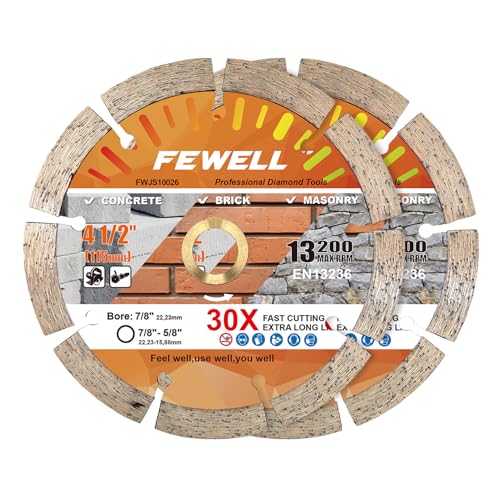
FEWELL 4 1/2 Inch Diamond Concrete Saw Blade

FEWELL 7 Inch Diamond Blade, Concrete Segmented Saw Blade

Inwell 4-1/2 Inch Segmented Diamond Saw Blades 2-Pack

GRAFF 6 Inch Diamond Blade for Angle Grinder, 10 mm Segment Height
More Details On Our Top Picks
The 6-inch size gives you a nice middle ground for patio stone, brick trim, and general masonry work. Compared with the 4-1/2 inch picks below, this GRAFF blade usually makes a steadier fit for bigger cuts without moving into the bulk of a 7-inch wheel.
That balance matters for you on repair jobs where one blade has to cover several materials, from concrete to marble and granite. The trade-off is simple, it’s not the most specialized option here, but for mixed use and a standard angle grinder setup, it sits in a comfortable spot.
Strong Points
- 6-inch diameter helps bridge the gap between compact blades and larger masonry wheels.
- Works across several hard materials, which saves you from swapping tools constantly.
- The turbo-style cutting surface is suited to everyday masonry cuts with a cleaner feel than a plain rim.
- Good match for home repair work, especially around pavers and stone edging.
Points To Note
- A 6-inch blade can feel a little large for tight trim work or cramped corner cuts.
- Multi-material blades are convenient, though a single-purpose blade may suit very specific jobs better.
- Like most diamond blades, the edge will ask for routine cleaning and sensible storage to stay in shape.
Feature Snapshot
Who It Suits Best
You get the most from this pick in home renovation work where stone, brick, and concrete all show up in the same weekend.
Where A Sibling Pick Shines
GRAFF 6 Inch Diamond Blade for Angle Grinder, 10 mm Segment Height is the better fit for you when longer cuts and a thicker segment profile matter more than this model’s broader all-purpose feel.
This one leans toward surface prep rather than clean slice work, so it stands apart from the GRAFF cutting blades above. The cup-wheel shape and 18 segments make more sense for grinding down uneven concrete, smoothing rough patches, or evening out masonry surfaces before the next step.
For you doing slab prep in a garage, basement, or courtyard, the medium-bond setup gives the wheel a more measured feel on hard material. The trade-off is obvious enough, it’s not the pick for deep cutting, but that’s also why it fits a very different job.
What We Like
- 18 turbo segments give the wheel a busy cutting edge for grinding tasks.
- The 5/8″-11 threaded arbor fits common grinder setups used in masonry work.
- #30/40 grit points to a medium abrasive feel, which suits surface leveling better than aggressive stock removal.
- Cup-wheel shape helps you work broader areas without feeling like you are chasing a narrow line.
Room For Improvement
- This is a grinder wheel, so it is a poor fit for the kind of straight cutting the first GRAFF blade handles.
- Grinding throws more dust and cleanup than cutting, so shop setup matters more here.
- The threaded arbor reduces setup hassle, though it also narrows compatibility to the right grinder thread.
Technical Sheet
Who Will Love This
You get the best fit here for concrete finish work, patch prep, and masonry smoothing on a standard small grinder.
Another Choice May Suit
MASTER DEPOT 4-1/2 Inch Diamond Saw Blade Segmented Rim, 3-Pack makes more sense for you when straight cutting matters more than grinding or leveling.
A 3-pack changes the math for frequent trim work, because you have spares ready when one wheel starts feeling tired. Compared with the first two picks, this MASTER DEPOT set is more about repeat use on smaller cuts than specialty grinding or a single premium blade.
That makes it handy for you handling pavers, block, terrazzo, or stone around a driveway or garden edge. The honest read is that the 4-1/2 inch size keeps it agile, but it also means you’ll want patience on thicker stock.
Bright Spots
- Three blades in the pack help you keep a spare on hand for ongoing projects.
- Segmented rim design suits dry or wet cutting, which adds flexibility on the job.
- The 4-1/2 inch diameter works well with common angle grinders used for trim cuts.
- Useful across concrete, pavers, masonry, terrazzo, stone, granite, and block.
Areas To Watch
- Smaller blades do their best work on trim tasks, not large slab cuts.
- Pack quantity helps with value, though storage and labeling matter so you do not mix used blades with fresh ones.
Details At A Glance
Built With In Mind
You get a strong fit here for DIY masonry jobs, especially when you need several blades instead of one long-term wheel.
Skip It When
GRAFF 6 Inch Diamond Blade for Angle Grinder is the better choice for you when you want a bit more reach and a less compact feel on larger cuts.
The jump to 7 inches gives this MASTER DEPOT set more reach than the 4-1/2 inch blades above, and that matters on thicker masonry or deeper scoring jobs. For you working around block, stone, or wide pavers, the larger diameter feels less cramped and covers more ground per pass.
That extra size also brings a little more tool mass, so it suits a steadier hand and a grinder that handles larger accessories comfortably. It’s a sensible upgrade, not a flashy one, and that’s usually the right kind of upgrade for concrete work.
Highlights
- 7-inch diameter adds cut depth for thicker material.
- Segmented general-purpose design keeps it flexible across several masonry tasks.
- Dry and wet cutting support gives you more control over the work setup.
- The 3-pack format makes sense for recurring projects or shared shop use.
Softer Spots
- Larger diameter can feel heavier on compact grinders.
- It is more blade than many small trim jobs need.
- Storage matters here, because bigger wheels deserve a flat, protected place.
Core Details
Best Suited To
You get the best fit here for bigger repair jobs, especially when a 4-1/2 inch wheel feels too small.
Look Elsewhere When
EDiamondTools 4.5 Inch Diamond Grinding Wheel for Concrete Masonry 18 Segments is the smarter choice for you when the task is leveling or grinding rather than cutting.
This FEWELL blade keeps the formula simple, which is often exactly what you want for brick, block, and stone around the house. Compared with the MASTER DEPOT 3-pack, it reads more like a straightforward single blade for one-off repairs and smaller fixes.
The 4-1/2 inch size keeps it easy to handle in a standard grinder, so you can move around edging or patch work without fighting the tool. The catch is that it’s not built for large material removal, but that’s a fair trade at this size.
Plus Points
- Compact 4-1/2 inch size suits common angle grinders and quick cut work.
- Segmented concrete blade design gives you a practical cutting edge for masonry materials.
- Dry and wet cutting support adds flexibility in garages, driveways, and outdoor jobs.
- Works across masonry, brick, block, and stone, so it covers a useful range.
Minor Gripes
- Single-blade packaging is less convenient than the 3-pack options for repeated use.
- Smaller diameter means less reach on thicker slabs.
- Routine cleaning helps a segmented blade stay cutting cleanly after dusty work.
Spec Overview
The Right Fit
You get the most from this blade for routine home repairs, especially when you want a compact option without extra packaging.
Swap It Out When
Inwell 4-1/2 Inch Segmented Diamond Saw Blades 2-Pack suits you better when you want two blades in reserve for tile and stone work.
The 7-inch format gives this FEWELL blade a more serious footprint than the smaller 4-1/2 inch options, which helps on deeper cuts and larger masonry jobs. For slab edges, block, and heavier concrete work, that extra size can feel like the right tool rather than just a bigger one.
It also ships with a 7/8″-5/8 inch adapter, so you have a little more flexibility around grinder fit. One thing worth considering, though, is that larger blades ask for a steadier setup and more storage space than the compact picks.
Reasons To Buy
- 7-inch diameter supports deeper cutting on thicker concrete and stone.
- Segmented design suits general masonry work rather than a narrow task.
- Dry and wet cutting support gives you setup flexibility.
- Included adapter improves fit options across common grinder arbors.
Trade Offs
- The larger wheel is less nimble than a 4-1/2 inch blade.
- Adapter-based setup adds one more part to keep track of in the tool bag.
- It makes more sense for deeper work than for quick trim cuts.
Feature Rundown
Whose Shelf It Belongs On
You get the best fit here for concrete work that goes beyond trim and needs a larger blade profile.
Reach For A Different Pick When
GRAFF 6 Inch Diamond Blade for Angle Grinder is the better call for you when you want a lighter-feeling middle ground instead of a 7-inch wheel.
Two blades in a 4-1/2 inch format make a lot of sense for trim-heavy work, especially around tile, stone, granite, and concrete edges. Compared with the FEWELL single blade, this Inwell set gives you a simple backup plan without moving into a larger wheel size.
The 7/8 inch to 20 mm arbor range is useful detail for grinder fit, and the compact size keeps handling friendly. You may find it especially convenient for a garage kit or a small repair box, where extra blades matter more than a big cut depth.
Best Bits
- Two-pack format gives you a spare blade ready for the next job.
- Compact 4-1/2 inch size works well on common grinders.
- Useful for tile and stone trimming as well as concrete and brick cuts.
- Arbor range supports a broader fit with standard grinder setups.
Small Caveats
- Smaller diameter is better for trim work than for deep material removal.
- Two-pack value helps with readiness, though you still need to keep the spare clean and dry.
At A Glance
Made For
You get the best fit here for regular home trimming, especially when you want a second blade on hand.
A Better Fit Elsewhere
MASTER DEPOT 7 Inch Diamond Saw Blade for Angle Grinder, 3-Pack suits you better when deeper concrete cuts matter more than compact handling.
This GRAFF model looks a lot like the first 6-inch pick, but the 10 mm segment height gives it a more substantial cutting edge on paper. That thicker segment profile can matter during longer sessions on stone, brick, or concrete, where edge life and a steadier feel tend to matter more than sheer size.
For you doing repeat work across a driveway, walk edge, or masonry wall, it sits in a more refined place than the basic 6-inch choice. The trade-off is that it still keeps the same broad-purpose character, so you’re paying for a more developed blade profile, not a narrow specialty blade.
What We Like
- 6-inch diameter keeps the blade versatile without jumping to a very large wheel.
- 10 mm segment height adds a thicker working edge for more demanding sessions.
- Handles stone, marble, granite, brick, masonry, paving flag, and concrete.
- Well suited to repeated homeowner or light trade use where consistency matters.
Honest Caveats
- Like the earlier GRAFF 6-inch blade, it stays in the general-purpose lane.
- The thicker segment profile helps with durability, though it does not replace the need for clean handling and sensible cooldown breaks.
- For tight detail cuts, a smaller wheel can still feel handier.
Core Details
Who Should Grab It
You get the best fit here for repeat cutting on mixed masonry materials, especially when you want a sturdier-feeling 6-inch option.
Where Shoppers Go Wrong
FEWELL 4 1/2 Inch Diamond Concrete Saw Blade suits you better when you need a simpler and smaller blade for quick, light repairs.
How To Choose The Right Concrete Blades For Angle Grinder
Match Blade Size To The Job
Blade diameter shapes both reach and handling. A 4-1/2 inch blade stays nimble for trim work, edging, and small repairs, while a 6-inch or 7-inch blade gives you more depth for thicker masonry and wider cuts.
That extra reach matters most on pavers, block, and slab edges. The trade-off is weight and bulk, so larger blades suit steadier hands and more open work areas.
Choose The Right Blade Type
Diamond blades are the standard choice for concrete, brick, stone, granite, and similar hard materials because the abrasive edge is built for dense stock. Segmented rims usually cut with less drag and help clear debris, while cup wheels focus on grinding and surface prep rather than straight cutting.
That distinction saves frustration on the job. A cup wheel like the EDiamondTools pick belongs in prep work, while a segmented saw blade handles cutting tasks more cleanly.
Check Arbor Fit And Grinder Compatibility
Arbor size is the center hole that lets the blade mount to your grinder. The wrong fit stops the job before it starts, so the 5/8″-11 thread, 7/8 inch mount, or adapter detail needs to match your tool.
You also want to think about the grinder’s comfort level with the blade diameter. A small grinder can feel awkward with a larger wheel, especially during long cuts or when the material is thick.
Think About Pack Count And Wear
Single blades suit occasional repairs, while two- and three-packs make more sense for repeated use or shared tool boxes. Extra blades are useful when you’re cutting several pavers, trimming a patio edge, or keeping a project moving after one wheel dulls.
That said, more blades only help when you store them flat, dry, and separated from damage. Diamond blades last longer when they stay clean and don’t get knocked around in a crowded bin.
Things Worth Knowing First
Mistakes Worth Dodging
A common mistake is buying a cutting blade for grinding jobs, or a cup wheel for straight cuts. Another easy miss is ignoring arbor size, which leaves a blade that looks right but won’t mount correctly.
Blade size causes trouble too, especially when the grinder is too small for the wheel you picked. Matching the tool to the job saves a lot of awkward handling.
The Upgrade Payoff
Higher-tier blades usually cost more because they use more diamond material, thicker segments, or a more specialized bond. Those details can help the blade keep its shape longer and stay steadier during extended use.
The upgrade makes the most sense for frequent masonry work, tougher concrete, or longer cutting sessions. For light weekend projects, a simpler blade often does enough without extra cost.
Frequently Asked Questions
Can you use these blades on both concrete and brick?
Yes, several blades here are made for both materials, and that flexibility is useful on mixed repair jobs. The exact blade style still matters, since some are better for cutting and others for grinding.
What does segmented rim mean?
A segmented rim means the cutting edge is broken into sections rather than a smooth ring. That design often helps with debris clearing and a more practical cutting feel on hard masonry.
Do you need a wet setup for these blades?
No, several of these picks are listed for dry or wet cutting, so you have both options in many cases. Wet cutting can help with dust control, but the best setup depends on the work area.
Why does arbor size matter so much?
The arbor is the mount that holds the blade on the grinder, so a mismatch blocks installation. Adapter pieces help in some cases, but the cleanest fit still starts with the correct size.
Is a bigger blade always better?
No, bigger blades add reach, but they also add weight and can feel harder to steer in close quarters. Smaller blades stay easier to manage for trim work and light repairs.
Closing Thoughts
The right concrete blade depends less on hype and more on the kind of work sitting in front of you. A 4-1/2 inch blade makes sense for trim and small repairs, while a 6-inch or 7-inch option gives you more reach for heavier masonry jobs. Grinding wheels belong in prep work, and pack count starts to matter once the project gets repetitive. Pick the blade that matches your grinder, your material, and the amount of cutting you actually do, and the whole task feels a lot more manageable.




