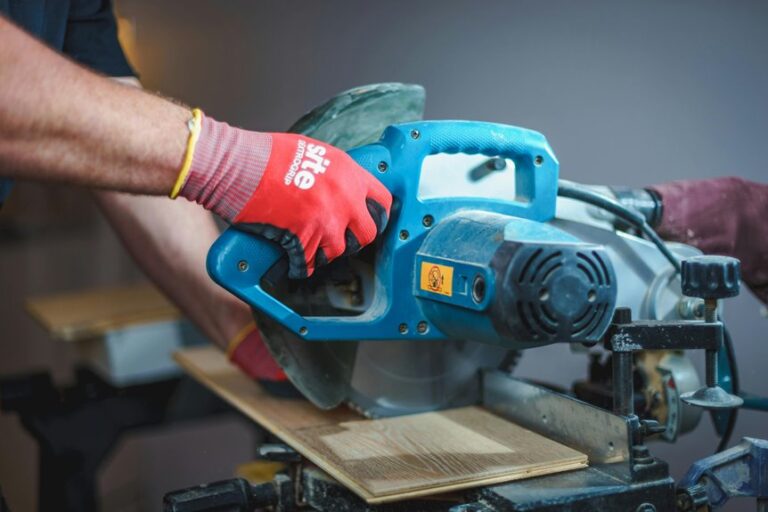
Dry tile work gets messy fast, and the wrong tool turns a simple cut into a chipped edge or a stalled project. You need gear that matches the material, the cut style, and the amount of space you have to work in. That could mean a compact diamond bit set for drilled openings, a 10-inch blade for clean straight runs, or a heavier cutter for concrete and foundation jobs.
This roundup focuses on those real jobsite choices, not just broad labels. You’ll see where each pick fits best, where it asks a little more from you, and which one makes the most sense for a weekend bathroom update, a garage workspace, or a tougher masonry task.
Quick Shortlist For Tile Cutting Jobs

DECKRKAT 5 Packs Dry Diamond Drill Bits Set 3/16" 5mm

XtremepowerUS 3200W Electric 16" Circular Saw Concrete Cutter
BRSCHNITT Super Thin Diamond Porcelain Saw Blade 10 Inch

FACHLICH Tile Saw Blade 10 inch Diamond Wet Saw Blade

ONEGOTOOL 4-1/2 inch Tile Cutter Diamond Saw Blade

DAYDOOR Diamond Hole Saw Kit 13-PC Vacuum Brazed

OSECH 7" Turbo Granite Diamond Blade

BGTEC Dry Diamond Drill Bit Set 10pcs 5/16" 8mm
More Details On Our Top Picks
Small opening work is where this set earns attention, especially for backsplash runs, bathroom fixtures, and glass or stone accents. The 3/16 inch, 5 mm size keeps the focus narrow, which helps you avoid oversized holes in fragile tile edges.
Vacuum brazing means the diamond grit is bonded in a way that aims for steady wear rather than fast shedding. The trade-off is simple, though, because a set like this is built for specific hole sizes, not broad all-purpose drilling, so it suits you best when the task list is already clear.
Strong Points
- Five-piece pack gives you a little backup.
- Works across granite, ceramic, marble, and glass.
- Round shank fits common drill chucks.
- Small diameter helps with neat fixture openings.
- Storage case makes bench organization easier.
Things To Consider
- Single-size focus limits flexibility on larger openings.
- Dry diamond drilling can build heat, so a slower pace helps.
- Stone dust cleanup is part of the routine.
Core Details
Whose Shelf It Belongs On
It suits you best for small remodeling tasks, fixture holes, and occasional tile drilling with a standard hand drill.
Swap It Out When
DAYDOOR Diamond Hole Saw Kit 13-PC Vacuum Brazed fits you better when your project needs several hole sizes instead of one narrow diameter.
Concrete cutting is a different job from tile trimming, and this 16-inch saw sits in the heavier lane. The water line attachment matters because wet cutting helps control dust and can keep the blade happier on long runs, which is useful in foundation work or a DIY house project with bigger slab sections.
At 3200W and 20AMP, this is clearly built for more demanding cutting than the smaller grinder blades in this roundup. The catch is that size and power bring more setup, more handling weight, and a stronger need for the right space, so it suits larger, less fussy jobs better than quick trim work.
What We Like
- 16-inch blade class handles broad concrete cuts.
- Water line attachment supports wet cutting setups.
- 3200W output gives you strong cutting headroom.
- Blade included helps shorten the first setup step.
Room For Improvement
- Bulk and weight make storage less convenient.
- Better suited to large surfaces than detail work.
- Wet setup adds cleanup after use.
- More machine than most tile-only jobs need.
Feature Snapshot
Built With In Mind
You suit this saw best for driveway, slab, or foundation work where a larger concrete cutter makes more sense than a tile blade.
A Better Fit Elsewhere
BRSCHNITT Super Thin Diamond Porcelain Saw Blade 10 Inch fits you more naturally for cleaner tile and porcelain cuts with an angle grinder.
This blade is aimed at cleaner cuts on porcelain, and the thin profile helps it feel less clumsy on an angle grinder. The X tooth pattern is meant to move through material with a more controlled bite, which suits you well in a bathroom or kitchen where edge quality matters.
The 10-inch size is versatile, but the real fit depends on your grinder setup because arbor compatibility is part of the equation. That means this is a smart choice for tile work, yet it asks for a little more attention than a dedicated drill-bit kit like the DECKRKAT set.
Highlights
- Thin blade profile supports cleaner edge control.
- Works for dry or wet cutting.
- Fits multiple arbor sizes for wider compatibility.
- Handles porcelain, marble, granite, and ceramic.
- Good match for angle grinder users.
Minor Gripes
- Arbor matching needs a quick check before setup.
- Angle grinder use can produce more noise and dust.
- Best suited to line cuts, not hole making.
Technical Sheet
Right Fit For
You suit this blade best for tile work with an angle grinder, especially where a thin cut line matters more than sheer cutting depth.
Look Elsewhere When
OSECH 7" Turbo Granite Diamond Blade fits you more naturally for stone-heavy jobs where a smaller turbo blade suits the pace.
A wet saw blade like this is a straightforward fit for tile work where you want a more controlled cut and less airborne dust. The 10-inch diameter keeps it in the familiar range for home renovation setups, especially for straight runs in ceramic or porcelain.
The honest read is that it’s a general-purpose tile blade rather than a specialty tool. Compared with the BRSCHNITT grinder blade, this one makes more sense for wet saw users, while the smaller ONEGOTOOL blade stays more compact for quick trim work.
What We Like
- 10-inch size suits common wet saw setups.
- Diamond edge works across hard tile materials.
- Simple format is easy to store.
- Good fit for repeat straight cuts.
Points To Note
- Wet saw setup adds water management and cleanup.
- Best for line cuts rather than shaped openings.
- General design leaves less room for specialty tasks.
Details At A Glance
Who Should Grab It
You suit this blade best for everyday tile projects where a basic 10-inch wet saw blade is the cleanest match.
Another Choice May Suit
ONEGOTOOL 4-1/2 inch Tile Cutter Diamond Saw Blade fits you better for small angle grinder jobs and quick trim work.
A 4-1/2 inch blade keeps your setup light and familiar, which matters when you’re using an angle grinder for trim, touch-up cuts, or smaller fit adjustments. Compared with the larger 10-inch options in this list, this one is easier to handle in tighter spaces and more convenient for quick work between measurements.
Three blades in the pack give you backup for repeat projects, though the smaller size means it’s not aimed at long, deep cuts. For most home tile jobs, that trade-off is reasonable, and the reduced bulk can make the whole process feel less cumbersome.
Bright Spots
- Small diameter keeps the grinder setup nimble.
- Three-pack format adds practical spares.
- Works across porcelain, ceramic, glass, and marble.
- Useful for trim cuts and spot corrections.
Areas To Watch
- Small size limits cutting depth.
- Angle grinder use can create more dust.
- Better for adjustment cuts than full runs.
Feature Card
The Right Fit
You suit this blade best for quick angle grinder work, especially in apartments, small bathrooms, or compact renovation spaces.
Where A Sibling Pick Shines
FACHLICH Tile Saw Blade 10 inch Diamond Wet Saw Blade fits you better for larger wet saw projects and longer straight cuts.
Multiple hole sizes matter when your project jumps between faucet lines, accessory mounts, and stone surfaces, and this 13-piece kit is built around that kind of mixed use. Vacuum brazed construction is meant to hold diamond material securely on the working edge, which helps the kit stay useful across porcelain, marble, granite, glass bottles, and ceramic.
The red kit layout also makes storage easier to track in a busy garage or tool chest. The trade-off is that a kit like this rewards organized setup, because the variety is useful only when you keep the right size close at hand.
Best Bits
- Thirteen pieces cover many opening sizes.
- Works on tile, stone, glass, and pottery.
- Vacuum brazed build suits repeated drilling.
- Wet or dry use broadens job flexibility.
- Kit format keeps multiple sizes together.
Softer Spots
- More pieces mean more sorting after a job.
- Best value comes from using several sizes.
- Storage discipline matters in a full kit.
Quick Facts
Perfect Match For
You suit this kit best for mixed renovation tasks where several hole sizes are needed across one project.
Skip It When
DECKRKAT 5 Packs Dry Diamond Drill Bits Set 3/16" 5mm fits you better when you only need one narrow hole size in a small area.
Granite and quartz need a blade that feels deliberate, and this turbo-style 7-inch option is built for that kind of stone work. Turbo segments are shaped to move material out of the cut more quickly than a plain rim, which can make the blade feel smoother during faster passes on dense stone.
The arbor range from 5/8 inch to 7/8 inch adds useful flexibility, especially in shops that swap tools often. The trade-off is that this is a more focused stone blade than a general tile cutter, so it makes the most sense when your project leans hard into granite, marble, or quartz surfaces.
Reasons To Buy
- Turbo profile supports fast stone cutting.
- Wet or dry use adds flexibility.
- Works on granite, marble, quartz, and quartzite.
- Arbor range improves tool compatibility.
Small Caveats
- More specialized for stone than for general tile.
- 7-inch size may feel small for wider spans.
- Best results depend on a proper arbor match.
Spec Overview
Whose Shelf It Belongs On
You suit this blade best for stone-heavy renovation work where a compact turbo blade fits the tool and the material.
Reach For A Different Pick When
BRSCHNITT Super Thin Diamond Porcelain Saw Blade 10 Inch fits you more naturally for porcelain and tile runs that need a broader cutting span.
This set is a practical middle ground for common household drilling, especially when you need holes in tile, masonry, or glass without reaching for a larger kit. Ten bits in the same 5/16 inch, 8 mm size gives you repeat coverage, which is handy in a kitchen update or a bathroom project where consistency matters.
Compared with the smaller DECKRKAT pack, this set gives you more pieces in the same general size range, so it feels better suited to repeat work. The trade-off is still the same kind of focused drilling role, which means it won’t replace a full blade setup for straight cuts.
Positives
- Ten-piece pack supports repeated drilling tasks.
- Works on tile, masonry, concrete, glass, and hard plastic.
- Vacuum brazed design suits dry drilling needs.
- 5/16 inch, 8 mm size fits common fixture holes.
- Good match for routine home projects.
Worth Noting
- Single size keeps the kit focused.
- Dry drilling still calls for patience and cooling breaks.
- Dust control takes some planning around the work area.
Core Details
Who Will Love This
You suit this set best for regular DIY drilling where one common bit size keeps coming up again and again.
Where Shoppers Go Wrong
DAYDOOR Diamond Hole Saw Kit 13-PC Vacuum Brazed fits you better when several hole diameters matter in the same project.
How To Choose The Right Dry Tile Saws
Match The Tool To The Cut
Dry tile work splits into two main jobs, hole making and straight cutting. Hole saw bits, like the DECKRKAT and BGTEC sets, suit pipes, fixtures, and anchor points, while blades such as the BRSCHNITT, FACHLICH, and OSECH picks handle long cuts along tile or stone.
That distinction matters because a strong blade cannot replace a drill bit, and a clean hole bit will not help with a long countertop run. Start with the cut shape, then narrow the tool type from there.
Check The Material First
Porcelain, granite, marble, ceramic, glass, and concrete each ask for a slightly different edge style. Vacuum brazed bits tend to work well for hard, brittle surfaces, while diamond blades with thin or turbo profiles handle line cutting with better control.
The more brittle the surface, the more important the edge geometry becomes. A blade made for granite may feel too aggressive for a delicate tile edge, and a small mismatch can chip the finish before the cut is finished.
Think About Size And Machine Fit
Blade diameter and arbor size control what your saw can actually accept. The 10-inch options fit many wet saw setups, the 4-1/2 inch blade stays easy to move with a grinder, and the 16-inch concrete cutter lives in a much heavier class.
That’s why tool fit matters as much as material fit. A compact blade can be easier to control in a bathroom, while a larger machine belongs on broader concrete work where stability matters more than speed of setup.
Choose For Your Workload, Not Just The Listing
A single-size drill bit can be enough for one fixture install, but repeated remodel work usually rewards a kit with backup pieces or multiple diameters. That is where the DAYDOOR and BGTEC sets make more sense than a lone bit.
For straight cuts, blade durability and job length matter more than pack count. If your projects stay small, a lighter blade or drill bit set keeps storage and cleanup simpler, and that small convenience adds up over time.
What To Weigh Before You Buy
Common Shopping Slip Ups
Many people start with the wrong tool shape, then wonder why a blade will not make a hole or a drill bit will not handle a long tile run. Another common miss is skipping the arbor check, which can turn a good blade into a useless one for your saw.
Dust control gets overlooked too, especially with dry drilling. A simple workspace setup, plus a slower pace on hard stone, keeps the job more manageable.
The Upgrade Payoff
Higher-tier options usually cost more because the edge design, size, and material coverage are broader or more specialized. Turbo blades, vacuum brazed drilling edges, and larger concrete saw bodies all ask for more precise construction.
The upgrade makes sense when you cut often, work in dense material, or need better fit across several jobs. For a one-off bathroom repair, a simpler blade or smaller bit set may be enough.
Frequently Asked Questions
Can dry tile tools handle porcelain safely?
Yes, the right diamond blade or drill bit can handle porcelain. Thin blades and vacuum brazed bits are the better starting point for that harder surface.
Do dry tile saw blades work on wet saws?
Some blades are designed for wet or dry use, while others are meant for a specific setup. Check the listing details before you match the blade to your saw.
What is the difference between a blade and a hole saw bit?
A blade makes straight or curved cuts along a surface line. A hole saw bit drills round openings for fixtures and pass-throughs.
How do you reduce chipping on tile?
Use the right tool for the material and keep your pace steady. Thin diamond blades and careful pressure usually help more than forcing the cut.
Do bigger kits help more than single bits?
Bigger kits help when your project needs several hole sizes. A single bit is enough when the task stays narrow and repeated.
Closing Thoughts
The right dry tile saw setup depends on the cut you need, the material in front of you, and the space you have to work in. Small drill-bit kits suit fixture holes, 10-inch blades fit general tile work, and heavier concrete cutters belong on bigger masonry jobs. That’s the cleanest way to avoid buying a tool that feels right on paper but awkward in your hand. Match the tool to the task, and the project usually feels a lot less stubborn.