


Wood dust builds up fast, especially around saws, routers, planers, and miter stations that run for long stretches. The right setup helps you keep hoses organized, cut down on cleanup, and match each machine with the right diameter and fitting style. Some of these picks suit a small router table or benchtop tool, while others make more sense in a full shop with longer runs and more fixed equipment.
You’ll see a mix of hoses, fitting kits, and router-table parts here, because a good system usually starts with the right connections. That matters in a busy garage shop where storage space is tight and every bend in the hose has to earn its keep. The honest read is that a few items are best as building blocks, not complete kits, and that’s exactly where they can help most.
Quick Look At The Shortlist

POWERTEC 5″ x 5′ PVC Flexible Dust Collection Hose with Clamps
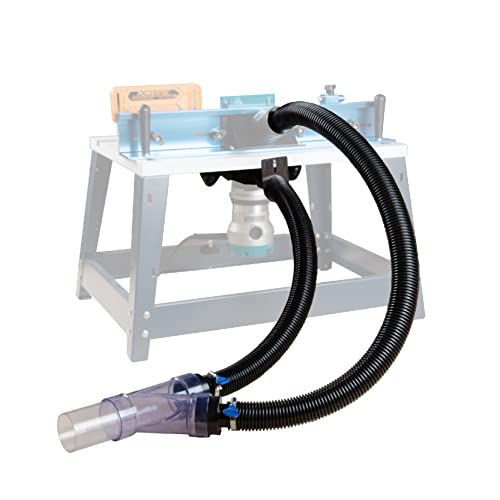
POWERTEC Dust Collector Fittings, Router Table System w/Y Fittings

POWERTEC 2-1/2 Inch Dust Collection Fittings Kit with Connectors

POWERTEC 6″ x 20′ Dust Collection Hose

POWERTEC 6″ x 5′ Dust Collection Hose

POWERTEC 2-1/2” x 36” Dust Collection Hose

POWERTEC 4″ x 20′ Dust Collection Hose
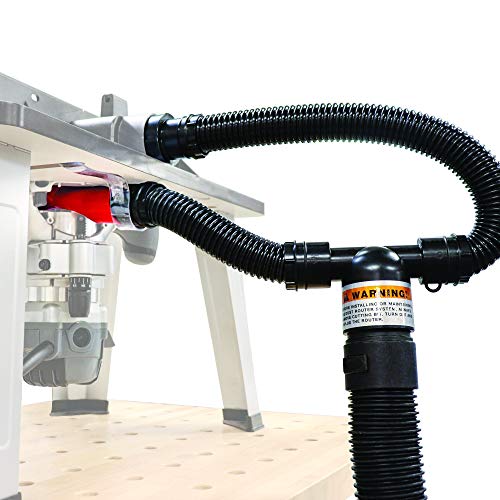
Milescraft 1501 Dust Router
More Details On Our Top Picks
A short 5-foot hose like this fits the awkward spots most shop layouts create, especially near a planer, cyclone separator, or garage-side dust port. The stainless steel key-style clamps give you a firmer hold than plain plastic hardware, though the 5-inch diameter still asks for a tool that can actually use that size.
Compared with the longer hoses in this roundup, it’s easier to manage on a compact wall rack and less likely to become a tangled extra. You may still need to think about routing, because short flexible hose sections can feel stiff in tight corners, but that trade-off often pays off in cleaner machine connections.
What We Like
- Short length keeps small setups tidy.
- Flexible PVC works well for tight machine hookups.
- Steel clamps help the ends stay secured.
- Useful near planers and separators in garage shops.
Points To Note
- The 5-inch size fits only matching ports and accessories.
- Short hose runs leave little slack for repositioning.
- Flexible material still benefits from careful storage so it keeps its shape.
Feature Snapshot
Who It Suits Best
Garage woodworkers and weekend shop users with a 5-inch connection point get the most out of this hose.
A Better Fit Elsewhere
POWERTEC 6″ x 20′ Dust Collection Hose suits larger fixed layouts better, especially once your runs need more reach.
Router tables can turn dusty in a hurry, and this fitting kit is built for that kind of focused cleanup. The Y fittings and reducer pieces matter because they help you shape the path from tool to hose, which is the part many small setups ignore until shavings start piling up.
Unlike the hose-only picks above, this one is about compatibility and connection layout more than raw length. One thing worth noting is the clear fit list, since it works with several router models but is not made for lift-style router tables.
Highlights
- Y fittings give you more routing options around a router table.
- Reducer parts help connect different hose or vac sizes.
- Model-specific fit support can simplify a planned setup.
- Useful for shop owners who want a cleaner router station.
Small Caveats
- It does not suit lift router tables.
- Compatibility matters more here than with a simple hose.
- Plan on matching the rest of your system before you order.
Core Details
Built With In Mind
Router-table users who need fit support for a known tool line will appreciate the focused layout.
Look Elsewhere When
POWERTEC 2-1/2 Inch Dust Collection Fittings Kit makes more sense for multi-machine branch layouts with blast gates.
This kit speaks to a shop that’s ready to branch out, not just attach one hose and stop there. The blast gates matter because they let you close off unused runs, so your smaller collector or shop vac can focus on one machine at a time instead of leaking effort everywhere.
Compared with the router-table kit above, this one is broader and more layout-minded, especially for a three-machine plan. The trade-off is simple, though, it works best when your hose diameter and machine ports already match the 2-1/2 inch format.
Reasons To Buy
- Useful for building a tidy three-machine branch setup.
- Blast gates help you direct suction where it matters.
- Stainless steel clamps add a more secure fastening point.
- Connectors simplify the job of joining shop components.
Areas To Watch
- The 2-1/2 inch size limits it to matching tools and hoses.
- More parts means a little more planning during setup.
- Blast gates need regular attention so they stay easy to move.
Quick Facts
The Right Fit
Small to mid-size woodworking setups with more than one machine get the most value from this kit.
Swap It Out When
POWERTEC 4″ x 20′ Dust Collection Hose is the stronger choice for longer duct runs built around a 4-inch network.
A 20-foot hose changes the feel of a shop because you can route farther without piecing together a lot of short sections. That matters in larger garages or basement shops where the collector sits in one corner and your jointer, planer, or table saw sits somewhere else.
Compared with the shorter 5-foot hose earlier in the list, this one is built for reach rather than neatness. The catch is that a long hose takes more room to store and can be harder to keep out of the way, so it suits fixed layouts more than constantly rearranged benches.
Best Bits
- Long reach helps cover spread-out tools.
- 6-inch diameter suits larger dust collection paths.
- Helpful for fixed duct routes in roomy shops.
- Reduces the need for multiple short hose joins.
Room For Improvement
- Long hose sections need more storage space.
- Large diameter demands compatible ports and fittings.
- Routing can take extra planning in tight garages.
Details At A Glance
Whose Shelf It Belongs On
Shop owners with a larger fixed dust route and plenty of wall or ceiling space get the best match here.
Where A Sibling Pick Shines
POWERTEC 6″ x 5′ Dust Collection Hose suits tighter setups where the hose stays close to one machine.
This one sits in a useful middle ground, because the 6-inch diameter gives you room to work while the 5-foot length keeps the run short. That shape suits a cyclonic separator, a fixed machine, or a garage corner where you don’t want a long hose draped across the floor.
Compared with the 20-foot hose above, it’s easier to store and less likely to become shop clutter. The honest trade-off is that short PVC hose sections can still feel a bit stiff in cramped setups, so you get convenience more than sweeping reach.
Upsides
- Short length makes storage simpler.
- 6-inch diameter works well for larger connections.
- Flexible PVC suits steady machine-side placement.
- Handy around cyclone separators and garage tools.
Softer Spots
- Short reach limits how far it can span.
- The larger diameter narrows compatibility to matching ports.
- PVC can take up space even when the run is short.
Feature Rundown
Who Will Love This
You get the most from this hose near one anchored tool, a separator, or a compact collection point.
Another Choice May Suit
POWERTEC 6″ x 20′ Dust Collection Hose fits better once your machine spacing calls for a longer fixed route.
Benchtop tools often need a short connector more than a giant hose, and this 36-inch piece fits that role neatly. It suits table saws, miter saws, drill presses, and belt sanders where the connection point stays close to the collector or vac.
Compared with the 6-inch hoses above, this one trades bulk for easier placement around smaller machines. Polypropylene, or PP, is a rigid plastic used here for a practical, lightweight hose body, though the shorter run means you still need to plan your tool spacing carefully.
Bright Spots
- Short reach suits compact benchtop setups.
- Works across several common shop tools.
- Flexible enough for everyday machine hookups.
- Small size makes it easy to store.
Minor Gripes
- 36 inches leaves little extra slack.
- 2-1/2 inch size limits it to smaller ports.
- PP construction is more about utility than softness.
At A Glance
Made For
Small-shop owners and benchtop tool users who need a short, manageable hose segment will feel right at home with this pick.
Skip It When
POWERTEC 2-1/2 Inch Dust Collection Fittings Kit is the better route once you need gates, connectors, and a multi-tool layout.
For a wood shop that runs on a more fixed layout, a 4-inch hose with 20 feet of length can bridge a lot of ground. That size is common for larger stationary machines such as a table saw, band saw, planer, or jointer, so it suits a shop that already has a more deliberate dust path.
Compared with the 6-inch hose above, this one is narrower and more versatile across standard shop machines. The drawback is simple: long hose runs still need storage space, and in a crowded garage the extra reach can feel like more hose than you need.
Standout Traits
- 20-foot length helps span a wider shop.
- 4-inch size matches many common machine ports.
- Good fit for a stationary machine lineup.
- Useful for table saw and jointer stations.
Honest Caveats
- Long hose storage takes real wall or floor space.
- 4-inch sizing may not suit smaller vac-based tools.
- Routing takes a little thought in tighter work areas.
Feature Card
Who Should Grab It
Woodworkers with a mid-size shop and a standard 4-inch dust path will find this hose easy to plan around.
Reach For A Different Pick When
POWERTEC 6″ x 20′ Dust Collection Hose is the stronger option for larger ports and broader airflow needs.
Router tables make a mess in a very specific way, and this setup speaks directly to that problem. Compared with the POWERTEC fittings and hose picks, this one is more of a dedicated router-table solution than a general shop part, so it suits a focused station better than a whole-room network.
That narrower focus is useful for homeowners who route often and want the cleanup centered around one bench. The trade-off is that it’s not the flexible answer for every tool in the shop, but for a router table, that specialization can be exactly the point.
Plus Points
- Built specifically around router-table cleanup.
- Helps keep a dedicated routing station more orderly.
- Good fit for shops where routing is a regular task.
Worth Noting
- Focused use means it serves one station more than the whole shop.
- Less useful for general dust routing outside router tables.
- You’ll want to confirm your table layout before fitting it in.
Core Details
Right Fit For
Regular router-table users who want a dedicated cleanup setup will benefit most from this pick.
Where Shoppers Go Wrong
POWERTEC Dust Collector Fittings, Router Table System w/Y Fittings makes more sense for tool-specific compatibility work and hose matching.
How To Choose The Right Dust Collection Systems For Wood Shop
Match The Hose Size To The Tool
Diameter matters more than many first-time setups expect. A 2-1/2 inch hose works well with smaller machines and shop vac-style connections, while 4-inch and 6-inch hoses make more sense for stationary tools that move a lot of air. The wrong size creates awkward adapters, weaker fit, and a setup that feels cobbled together.
Length matters just as much. Short hoses keep a station neat, but a longer run helps when the collector sits far from the machine, especially in a garage with limited wall space.
Think In Terms Of The Whole Path
A dust collection system is more than a hose, it’s a path from machine to collector. Y fittings, reducers, blast gates, and clamps decide whether the airflow goes where you want or leaks into a messy tangle of half-matched parts. That’s why the POWERTEC fittings kit makes sense for a planned branch setup, while the router-table kit fits a more focused station.
In a shop with several machines, the path design usually matters more than any single piece. A clean layout saves time later because you spend less effort moving hoses around or swapping fittings every few minutes.
Choose For Your Shop Size And Rhythm
Small garages usually benefit from short, flexible pieces that store easily and don’t crowd the floor. Larger spaces can support 20-foot hoses and wider diameters, especially around a table saw, jointer, or planer that stays in one place. The best match depends on whether your tools are fixed or you keep rearranging the bench.
People who work in short sessions often prefer compact parts, because setup and takedown stay simple. Anyone running longer sessions on a regular basis will usually feel better with a more complete route and fewer temporary connections.
What To Weigh Before You Choose
Wrong Turns To Avoid
A common mistake is buying hose length before checking port size. Another is forgetting that some router-table parts do not fit lift tables, which can turn a promising kit into a poor match very quickly. Storage also gets overlooked, and a long hose can become clutter in a small garage.
Steady planning avoids most of that. Measure the machine ports, look at the run distance, and decide whether you want one hose, a branched setup, or a dedicated router-table solution.
The Case For Spending Up
Higher-tier dust collection parts usually cost more because they solve more of the layout problem at once. Longer hoses, thicker fittings, blast gates, and purpose-built router-table systems all reduce the amount of improvising you need later. That matters most in a shop where several tools share one collector.
Paying more makes sense when you want fewer adapters, a cleaner route, and less time reworking the setup. A simple benchtop machine does not need that much hardware, but a fuller workshop often does.
Frequently Asked Questions
What size hose suits most wood shop tools?
Smaller benchtop tools often use 2-1/2 inch hose, while larger stationary machines commonly call for 4-inch or 6-inch options. The right size depends on the machine port and the amount of airflow the setup expects.
Do blast gates matter in a small shop?
Yes, especially when more than one machine shares the same collector. They help you focus airflow on the tool you’re using instead of sending it through every branch at once.
Is a long hose always better?
Not really, because length helps reach but also adds storage and routing concerns. Short hoses work better near a single machine, while long hoses suit spread-out shop layouts.
Can router-table dust parts work with every table?
No, fit depends on the router, the table design, and whether the table uses a lift-style setup. It’s smart to check compatibility before you build around one kit.
Why do some shops mix hose sizes?
Different machines need different connection sizes and airflow paths. Mixing sizes can make a setup more practical, as long as the reducers and fittings match cleanly.
Final Thoughts
The right dust collection setup for your wood shop is usually the one that fits your machines before it tries to impress you with volume. Short hoses, long runs, router-table kits, and fittings all solve different problems, so the best choice comes down to your bench layout and how often you swap tools. Start with the connection size, then think about distance, storage, and how many machines share the line. Get those parts right and the whole shop feels calmer.




