The right saw turns a weekend of yard cleanup or a stack of rough lumber into an afternoon’s work. This roundup covers five electric options across very different jobs: pruning shears-style chainsaws for branches, a reciprocating saw for demolition, and a miter saw for precise crosscuts. Whether you’re a first-time homeowner staring down an overgrown hedge or a DIYer building out a workshop bench, one of these belongs in your garage.
The Picks In Brief

Dewalt DCCS623B 20V 8-Inch Pruning Chainsaw

IMOUMLIVE 6-Inch Mini Cordless Chainsaw (21V)
GALAX PRO 6.0 Amp Corded Reciprocating Saw

Metabo HPT C10FCG2 10-Inch Compound Miter Saw

DEWALT 20V MAX 12 in. Cordless Chainsaw (DCCS621B)
The Strengths Of Each Pick
An 8-inch bar sits in the sweet spot between a hand pruner and a full chainsaw, which is exactly where most backyard pruning lives. The Dewalt runs on the brand’s 20V battery platform, so anyone already owning Dewalt tools can swap packs without buying new ones.
Picture a Saturday spent working through apple tree suckers or low maple limbs: this is the tool that stays comfortable hour after hour. The compact form factor also means you can cut close to a trunk without wrestling a full-size saw around tight growth.
Reasons It Performs
- The 8-inch bar handles branches thick enough to frustrate loppers, yet stays light enough for overhead cuts.
- Battery compatibility across the Dewalt 20V line saves real money if you already own their drills or trimmers.
- Cordless design means no fuel mixing, no pull cords, and no fumes while you work near the house.
- Compact size lets you reach into dense shrubs where bigger saws simply won’t fit.
Things To Consider
- This is a bare tool listing, so budget for a battery and charger separately unless you already own them.
- Chain tension needs periodic checking; owners commonly report loosening after the first few sessions.
Who It Suits Best
Homeowners with mature trees and shrubs who want a dedicated pruning tool rather than a do-everything saw.
A Better Fit Elsewhere
Anyone felling larger limbs should step up to the DEWALT DCCS621B later in this list, whose 12-inch bar covers heavier stock.
At roughly 2.2 pounds, this little saw weighs about as much as a cordless drill, and that changes everything about how it feels in hand. One-handed operation becomes genuinely practical, which matters enormously for seniors or anyone with limited grip strength.
Where the Dewalt above targets serious gardeners, the IMOUMLIVE aims at people who found traditional chainsaws intimidating. The 21V 2.0Ah pack keeps it portable, and the small footprint makes storage in a garden shed almost trivial.
The Helpful Details
- The 2.2 lb weight means arm fatigue stays minimal during long trimming sessions.
- A pure copper motor holds steady speed under load, so cuts through denser wood don’t stall out mid-branch.
- One-hand control suits tight spots like rose beds or fence-line saplings.
- Gentle learning curve makes it a sensible first power saw for cautious users.
Small Caveats
- The 6-inch bar caps you at pencil-to-wrist-thick branches; anything larger needs a bigger tool.
- Mini chainsaw chains wear faster than full-size ones, so keep a spare chain on hand for a season of heavy use.
Quick Facts
Made For
Seniors, women, and complete beginners handling light yard tidying and small-branch pruning.
Reach For A Different Pick When
Thicker limbs call for the Dewalt DCCS623B, whose 8-inch bar adds two inches of cutting capacity for modestly more bulk.
A reciprocating saw pushes its blade back and forth at high speed, which makes it the demolition tool of choice for cutting through studs, pipes, and old decking. The GALAX PRO draws 6.0 amps from a standard wall outlet and spins up to around 2800 RPM, plenty for remodeling scrap work.
Corded power is the whole argument here: unlike the battery saws earlier in this list, runtime never becomes a question. You’re limited by extension-cord reach instead, which suits a garage workshop or a renovation site with outlet access far better than a remote woodlot.
What Helps Most
- Wall power means unlimited session length, ideal for a full day of demo work.
- The 6.0-amp copper motor drives blades through nail-embedded lumber without bogging down.
- Heat management features help the motor survive long continuous cuts, extending tool life.
- Reciprocating blades swap quickly, letting one tool handle wood, metal, and plastic tasks.
Points To Note
- The cord restricts movement outdoors; plan your cutting area around outlet locations.
- Vibration over long sessions is inherent to the reciprocating design, so gloves are worth wearing.
- Blade selection matters enormously; budget for a small assortment beyond what ships in the box.
Core Details
Right Fit For
DIY renovators and hobbyists tearing out walls, trimming pipe, or cutting pallet lumber near a power source.
Swap It Out When
Precision angle work calls for the Metabo HPT miter saw below; a reciprocating saw is the wrong instrument for clean joinery.
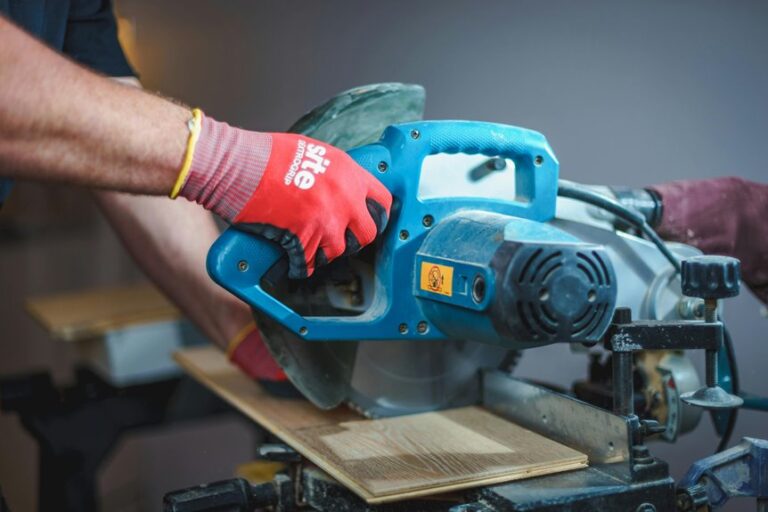
Everything before this point cuts rough material; the Metabo HPT cuts exact material. A compound miter saw pivots left and right for angle cuts and tilts for bevels, and this second-generation model pairs a 15-amp motor with a 40-tooth carbide-tipped blade straight from the box.
The Xact Cut shadow line projects the blade’s path onto your workpiece, so you see the kerf before the blade ever touches wood. That single feature shortens the learning curve dramatically for anyone nervous about wasting expensive trim boards. The lightweight build also makes it realistic to carry out to a driveway cutting station.
Useful Strengths
- The shadow line system shows exactly where the cut lands, reducing mis-measured boards.
- Single bevel adjustment from 0 to 45 degrees covers crown molding and picture-frame angles.
- The included 40T TCT blade leaves finish-quality edges on trim and hardwood.
- Light enough to move between garage and job site without a second person.
Where It May Fall Short
- Single bevel means flipping wide crown molding for opposite angles, which slows complex trim work slightly.
- Dust collection is basic; expect to sweep the cutting zone after each project.
Whose Shelf It Belongs On
Serious DIYers and trim carpenters who need repeatable, accurate crosscuts for framing, molding, and furniture builds.
Another Choice May Suit
Rough outdoor cutting is better served by the DEWALT DCCS621B chainsaw, since a miter saw demands stable, dimensioned stock.
This is the biggest cutter in the lineup, with a 12-inch bar that swallows limb diameters the smaller saws can’t touch. The brushless motor, which uses electronics instead of brushes to reduce friction and wear, delivers up to 100 cuts per charge depending on wood density.
Compared to the pruning-focused Dewalt DCCS623B at number one, this one trades agility for capacity, and construction crews use it for everything from tree limbs to dimensional beams. Going gas-free eliminates cold starts, carburetor fuss, and stored-fuel headaches entirely.
Noteworthy Benefits
- The 12-inch bar handles storm-damage limbs and thick branches in a single pass.
- Brushless motor efficiency stretches each battery charge across dozens of cuts.
- No gas engine means no winterized fuel sitting stale in a shed all season.
- Lighter than comparable gas saws, reducing fatigue during overhead limbing.
Trade Offs To Weigh
- Bare tool only; you’ll need a compatible 20V MAX battery and charger unless you own them already.
- Runtime depends heavily on wood hardness, so plan around a spare pack for all-day sessions.
- Chain sharpening and bar-oil top-ups are routine maintenance any chainsaw owner should expect.
Key Specs
Best Suited To
Rural homeowners and contractors clearing storm debris or cutting beams who already own Dewalt 20V batteries.
Not Your Match When
Light touch-up pruning is easier and cheaper with the IMOUMLIVE mini saw, whose 2.2 lb frame excels at small branches.
What Matters Before Choosing Electric Saws
Match The Tool To The Material
Start with what you actually cut. Branches under two inches suit a mini or pruning chainsaw; storm debris and firewood demand a 12-inch bar; sheet goods and trim need a miter saw; hidden nails inside wall studs call for a reciprocating saw. Buying a general-purpose saw for one specific job usually ends in frustration.
Corded Versus Cordless
Corded models like the GALAX PRO deliver constant power and never need charging, but they tether you to an outlet. Battery saws cost more upfront, especially bare-tool listings that exclude the pack, yet they go anywhere. Count your likely session length honestly before choosing a side.
Total Cost Of Ownership
Look past the sticker. Batteries, chargers, replacement chains, blades, and bar oil all add up over a tool’s life. Sticking with one battery platform, as both Dewalt picks here allow, keeps those recurring costs predictable.
Weight And Handling
A saw you can’t lift comfortably is a saw that sits unused. Seniors and occasional users should prioritize sub-3-pound designs, while production work justifies the extra heft of a full-size machine.
Key Considerations Across These Picks
Traps First Timers Fall Into
The most common mistake is buying too much saw. A 12-inch chainsaw feels powerful until you’re trimming roses with it. The reverse error hurts too: grabbing a mini saw for firewood duty and burning through batteries. Also check whether a listing includes the battery, since bare-tool surprises are frequent.
When Paying More Pays Off
Higher-tier models earn their price through brushless motors, larger bars, and platform compatibility. Spending up makes sense when you’ll use the tool weekly or already own matching batteries. For twice-a-year trimming, a simpler model serves you fine.
Frequently Asked Questions
Can a mini chainsaw cut tree branches?
Yes, within limits. A 6-inch bar handles branches up to roughly wrist thickness, which covers most routine pruning.
Do cordless chainsaws come with batteries?
Not always. Listings marked “bare tool” exclude the battery and charger, so read the package contents carefully before ordering.
What’s the difference between a miter saw and a reciprocating saw?
A miter saw makes precise, repeatable crosscuts in stationary stock. A reciprocating saw makes rough, freehand cuts in installed material like walls and pipes.
How often does a chainsaw chain need sharpening?
For typical homeowner use, expect to touch up the chain every few cutting sessions. Dull chains cut slowly and produce fine dust instead of chips.
Are electric saws safer than gas models?
Electric models avoid fuel handling and pull-start kickback, but every saw demands eye protection, gloves, and careful technique regardless of power source.
Closing Thoughts
Five saws, five different jobs, and the honest answer is that most homes eventually need more than one. Start with the task that annoys you most today, whether that’s an unruly hedge or a basement full of scrap lumber, and let that decide. Match the bar length or blade type to your actual material, confirm what’s in the box, and you’ll end up with a tool that earns its shelf space instead of collecting dust on it.