Cutting concrete slabs, control joints, or an old patio takes a machine that keeps its composure under load. Anyone who has wrestled a gas cutter through a basement doorway knows the appeal of a corded electric saw: no fuel mixing, no exhaust filling the room, and a motor that starts the moment you pull the trigger. This roundup covers five cutters that handle masonry, brick, and reinforced concrete, including one gas-powered option for crews who need cordless range. Each entry weighs power against portability so you can match the tool to your actual job site, not a spec sheet fantasy.
The Leading Options At A Glance
PickWhy We Picked ItBest ForAction
Heavy Duty Pick
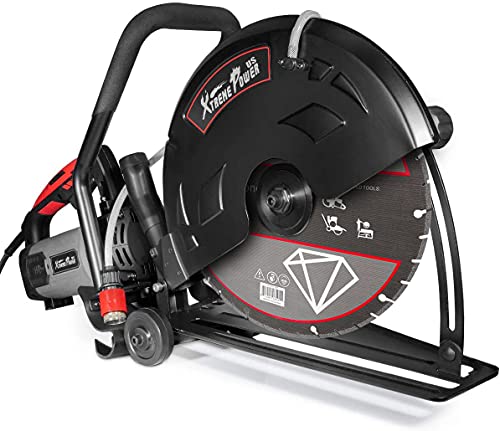
XtremepowerUS 3200W Electric 16″ Concrete Cut Off Saw with Water Line
Deep cuts, big blade
Slab and driveway work

Value Pick
XtremepowerUS 3200W Electric 16″ Concrete Cutter 20AMP Wet/Dry
Blade included, ready
DIY foundation projects
Professional Pick
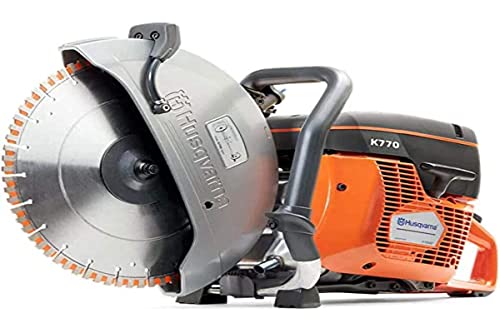
Husqvarna K 770 Gasoline Power Cutter (Orange)
Refined pro-grade build
Full-time contractors
Design Standout
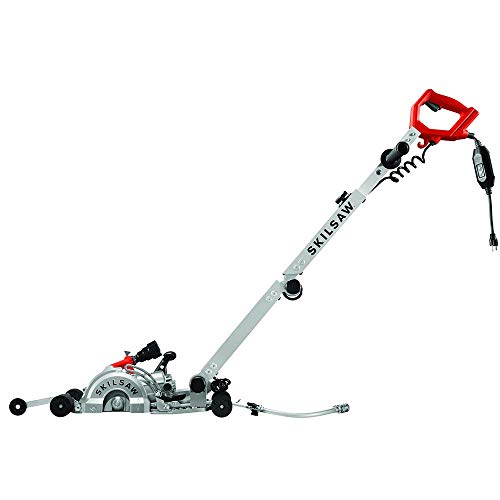
SKIL SPT79A-10 Walk Behind Worm Drive Skilsaw
True walk-behind layout
Long control joints
Compact Choice
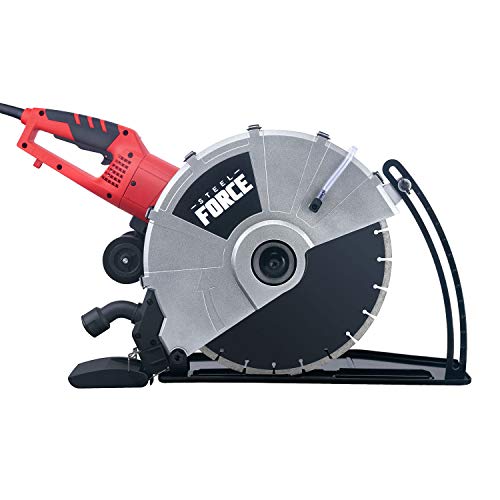
Steel Force KPC 3551 Portable 14″ Wet/Dry Concrete Saw
Lighter, easier handling
Tile, granite, small pours
The Details Behind The Selections
A 16-inch blade changes what a handheld electric saw can do. With that much wheel diameter, this XtremepowerUS reaches deeper into a slab in a single pass than most 14-inch rivals, which matters when you’re scoring a driveway or slicing through reinforced concrete without flipping the work over.
The built-in water line feeds moisture straight to the cutting edge, keeping dust down and helping the blade last longer on long runs. A guide roller steadies the cut, something you’ll appreciate once fatigue sets in halfway down a patio slab.
Everyday Advantages
- ✓The 3200-watt motor holds speed under load, so cuts stay consistent through dense material instead of stalling mid-slab.
- ✓Wet or dry operation gives you flexibility: run water outdoors for dust control, go dry where a hose can’t reach.
- ✓The guide roller helps you track a straight line, reducing the wobble that ruins edges on visible concrete work.
- ✓Corded electric means no fuel mixing, no pull cords, and no exhaust indoors, which makes garage and basement jobs far more tolerable.
Things To Consider
- •A 16-inch disc adds weight, and owners commonly report arm fatigue on overhead or vertical cuts, so plan your positioning before you start.
- •You’ll want a heavy-duty extension cord rated for high amperage; undersized cords are a frequent cause of sluggish performance with big electric saws.
Key Specs
| | Feature | Specification | Why It Matters |
|---|
| Motor power | 3200W | Sustains torque through dense masonry |
| Blade size | 16 inches | Deeper single-pass cuts than 14-inch wheels |
| Dust control | Built-in water line | Suppresses dust and cools the blade |
| Stability aid | Guide roller | Keeps long cuts tracking straight |
Who It Suits Best
Homeowners and remodelers tackling thick slabs, driveways, or foundation walls who want maximum cut depth from a corded machine.
Where A Sibling Pick Shines
Anyone working mostly with tile, granite, or thinner pours will find the Steel Force KPC 3551 lighter and easier to maneuver for those materials.
This sibling to our first pick shares the same 3200-watt muscle and 16-inch blade capacity, but it arrives with a blade already included, which trims the true cost of getting started. For a first-time DIYer cutting a foundation wall or an old sidewalk, that head start counts.
The double protection switch is worth understanding: it requires two deliberate actions before the motor spins up, preventing accidental starts when the saw is being carried or set down. In a busy workspace with kids or helpers around, that design choice earns its keep.
Where It Helps
- ✓Ships with a blade fitted, so you can be cutting within minutes of unboxing rather than shopping for consumables first.
- ✓The two-step safety switch guards against unintentional startups during transport between cut locations.
- ✓Low vibration relative to its power output means less hand strain across a long afternoon of scoring work.
Small Caveats
- •Like its sibling above, the 16-inch format demands solid upper-body strength; shorter users may find extended sessions tiring.
- •The water line attachment needs a nearby hose connection, which limits placement unless you plan your setup around a spigot.
Made For
DIY homeowners handling house foundations, patios, or demolition cuts who want serious depth without buying a blade separately.
Swap It Out When
Crews cutting all day, every day should look at the Husqvarna K 770 instead, since its pro-grade durability justifies the step up for commercial schedules.
Here’s the honest exception in an electric-focused list: the K 770 runs on gasoline, and that’s exactly why contractors keep buying it. No outlet, no cord length math, no generator. You carry fuel and freedom in the same package, which matters on remote lots and road work.
Husqvarna’s semi-automatic smart tension system adjusts belt tension on its own, protecting power transmission and stretching belt life. Reliability like that is why this model shows up on professional job sites year after year, and owners commonly report dependable starts season after season.
Where It Delivers
- ✓Gas power delivers full torque anywhere, from back lots to highway median work where outlets simply don’t exist.
- ✓The self-adjusting belt tension reduces maintenance intervals and keeps power transfer efficient as the machine ages.
- ✓An outstanding power-to-weight ratio paired with low vibration lets operators work longer with less strain.
- ✓Quick, reliable starting means less downtime at the start of each shift, a real advantage on billable hours.
Points To Note
- •Two-stroke engines demand fuel mixing, spark plug checks, and air filter cleaning; skip the upkeep and performance suffers quickly.
- •Exhaust rules out indoor use, so basement or enclosed-garage cuts still belong to the electric picks on this list.
Right Fit For
Full-time contractors and landscape crews who cut daily across multiple sites and need cordless range with professional-grade endurance.
Consider Something Else When
Weekend DIYers cutting near an outlet will get comparable results for far less money from the XtremepowerUS 3200W Electric 16″ Concrete Cutter 20AMP Wet/Dry.
Most saws here are carried; this one walks. SKIL built the only worm drive walk-behind concrete saw in its class, meaning the machine rolls ahead of you while you steer, taking the blade’s weight off your arms entirely. Cutting a hundred feet of control joint becomes a stroll instead of a workout.
The worm drive gearing itself deserves a word: it’s a gear arrangement that trades raw speed for steady torque, a layout SKIL has refined for decades. Combined with a pivoting pointer for lining up cuts, precision stays high even on fresh, soft concrete.
Advantages To Know
- ✓The integrated handle adjusts to your height and folds flat, so transport in a truck bed or storage on a garage wall takes seconds.
- ✓An integrated dust management system controls debris for cleaner cuts, whether you run it wet or dry.
- ✓Walking the saw along fresh pours produces straighter joints than handheld scoring, which is why finishers favor this layout.
Less Ideal Details
- •The 7-inch blade caps cut depth well below the 14- and 16-inch machines here, so deep slab penetration isn’t its job.
- •It’s purpose-built for joint work; buyers needing versatile demolition cutting should look elsewhere on this list.
Feature Snapshot
| | Feature | Specification | Why It Matters |
|---|
| Drive type | Worm drive | Steady torque suited to dense material |
| Blade size | 7 inches | Matched to control-joint depth needs |
| Operation | Wet or dry capable | Adapts to site dust rules |
| Handle | Adjustable, folding | Fits user height, packs down small |
Who Will Love This
Concrete finishers and framing crews who score long control joints on fresh pours and value straight lines over brute depth.
Not Your Match When
Demolition work through thick existing slabs calls for the XtremepowerUS 3200W Electric 16″ Concrete Cut Off Saw with Water Line and its much larger blade.
Not every job needs a 16-inch monster. The Steel Force drops to a 14-inch blade and a 2600-watt motor, trading some depth for noticeably easier handling. On tile, granite, porcelain, or a modest patio pour, that trade works in your favor, especially on ladders or awkward angles where every pound counts.
It also arrives complete: a general-purpose segmented diamond blade comes in the box, and both 1/2-inch and 3/4-inch water hose adapters are included, so hooking up dust suppression doesn’t require a hardware store detour.
Useful Highlights
- ✓The 2600W motor spins the blade at 4,300 RPM, giving smooth, accurate cuts in stone and masonry without demanding a 20-amp circuit.
- ✓Included hose adapters mean the water line connects to standard plumbing right away, no improvising with clamps.
- ✓A dust extraction port pairs with the water line to keep the cut line visible and the air clearer.
- ✓The bundled diamond blade handles general-purpose cutting out of the box, saving a separate purchase.
Potential Drawbacks
- •At 4,300 RPM the blade runs faster than bigger saws, so letting the wheel do the work matters; forcing cuts is a commonly reported way to glaze a diamond blade early.
- •Shallower cut depth than the 16-inch XtremepowerUS models limits how thick a slab you can slice in one pass.
Core Details
| | Feature | Specification | Why It Matters |
|---|
| Motor power | 2600W / 15 Amp | Runs on standard household circuits |
| No-load speed | 4,300 RPM | Smooth finishes in tile and granite |
| Hose adapters | 1/2″ and 3/4″ | Fits common garden and supply hoses |
| Included blade | 14″ segmented diamond | Ready to cut on day one |
Who Should Grab It
Tilers, hardscape hobbyists, and DIYers working stone, porcelain, or thin-to-medium concrete who prioritize manageable weight and easy setup.
Reach For A Different Pick When
Thick driveway or foundation cuts demand the extra depth of the XtremepowerUS 3200W Electric 16″ Concrete Cut Off Saw with Water Line.
What Matters Most Before Choosing An Electric Walks Behind Concrete Saw
Match Blade Size To Material Depth
Blade diameter sets your maximum single-pass cut depth, and it’s the number that should drive everything else. A 7-inch wheel handles control joints in fresh pours; a 16-inch wheel slices most residential slabs in one go. Measure the thickest material you realistically cut, then add margin, because a blade that only barely reaches forces slow, repeated passes.
Respect Your Circuit And Cord
Big electric motors draw serious current. A 3200-watt saw assumes a robust circuit and a properly gauged extension cord; a skinny 50-foot cord from the junk drawer will choke performance and shorten motor life. Before ordering, confirm the outlet situation at your typical work area and budget for a heavy-duty cord if needed.
Decide Wet Versus Dry Honestly
Water-fed cutting suppresses silica dust dramatically and extends blade life, but it requires a hose, creates slurry, and gets messy. Dry cutting suits quick indoor touch-ups with proper extraction. Most people benefit from a saw that does both, then choosing per job rather than per purchase.
Weigh Weight Against Runtime
Every extra pound shows up in your shoulders by hour two. Lighter 14-inch machines suit occasional users and overhead work; heavier 16-inch units reward strength and stamina with depth. Be realistic about how often and how long you’ll actually cut.
Key Considerations Across These Picks
Traps First Timers Fall Into
The classic error is buying for the biggest job you might ever do instead of the jobs you actually do. A 16-inch saw used twice a year mostly gathers dust, literally. Another slip: ignoring extension cord gauge, then blaming the saw for weak cuts. Check your circuit and cord before assuming the tool is at fault.
What Separates Premium From Basic
Higher-tier machines like the Husqvarna K 770 charge more for engineering that survives daily abuse: self-adjusting belt systems, better vibration damping, and parts availability years down the road. Occasional users rarely recoup that premium. Full-time crews almost always do, since downtime costs more than the price gap ever will.
Frequently Asked Questions
QCan an electric concrete saw really replace a gas model?
For cuts near an outlet, yes, and it starts instantly with zero fumes. Gas still wins for remote sites and all-day production work.
QDo I need to use the water line?
Not always, but running water suppresses harmful silica dust and extends blade life considerably. Use it whenever the job site allows.
QWhat size extension cord do these saws require?
Use a heavy-duty cord with wire gauge matched to the saw’s amperage rating and your cord length. Undersized cords cause power loss and overheating.
QHow deep can a 16-inch blade cut?
A 16-inch wheel typically reaches roughly five inches into material in a single pass. Always check the manufacturer’s stated depth figure for the specific model.
QAre these saws suitable for beginners?
The lighter 14-inch models are approachable for careful first-timers on simple cuts. Large-blade saws demand experience, proper protective gear, and respect for kickback.
Closing Thoughts
Choosing among these five comes down to honesty about your workload. Weekend warriors cutting a patio or foundation wall get excellent value from either XtremepowerUS unit or the nimble Steel Force. Finishers chasing straight control joints should shortlist the SKIL walk-behind, while daily commercial crews will justify the Husqvarna’s professional pedigree. Match the blade to the material, feed it clean power, and any of these will serve you well for seasons to come.







