


A great espresso shot starts long before the machine fires up. It starts at the grinder, where uneven grounds turn a promising bean into a sour or bitter cup. The five grinders below cover the full range of what matters in this bracket: burr type, adjustment precision, dosing control, and how much counter space each one demands. Whether you pull shots every morning before work or only on slow weekends, there’s a fit here for your routine and your kitchen.
An Overview Of The Picks

Wancle Flat Burr Coffee Grinder with 28 Settings

KINGrinder K6 Manual Coffee Grinder Stainless Burr

SHARDOR Conical Burr Espresso Grinder with Touchscreen
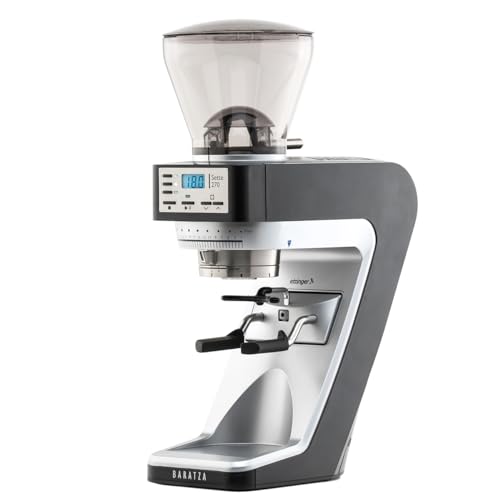
Baratza Sette 270 Conical Burr Coffee Grinder

Lonkion Electric Burr Coffee Grinder, 28 Settings
More On The Choices That Made The List
A flat burr design means two parallel grinding surfaces rather than cone-shaped ones, which tends to produce an even particle spread once dialed in. The Wancle keeps its footprint small, so it slots into tight counters beside a toaster without crowding anything.
The 28-step adjustment spans fine enough for espresso through coarse French press territory, and the cup selector covers 2 to 12 servings. For most small households, that range handles everything from a solo morning shot to weekend company.
What It Does Well
- 28 grind levels cover espresso, drip, and press brewing from one dial
- Cup control from 2 to 12 means you grind exactly what you’ll drink
- Compact body leaves room on crowded apartment counters
- Removable parts make the cleanup routine quick after oily beans
Things To Consider
- Fewer steps than pricier models, so fine-tuning espresso may take patience
- Static cling is a common gripe with compact electric grinders like this
Key Specs
Who Will Love This
Apartment dwellers and first-time burr-grinder owners who want simple dials over menus.
Where A Sibling Pick Shines
The SHARDOR conical burr grinder suits anyone wanting touchscreen control and finer step adjustments instead of manual dials.
No motor, no cord, no noise at 6 a.m. The KINGrinder K6 runs entirely on elbow grease, and its all-metal body feels closer to workshop tooling than kitchen gadget. Compared with the Wancle above, you trade convenience for adjustment depth and durability.
The external adjustment nut moves in tiny increments, roughly 16 microns per click, with 60 clicks per rotation across four full turns. That granularity matters enormously for espresso, where a single step too coarse can wreck extraction.
Bright Spots
- Micron-level clicks let you chase a specific shot recipe with confidence
- Stainless burrs and aluminum construction shrug off years of daily cranking
- External adjustment means no disassembly between brew methods
- Quiet operation works well in shared apartments and early riser homes
Minor Gripes
- Hand grinding a full dose takes real effort, especially at espresso fineness
- Slower mornings compared with any electric option on this list
Right Fit For
Hobbyists who enjoy the ritual of hand grinding and want laboratory-grade adjustability without paying flagship prices.
Swap It Out When
Households brewing multiple cups back-to-back will find the SHARDOR’s electric motor and timer far less tiring.
Conical burrs are cone-shaped cutting surfaces that run cooler than flat designs, helping preserve the aromatic oils in your beans. SHARDOR pairs a 40mm stainless set with a touchscreen interface, which puts it a generation ahead of the dial-only Wancle in day-to-day usability.
Fifty-one settings stretch from espresso-fine to French press coarse, and the electronic timer doses by cup count from 1 to 12. In a busy kitchen before work, tapping a preset beats fiddling with a hopper lid every time.
The Upside
- 51 steps give noticeably finer control than entry-level 28-setting rivals
- Timed dosing delivers repeatable amounts without weighing grounds manually
- Anti-static handling cuts down the messy grounds scatter on the counter
- Touchscreen presets speed up multi-drink households
Points To Note
- More electronics mean more potential failure points over a long ownership span
- Owners commonly report occasional static buildup with very dry beans despite the anti-static design
Feature Snapshot
Made For
Mixed-brew households that rotate between espresso, pour-over, and press and want one appliance to handle all three.
Consider Something Else When
Dedicated espresso shooters chasing café-grade consistency should look at the Baratza Sette 270 below instead.
This is the pick that behaves like café equipment. The Sette 270 grinds directly into a portafilter, the handled basket that locks into an espresso machine, and its three programmable buttons store doses accurate to a tenth of a second. That repeatability is what separates consistent shots from lucky ones.
Baratza grinders have long been a fixture in specialty coffee circles, and the brand’s support reputation is part of why owners keep them for years. You give up some bench-top elegance compared with the SHARDOR, but gain serious workflow speed.
What Pays Off
- Three saved dose programs eliminate guesswork between single and double shots
- Direct portafilter grinding removes a transfer step and the mess it creates
- Dual output lets you switch between portafilter and grounds bin freely
- Strong parts availability supports long-term maintenance rather than replacement
Softer Spots
- It’s loud during operation, a known trait of its high-speed design
- Footprint and height demand more cabinet clearance than the Wancle
- Coarse brew methods aren’t its strength, so press drinkers get less value
Whose Shelf It Belongs On
Home baristas running a dedicated espresso setup who weigh their shots and care about repeatable extraction.
Another Choice May Suit
French press and drip drinkers will get more versatility per dollar from the Lonkion grinder further down this list.
The Lonkion sits close to the Wancle in concept, both offering 28 settings and cup-count control, but its stainless steel housing gives it a sturdier presence on the counter. For shoppers comparing the two, the decision mostly comes down to styling and current listing details.
Its flat metal burr head aims for even particle size, and the 2-to-12-cup selector mirrors what you’d find on pricier units. In most kitchens, that’s plenty of capability for a household that rotates between espresso and coarser brews.
Useful Strengths
- Flat metal burrs promote uniform grounds for steadier flavor extraction
- 28 settings handle espresso finesse through French press coarseness
- Cup selection from 2 to 12 avoids wasted beans and stale leftovers
- Stainless exterior wipes clean and resists coffee-oil staining
Trade-Offs To Consider
- Step count trails the SHARDOR’s 51 levels for espresso micro-adjustment
- You may find the hopper capacity limiting when hosting larger groups
Quick Facts
Who Should Grab It
Budget-minded shoppers furnishing a first proper coffee corner who still want true burr grinding rather than blades.
Not Your Match When
Anyone pulling espresso daily with a scale and a recipe will appreciate the KINGrinder K6’s micron-level clicks far more.
What Matters Most Before Choosing Espresso Grinders Under 500
Burr Type And Build
Blade grinders chop beans unevenly, while burr grinders crush them between two surfaces for uniform particles. Uniformity is the single biggest driver of balanced flavor, so any budget here should go toward burrs first. Flat burrs lean toward evenness, conical burrs toward cooler, quieter operation. Both work; neither is wrong.
Adjustment Range And Steps
More settings mean finer control over extraction. Espresso demands tight steps because small changes swing taste dramatically, whereas drip and French press forgive wider gaps. A 28-setting machine serves mixed brewers well, and something like the KINGrinder’s micron clicks rewards tinkerers.
Dosing Convenience
Timers, cup selectors, and portafilter holders shape your morning more than raw specs do. Grinding straight into a portafilter saves a transfer step, and saved dose programs keep shots repeatable. Match the dosing style to how many drinks you make before caffeine kicks in.
Footprint And Noise
Counter space and household tolerance for early-morning noise matter as much as grind quality. Compact electrics suit small kitchens, hand grinders suit shared walls, and high-speed machines like the Sette trade volume for speed.
Key Considerations Across These Picks
Traps First Timers Fall Into
Chasing setting counts alone leads shoppers astray; burr quality and motor stability affect the cup more than a big number on the box. Another common slip is ignoring cleaning access, since oily beans clog chutes that don’t come apart easily. Check removable parts before committing.
The Case For Spending Up
Higher-tier models buy tighter tolerances, quieter motors, and replaceable parts. The Baratza shows the payoff clearly: programmable dosing and serviceable components extend useful life for years. Casual drip drinkers won’t feel the difference, but daily espresso drinkers will notice within a week.
Frequently Asked Questions
Do I really need a burr grinder for espresso?
Yes, because blade grinders produce uneven particles that extract inconsistently. Every pick on this list uses burrs for that reason.
Can one grinder handle espresso and French press?
All five models here span that range through their adjustment systems. Just expect coarser settings to be less refined than dedicated press grinders.
How often should I clean a burr grinder?
Light brushing after each session and a deeper clean every few weeks keeps oils from going rancid. Removable burrs make the job much faster.
Are manual grinders actually good for espresso?
The KINGrinder K6’s micron-level adjustment makes it genuinely capable. The trade-off is physical effort and slower dosing each morning.
Does grind size affect machine maintenance?
It does, since overly fine grounds can stress pumps and clog baskets over time. Matching grind to your machine’s pressure keeps everything running smoothly.
Closing Thoughts
Every grinder here earns its place for a different kind of coffee drinker. The Wancle and Lonkion cover everyday value, the KINGrinder rewards hands-on precision, the SHARDOR brings modern convenience, and the Baratza serves committed espresso fans. Start with your brewing habits, match the dosing style to your routine, and any of these will outperform whatever pre-ground bag is sitting in your cupboard right now.




