


Stepping on a scale that only shows weight tells you half the story. A fat measuring scale uses bioelectrical impedance analysis (BIA), a safe low-level electrical signal that estimates body composition from how current travels through tissue, so you can see whether your progress is muscle or fat. That distinction matters when you’re cutting calories, building strength, or managing a health condition and the mirror isn’t moving fast enough.
This roundup covers five options across very different budgets and philosophies, from a full segmental-analysis system to a no-frills digital scale in a cheerful pink finish. Each one suits a different routine, and the honest trade-offs are spelled out below.
A Closer Look At The Lineup
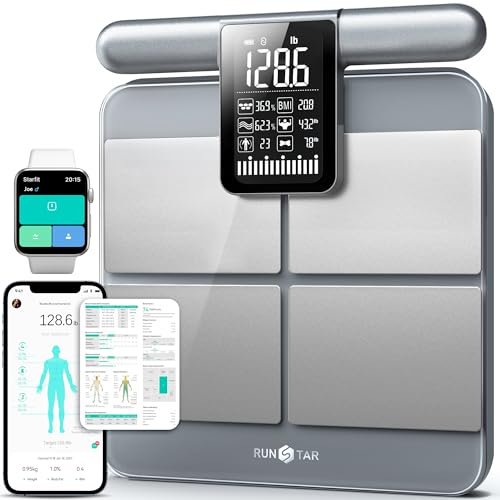
RunStar 8-Electrode Body Weight Scale with Handle Display

OMRON BCM-500 Body Composition Monitor and Scale

Tanita UM-081 Body Fat & Body Water Monitor Scale

Alcedo Smart Body Fat Scale, Color-Changing, White
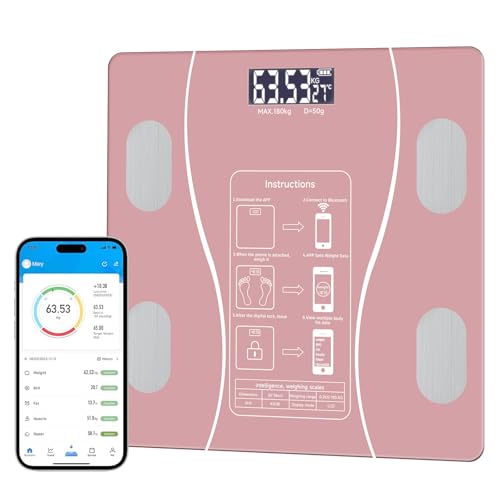
ChuangMaiShi Intelligent Body Fat Scale (Pink)
The Details Behind The Selections
Most bathroom scales measure only through your feet, which leaves your upper body unaccounted for. The RunStar adds four electrodes to a handheld bar plus four on the platform, letting dual-frequency BIA break down muscle and fat by body segment rather than as one blended estimate.
The payoff shows up in real routines. Lifters can watch arm and leg development separately, and the large screen built into the handle means you don’t need to squint down at your toes mid-measurement. One setup note worth knowing: you’ll pair the scale with the Starfit app over Bluetooth before your first reading, so budget five minutes for onboarding.
Notable Upsides
- Eight-electrode design enables segmental muscle and fat readings, not just whole-body averages
- Dual-frequency BIA generally reads more consistently than single-frequency foot-only platforms
- Handle-mounted display keeps numbers visible without bending over
- More than 50 tracked metrics give trend data for serious training programs
- A reading takes roughly 15 seconds once paired, easy to slot into a morning routine
Things To Consider
- The app connection is mandatory before measuring, which frustrates anyone wanting a standalone device
- Two-handed operation takes slightly longer than a step-on scale during busy mornings
Key Specs
Built With In Mind
Serious home trainers who want segmental data comparable to gym-grade analyzers will get the most from this system.
Where A Sibling Pick Shines
Anyone who dreads app setup should look at the Tanita UM-081 instead, since it delivers core readings with zero pairing required.
Where the RunStar chases depth, Omron plays a narrower, more clinical game. The BCM-500 tracks six indicators from a single step-on: weight, BMI, body fat percentage, skeletal muscle mass, resting metabolism, and visceral fat, the deep abdominal fat linked to metabolic health that ordinary scales never surface.
That visceral-fat number is the reason this model earns shelf space in health-conscious homes. Someone working with a doctor or dietitian gets a focused dashboard rather than fifty metrics they’ll never open again. Capacity tops out at 330 pounds, which covers most households but is worth checking against your needs. In our view, this is the pick for people who want trustworthy essentials, not a spreadsheet.
A Few Highlights
- Visceral fat tracking supports medically relevant conversations about abdominal health
- Resting metabolism readings help you calibrate calorie targets realistically
- Six clear indicators keep daily check-ins fast and readable
- Omron’s long history in home health monitoring lends confidence in build quality
Small Caveats
- No segmental breakdown, so lifters chasing arm-versus-leg detail will find it thin
- The 330-pound ceiling excludes some users that higher-capacity rivals accommodate
- Fewer metrics than app-driven competitors, which some owners eventually outgrow
Right Fit For
Adults managing weight under professional guidance who value a small set of meaningful numbers over exhaustive data.
Swap It Out When
Strength athletes needing per-limb muscle detail are better served by the RunStar 8-electrode scale’s segmental analysis.
Tanita has been building BIA scales in Japan since before smartphones existed, and the UM-081 reflects that old-school confidence: three measurements, two user profiles, one guest mode, no app anywhere in sight. You step on, it reports weight, body fat percentage, and body water percentage, done.
The healthy-range indicator is the quiet hero here. Instead of raw percentages floating in space, the display frames each reading against established ranges, which helps first-time users interpret what they’re seeing. Hydration tracking matters too, since water shifts can masquerade as fat loss on lesser scales. Owners commonly report these units lasting years with nothing more than an occasional battery swap, though the plastic platform won’t survive careless drops the way glass-and-metal builds might.
Useful Touches
- Healthy-range indicator turns raw numbers into actionable context instantly
- Body water percentage guards against mistaking hydration swings for fat change
- Two-user memory plus guest mode fits shared bathrooms gracefully
- 330-pound capacity matches most mainstream smart scales
- No Bluetooth, no accounts, no firmware updates to babysit
Points To Note
- Only three metrics, so data-hungry users may feel capped within months
- No trend syncing, meaning progress lives only in whatever notebook you keep
Quick Facts
Made For
Minimalists and older family members who want dependable readings without learning an app ecosystem.
Another Choice May Suit
Households wanting automatic history logging will prefer the Alcedo’s Bluetooth companion app for hands-free trend tracking.
Nobody expects a bathroom scale to be fun, yet Alcedo leans into exactly that. Seven selectable glow colors, adjustable through its companion app, turn each weigh-in into a small moment of light, and the clean white platform sits comfortably in modern bathrooms where black glass feels heavy.
Underneath the styling sits a competent tracker covering twenty metrics including weight, body fat, BMI, and muscle mass, synced over Bluetooth so your history builds itself. Compared with the Tanita UM-081 reviewed earlier, you trade standalone simplicity for automation and ambience. The honest caveat: novelty lighting is a preference, not a feature everyone keeps enabled, and some owners reportedly dim or disable it after the first week. For most people, though, it makes a daily habit feel less like a chore.
What Pays Off
- Seven-color customizable glow adds personality to a usually sterile object
- Twenty tracked metrics strike a middle ground between basic and overwhelming
- Bluetooth sync builds trends automatically, no manual logging needed
- White finish blends into bright, minimalist bathroom palettes
Honest Caveats
- The light show loses appeal for some owners after initial novelty fades
- Glass platforms demand gentle handling around tile floors, a common breakage point reported with this category
Who Will Love This
Design-minded renters and couples starting a shared wellness routine who want tech that looks intentional, not medical.
Not Your Match When
Users prioritizing maximum metric depth over aesthetics should step up to the RunStar’s 50-plus-metric platform instead.
Entry-level BIA scales usually force a choice between boring black slabs and flimsy construction. This ChuangMaiShi unit sidesteps both with a pink finish that stands out in a crowded category and a 400-pound weight capacity that actually beats every other pick here, including the premium options.
You get the fundamentals covered: weight, body fat percentage, BMI, and muscle mass via smartphone connection, backed by high-precision sensors. It won’t match the RunStar’s segmental depth or Omron’s visceral-fat reporting, and the brand carries less name recognition than Tanita or Omron, which matters to some shoppers. Still, as a starter scale for a dorm, first apartment, or guest bath, it covers the essentials at entry pricing. The honest read is that you’re paying for capability, not pedigree.
Features That Help
- 400-pound capacity exceeds all four pricier picks in this lineup
- Core four-metric set covers weight, fat, BMI, and muscle for everyday goals
- Phone connectivity lets progress accumulate without manual notes
- Pink colorway adds warmth to neutral bathrooms
Less Ideal Details
- Four metrics leave out hydration, visceral fat, and metabolism data
- Lesser-known brand means thinner long-term reliability track record than Omron or Tanita
- App experience depends on third-party software quality, which varies in this price tier
Product Snapshot
Whose Shelf It Belongs On
First-time scale owners, students, and gift-givers who want capable basics without committing to a premium brand.
Reach For A Different Pick When
Households needing clinically oriented indicators like resting metabolism fit the OMRON BCM-500 better despite its lower capacity.
What Matters Most Before Choosing Fat Measuring Scales
Accuracy Starts With Consistency
Consumer BIA scales aren’t lab instruments, and their fat estimates shift with hydration, recent meals, and even skin temperature. The practical move is weighing at the same time each day, ideally morning before eating, barefoot on a hard floor. Trends matter far more than any single reading.
Electrode Count Changes What You Learn
Foot-only pads treat your body as one block, while eight-electrode designs like the RunStar separate upper and lower segments. Casual trackers rarely need that granularity, but anyone following a structured lifting program benefits from seeing limb-level changes.
App Dependence Is A Lifestyle Decision
Bluetooth models log everything automatically but require accounts, updates, and a charged phone nearby. Standalone units like the Tanita trade convenience for permanence. Decide honestly which friction you’ll tolerate at 6 a.m.
Capacity And Platform Build
Check the stated weight ceiling against everyone in the household, and favor tempered glass or reinforced platforms if the scale lives on tile. Drop damage is the most commonly reported failure mode across this category.
Key Considerations Across These Picks
Traps First Timers Fall Into
Chasing the highest metric count is the classic error; fifty numbers you ignore beat six you act on. Another slip is comparing readings between different scales, since BIA algorithms differ by brand and the numbers won’t reconcile. Pick one device and stay loyal to it.
Where The Extra Money Goes
Higher-tier models spend their cost on electrode quantity, dual-frequency sensing, and validated algorithms rather than prettier displays. That investment pays off for athletes and medically supervised users. Everyone else gets diminishing returns past the mid tier.
Frequently Asked Questions
How accurate are fat measuring scales?
They’re consistent trend tools rather than precise measurement devices. Expect estimates within a few percentage points of clinical methods, with day-to-day variation driven mainly by hydration.
Can I use one while pregnant?
Most manufacturers advise against BIA readings during pregnancy because electrical impedance assumptions don’t hold. Weight-only mode is typically fine, but confirm with your doctor.
Do these work on carpet?
No, soft flooring compresses unevenly and skews load cells. Place the scale on hard, level flooring such as tile, wood, or concrete.
Why do my numbers change throughout the day?
Hydration, food, exercise, and even a hot shower shift your body’s electrical conductivity. Weighing under consistent conditions smooths out the noise.
Are they safe with pacemakers?
BIA sends a small electrical current, so people with implanted electronic devices should avoid body-composition modes entirely. Consult your cardiologist before using one.
Closing Thoughts
The right fat measuring scale is the one matching your actual habits, not the longest spec sheet. Data-driven lifters get genuine value from the RunStar’s segmental analysis, while health-focused households will appreciate the Omron’s focused six-metric view. Minimalists should shortlist the Tanita, style-conscious homes the Alcedo, and cautious first-timers the ChuangMaiShi. Whichever direction you lean, weigh consistently, watch the trend line, and let the numbers inform rather than dictate.




