A loose crimp on a fence wire or a battery cable is the kind of small failure that turns into a big weekend repair. The right crimper squeezes a sleeve down evenly so the connection holds under tension, season after season. This roundup covers five options that span light fishing-line work all the way up to hydraulic battery-cable duty, so you can match the tool to the job instead of guessing. Each entry breaks down what it does well, where it falls short, and who should actually spend their money on it.
A Fast Comparison Of The Options

IRWIN VISE-GRIP Fencing Pliers 10-1/4-Inch (2078901)

iCrimp Wire Rope Swager Up To 2.2mm
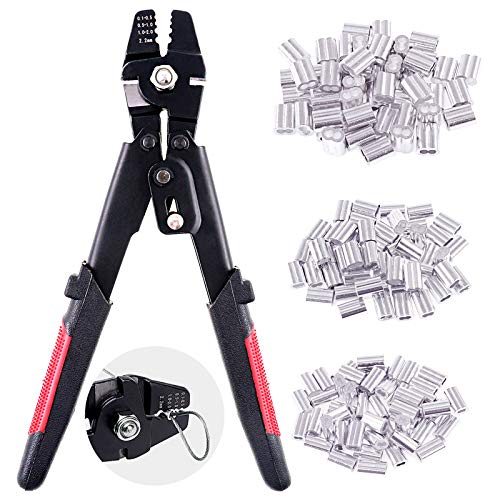
Swpeet Wire Rope Crimping Tool With 150Pcs Sleeve Kit

Twidec Wire Rope Crimping Tool With 160PCS Sleeve And 66FT Wire Rope

YUZES 10-Ton Hydraulic Crimping Tool, 12 to 2/0 AWG
More Details On Our Top Picks
This is the classic fencing plier shape, built from nickel chromium steel with machined jaws that bite hard into wire without slipping. At just over ten inches long, it gives you enough leverage to twist and cut fence wire in one hand while you hold tension with the other.
Anyone running or repairing barbed or smooth wire fencing will recognize the workflow immediately. The padded grips matter more than they sound like they would, because a full afternoon of splicing tends to wear out bare hands fast.
What Makes Sense
- Nickel chromium steel construction holds up to outdoor work seasons at a time
- Machined jaws grip wire firmly, which means fewer slipped twists mid-splice
- Cushioned grips reduce hand fatigue during long fence-line sessions
- One tool handles both metal and wood post work, trimming your kit
Things To Consider
- It’s a general fencing plier, not a swager, so it won’t compress aluminum sleeves the way the iCrimp below does
- The blue coating can show scuffs after rough handling, mostly cosmetic
Who It Suits Best
Ranchers, homesteaders, and anyone maintaining wire fencing who wants one dependable plier instead of a drawer full of single-task tools.
A Better Fit Elsewhere
For crimping sleeves onto fishing line or thin cable, the iCrimp Wire Rope Swager Up To 2.2mm is the purpose-built choice.
Where the IRWIN above twists wire, this tool compresses sleeves, and that difference defines everything about it. Four crimping positions cover line from 0.1mm up to 2.2mm, sized for copper or aluminum sleeves on test lines from roughly 50 to 450 pounds.
The carbon steel jaws get a black oxide finish, a treatment that leaves a dense surface film resisting corrosion. Saltwater anglers are the obvious beneficiaries here, since ordinary pliers tend to pit quickly around boats and docks.
Why It Works Well
- Four graduated crimp positions mean one tool covers most common sleeve sizes
- Black oxide coating shrugs off saltwater exposure better than bare steel
- Built-in side cutters let you trim excess line without switching tools
- Handles heavy test line up to 450 lb class applications
Small Caveats
- Jaws benefit from an occasional wipe-down and light oiling after wet trips, a habit worth building
- Two-handed squeeze effort rises noticeably near the 2.2mm ceiling
Feature Snapshot
Made For
Saltwater and freshwater anglers who tie their own leaders and want a compact, corrosion-minded swager that lives in a tackle bag.
Swap It Out When
If you’d rather start with sleeves already in the box, the Swpeet kit bundles 150 ferrules with an equivalent crimper.
On paper this looks nearly identical to the iCrimp reviewed earlier, and mechanically it is close: carbon steel body, black oxide finish, four crimp positions from 0.1mm to 2.2mm, plus two hardened side cutters. The real difference sits in the box, because 150 aluminum double-barrel ferrule sleeves in three sizes come along for the ride.
That matters more than any spec sheet suggests. A first-time rigger learning how sleeve compression works burns through hardware fast, and having a starter supply on hand removes the frustration of stopping mid-project to order more.
Where It Excels
- 150 double-barrel ferrules in three sizes arrive ready to use
- Same 50-450 lb test range as pricier standalone swagers
- Oxide-treated surface stands up to damp storage and occasional salt spray
Honest Caveats
- Aluminum sleeves are soft, so keep them dry and sorted or they’ll oxidize in the bag
- Fit and finish sit a step below premium brands, though owners generally report solid function for the money
The Right Fit
Newcomers to leader-making or light wire-rope projects who want the tool and consumables in a single purchase.
Where A Sibling Pick Shines
Anglers who already stock sleeves will find the leaner iCrimp Wire Rope Swager Up To 2.2mm the tidier buy.
The Swpeet kit gives you sleeves; this one goes further and ships the actual wire rope too. You get 160 aluminum loop sleeves in 1/16-inch sizing, 66 feet of 304 stainless steel cable, and 12 wire rope thimbles, which are the small teardrop inserts that protect a looped cable from wearing against itself.
Put together, that’s enough material to build garden trellises, clotheslines, or light railing runs without a separate shopping trip. The crimper itself uses stainless construction with the familiar four-position layout covering 0.1mm through 2.2mm and the same 50-450 lb working range as its rivals.
What Helps Most
- Complete project bundle: crimper, sleeves, 66 feet of cable, and thimbles
- 304 stainless rope offers strong corrosion resistance outdoors
- Thimbles extend loop life by reducing abrasion at anchor points
- Stainless tool body suits humid sheds and coastal garages
Points To Note
- Everything arrives in one package, so first-timers may find the parts count slightly overwhelming
- Fixed 1/16-inch sleeve sizing limits you to matching cable diameters
Quick Facts
Right Fit For
DIYers tackling a full wire-rope project from scratch, trellis builders, and homestead tinkerers who value having every component matched and ready.
Reach For A Different Pick When
Heavy battery cable work calls for the YUZES 10-Ton Hydraulic Crimping Tool, which operates in a completely different weight class.
Everything before this point works thin wire and fishing line. The YUZES plays a different sport entirely: a hydraulic ram delivering 10 tons of force onto lugs for battery cables ranging from 12 AWG up to 2/0 AWG. For context, 2/0 cable is the thick stuff feeding inverters, winches, and dual-battery setups in trucks and boats.
The head uses overall quenching during manufacture, a heat treatment that toughens the metal through its full thickness rather than just the surface. Dies are hardened steel with a chrome finish, and owners commonly report clean, consistent crimps on both copper and stainless terminals. One honest note: hydraulic tools carry more weight than hand pliers, so plan storage accordingly.
Where It Delivers
- 10 tons of hydraulic pressure crimps large-gauge lugs that hand tools simply can’t
- Quenched pliers head resists cracking under repeated heavy loads
- Chrome-finished hardened dies handle copper and stainless terminals alike
- Wide 12 to 2/0 AWG range covers most automotive and solar cable work
Worth Noting
- Hydraulic units need occasional seal checks and careful storage to avoid fluid leaks
- Overkill for fishing line or light fence wire, where the smaller picks above make more sense
Key Specs
Whose Shelf It Belongs On
Off-grid solar installers, auto electricians, and serious DIYers wiring winches, inverters, or dual-battery systems.
Another Choice May Suit
Lighter leader and fence-sleeve work belongs with the Swpeet Wire Rope Crimping Tool With 150Pcs Sleeve Kit instead.
What To Weigh Before You Buy
Match The Tool To Your Material
The fastest mistake in this category is buying a crimper sized for the wrong job. Fishing leaders and thin wire rope live in the sub-2.2mm world, where a compact swager with graduated dies does the work cleanly. Battery cable and heavy lugs demand hydraulic force, and no amount of hand strength substitutes for it. Start from the thickest connection you’ll actually make, then choose downward.
Look Past The Tool Itself
Consumables shape your experience as much as the tool does. Kits that include sleeves, thimbles, or cable save a second purchase and guarantee compatible sizing, which matters because a mismatched sleeve crimps poorly no matter how good the pliers are. Corrosion resistance deserves equal attention: black oxide and stainless finishes earn their keep anywhere humidity, salt air, or outdoor storage enters the picture.
Grip Comfort Is Real Money
A crimper you use twice a year forgives an uncomfortable handle. One you reach for weekly doesn’t. Padded grips, sensible leverage, and a weight you can control one-handed all translate directly into cleaner crimps late in a long session, when tired hands start rushing.
Key Considerations Across These Picks
Traps First Timers Fall Into
Shoppers often grab the cheapest crimper without checking jaw capacity, then discover their sleeves don’t fit any die position. Another frequent slip is ignoring finish quality; bare carbon steel rusts fast in a garage or tackle box. Match die range to your sleeves first, then judge comfort and coatings.
What Separates Premium From Basic
Higher-tier tools spend their cost on metallurgy and finishing: quenched heads, chrome-plated dies, oxide treatments. Those details show up as crimps that hold for years instead of seasons. Paying up makes sense for daily professional use; occasional hobbyists usually do fine mid-range.
Frequently Asked Questions
Can one crimper handle both fishing line and fence wire?
Not usually. Fishing swagers compress aluminum sleeves on thin line, while fencing pliers twist and cut heavier wire. The tasks share a name but not a mechanism.
What does AWG mean on a cable crimper?
AWG stands for American Wire Gauge, the standard sizing system for electrical conductors. Lower numbers indicate thicker cable, so 2/0 is far larger than 12 AWG.
Do I really need thimbles for wire rope loops?
They’re strongly recommended wherever a loop bears load repeatedly. A thimble keeps the bend radius gentle and stops the cable from cutting into itself at the anchor.
How do I keep a black oxide crimper from rusting?
Wipe it dry after wet use and add a light coat of oil occasionally. The oxide film slows corrosion considerably, but standing moisture eventually wins without basic care.
Are hydraulic crimpers worth it for home use?
Only for large-gauge battery or welding cable work. Hand crimpers handle anything smaller, and hydraulics add weight, cost, and maintenance for no benefit on light jobs.
Closing Thoughts
Every pick here solves a specific crimping problem well, and none of them pretends otherwise. Match the tool’s capacity to your thickest real-world job, factor in whether bundled sleeves or cable save you a trip, and weigh grip comfort honestly against how often you’ll reach for it. Do that, and whichever option lands in your cart will feel like the right call years from now.