Anyone who heats with wood knows the difference a good tool makes. The wrong axe bounces off knotty rounds, dulls fast, and leaves your back paying the bill. This shortlist covers five firewood axes built for different jobs, from heavy German-forged splitters to a compact camp maul that fits in a trunk. Match the tool to your woodpile and the work gets noticeably easier.
The Main Contenders
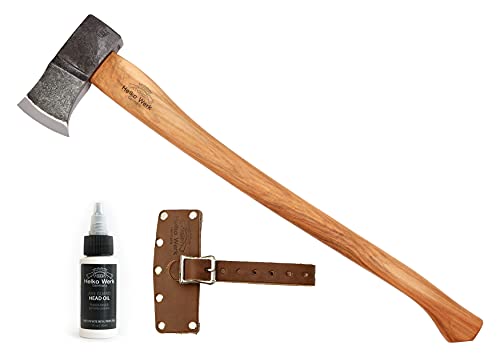
1844 Helko Werk Germany Traditional Saxon Log Splitting Axe
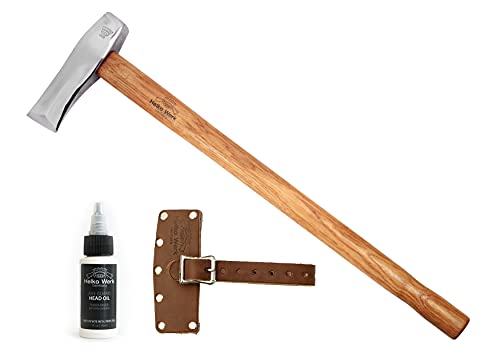
1844 Helko Werk Germany Classic Nordic Splitting Axe

1844 Helko Werk Germany Vario Heavy Log Splitter

Fiskars A-Series Chopping Axe 28″
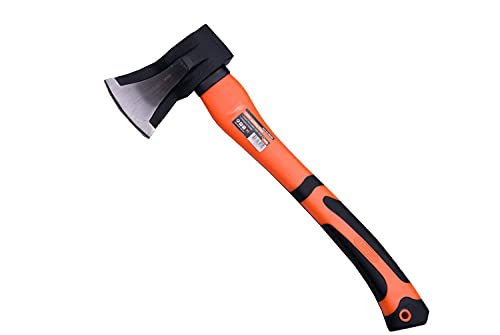
Edward Tools Wood Splitting Maul 17″
More Details On Our Top Picks
This Saxon splitter comes out of a German forge, and the heritage shows in the head geometry. It’s shaped to deliver maul-level force without pinching or wedging itself into stubborn grain, yet it balances closer to a true axe than a sledge. That combination matters when you’re working through a stack of dense hardwood rounds.
The small turnaround hook on the heel gives you a second way to lever stuck pieces free, which owners of big splitters tend to appreciate once winter sets in.
Useful Strengths
- Hand-forged construction holds an edge through season after season of hard use.
- The head resists getting stuck in twisted grain, so fewer interruptions mid-swing.
- Balance feels like an axe rather than a blunt hammer, reducing wrist fatigue over long sessions.
- The heel hook lets you pry apart rounds that refuse to cooperate.
Things To Consider
- Carbon steel heads need a light coat of oil before storage or surface rust will show up in a damp shed.
- Heavier heads ask more from smaller frames; technique counts as much as strength here.
Quick Facts
Who It Suits Best
Homesteaders and serious wood burners processing big-diameter hardwood rounds every week.
A Better Fit Elsewhere
Campers wanting something lighter for trailside kindling will get more mileage from the Edward Tools 17-inch maul.
Where the Saxon leans toward brute force, this Classic Nordic model commits fully to traditional form: a straight handle and a single-minded focus on difficult splits. The straight shaft changes how the tool tracks through the swing, rewarding a consistent stance over flashy technique.
Its 5½-pound head sits at the heavy end for an axe, enough mass to open large rounds and tough firewood without crossing into full-maul territory. For households burning through a cord or more each cold season, that weight earns its keep.
A Few Strong Suits
- The 5½-pound head cracks large rounds that lighter hatchets just bounce off.
- Straight-handle design suits woodworkers who prefer classic Scandinavian-style balance.
- Purpose-built solely for splitting, so nothing about the profile compromises that job.
Small Caveats
- Straight handles offer less grip security than curved ones in wet or gloved hands, a trade-off worth knowing upfront.
- At this head weight, occasional handle inspections are smart; wood handles loosen over years of impact.
- Overkill for kindling and small branches, where a lighter tool works faster.
Made For
Rural households facing long winters who split a full cord of seasoned firewood annually by hand.
Look Elsewhere When
Folks needing a dual-purpose chopper for felling small trees will find the Fiskars A-Series more adaptable around the yard.
This is the biggest tool on the list, and it doesn’t apologize for it. The Vario pairs a deep wedge profile with punishing head weight, generating striking force aimed squarely at tree trunks and oversized rounds that defeat ordinary axes.
The standout engineering detail is its patented interchangeable head system. The C50 high-carbon steel head runs 53-56 HRC on the Rockwell hardness scale, a measure of steel hardness that predicts edge durability. Being able to swap heads extends the platform’s life well beyond a single fixed tool.
Where It Excels
- Deep wedge plus heavy mass drives through trunks most tools stall on.
- Patented interchangeable head design future-proofs the handle investment.
- C50 high-carbon steel at 53-56 HRC resists deformation under repeated heavy impact.
- Handles demanding seasonal jobs without complaint, year after year.
Worth Bearing In Mind
- The sheer size makes it awkward to transport; it lives in a truck bed or woodshed, not a backpack.
- High-carbon steel demands routine oiling to stay ahead of corrosion in humid climates.
Core Details
Right Fit For
Landowners clearing storm-felled trunks and splitting oversized hardwood on a regular schedule.
Consider Something Else When
Smaller yards and lighter loads call for the Fiskars A-Series, whose 28-inch frame is far easier to store and swing casually.
After three heavyweight Germans, the Fiskars reads like a breath of fresh air. At 28 inches, it’s sized for one-handed carry around the property while still delivering two-handed chopping authority. Fiskars built its reputation on lightweight composite handles, and this model keeps that DNA.
The blade carries an ultra-sharp edge with a low-friction coating, which means less sticking in green wood and cleaner bites on small trees. Campsite prep, backyard cleanup, dropping a sapling for firewood: it covers all of it without demanding a lumberjack’s shoulders.
A Favorable Mix
- Ultra-sharp, low-friction blade bites cleanly instead of bouncing off green wood.
- Balanced design maximizes swing speed, so each strike does more work.
- 28-inch length stays maneuverable in tight yards and around campsites.
- Versatile enough to fell small trees and split logs with one tool.
Points To Note
- Lighter build won’t crack massive rounds like the Helko Werk models will; know your woodpile size first.
- The coated edge benefits from touch-ups with a file each season to stay sharp.
Who Will Love This
Suburban homeowners handling occasional felling, storm cleanup, and modest firewood batches.
Swap It Out When
Dense, trunk-diameter hardwood calls for the Helko Werk Vario, whose deep wedge was engineered for exactly that fight.
Not everyone needs a forge-made heirloom. This Edward Tools maul packs a forged steel head, a 3-pound weight, and a 17-inch fiberglass handle into a package that rides easily in a car trunk or camper bin. It merges axe and sledge functions, replacing two separate tools for kindling duty.
The weighted head does much of the work on small logs, and the rubber sheath protects both the edge and whatever it’s stored next to. First-time splitters often start here, and honestly, that’s a sensible place to learn swing mechanics.
The Value In It
- Combined axe-and-sledge design saves money and pack space versus buying two tools.
- Ergonomic fiberglass handle absorbs shock better than bare wood on cold mornings.
- Included rubber sheath keeps the edge protected during storage and transport.
- Light 3-pound build stays manageable for teens and smaller-framed users.
The Fine Print
- Short 17-inch reach limits leverage; big rounds will laugh at it, so pair expectations with log size.
- Entry-level steel softens faster than the German-forged options and needs more frequent sharpening.
Feature Snapshot
The Right Fit
Weekend campers and beginners building a starter kit who split kindling, not cords.
Where Another Pick Suits Better
Households burning serious winter volumes should step up to the Classic Nordic’s 5½-pound head for sustained production work.
Choosing a Splitting Tool That Fits Your Woodpile
Match Head Weight To Your Logs
Head weight determines what you can actually crack. Rounds under eight inches yield to a 3-pound head; dense oak or trunk sections want 5 pounds or more. Buying too light means frustration, too heavy means exhaustion. Measure your typical log diameter before committing.
Handle Material Changes The Experience
Wood handles feel traditional and damp vibration naturally, but they demand inspection and occasional replacement. Fiberglass shrugs off moisture and impacts, making it the practical choice for humid climates or rough storage. Straight versus curved grip also shifts swing mechanics more than most newcomers expect.
Steel Quality Predicts Lifespan
Forged high-carbon steel, like the C50 rated 53-56 HRC in the Vario, holds edges longer and deforms less under repeated strikes. Softer entry-level steels sharpen easily but lose their bite quickly. Frequent users recoup the higher upfront cost within a couple of seasons.
Think About Where It Lives
A 36-inch-class splitter needs shed space and a vehicle bed for hauling. Shorter tools travel to campsites and fit apartment storage. Carbon steel wants a wiped-down surface and light oil film before winter storage, regardless of brand tier.
A Quick Word Before You Commit
Wrong Turns To Avoid
The most common mistake is sizing up: grabbing a massive maul for a mostly decorative fireplace. Oversized tools discourage use, and unused tools gather rust. The second slip is ignoring storage reality. High-carbon heads left on damp concrete floors corrode within weeks, so plan a dry rack or wall hooks before the tool arrives.
The Case For Spending Up
Premium tiers buy forging quality, harder steel, and designs refined over generations. Hand-forged heads resist chipping and hold edges through years of impact that budget heads survive only seasons. Occasional users won’t feel the difference; anyone splitting weekly will, usually within the first month of ownership.
Frequently Asked Questions
What size axe do I need for splitting firewood?
Most household splitting works well with a head between 3 and 5½ pounds on a handle of 17 inches or longer. Larger, denser rounds justify heavier heads and full-length handles.
Is a maul better than an axe for splitting?
Mauls concentrate wedge-shaped force, so they excel at cracking rounds along the grain. Axes split faster on easy wood and handle felling tasks a maul cannot.
How often should I sharpen a splitting axe?
A light filing pass once or twice per season keeps most edges effective. Heavier use or abrasive, dirty bark may require touch-ups monthly.
Can I use one axe for both felling and splitting?
General-purpose chopping axes such as the Fiskars A-Series manage both moderately well. Dedicated splitters simply do the splitting job with less effort per swing.
How do I stop my axe head from rusting?
Wipe the head dry after use and apply a thin layer of oil before storing it somewhere ventilated. Avoid leaving any steel tool directly on concrete floors.
Closing Remarks
Your woodpile should decide this purchase, not marketing. Big hardwood rounds point toward the Helko Werk trio, with the Vario suiting the heaviest work. Mixed yard duty favors the Fiskars, and camp kits belong to the Edward Tools maul. Whichever direction you lean, matching the tool to your actual logs turns an afternoon chore into a satisfying rhythm.