


Nothing ruins a cold evening like firewood that hisses, smokes, and refuses to catch. The culprit is almost always moisture, and the only reliable way to know what’s actually inside your logs is a dedicated meter. Whether you’re seasoning your own stack, buying cords from a local seller, or checking walls for hidden damp after a leak, the right tool takes the guesswork out of the burn. This roundup covers five meters spanning simple pinless scanners to multi-function pin testers, so you can match the tool to how you actually handle wood and building materials.
The Lineup, Simplified

Povlen Pinless Wood Moisture Meter for Lumber & Drywall

Calculated Industries 7440 AccuMASTER XT Digital Moisture Meter
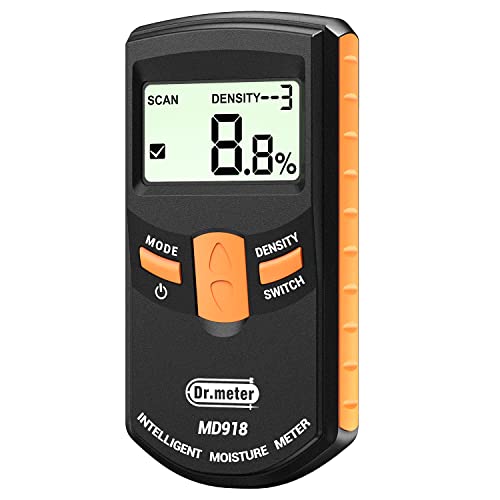
Dr.meter Pinless Wood Moisture Meter for Drywall

Mecurate Pinless Wood Moisture Meter, 4 Mode 9 Density Settings
PREXISO 7-in-1 Digital Wood Moisture Meter
A Closer Look At Each Pick
Sanded tabletops and finished cabinetry don’t survive pin holes well, and that’s exactly where this Povlen earns its keep. The sensor reads through high-frequency waves rather than probes, so you press it flat against the surface instead of stabbing it.
The HOLD button records a reading with one press, which matters when you’re leaning into a tight corner behind a bookcase. For most hobbyist woodworkers checking stock before a build, this is the least fussy option here.
Practical Pluses
- Pinless scanning leaves zero holes or scratches on high-end wood surfaces
- HOLD function lets you capture a number without crouching over the display
- Doubles as a drywall checker during renovation walk-throughs
- Smart-chip processing aims for quick, repeatable readings across a board face
Worth Noting
- Surface-only scanning reads shallower than pins, so core moisture in thick logs may be missed
- You’ll want to keep the sensor pad clean; sawdust buildup is a commonly reported accuracy drag
Who It Suits Best
Woodworkers and furniture restorers who need non-marring checks on finished or valuable pieces.
Where Another Pick Suits Better
Anyone testing split firewood rounds will get deeper truth from the Calculated Industries 7440 AccuMASTER XT and its pin probes.
Where the Povlen stops at the surface, the AccuMASTER XT goes into the material with two sharp pins. That penetration is why remodelers reach for it: pins read the moisture trapped inside lumber, drywall, plaster, even brick and concrete.
Picture tracing a suspected roof leak across a ceiling. The backlit LCD keeps numbers legible in dim attics and crawl spaces, and handheld sizing means one-handed operation while you hold a flashlight in the other. It’s a practical tool for people who diagnose buildings, not just season logs.
What Works In Its Favor
- Pin-type probes measure internal moisture, not just the outer shell of a log
- Backlit LCD stays readable in dark basements and attics
- Covers wood, walls, ceilings, carpet, and firewood in one handheld unit
- Handheld form factor suits one-handed work in awkward spaces
Trade Offs
- Pin holes are permanent, so skip it on visible finished surfaces
- Pins bend with rough handling; owners commonly report replacing them after heavy seasons
Quick Facts
Made For
DIY remodelers and home inspectors tracking leaks, flooding aftermath, and damp framing.
Consider Something Else When
For quick, hole-free scans of finished furniture, the Dr.meter pinless scanner is the gentler match.
First-time users tend to abandon tools that demand calibration homework, and this Dr.meter sidesteps that problem. High-frequency electromagnetic waves do the sensing, so there are no pins to seat and no cleanup afterward.
The standout detail is its ten selectable timber grades. Different species hold water differently, and choosing the right grade keeps readings honest whether you’re checking pine shelving or oak flooring. Compared with the single-mode Povlen above, that species flexibility is the main reason to step up here, though you trade away the one-button simplicity in exchange.
Notable Gains
- Non-destructive HF sensing spares furniture and valuables from holes
- Ten timber grades improve accuracy across different wood species
- No drilling means no cleanup between measurements
Small Caveats
- Selecting the correct wood grade adds a small learning curve for newcomers
- Electromagnetic scanning can be influenced by nearby metal fasteners, a widely reported quirk of pinless designs
Right Fit For
New woodworkers and renters who want accurate species-aware readings without damaging anything they don’t own.
Not Your Match When
Firewood sellers needing hard numbers on rough splits will prefer the Mecurate’s density settings and alert system.
This black Mecurate is the busiest tool on the list, and that’s the point. Four measurement modes and nine density settings let you tune the scan to the material at hand, from wallboard to dense hardwood logs, with 0.1% resolution underneath it all.
The part you’ll appreciate on a cold afternoon by the stack is the three-colored LED bar paired with an audible alert. Sweep it along a row of splits and listen: green means ready to burn, red means back to the rack. Mapping large wall surfaces works the same way, and the backlit screen handles dim garages. In our view, it’s the most complete pinless package here for anyone managing serious firewood volume.
The Helpful Details
- Audible alerts let you map damp zones without watching the screen
- Nine density settings adapt readings to different wood types and building materials
- 0.1% resolution catches small changes between similar-looking boards
- Three-color LED bar makes low, mid, and high moisture obvious at a glance
- Backlit display suits unlit garages and evening stacking sessions
Things To Consider
- More modes mean more menu time; casual users may never touch half of them
- Battery care matters, since cold storage sheds drain cells faster than room temperature
At A Glance
Best Suited To
Homesteaders and firewood buyers who sort cords regularly and want fast pass-fail feedback on every split.
Look Elsewhere When
Shoppers who want temperature and humidity readings alongside moisture should look at the PREXISO 7-in-1 below.
The PREXISO swings back to pin-style measurement, and its two stainless steel probes give it an edge on mixed hardwood piles where surface readings lie. Seven calibration scales span softwoods, hardwoods, and building materials, covering moisture content from 0% up to 57%.
What separates it from the AccuMASTER XT is breadth: four measurement modes including single-point, multi-point averaging, and min/max capture, plus ambient temperature and humidity readings. Rubber side grips keep repeated testing comfortable, and auto power-off saves the battery when the tool gets left in a coat pocket. The color backlit screen with a hold function rounds out a genuinely versatile tester.
Points In Its Favor
- Seven calibration scales cover softwood, hardwood, and building materials
- Wide 0% to 57% range handles soaked studs down to kiln-dried stock
- Min/max and averaging modes speed up surveying many boards quickly
- Rubber grips reduce hand fatigue during long sessions
Points To Keep In Mind
- Pins leave small holes, so finished surfaces stay off-limits
- Probe tips dull with heavy use; storing the included cover on them preserves sharpness
Core Details
Whose Shelf It Belongs On
Landlords and maintenance-minded homeowners juggling wood checks, humidity monitoring, and occasional wall surveys.
Skip It When
Your priority is untouched antique furniture; the Povlen pinless scanner handles those checks without leaving a mark.
What Matters Most Before Choosing a Firewood Moisture Meter
Pin Versus Pinless Design
Pin meters drive two metal probes into the wood and measure electrical resistance between them, which gives you a true internal reading. Pinless models scan with electromagnetic waves from the surface, protecting finishes but reading shallower. Split firewood rewards pins; finished furniture demands pinless.
Species and Density Compensation
Different woods carry baseline moisture differently, so a reading taken on oak with a pine setting will skew wrong. Models like the Dr.meter with ten timber grades and the Mecurate with nine density settings let you correct for species. Occasional users can lean on general modes, but regular sorters should prioritize this adjustment.
Readout Style and Feedback
A bare percentage suits experienced hands, yet a colored LED bar or audible tone speeds decisions when you’re working through fifty splits. Backlit displays earn their place in dim sheds and crawl spaces. Choose feedback that matches how fast you need answers.
Where You’ll Store It
Garages and woodsheds swing between freezing and humid, conditions that drain batteries and corrode pin tips. Auto power-off, probe covers, and sturdy housings matter more than spec sheets suggest. The honest read is that durability features separate tools that last seasons from ones replaced yearly.
Key Considerations Across These Picks
Traps First Timers Fall Into
The most common mistake is matching a pinless scanner to seasoned-log duty, then blaming the tool when readings run low. Surface scans miss the wet core of a thick round. The second slip is ignoring species settings entirely, which quietly skews every number the meter reports.
The Case For Spending Up
Higher-tier models buy resolution, multiple density profiles, and environmental sensors rather than raw accuracy alone. That extra capability pays off for anyone sorting cords weekly or diagnosing building moisture professionally. Weekend burners rarely need it.
Frequently Asked Questions
What moisture level should firewood reach before burning?
Most seasoned hardwood lands around 15 to 20% moisture content, measured inside a fresh split. Above roughly 25%, wood tends to smoke heavily and burn inefficiently.
Do pinless meters work on freshly split logs?
They read the surface zone well, but the interior of a thick split may stay wetter than the scan shows. Pin meters give a truer picture on fresh cuts.
Can one meter check both firewood and drywall?
Yes, several picks here list building materials among their supported targets. Just switch to the appropriate mode or density setting first.
Why does my reading change across the same board?
Moisture distributes unevenly within any piece of wood, especially near knots or end grain. Taking several readings and averaging them gives a fairer result.
How often should I recalibrate or maintain my meter?
Most consumer models arrive factory calibrated and need no routine adjustment. Wipe the sensor pad or pin tips clean and store the tool dry between uses.
Wrap Up
Five meters, five honest personalities: the Povlen for gentle surface checks, the AccuMASTER XT for deep pin-truth, the Dr.meter for species-aware beginners, the Mecurate for volume firewood sorting, and the PREXISO for everything-plus-humidity. Match the design to your woodpile and your surfaces, and every future cord gets judged on facts instead of hope. Stay warm out there.




