Framing a deck or squaring up interior walls punishes sloppy layout fast, so the right gear matters more than most people expect. This shortlist covers the jobs you actually face on site or in the garage: hanging joists straight, finding studs without guesswork, projecting level lines across a whole room, driving structural fasteners, and cutting lumber to length cleanly. Each pick below fits a specific stage of framing work, from first chalk line to final screw.
The Essentials At A Glance
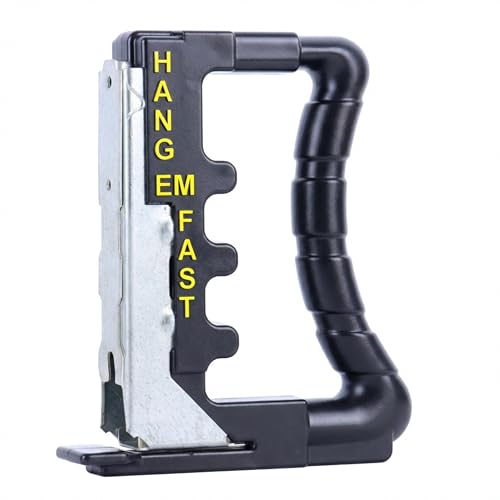
Hang Em Fast Joist Hanger Installation Jig

PREXISO 2-in-1 Stud Finder with Laser Level

Alloyman Laser Level with Tripod 4×360° Self-Leveling

Klein Tools 32303HD 20-in-1 Impact Driver Set

Metabo HPT C10FCG2 10-Inch Compound Miter Saw
Inside Each Recommended Option
Anyone who has nailed up a run of joist hangers solo knows the problem: the flange slips, the nail bends, and every hanger sits a little crooked. A jig like this clamps the hanger flush against the ledger while you drive nails, which is why deck crews reach for it. The manufacturer claims it trims installation time by as much as 75 percent, and that tracks with how much fumbling it removes.
It’s sized for common dimensional lumber, working with 2×4 through 2×12 stock depending on the hanger configuration, and pairs naturally with a joist-hanger nailer. For a weekend builder raising a ground-level deck, this is the kind of small tool that quietly saves an afternoon.
The Value In It
- Holds hangers square against the ledger so flanges sit flush without a second pair of hands.
- Covers standard sizes from 2×4 to 2×12, so one jig serves most residential deck layouts.
- Works alongside a dedicated joist-hanger nailer, speeding up repetitive nailing runs.
- Saves real labor hours; the maker cites up to 75 percent faster installs per hanger.
Things To Consider
- You’ll still want a hammer or nailer on hand; the jig guides placement but doesn’t drive anything itself.
- Steel-on-steel contact during nailing can scuff the jig’s finish over a long season, though function isn’t affected.
Key Specs
Who Should Grab It
Solo deck builders and DIY framers who want hangers placed right the first time will get the most from this jig.
A Better Fit Elsewhere
For indoor wall layout instead of deck structure, the PREXISO 2-in-1 Stud Finder with Laser Level suits renters and remodelers better.
Two tools usually live in the same drawer for wall work: a stud finder and a laser level. Prexiso merged them into one rechargeable unit, so marking anchor points and projecting a cross line happens with a single device in your pocket. That consolidation is genuinely handy in tight hallways where a tripod won’t fit.
The leveling side is manual rather than self-leveling, meaning you align it using built-in bubble vials instead of internal pendulum motors. In our view that’s fine for picture rails and shelving, though you should budget a moment for calibration before each detection session, since the manufacturer calls it out as required prep.
Well-Handled Touches
- Rechargeable battery eliminates the AA shuffle mid-project.
- Bubble vials light up in laser mode, making horizontal and vertical alignment easier to read.
- One compact body covers both detection and line projection, trimming what rides in the tool belt.
Points To Note
- Manual leveling demands your attention; unlike a self-leveling unit such as the Alloyman below, accuracy depends on reading those vials correctly.
- Calibration before use is a required step, so factor a minute into every job start.
- Included adhesive mounting strips struggle on dusty, textured, or wallpapered surfaces, so plan on screws or a different mount there.
Made For
Apartment dwellers and weekend remodelers who hang shelves, TVs, and trim and want one gadget doing double duty.
Swap It Out When
Whole-room tile or cabinet runs call for the Alloyman 4×360° Self-Leveling Laser Level, whose automatic leveling handles longer, more demanding layouts.
Where the Prexiso projects a single cross line, the Alloyman floods all four walls at once. Sixteen green lines wrap a room in full 360-degree coverage both horizontally and vertically, which turns a cabinet run or tile job into a paint-by-numbers exercise. Green diodes read brighter than red ones under typical shop lighting, another point in its favor.
Self-leveling is the headline here: set it down and the unit finds plumb on its own, no bubble-vial squinting. The included tripod gets the beam to working height, and a manual mode silences the out-of-level beep when you deliberately need an angled reference. One setup note from the manufacturer deserves respect: seat the battery firmly or the unit can wobble off true.
A Few Strong Suits
- Four independent 360-degree planes mean one placement covers an entire room’s layout marks.
- Automatic self-leveling removes human error from plumb and level references entirely.
- Tripod included, so the beam lands at practical height straight out of the box.
- A manual mode unlocks angled lines for stairs, rake walls, and sloped trim work.
Honest Caveats
- A loosely seated battery is a commonly reported cause of instability, so press it home before every session.
- Out-of-level beeping alerts you constantly until switched to manual mode, which some users find chatty indoors.
Details At A Glance
Right Fit For
Tile setters, cabinet installers, and serious DIYers tackling full-room layouts benefit most from this level of coverage.
Where Another Pick Suits Better
Quick single-wall hanging tasks are simpler with the lighter PREXISO 2-in-1 Stud Finder with Laser Level, which skips the tripod fuss.
Klein built this around a simple idea: one shank, twenty answers. Phillips, slotted, square, and Torx tips plus common nut-driver sizes all stack onto a single impact-rated body, so swapping between a #2 Phillips and a 5/16 nut driver takes seconds instead of a trip to the bag. Every component carries an impact rating, which matters because ordinary bits crack under the hammering action an impact driver delivers.
It also accepts a 1/4-inch quick-connect handle for hand-driven work, giving you a fallback when the cordless stays on the charger. Framers who hate digging through bit cases will appreciate the consolidation, though anyone needing metric sockets will still carry a second set.
What Pays Off
- All twenty functions ride on one shaft, shrinking belt clutter dramatically.
- Impact-rated construction survives the torque pulses that destroy standard bits.
- Quick-connect handle compatibility keeps it useful even away from the drill.
Small Limitations
- SAE sizing only; metric fasteners demand a separate kit.
- Tips stored on the body can rattle loose in a rolling box, so check them before climbing a ladder.
The Right Fit
Professional carpenters and punch-list workers running one impact driver all day will lean on this daily.
Reach For A Different Pick When
Rough lumber cutting is outside its lane entirely; the Metabo HPT miter saw below handles that stage of framing.
This second-generation saw targets the crossover crowd: pros framing additions and homeowners building their own decks. The 15-amp motor spins a 40-tooth TCT blade through dimensional lumber without bogging, and the Xact Cut shadow line shows exactly where the blade meets the mark before you pull the trigger. That preview alone prevents a surprising number of miscuts on crown and casing.
Single bevel travel spans 0 to 45 degrees left, covering most compound angles trim work demands. The lightweight build makes it the easiest saw here to haul up a ladder or between job sites, a genuine advantage over heavier sliding models. For a first miter saw or a dedicated jobsite cutter, it hits a sensible balance.
Noteworthy Benefits
- Xact Cut shadow line previews the cut path, reducing wasted boards on precise trim runs.
- 15-amp motor with a 40T TCT blade powers clean passes through framing stock.
- Lightweight chassis travels easily between garage, deck site, and truck bed.
- 0-45 degree single bevel handles the compound angles baseboard and crown require.
Trade-Offs To Consider
- Bevel swings one direction only; wide crown springs may need workarounds compared with dual-bevel saws.
- Blade changes and dust cleanup are routine maintenance you’ll perform regularly on any saw this size.
Quick Facts
Who Will Love This
DIY deck builders and trim carpenters wanting portable, accurate cutting without sliding-saw bulk will feel at home here.
Not Your Match When
Layout-only shoppers with no cutting needs should stick with the Hang Em Fast Joist Hanger Installation Jig instead.
What Matters Most Before Choosing Framing Tools
Match The Tool To Your Build Stage
Framing unfolds in stages: layout, fastening, cutting. Buying for the stage you’re stuck on beats buying everything at once. Deck builders start with a jig like the Hang Em Fast; interior finishers start with detection and leveling gear. Map your next three projects first, then spend accordingly.
Accuracy Features Beat Raw Power
A shadow line, a self-leveling pendulum, or a flush-clamping jig saves more material than extra amps ever will. Miscut boards and crooked hangers cost real money on every project. Look for features that remove guesswork rather than ones that just add speed.
Weight And Portability Shape Daily Use
A 25-pound saw you’ll actually carry beats a 45-pound one that lives in the garage. Same logic applies to a pocketable stud finder versus a tripod rig. Honest assessment of how far you haul gear each day should drive the decision more than spec sheets do.
Corded Versus Cordless Trade-Offs
Corded tools like the Metabo HPT deliver steady power for long sessions, while rechargeables such as the Prexiso win on convenience. Consider your access to outlets on typical job sites before committing either way.
Key Considerations Across These Picks
Wrong Turns To Avoid
Shoppers often buy a laser level expecting automatic alignment, only to discover manual models need vial reading and calibration. Read the leveling type before checkout. Another slip: pairing non-impact-rated bits with an impact driver, which snaps tips quickly. Match accessory ratings to the tool driving them.
When Paying More Pays Off
Higher-tier levels add self-leveling motors and multi-plane output, which pay for themselves on full-room installations. Premium saws add cut-preview systems and smoother bevel mechanisms. For occasional weekend use, entry models suffice; for weekly production work, the upgrade earns its keep in saved time and material.
Frequently Asked Questions
What does a joist hanger jig actually do?
It clamps the metal hanger flush against the ledger board while you nail, holding it square and at the correct height. That eliminates the slipping and misalignment that happen when nailing freehand.
Is a manual laser level accurate enough for home projects?
Yes, provided you take a moment to center the bubble vials before projecting lines. Self-leveling models simply automate that step and suit larger rooms better.
Why do impact drivers need special rated bits?
Impact drivers deliver rotational hammer blows that exceed what standard bits tolerate. Rated bits flex slightly under those pulses instead of snapping.
What does single bevel mean on a miter saw?
The blade head tilts in only one direction, typically left, for compound angle cuts. Dual-bevel saws tilt both ways, which speeds up certain crown molding work.
Do I need a tripod for a laser level?
For floor-to-ceiling work like cabinets or tile, yes, since beam height determines usability. Compact cross-line units often mount flat on a shelf instead.
Closing Remarks
Framing rewards preparation, and each tool above removes one specific headache from that process. Start with the piece matching your nearest project, whether that’s straightening joist hangers or projecting level lines across a kitchen. Quality gear holds its value across years of weekends, so choose for the work ahead rather than the task in front of you today.