A compressor that wakes the whole street gets old fast, especially when your garage shares a wall with the living room. This shortlist leans into that problem: oil-free motors, low decibel ratings, and tanks sized to match how you actually work. Whether you’re topping off tires on a Sunday morning or running a nail gun through trim work, one of these five fits the job without drowning out your podcast.
How The Shortlist Stacks Up

VEVOR 6.3 Gallon 2 HP Oil-Free Air Compressor

VEVOR 12V Air Compressor with 1.6 Gallon Tank

VEVOR 13-Gallon Air Compressor 2HP Oil-Free
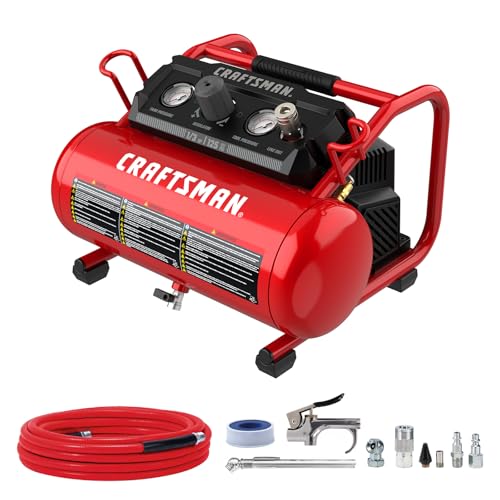
CRAFTSMAN 2 Gallon Portable Air Compressor

VELPAX Ultra Quiet Air Compressor 2.4 Gallon
Meet The Standout Selections
The 6.3-gallon tank sits right in the sweet spot for weekend wrenching: big enough to keep an impact wrench cycling, small enough to carry out to the driveway. Its 1450W motor spins to 3500 rpm and delivers 3.35 CFM at 90 PSI, which covers nail guns, spray guns, and tire inflation without constant refill waits.
Oil-free design matters more than most shoppers realize. You skip oil changes entirely, and there’s no risk of oil mist contaminating paint finishes. Compared with the smaller CRAFTSMAN later in this list, this VEVOR trades some portability for noticeably longer run times between cycles.
Useful Touches
- Oil-free pump means zero maintenance fluids and cleaner air for spray work
- 116 PSI max pressure handles most pneumatic tools with headroom to spare
- 3.35 CFM at 90 PSI keeps nailers and inflators cycling steadily
- Quiet operation suits attached garages where noise carries indoors
Honest Caveats
- At 6.3 gallons, continuous high-draw tools like sanders may outrun recovery time
- Tank condensation needs periodic draining, a routine task owners of any compressor should expect
Key Specs
Who Will Love This
Weekend DIYers running nail guns, inflating tires, and doing occasional auto repair from a home garage.
A Better Fit Elsewhere
Anyone needing longer uninterrupted spray sessions will get more from the VEVOR 13-Gallon model’s larger tank and higher SCFM rating.
This one lives in your truck bed, not your garage. Running off a vehicle’s 12-volt system, the kit bundles a compact tank, the compressor itself, and connecting pipe, spinning up to 5000 rpm to build pressure quickly wherever you’re parked. The 90 to 120 PSI working range handles train horns, tires, and air mattresses alike.
The honest trade-off is scale. With just 1.6 gallons onboard, you won’t run shop tools off it, but that’s not its job. For overlanders, contractors between sites, or anyone adding an onboard horn setup, having stored pressure ready at the flip of a switch changes how you work roadside.
Practical Advantages
- 12-volt power means no wall outlet needed, ever
- Small tank stores pressure so horns and chucks get instant airflow
- Complete kit includes tank, compressor, and piping, nothing extra to source
- Low-noise operation reported across typical duty cycles
Points To Keep In Mind
- Duty on your vehicle’s electrical system, so wiring quality and battery health matter
- 1.6-gallon capacity limits it to inflation and horn duty, not tools
Right Fit For
Truck and SUV owners who want onboard air for tires, mattresses, or a train horn without dragging extension cords around.
Where A Sibling Pick Shines
Garage-based users should step up to the VEVOR 6.3 Gallon unit, which offers triple the capacity and wall-powered consistency.
Double the first pick’s tank and you land here. Thirteen gallons paired with a 2HP motor builds full pressure in under three minutes per the manufacturer, and the 4.6 SCFM at 90 PSI rating gives spray guns the steady feed they demand. A reinforced, leak-resistant valve setup aims to hold output stable through long sessions.
The standout number is 66 dB, remarkably civil for a machine this size. Wheels and a thickened steel body make it movable despite the heft, though you’ll want a dedicated corner once it’s placed. For anyone stepping up from a pancake unit, the difference in runtime feels immediate.
Useful Strengths
- 13-gallon tank sustains extended spray painting and multi-tool sessions
- Full tank buildup in under three minutes keeps workflow moving
- 66 dB operation lets conversation continue nearby
- 125 PSI maximum covers demanding automotive and framing tools
- Wheeled steel construction survives garage bumps and repositioning
Softer Spots
- Larger footprint demands real floor space, a squeeze in single-car garages
- Draining a bigger tank after humid-day use takes slightly longer
Feature Snapshot
Made For
Serious hobbyists and semi-pro users running paint sprayers, impact tools, or multiple nailers through full workdays.
Consider Something Else When
Apartment dwellers and light-duty users will find the VELPAX ultra-quiet 2.4-gallon unit easier to store and just as pleasant to hear.
Nineteen pounds. That’s the whole pitch here, and it’s a good one. At 19 lbs with a 2-gallon tank and a 1/3HP oil-free motor topping out at 125 PSI, this CRAFTSMAN goes from shelf to trunk to jobsite without a second thought. First-time owners especially benefit from the bundled 10-piece accessory kit, hose, chuck, couplers, gauge, blow gun, and thread seal tape, so you’re inflating within minutes of unboxing.
Compared with the VEVOR units above, you give up tank volume and CFM, so think brad nailers and bike tires rather than spray booths. As a first compressor, though, few packages remove as many barriers.
Bright Spots
- 19 lb weight makes one-handed carrying genuinely easy
- 10-piece accessory kit eliminates separate purchases for basic tasks
- Oil-free pump requires no fluid maintenance at all
Things That May Matter
- 2-gallon tank refills often under sustained tool use
- 1/3HP motor suits inflation and finish nailing, not heavy draw tools
Who Should Grab It
First-time compressor owners and apartment dwellers who need occasional inflation and light nail-gun duty in tight spaces.
Swap It Out When
Users planning regular spray painting or impact wrench work should move to the VEVOR 6.3 Gallon model for its stronger motor and larger reserve.
Roughly 60 dB puts this VELPAX at conversational volume, quieter than many shop vacuums. The 1100W (1.5HP) motor runs on standard 110V household power and pushes 6.71 CFM at 115 PSI, an unusually strong delivery figure for such a small 2.4-gallon footprint. That combination suits indoor finishing work where both noise and fume-adjacent cleanliness matter.
The oil-free pump helps on that second front too, since no lubricant mist reaches your paint. Against the CRAFTSMAN above, you gain serious airflow and lose a little portability; against the big VEVOR, you gain silence and lose tank endurance. Depending on your space, that math usually favors this unit for detail work.
Benefits That Matter
- About 60 dB makes early-morning or in-house work socially survivable
- 6.71 CFM at 115 PSI outpaces many larger-tank competitors
- Runs on ordinary 110V outlets, no special wiring needed
- Oil-free operation keeps sprayed finishes free of contamination
Less Ideal Details
- 2.4-gallon reserve empties quickly during continuous high-volume spraying
- Smaller brand name means fewer local service options than established names
Quick Facts
Who It Suits Best
Hobbyist painters and detail-oriented DIYers working inside homes or shared spaces where noise tolerance is low.
Not Your Match When
All-day production painting calls for the VEVOR 13-Gallon unit, whose larger reserve avoids constant motor cycling.
What Matters Most Before Choosing Gas Air Compressors
Match Tank Size To Your Actual Tasks
Tank volume determines how long a tool runs before the motor kicks back in. A 2-gallon unit handles tire tops and brad nails happily, while spray painting wants 6 gallons minimum and ideally 13. Be honest about your heaviest planned job rather than your average one.
Read CFM Before Horsepower
CFM (cubic feet per minute) measures actual air delivery at a given pressure, and it’s the number your tools care about. A spray gun typically wants 4-plus CFM at 90 PSI; a brad nailer needs far less. Always check the rating at 90 PSI specifically, since some listings quote figures at lower pressures.
Noise And Placement Reality
Decibel ratings between 60 and 70 dB let you work near sleeping kids or in attached garages without friction. Anything louder deserves a detached shed. Also measure your outlet situation, since larger motors assume standard 110V but draw meaningful current on startup.
Oil-Free Versus Oiled Pumps
Oil-free pumps trade a bit of longevity for zero maintenance and cleaner air, which matters enormously for painting. Most homeowners are better served by oil-free designs they’ll actually maintain properly.
Key Considerations Across These Picks
Traps First Timers Fall Into
Oversizing is the classic error: buying a 13-gallon beast for bicycle tires wastes money and floor space. Undersizing hurts too, since a 2-gallon tank paired with a paint sprayer means endless motor cycling. Match the tool list first, then buy the tank.
The Case For Spending Up
Higher-tier models buy quieter motors, faster recovery times, and steadier pressure under load. Those traits compound over years of weekend use. Paying more pays off the moment your projects involve continuous airflow rather than quick inflation chores.
Frequently Asked Questions
What tank size do I need for home use?
For tires, sports gear, and occasional nail guns, 2 to 6 gallons covers nearly everything. Spray painting and impact tools justify stepping up to 13 gallons.
Are oil-free compressors reliable long term?
Modern oil-free pumps handle thousands of hours of hobbyist use without servicing. Heavy daily commercial schedules are where oiled pumps still hold an edge.
Why does CFM matter more than horsepower?
Your tools consume air measured in CFM, so that figure determines what actually runs. Horsepower only describes the motor driving the pump.
Can a 12V compressor replace a shop unit?
It handles inflation, air mattresses, and horns well, but tank capacity and airflow fall short for power tools. Treat it as a mobile supplement, not a replacement.
How loud is quiet enough for indoor work?
Units rated around 60 dB stay below typical vacuum-cleaner noise and suit shared living spaces comfortably. Above 75 dB, plan on a detached workspace.
Closing Thoughts
Match the machine to your heaviest realistic project and everything else falls into place. Light-duty users get genuine value from the CRAFTSMAN kit, while the VELPAX rewards anyone working indoors. Bigger ambitions point squarely at the VEVOR 13-gallon. Whichever direction your projects pull, one of these five will keep the air flowing without waking the house.