Big drilling jobs punish the wrong tool fast. A weak magnet lets a mag drill walk off an I-beam, a dull core bit burns out halfway through a slab, and a hobby drill pen dies mid-project. This shortlist covers both ends of that reality: serious magnetic drill presses for steel fabrication, a wet diamond core bit for concrete work, and one compact cordless option for small-detail tasks. Each entry breaks down what it does well, where it falls short, and who actually needs it.
The Leading Options At A Glance
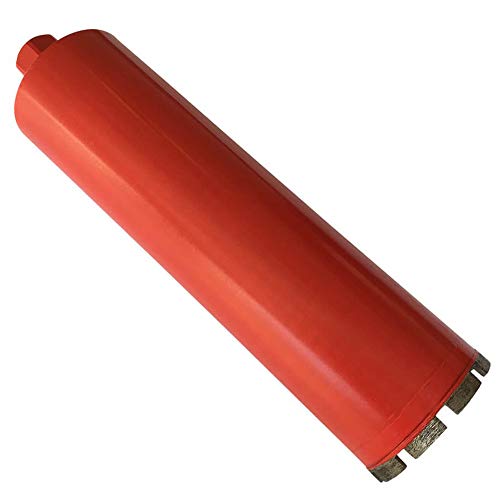
EDiamondTools 3″ Wet Diamond Core Bit, 1-1/4″-7 Arbor

Uolor Cordless Mini Drill Pen with 10 Bits

VEVOR Magnetic Drill 1450W, 1.6 in Boring Diameter

VEVOR 1550W Mag Drill Press, 2″ Core Drilling Machine
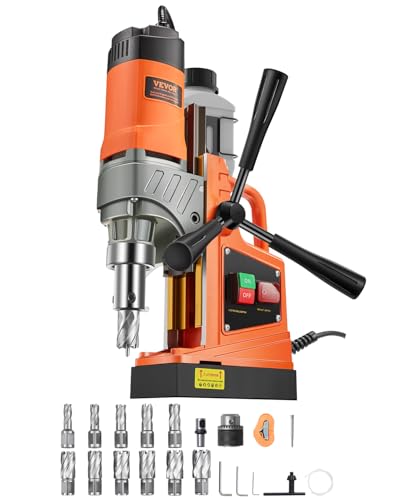
VEVOR Mag Drill Press 1300W, 1.57″ Boring Diameter
The Picks, Examined More Closely
This is a consumable accessory rather than a machine, but it earns its place because no drilling setup matters without a bit that survives the material. The embedded diamond concentration is designed to cut concrete, lightly reinforced slabs, and dense masonry without glazing over early.
The 14-inch drilling depth stands out. That’s enough reach to bore fully through most residential slab pours in a single pass, which saves you from stepping down or breaking out cores by hand. Note it’s a wet-cut bit: water cools the diamonds and flushes slurry, so plan your job site accordingly.
Where It Helps
- Diamond-heavy segments resist wear through abrasive aggregate, meaning fewer replacements across a big pour
- 14-inch depth handles thick slabs and walls where shorter bits stall out partway
- Standard 1-1/4″-7 threaded arbor fits most dedicated core rigs and handheld core drills
- Handles lightly reinforced concrete, useful around older structures with stray rebar
Honest Caveats
- Wet operation only, so you’ll need a water supply and slurry management on site
- Requires a rotary-mode rig; hammer functions will damage the segments
Key Specs
Who Will Love This
Plumbers, electricians, and concrete contractors running a proper core rig on poured slabs get the most value here.
A Better Fit Elsewhere
Fabricators cutting steel plate should look at the VEVOR 1550W Mag Drill Press instead, since its annular cutter system targets metal, not masonry.
Not every drilling task needs horsepower. For jewelry makers, resin artists, and anyone punching pinholes into shells, stone pendants, or plastic keychain blanks, this pen-style micro drill is the right scale of tool. It’s shaped like a marker, weighs almost nothing, and fits in a craft drawer.
The three-speed switch matters more than it sounds. Soft resin wants low speed to avoid melting, while denser materials benefit from the top setting. USB charging means you can top it up from a laptop between sessions, though the roughly half-hour runtime per charge means longer craft days need planning.
Everyday Perks
- Ten included micro bits cover the common hole sizes crafters actually use
- Cordless pen format reaches tight spots like bead interiors and cured resin molds
- Adjustable speeds protect delicate materials from cracking or heat damage
Points To Note
- Runtime of about 30 minutes per charge may interrupt longer workshop sessions
- Owners commonly report the tiny chuck needs gentle handling to keep bits seated straight
Right Fit For
Casual crafters and jewelry hobbyists working on small, light materials at a desk or kitchen table.
Swap It Out When
Anyone drilling structural steel or concrete should step up to the VEVOR Mag Drill Press 1300W, which brings real torque and holding force to the table.
A magnetic drill press, for those new to the category, clamps itself to ferrous steel with an electromagnet so the motor can drive an annular cutter through plate without wandering. This VEVOR runs a 1450W copper-wound motor spinning up to 800 RPM, and that speed range is its calling card compared to the slower VEVOR 1550W model later in this list.
Higher RPM suits smaller-diameter cutters and thinner stock, where aggressive feed rates finish holes faster. Holding force sits at 2810 lbf, respectable but a step below its bigger sibling. Two coring bits ship in the box, so the machine works out of the case on day one, a genuine convenience for first-time mag drill owners.
What Pays Off
- 0-800 RPM variable speed gives finer control on thin-gauge steel than fixed-speed units
- 2810 lbf electromagnetic base keeps the cutter planted during heavy cuts
- Included pair of coring bits means usable output before buying accessories
- Portable format moves between shop bench and field steelwork easily
Small Caveats
- Cutting depth tops out near 2 inches, limiting deep-hole work on thick sections
- The electromagnet draws steady current, so extension cords and generator sizing deserve attention
Feature Snapshot
Made For
Fabricators and maintenance techs who mostly punch smaller holes in plate and want speed over maximum capacity.
Reach For A Different Pick When
Thick I-beam flanges demand more bite, and the VEVOR 1550W Mag Drill Press delivers a wider 2-inch bore with stronger holding force.
This is the muscle of the group. A 1550W copper motor drives cutters up to 2 inches across, and the high-purity iron core in the base generates 2922 lbf of holding force, the strongest grip among these picks. Structural steelworkers cutting beam flanges and heavy plate are exactly who this machine was drawn up for.
Speed runs 0-550 RPM, deliberately slower than the VEVOR 1450W reviewed above. That’s not a weakness: large annular cutters generate enormous torque loads, and a lower ceiling keeps them from stalling or overheating on deep cuts in thick sections. In our view, the slower spindle paired with the bigger bore is the right engineering trade for fabrication bays.
What It Does Well
- 2-inch maximum bore covers oversized bolt holes and pipe penetrations in one pass
- 2922 lbf magnetic hold inspires confidence when cutting overhead or vertical surfaces
- Copper motor windings dissipate heat better, supporting longer continuous runs
- Variable speed dial adapts feed rate to material thickness
Things To Weigh Up
- Extra motor power translates to extra weight, and owners commonly note fatigue during long overhead sessions
- No coring bits are confirmed in the listing, so budget for cutters separately
Built With In Mind
Professional fabricators and industrial maintenance crews working structural steel daily will put this machine to work immediately.
Where A Sibling Pick Shines
Lighter-duty users drilling occasional 1-inch holes save money and hauling effort with the VEVOR Mag Drill Press 1300W instead.
Here’s the value angle in this lineup. Despite drawing less power at 1300W, this unit matches the flagship VEVOR 1550W’s 2922 lbf holding force, thanks to an optimized internal structure the manufacturer credits for both stability and faster drilling. You give up some bore width, capping at 1.57 inches, but keep the same secure footing on the workpiece.
The single 810 RPM operating speed tells you who this suits: general-purpose hole making in mild steel, not precision variable-feed work. For a home workshop or small fabrication side business doing repetitive bolt holes, that simplicity is arguably a feature, since there’s less to adjust and less to get wrong.
The Practical Payoff
- Full 2922 lbf magnetic grip at a lower power draw eases generator and circuit demands
- 810 RPM fixed speed handles standard annular cutters in mild steel without fuss
- Compact footprint stores easily in a crowded garage or service van
Potential Sticking Points
- No variable speed, so matching feed to cutter size depends entirely on operator technique
- 1.57-inch cap excludes larger-diameter penetrations some structural jobs require
- Like all mag drills, the base needs clean bare steel; painted or rusty surfaces reduce hold
Core Details
Whose Shelf It Belongs On
DIY metalworkers and small-shop operators wanting dependable magnetic drilling without paying for capacity they won’t use.
Another Choice May Suit
Shoppers needing finer speed control on varied stock should consider the VEVOR Magnetic Drill 1450W with its 0-800 RPM variable dial.
What Matters Most Before Choosing Giant Drilling Machines
Match The Tool To The Material
Steel, concrete, and craft plastics each demand completely different equipment. A mag drill is useless on a concrete slab, and a diamond core bit has no place on an I-beam. Start by naming your primary material honestly, then buy for that job first and versatility second.
Capacity And Holding Force
For magnetic drills, two numbers decide everything: maximum boring diameter and holding force in pounds-force. Cutting a 2-inch hole in thick plate demands both a bigger motor and a stronger magnet than a 1-inch hole in quarter-inch stock. Undersize either figure and the cutter stalls, walks, or binds.
Speed Control And Runtime
Variable speed lets you match spindle RPM to cutter size, which extends tool life and improves hole quality. Fixed-speed machines cost less but demand more operator judgment. Cordless tools trade runtime for portability, so check charge duration against your typical session length.
Consumables And Support
Bits and cutters wear out, sometimes quickly on hard material. Bundles that include coring bits soften the initial outlay, while proprietary arbor sizes lock you into one ecosystem. Standard threads like the 1-1/4″-7 keep replacement options open for years.
Key Considerations Across These Picks
Where Shoppers Go Wrong
The classic error is buying on bore diameter alone and ignoring holding force, then wondering why the drill slips mid-cut. Another frequent miss: ordering a wet-only core bit for dry work sites with no water access. Confirm power supply requirements too, since mag drills pull serious current.
What Separates Premium From Basic
Higher-tier machines add copper motor windings, variable speed electronics, and stronger iron-core magnets. Those upgrades translate into cooler long runs, cleaner holes, and safer vertical cuts. Occasional users rarely need them; daily production work justifies every dollar.
Frequently Asked Questions
What counts as a giant drilling machine?
The term generally covers high-capacity drills such as magnetic drill presses and large-diameter core rigs. These handle bores and materials beyond ordinary consumer drill drivers.
Can a magnetic drill work on any metal surface?
It needs clean, bare ferrous steel for the electromagnet to grip properly. Paint, rust, and non-magnetic metals like aluminum prevent secure mounting.
Do diamond core bits always need water?
Wet-design bits do, because water cools the diamond segments and clears debris. Running them dry overheats the bond and ruins the bit prematurely.
Is a cordless mini drill suitable for wood?
It handles thin, soft woods for pilot holes and craft projects. Dense hardwoods exceed its torque and will stall the tiny motor.
How important is variable speed on a mag drill?
Very important for mixed workloads, since large cutters need slower RPM than small ones. Fixed-speed models still perform well on repetitive, similar-size holes.
Bottom Line
Your material should make this decision for you. Steel fabricators get the strongest overall package from the VEVOR 1550W Mag Drill Press, while budget-focused workshops can trust the VEVOR 1300W for everyday holes. Concrete crews need the EDiamondTools core bit paired with a proper rig, and crafters have the Uolor pen ready in a drawer. Match the spec sheet to the job waiting on your bench, and any of these five will earn its spot.