


Hot melt adhesive has quietly become one of the most useful tools on a woodworking bench. It tacks trim in place while wood glue cures, holds jigs together, and handles quick repairs without clamps or drying time. The catch is that not every glue gun can take the heat a shop demands, and the wrong stick formula peels right off raw lumber. This roundup covers five options that handle wood honestly, from a budget-friendly starter to a 300-watt professional unit, plus the stick formulation that makes hot glue actually grip grain. Whether you build furniture on weekends or just fix things around the house, there’s a match here for your bench.
The Picks In Brief

Surebonder Full Size Dual Temperature 40W Glue Gun
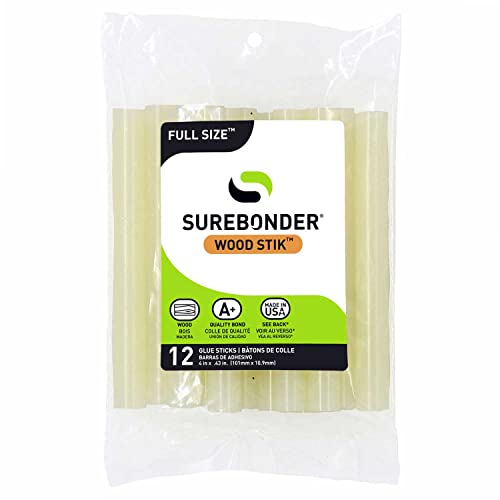
Surebonder WS-12 Hot Glue Sticks for Woodworking 12 Pack

Mini Hot Glue Gun with 30 Glue Sticks (White)

Assark Dual Power 60/100W Hot Glue Gun with 10 Sticks
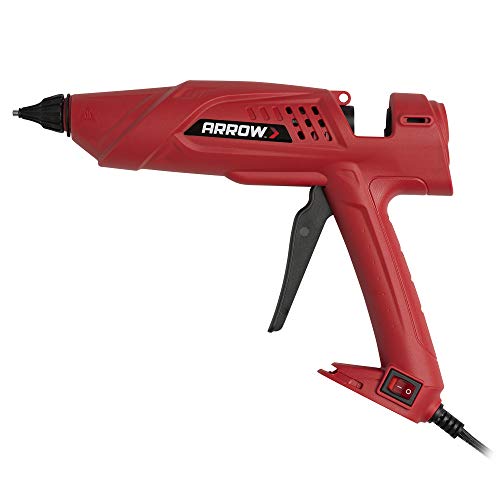
Arrow Fastener 300-Watt Heavy Duty Glue Gun
A Deeper Look At The Lineup
A dual temperature switch changes what one glue gun can do. At the high setting, this Surebonder runs at 380°F, hot enough for solid structural tacks on wood trim and jigs. Flip it low and you get 250°F, gentle enough that delicate stock like thin veneer or floral foam won’t scorch.
The 40W element means modest output compared with the bigger guns below, so long glue lines on wide panels will feel slow. In our view that’s an honest trade-off rather than a flaw, because the lower draw also keeps the body lighter during extended handheld work around the shop.
Reasons It Performs
- High setting reaches 380°F for dependable bonds on wood and heavier repair jobs
- Low 250°F mode protects fragile materials from melting damage
- Takes standard 7/16-inch full-size sticks, so refills stay easy to find
- One switch covers both heavy-duty fixes and fine craft detail work
Things To Consider
- The 40W heater recovers slowly during continuous squeezing, so pace long runs accordingly
- Drip management depends on trigger discipline since there’s no adjustable flow knob mentioned
Who Will Love This
Hobbyist woodworkers who bounce between shop repairs and lighter craft projects benefit most from the switchable heat.
Where A Sibling Pick Shines
Anyone needing faster output on big glue lines should step up to the Assark Dual Power gun, which doubles the wattage at its high setting.
A gun is only half the equation, because generic all-purpose sticks often release from raw grain under any real load. Surebonder formulates these WS-12 sticks specifically for wood, which is why they earn a slot alongside the tools here. The tan color also blends into most lumber tones better than clear adhesive does.
Each stick measures 7/16 inches across by 4 inches long, the full-size format used by half-inch guns like the Surebonder dual temperature model reviewed above. Twelve sticks per bag covers a decent stretch of jig building and edge tacking before you reorder.
Benefits That Matter
- Wood-focused formulation grips grain where general-purpose sticks tend to peel away
- 7/16-inch diameter fits standard full-size guns without adapter fuss
- Tan shade hides seams better on unfinished furniture pieces
Potential Drawbacks
- They’re sticks only, so you’ll need a compatible full-size gun already on hand
- Store them away from direct sun in a warm garage, since softened sticks can deform in the bag
Key Specs
Built With In Mind
Furniture makers and jig builders who already own a full-size gun and want adhesive matched to lumber.
Swap It Out When
Mini-gun owners should look at the COMTO kit instead, since its bundled 4-inch mini sticks are the only ones that fit that smaller barrel.
Not every job needs a full-size barrel. This compact white unit from COMTO heats through a 20W PTC element and reports ready in roughly two minutes, which is quick enough that you won’t wander off mid-project. The precision nozzle lays down narrow beads suited to small dowels, trim shims, and detail work where a fat bead would squeeze out everywhere.
A protective silicone cover over the nozzle addresses the burned-fingertip problem common with small guns left on a crowded bench. Thirty included 4-inch mini sticks mean it works straight out of the box, no separate purchase needed. The honest limitation is throughput: mini sticks hold far less adhesive than the 7/16-inch format, so panel gluing isn’t realistic here.
Positive Takeaways
- Roughly two-minute warmup keeps short tasks moving
- Precision nozzle suits tight spots and detailed assembly
- Silicone nozzle cover adds a layer of burn protection
- Thirty bundled sticks make it a complete starter package
Small Caveats
- Mini sticks run out fast on anything larger than trim-scale work
- Lower power limits bond strength on dense hardwoods compared with full-size units
Right Fit For
First-time users, students, and anyone handling light household repairs in a small workspace.
Another Choice May Suit
Shoppers wanting serious wood bonding should pick the Surebonder WS-12 sticks paired with a full-size gun instead of this mini setup.
Where the Surebonder above tops out at 40W, this Assark pushes 100W at its high setting, reaching about 410°F with an output near 0.53 ounces per minute. That extra headroom matters on wood, because hotter adhesive penetrates grain and sets with more bite. A simple power switch toggles down to 60W and roughly 300°F for gentler materials, giving you both ends of the range in one body.
The manufacturer describes the housing as fireproof with anti-drip behavior, and the full-size, high-capacity chamber cuts refill interruptions on longer builds. Ten sticks ship in the box, so the first session needs nothing else. One thing worth considering: at 100W the tip stays genuinely hot, so give it a proper stand and cool-down spot on your bench.
Good Reasons To Consider
- 100W high mode delivers fast flow for wood and heavy-duty assembly
- 60W low mode handles crafts and heat-sensitive materials
- Anti-drip design reduces stringing mess across finished surfaces
- Large-capacity chamber means fewer mid-task reloads
- Fireproof housing adds durability margin in a busy shop
Where It May Fall Short
- Higher wattage draws more from a circuit, relevant in older workshops sharing outlets
- Hotter tips demand careful storage habits while cooling
Feature Rundown
Made For
Intermediate DIYers tackling furniture repairs and larger builds who’ve outgrown a basic 20W to 40W gun.
Reach For A Different Pick When
Budget-conscious first-timers are better served by the COMTO mini kit, which costs less commitment while skills develop.
Three hundred watts puts this Arrow in a different league from everything above it. High-wattage elements recover almost instantly as you pull the trigger, which is the difference between a steady bead and a stuttering one when you’re tacking long stretches of trim or assembling jigs back to back. Arrow positions it for construction and professional applications, and the clear body lets you watch adhesive levels at a glance.
Control comes from a combination the others lack: a drip-resistant nozzle paired with an adjustable flow knob, letting you place small dots or smooth continuous lines with deliberate accuracy. The ergonomic grip matters too, since jobsite sessions run longer than a five-minute craft fix. Compared with the Assark, you trade dual temperature modes for sheer consistent output, which suits pros who mostly work hot anyway.
Useful Touches
- 300W element sustains flow through continuous professional use
- Adjustable control knob tunes bead size from dots to lines
- Drip-resistant nozzle keeps finished wood surfaces cleaner
- Ergonomic grip supports extended handheld sessions
- Transparent body shows remaining adhesive without guessing
Points To Note
- No low-temperature mode, so delicate materials need a second tool
- Full-size professional units occupy more bench space than compact alternatives
The Numbers That Matter
Whose Shelf It Belongs On
Contractors, cabinet installers, and serious hobbyists who run a glue gun daily and value speed over versatility.
Not Your Match When
Occasional users working mixed materials get more flexibility from the Surebonder Full Size Dual Temperature gun at a friendlier entry point.
What Matters Most Before Choosing Glue Guns For Woodworking
Wattage Sets Your Ceiling
Wattage determines how fast the element recovers heat as you dispense adhesive. A 20W mini gun works for trim shims and craft detail, while 100W-plus units keep a steady bead flowing across long joints. Daily shop users should treat higher wattage as a productivity feature, not a luxury.
Match the Stick to the Material
Standard all-purpose sticks bond many surfaces but often release from raw wood under stress. Formulations designed for wood, like the Surebonder WS-12, bite into grain and hold through handling. Always check diameter compatibility too, since mini and full-size barrels accept different sticks.
Temperature Flexibility Pays Off
Dual-temperature models let one tool serve both structural work and heat-sensitive materials. Low settings near 250°F protect veneers and foam; high settings near 400°F deliver stronger penetration into hardwood. Single-temperature guns cost less but lock you into one behavior.
Ergonomics and Drip Control
Trigger feel, grip shape, and nozzle design decide whether long sessions fatigue your hand or leave strings across finished surfaces. Adjustable flow knobs and drip-resistant tips earn their keep on visible furniture work.
Key Considerations Across These Picks
Traps First Timers Fall Into
The most common mistake is buying a mini gun for furniture-scale projects, then fighting constant stick reloads and weak bonds. Another frequent slip is ignoring stick diameter, ordering 7/16-inch sticks for a mini-barrel tool that can’t feed them. Check compatibility before checkout and size the tool to your actual project scale.
When Paying More Pays Off
Higher-tier guns justify their cost through wattage, recovery speed, and flow control. A 300W professional unit finishes long trim runs without stutter, and adjustable nozzles cut cleanup time on visible surfaces. Casual users rarely feel that difference; anyone gluing daily will within a week.
Frequently Asked Questions
Can a hot glue gun replace wood glue?
No, it serves a different role. Hot melt excels at temporary tacking, jig assembly, and quick repairs, while PVA wood glue forms stronger permanent bonds on structural joints.
What temperature works best for bonding wood?
Higher settings around 380°F to 410°F penetrate wood grain more effectively. Lower temperatures suit veneers and delicate stock that could scorch.
Do glue stick brands matter for woodworking?
Yes, noticeably. Wood-specific formulations grip porous grain far better than general-purpose clear sticks, especially under load or humidity swings.
Are full-size guns better than mini guns for wood?
For most woodworking, yes. Full-size 7/16-inch sticks hold more adhesive and deliver stronger beads, though minis handle small trim and detail tasks well.
How do I stop glue strings on finished surfaces?
Use a drip-resistant nozzle and adjust flow to the lowest effective rate. Pulling the gun toward yourself at the end of a bead also leaves a cleaner finish point.
Closing Remarks
Every bench eventually needs a way to hold something in place right now, and a capable glue gun answers that call without clamps or cure time. Start by matching the tool to your workload: the COMTO mini for light duties, the Surebonder pair for balanced flexibility, the Assark for growing ambitions, or the Arrow for daily professional output. Pair whichever gun you choose with sticks formulated for wood, and it’ll earn its drawer space quickly.




