


French press coffee lives or dies by grind size. Too fine and your cup turns bitter and sludgy; too coarse and the brew comes out thin and sour. The five grinders below cover both camps, from hand-cranked travel companions to quiet electric burr machines, so you can match one to your kitchen, your counter space, and your morning patience level.
The Leading Options At A Glance

Alpaca Ventures Manual Coffee Grinder with Stainless Steel Conical Burr

Fellow Ode Gen 2 64mm Flat Burr Coffee Grinder
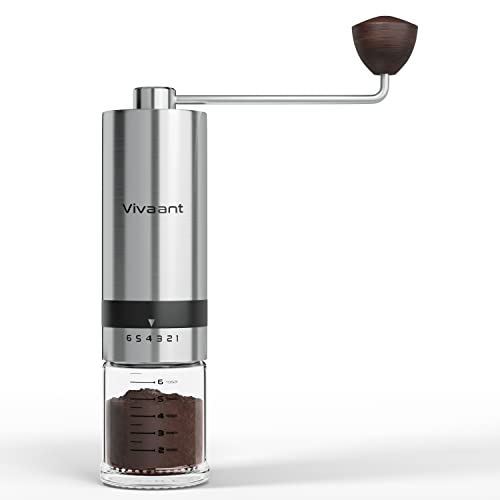
Vivaant Manual Coffee Grinder Hand Crank

KIRAINAFLY Electric Burr Coffee Grinder with 28 Settings

SHARDOR Electric Coffee Grinder 70g Capacity
Meet The Standout Selections
A conical burr is two ridged metal surfaces that crush beans to a uniform size, and this Alpaca Ventures grinder uses a stainless steel pair in a body small enough to disappear into a backpack side pocket. An internal bearing supports the crank shaft, which cuts down the wrist effort that makes cheaper hand grinders feel like a workout.
The longer handle gives you more leverage per turn, a real advantage when you’re grinding coarse for a press at a campsite or an office desk with no outlet nearby. No batteries, no cord, no noise complaints from sleeping family members.
A Few Strong Suits
- Bearing-assisted crank reduces grinding fatigue over multiple presses
- Stainless steel conical burrs hold their edge through years of daily use
- Adjustable settings span espresso-fine up to French press coarse
- Compact footprint slips into luggage without dedicating counter space
- Silent operation suits early risers in shared homes
Things To Consider
- Hand grinding a full press takes a few minutes of steady cranking
- Owners commonly report wiping grounds from the burr chamber after each session to keep adjustment smooth
Who Will Love This
Travelers, van lifers, and office workers who want fresh coarse grounds anywhere without touching an outlet.
Where A Sibling Pick Shines
Anyone brewing larger batches at home will find the Fellow Ode Gen 2 faster and more consistent per dose.
Flat burrs grind between two parallel plates rather than inside a cone, and Fellow’s 64mm stainless set uses a two-stage geometry aimed squarely at brewed coffee. Thirty-one settings cover pour-over through cold brew, with the coarse end of the dial built for French press extraction. Espresso fans should look elsewhere; this machine deliberately skips it.
In a busy kitchen, the single-dose hopper matters more than it sounds. You weigh beans, dump them in, grind exactly what you need, and nothing goes stale in a hopper overnight. Anti-static treatment keeps grounds from clinging to the catch cup, and the motor runs noticeably quieter than budget grinders, a genuine plus before sunrise.
The Good Stuff
- 31 stepped settings let you fine-tune steep time versus coarseness
- Two-stage flat burr design produces even particles for cleaner flavor
- Single-dose workflow keeps beans fresher than hopper-fed machines
- Anti-static handling means fewer messy grounds escaping the cup
- Quiet motor suits apartments and shared walls
Honest Caveats
- No espresso capability, so it won’t serve dual-brew households
- Single dosing adds a weighing step some mornings feel like too much
Key Specs
Made For
Enthusiast home brewers who weigh doses, chase clarity in the cup, and mostly drink filter-style coffee.
Swap It Out When
Espresso drinkers on a tighter budget will get more flexibility from the KIRAINAFLY electric burr grinder’s 28-setting range.
Where the Alpaca Ventures unit chases travel minimalism, the Vivaant leans into a complete kit: grinder body, detachable handle, glass jar, and lid all ship together. That glass jar doubles as the catch container and the storage vessel, so you can grind Sunday night and brew Monday morning without transferring beans between containers.
The stainless steel conical burr carries what Vivaant calls its Dragon Tooth geometry, designed to cut through beans quicker than standard hand-mill teeth. For most people that translates to less cranking per dose, though a full French press still asks for a minute or two of arm work. The whole assembly fits comfortably in one hand, which makes it a natural desk-drawer resident.
Useful Strengths
- Included glass jar stores grounds without extra containers
- Aggressive burr tooth pattern speeds up each grinding session
- No power required, so it works during outages and off-grid weekends
- Hand-sized body tucks into cabinets and bags easily
Small Caveats
- Glass jar needs careful handling around sinks and tile floors
- Manual effort adds up when brewing for several people at once
Right Fit For
Solo brewers in small apartments who value tidy storage and don’t mind a little elbow grease.
Another Choice May Suit
Households brewing four-plus cups daily are better served by the SHARDOR electric grinder’s 70g batch capacity.
This black electric burr grinder aims at the sweet spot most households actually occupy: decent consistency, push-button ease, and enough range to serve more than one brew method. Twenty-eight settings run from espresso-fine to French press coarse, and a cup selector lets you specify up to twelve cups so the machine stops itself at the right dose.
The honest read is that you trade some of the Fellow Ode Gen 2’s refinement for convenience and cost. Burr alignment and particle uniformity sit a tier below premium units, but for drip mornings and weekend presses, most palates won’t register the difference. One-touch operation means guests can make coffee without a tutorial.
A Strong Showing
- 28 adjustable settings accommodate espresso through coarse press work
- Cup-count selector automates dosing for up to twelve cups
- One-button workflow removes any learning curve
- Burr grinding avoids the inconsistent shards blade mills produce
Points To Note
- Build quality feels lighter than higher-tier rivals, so gentle handling pays off
- Some owners report static cling in dry climates leaving dust around the grounds bin
Feature Snapshot
Who Should Grab It
First-time burr grinder owners who want set-and-forget convenience without stretching the budget.
Look Elsewhere When
Flavor-focused brewers chasing competition-level uniformity will prefer the Fellow Ode Gen 2’s precision engineering.
Unlike every burr option above, the SHARDOR is a blade grinder, meaning a spinning blade chops beans rather than crushing them between burrs. That design trades some particle evenness for speed, price, and versatility, since the same bowl handles herbs and grains alongside coffee. A 70g capacity yields roughly twelve cups per session, enough for a large press or cold brew batch.
The standout detail is the visual timing knob marked in seconds, which replaces guesswork with repeatable results. Dial to your French press mark once and every future batch lands in the same zone. In most kitchens, that repeatability closes much of the quality gap blade grinders usually suffer.
Strengths Worth Knowing
- Second-marked timing knob delivers repeatable coarseness every batch
- 70g bowl covers big presses and cold brew in a single run
- Handles herbs and grains, consolidating small appliances
- Quieter motor than typical blade models
Worth Bearing In Mind
- Blade chopping produces less uniform grounds than burr designs, which can muddy flavor slightly
- Shared coffee-spice use means thorough cleaning between jobs to avoid flavor crossover
Quick Facts
Whose Shelf It Belongs On
Versatile home cooks who want one compact machine for coffee, spices, and grains without spending on a dedicated burr unit.
Reach For A Different Pick When
Purists who prioritize particle consistency above all else should step up to the Vivaant manual burr instead.
What Matters Most Before Choosing Grinders For French Press
Burr Type And Why Coarse Matters
French press immersion brewing exposes grounds to water for four minutes or longer, so uneven particles extract unevenly. A burr grinder, whether conical or flat, produces far more consistent coarse grounds than a blade. Consistency here directly controls bitterness and sediment in the cup.
Manual Versus Electric
Hand grinders cost less, travel well, and stay silent, but they ask for two to three minutes of cranking per press. Electric models dose quickly and suit multi-cup households. Match the choice to how many people you brew for and where the brewing happens.
Adjustment Range And Steps
Look for a grinder whose coarse end offers distinct, repeatable steps. Fine-grained adjustment lets you correct a bitter brew by nudging coarser rather than jumping between extremes. Stepped dials also help you reproduce last week’s good cup.
Capacity And Cleanup
A 12-cup household grinding daily wants a larger hopper or bowl; a solo drinker doesn’t. Whatever you choose, plan on brushing out oils and fines regularly, since stale residue dulls flavor faster than anything else.
Key Considerations Across These Picks
Traps First Timers Fall Into
The most common mistake is buying a blade grinder for espresso ambitions, then blaming the beans. Another frequent slip is ignoring cleanup; oil buildup inside any grinder degrades flavor within weeks. Skip hoppers filled days ahead, too, since exposed beans stale quickly.
What Separates Premium From Basic
Higher-tier grinders spend money on burr size, alignment tolerances, and motor stability. Those details show up as sweeter, clearer cups and quieter mornings. Casual drinkers may not notice; anyone brewing daily usually does within a week.
Frequently Asked Questions
How coarse should grounds be for a French press?
Aim for a texture resembling coarse sea salt. Finer grounds over-extract and leave heavy sediment in the cup.
Can I use a blade grinder for French press?
Yes, with short pulses and a careful eye on timing. Expect slightly muddier flavor because particle sizes vary more.
Do manual grinders really save money?
There’s no electricity or battery cost, and simpler mechanisms tend to need fewer repairs. Your payment is time spent cranking.
How often should I clean my grinder?
Brush out oils and fines weekly with regular use. A deeper clean monthly keeps older grounds from souring fresh batches.
Does grind size affect steeping time?
It does. Coarser grounds tolerate longer steeps gracefully, while finer ones turn bitter fast, so adjust one variable at a time.
Closing Thoughts
Every pick here earns its place for a different kind of coffee drinker. The Fellow Ode Gen 2 rewards enthusiasts, the KIRAINAFLY covers busy households affordably, and the manual options serve travelers and tight spaces well. Start with your batch size and your patience for cranking, then choose accordingly. Your next press will thank you.




