A good hand grinder changes your morning more than most gear upgrades. Freshly ground beans taste noticeably sweeter and brighter, and a manual mill gets you there without an outlet, a motor, or much counter space. The five models below cover different budgets and brewing styles, from espresso-focused precision to big-batch French press sessions. Whether you grind at a campsite or in a small apartment kitchen before work, one of these should fit the way you actually brew.
An Overview Of The Picks

TIMEMORE Chestnut C2S Manual Coffee Grinder (Black)

KINGrinder K6 Manual Coffee Grinder Stainless Burr

Alpaca Ventures Manual Coffee Grinder Travel Size
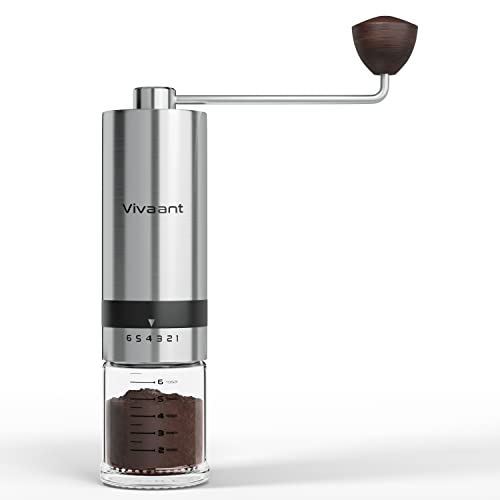
Vivaant Manual Coffee Grinder Hand Crank
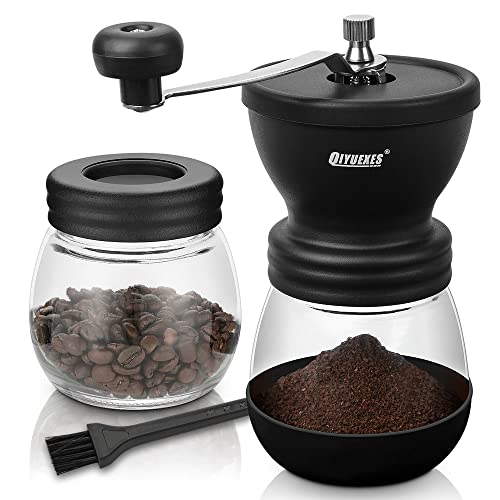
QIYUEXES Manual Coffee Grinder 80g Capacity
The Picks, Examined More Closely
The C2S is the updated version of one of the most popular entry-level grinders around, and the change that matters is structural. Timemore moved to a full metal unibody body, which addresses the cracked top covers owners sometimes reported on the older plastic-lidded model.
Inside sits a 38mm CNC-machined stainless steel conical burr, a size that moves beans along quickly without demanding much wrist effort. A double-bearing central axis keeps the burr steady while you crank, and steadiness is what produces uniform particles, which translates directly into cleaner-tasting coffee in the cup. For someone grinding 15 to 25 grams every morning before work, that consistency is the whole point.
The Practical Payoff
- All-metal unibody construction removes the breakage weak point of earlier versions
- Double-bearing shaft alignment keeps particle size even shot after shot
- 38mm conical burr cuts through a typical morning dose quickly
- 25g capacity covers two mugs or one generous pour-over
Things To Consider
- Adjustment happens inside the grinder, so dialing in takes a few tries compared with external-dial models like the K6 below
- Stainless burrs benefit from an occasional dry brush-out; coffee oils build up over weeks of daily use
Key Specs
Who It Suits Best
Daily pour-over and drip drinkers who want a durable, well-made grinder that will outlast cheaper options.
A Better Fit Elsewhere
Espresso chasers chasing micro-adjustments will get further with the KINGrinder K6 and its external click dial.
Espresso punishes sloppy grinding harder than any other brew method, and this is where the K6 earns its keep. Its external adjustment nut delivers 16-micron steps per click, fine enough to move between shots without guessing, and the dial sits outside the body so you can read and change settings mid-session.
The range is generous too: 60 clicks per rotation across up to four full rotations means coarse French press settings are just as reachable as tight espresso ones. The full metal housing and stainless steel burr set give it heft you can feel, and the straight handle keeps cranking efficient during longer doses. Compared with the Timemore above, this pick trades some polish for raw adjustability.
What Earns Its Place
- 16-micron click resolution makes repeatable espresso dialing realistic by hand
- External adjustment lets you switch brew styles without disassembly
- Huge adjustment range spans espresso through French press
- All-metal body and steel burrs suggest years of hard use
Small Caveats
- The metal body adds weight, so packability suffers next to lighter travel grinders
- Owners commonly note the adjustment nut needs occasional cleaning to stay smooth
Right Fit For
Home baristas pulling regular espresso shots who want laboratory-grade repeatability without paying electric-grinder money.
Reach For A Different Pick When
Backpackers counting ounces will prefer the Alpaca Ventures grinder, whose compact travel footprint travels lighter.
Morning coffee at a campsite is where cheap hand grinders fall apart, usually because cranking them feels like stirring cold honey. This one attacks that problem with an internal bearing that reduces the force needed per turn, paired with a lengthened stainless steel handle for extra leverage.
The result, according to the manufacturer’s design intent, is grinding that asks less of your hands and arms, which matters when you are making several cups outdoors. A stainless steel conical burr handles everything from espresso-fine to French press coarse, and the compact form factor slips into a pack pocket without ceremony. There is no battery and no cord, obviously, which is rather the appeal.
Useful Highlights
- Built-in bearing cuts cranking effort noticeably on long doses
- Extended handle gives better leverage than short-crank designs
- No batteries or electricity, ever, which suits off-grid trips
- Precision adjustment covers multiple brew methods from one unit
Worth Noting
- Smaller capacity than the QIYUEXES below, so group camping means repeated refills
- Hand-washing and thorough drying after use keeps the burr set corrosion-free
Quick Facts
Who Should Grab It
Campers, van lifers, and office workers who want low-effort grinding in a package that disappears into a bag.
Swap It Out When
Brewing for a household of four each morning goes faster with the Vivaant, whose glass jar holds a fuller batch.
Some mornings you want ritual, not engineering homework. The Vivaant leans into simplicity: a stainless steel conical burr mill with what the maker calls its Dragon Tooth burr geometry, designed to cut through beans roughly twice as fast as standard burrs, so a dose takes seconds rather than minutes.
The kit arrives complete, with the grinder, detachable handle, a glass catch jar, and a lid, which means grounds go straight into storage or straight into your filter basket. That jar is quietly useful in real kitchens; grind Sunday night, seal it, and Monday’s cup is ready before the kettle boils. Against the K6’s metal tank, this feels friendlier and less intimidating for first-time hand grinders.
Where It Helps
- Fast-cutting burr design trims grinding time on busy mornings
- Included glass jar doubles as ground-coffee storage with lid
- No power source needed, so it works during outages and travel alike
- Compact shape fits comfortably in one hand while cranking
Points To Keep In Mind
- Jar capacity limits single-session output compared with the 80g QIYUEXES
- Glass needs careful handling around sinks and camp tables
Made For
First-time manual grinder shoppers who want a complete, no-fuss kit for everyday home brewing.
Another Choice May Suit
Shot-by-shot espresso tinkerers should step up to the KINGrinder K6 for its finer click adjustments instead.
Grinding for one is easy; grinding for a table of guests is where capacity becomes the spec that matters. This QIYUEXES mill takes up to 80g of beans per session, roughly three times the Timemore’s 25g hopper, enough for a full French press round or several pour-overs back to back.
The adjustment ring offers 48 stepped settings spanning espresso to pour-over and beyond, and the package includes two jars so you can grind into one while the other stays sealed with yesterday’s batch. For shared households, that second jar is a genuinely practical touch. You may find the larger body slightly bulkier in a daypack, but on a kitchen counter it earns its footprint.
Real Benefits
- 80g bean capacity handles multi-cup brewing in one go
- 48 settings cover espresso through coarse immersion brews
- Two included jars separate fresh grounds from stored ones
- Suits home, office, and camping use without modification
Trade-Offs To Consider
- Larger body takes more pack space than dedicated travel grinders
- With many settings, keeping notes on your favorite numbers helps consistency
The Details
Whose Shelf It Belongs On
Households and small offices brewing multiple cups daily who want volume and versatility at a sensible level.
Look Elsewhere When
Solo commuters grinding one 20g dose a morning are better served by the lighter Timemore Chestnut C2S.
What Matters Most Before Choosing Hand Coffee Grinders
Burr Quality Comes First
The burr set does the actual work, so treat it as the headline spec. Stainless steel conical burrs resist wear and produce the even particle sizes that extract flavor cleanly, and a machined burr generally outlasts a stamped one. A 38mm burr like the Timemore’s clears a morning dose quickly; smaller burrs ask more patience per gram.
Adjustment Style Shapes Daily Use
Internal adjustment means opening the grinder between settings, which is tolerable once you learn your sweet spot. External dials, like the K6’s click nut, let you flip between espresso and filter coffee in seconds. Frequent method-switchers should weight this heavily.
Match Capacity To Your Routine
Count the cups before counting features. A solo drinker wastes nothing on a 25g hopper, while a family of four will resent refilling three times per breakfast. Capacity also drives body size, so travelers face a genuine trade-off here.
Think About Cleaning And Longevity
Coffee oils accumulate inside any burr chamber. Dry brushing weekly and avoiding water on the mechanism keeps grounds tasting clean and extends burr life considerably.
Key Considerations Across These Picks
Traps First Timers Fall Into
Chasing the highest setting count is a common misstep; 48 steps mean little if the steps themselves are inconsistent. Shoppers also underestimate crank effort on cheap bearings, then abandon hand grinding within a month. Buy for feel, not feature lists.
When Paying More Pays Off
Higher-tier models spend their extra cost on machined burrs, metal bodies, and finer adjustment mechanics. Those upgrades matter most for espresso, where tiny particle differences change the cup. Filter-only drinkers can often stay comfortable at the value end.
Frequently Asked Questions
Are hand coffee grinders really better than blade grinders?
Yes, because burrs crush beans to a uniform size while blades chop randomly. Uniform particles extract evenly, which tastes noticeably cleaner in the finished cup.
How long does grinding a dose take?
With a quality bearing and a decent burr, expect roughly 30 to 60 seconds for a standard pour-over dose. Espresso-fine settings take somewhat longer.
Can manual grinders handle oily dark-roast beans?
They can, though oils build up faster in the burr chamber. More frequent dry brushing keeps performance steady.
Is a manual grinder suitable for espresso?
Models with fine click adjustments, such as the KINGrinder K6, handle espresso well. Basic stepped grinders may lack the precision espresso demands.
How do I clean a hand coffee grinder?
Empty the chamber, brush out residual grounds, and avoid washing the burr mechanism unless the manufacturer says otherwise. Moisture is the main enemy of longevity.
Closing Thoughts
The right grinder depends less on rankings and more on your brewing habits. Dial in espresso daily and the KINGrinder K6 rewards the attention. Brew for a crowd and the QIYUEXES earns its counter space. Most people, though, will be very happy with the Timemore Chestnut C2S, a well-built daily companion that simply works. Whichever direction you lean, grinding fresh by hand is one of the few upgrades you’ll taste immediately.