Espresso punishes sloppy grinding more than any other brew method. A hand grinder that wobbles between fine settings turns a promising shot into a sour or bitter mess, and that frustration is exactly what this list solves. Whether you pull shots before work, brew pour-over at a campsite, or share a kitchen with someone who wants an electric option, one of these five will fit your routine. Each pick below was chosen for grind consistency, adjustment precision, and how it actually behaves day to day.
The Shortlist At A Glance

SHARDOR Conical Burr Espresso Coffee Grinder with Precision Timer 2.0
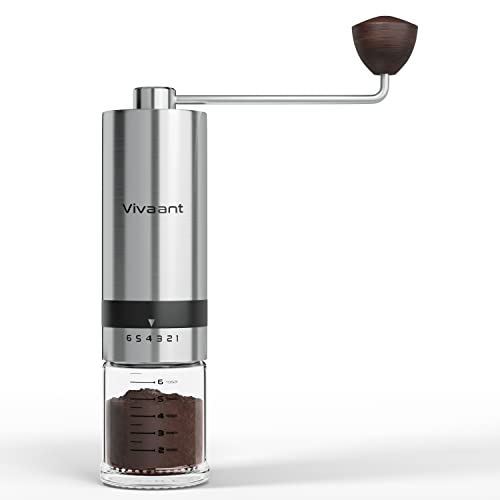
Vivaant Manual Coffee Grinder Hand Crank Stainless Steel

CEVING 60g Large Capacity Manual Coffee Grinder, Black

TIMEMORE S3 Manual Coffee Grinder Chestnut S3, Black

TIMEMORE Chestnut C3S Manual Coffee Grinder, Black
A Closer Look At Each Pick
Mornings move fast, and cranking a handle by hand is not always part of them. The SHARDOR runs on electricity, so you dose beans into the hopper, tap the touchscreen, and walk away while it works. Its 40mm stainless conical burr spins slowly enough to limit heat buildup, which helps preserve the oils that give espresso its body.
With 51 stepped settings, the range stretches from espresso-fine up through French press coarse, so one machine covers every brew style in your cabinet. The anti-static design cuts down on grounds clinging to the chute, a small thing that keeps your counter cleaner.
A Strong Showing
- Electric operation means consistent results without arm fatigue during back-to-back shots
- The 51-setting span handles espresso through French press without swapping equipment
- Precision timer plus cup quantification from 1 to 12 doses removes guesswork from daily brewing
- Anti-static treatment reduces messy clumping around the grounds container
Things To Consider
- It needs counter space and an outlet, so tiny kitchens may feel the footprint
- Stepped adjustments offer less micro-tuning than high-end manual dials
Key Specs
Who It Suits Best
Households pulling multiple espresso drinks each morning who want set-and-forget consistency.
Where Another Pick Suits Better
Off-grid campers should look at the CEVING 60g instead, since it grinds anywhere without power.
Some people want the ritual as much as the coffee. The Vivaant strips things back to a crank, a stainless conical burr, and a glass catch jar, no batteries or cords involved. That simplicity is the appeal: toss it in a bag, and fresh grounds follow you to a hotel room or a picnic table.
The compact shape sits comfortably in one hand while the other turns the handle, and the included lid lets you store beans right in the jar overnight. Compared with the SHARDOR above, you trade automation for portability and a lower entry cost.
A Few Strong Suits
- No power required, so it works at campsites, offices, and hotel counters alike
- Glass jar doubles as storage, keeping grounds contained between sessions
- Stainless conical burr produces a more uniform grind than blade-style alternatives
Worth Noting
- Hand cranking takes effort, and espresso-fine doses can feel slow on busy mornings
- Owners commonly report the glass jar deserves careful handling around hard sinks and tile floors
Made For
Minimalists and travelers who value a light, cordless kit over speed and volume.
Consider Something Else When
Large households brewing several cups at once will get more out of the CEVING’s bigger capacity.
Most manual grinders top out around 25 to 30 grams per session, which means refilling halfway through a family brew. The CEVING holds 60 grams, roughly double a standard load, so a big French press or a round of cold brew comes together in one sitting. That single change reshapes who this grinder makes sense for.
A ceramic conical burr does the cutting, a material that stays sharp through years of use and adds no metallic taste. Forty external adjustment clicks let you move between drip, pour-over, and coarser styles without tools, and the whole unit still packs down for camping trips.
The Helpful Details
- 60g capacity means one grinding session covers large batches or multiple drinkers
- External adjustment ring changes settings quickly, no disassembly needed mid-brew
- Ceramic burr resists wear and suits long-term ownership without rust concerns
- Portable enough for travel despite the larger hopper
Small Caveats
- Ceramic burrs grind more slowly than steel, so expect a longer crank for fine settings
- The extra capacity adds bulk compared with slimmer travel models like the Vivaant
Quick Facts
Right Fit For
Camp cooks, big families, and cold brew fans who grind generous batches by hand.
Not Your Match When
Espresso obsessives chasing sub-millimeter precision will prefer the TIMEMORE S3’s finer dial.
Espresso lives or dies on adjustment granularity, and this is where the S3 separates itself. Its external dial moves in 0.015mm increments per click, fine enough to nudge a shot from fast and sour to balanced without guessing. The full-metal unibody construction also gives the mechanism a stable platform, which matters when tolerances are this tight.
The patented S2C890 steel burrs prioritize uniform particle size, and even extraction follows from there. Next to the C3S below, the S3 is the step-up choice: same brand DNA, sharper precision, aimed at people who already know what they are chasing in the cup.
Useful Strengths
- 0.015mm-per-click external adjustment enables true espresso-level dialing
- S2C890 steel burrs deliver consistent particle size for even flavor extraction
- All-metal unibody feels solid and protects internal alignment over years of use
- External dial means no teardown between grind changes
Points To Note
- The precision-focused build carries a higher price than entry-level hand grinders
- Steel burrs benefit from occasional cleaning to keep fines from building up
Core Details
Best Suited To
Home baristas running espresso machines who treat grind size as a variable worth mastering.
Look Elsewhere When
Newcomers still learning basics will find the TIMEMORE C3S easier to live with and easier on the wallet.
First hand grinders teach habits, so starting with something well-built matters. The C3S wraps TIMEMORE’s stainless S2C conical burr in an aluminum alloy body, a combination that shrugs off daily knocks and dissipates grinding heat better than plastic shells. You get the same brand engineering as the S3 at a friendlier entry point.
The adjustable setting covers travel, camping, and home use, and the compact black body slips into a backpack pocket without complaint. For most people buying their first quality mill, this hits the sweet spot between price and performance.
Real Benefits
- Aluminum alloy body withstands frequent handling and shields internal parts
- Metal construction sheds heat during grinding, protecting delicate coffee flavors
- Adjustable settings adapt from home pour-over to trailside brewing
- Compact form factor travels easily in bags and luggage
Trade Offs To Consider
- Adjustment steps are coarser than the S3’s, limiting ultra-fine espresso tuning
- Manual cranking means slower mornings than the electric SHARDOR offers
Who Will Love This
Beginners upgrading from blade grinders who want durable metal construction without a steep learning curve.
A Better Fit Elsewhere
Batch brewers needing 50-plus grams per session should reach for the CEVING’s larger hopper instead.
What Matters Most Before Choosing Hand Grinders For Espresso
Burr Type Sets The Ceiling
A conical burr crushes beans between two ridged surfaces into uniform particles, unlike blade grinders that chop randomly. Steel burrs cut faster and suit espresso work; ceramic burrs resist wear and corrosion but turn more slowly. Match the material to your patience level and primary brew method.
Adjustment Style Determines Control
Internal adjustment requires removing the handle and burr assembly each time you change settings, which gets old fast. External rings or dials let you re-dial in seconds. Espresso drinkers should prioritize fine click increments, ideally under 0.02mm per step, because small changes shift shot timing noticeably.
Capacity and Portability Shape Daily Use
Single drinkers rarely need more than 25 grams per session, so slim grinders like the Vivaant make sense. Households and camp cooks benefit from 60g hoppers that finish a batch in one pass. Weigh where you will actually grind: a kitchen counter forgives bulk, a backpack does not.
Key Considerations Across These Picks
Traps First Timers Fall Into
The most common mistake is buying a blade grinder first, then replacing it within months once uneven grounds become obvious. Another trap is ignoring adjustment style; an internal-only mechanism frustrates anyone who switches between brew methods often. Skip both by choosing a burr grinder with external settings from day one.
The Case For Spending Up
Higher-tier mills buy tighter machining, better burr steel, and finer adjustment steps. Those upgrades translate directly into repeatable espresso shots and less wasted coffee during dial-in. Casual drip drinkers can stay budget-friendly; dedicated espresso brewers usually recover the difference in satisfaction quickly.
Frequently Asked Questions
Can a hand grinder really produce good espresso?
Yes, provided the adjustment steps are fine enough, ideally 0.02mm or less per click. Models like the TIMEMORE S3 are built specifically for that task.
How long does hand grinding take?
A standard 18-gram espresso dose takes roughly 30 to 60 seconds depending on burr sharpness and roast density. Larger batches scale up accordingly.
Are ceramic burrs better than steel?
Neither wins outright. Ceramic lasts longer and resists corrosion, while steel grinds faster and typically achieves finer, more uniform particles for espresso.
How do I clean a manual coffee grinder?
Brush out residual grounds after every few uses and run a handful of uncooked rice through occasionally to absorb oils. Avoid water unless the manufacturer says the parts are washable.
Is an electric grinder worth it over manual?
For daily multi-drink households, yes, since the SHARDOR-style convenience saves real time. Solo brewers and travelers often prefer the quiet, portable nature of hand grinding.
Closing Thoughts
Every pick here earns its place for a different kind of coffee drinker. The SHARDOR handles busy household mornings, the Vivaant and CEVING cover travel and big batches, and the two TIMEMORE models serve anyone serious about dialing in espresso by hand. Start from your actual routine rather than the spec sheet, and the right choice becomes obvious. Whichever you choose, fresher grounds will taste better tomorrow than pre-ground ever did today.