Grip strength shows up everywhere in daily life, from carrying groceries to holding a deadlift bar longer than your ego wants. The problem is that most people train it with whatever’s cheapest and wonder why their forearms stall out. This shortlist covers two very different needs: spring-style strengtheners you can squeeze at a desk or on the couch, and palm-protecting grips built for pull-up bars and rings. Each entry below breaks down who it fits, where it falls short, and which alternative makes more sense depending on how you actually train.
The Shortlist At A Glance
PickWhy We Picked ItBest ForAction
Budget Friendly
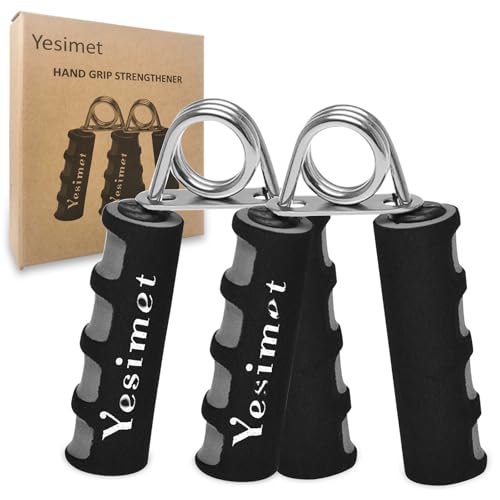
YESIMET 2 Pack Foam Hand Grip Strengthener Set
Simple pair, low cost
Casual desk squeezers

Smart Upgrade
Hiyoga Adjustable Grip Strength Trainer with Counter
Tracks reps automatically
Data-driven trainers

Fitness Focus
Velites All Terrain Crossfit Hand Grips, No Holes
Grips without chalk
Functional fitness athletes

Built To Last
Bear KompleX No Hole Hand Grips for Cross Training
Padded wrist comfort
High-volume lifters

Multi-Use Pick
FitBeast Grip Strength Trainer 6-Piece Set
Six tools in one kit
Recovery and seniors
A Deeper Look At The Lineup
This is the no-frills starting point of the list: two foam-coated spring grippers sold as a matched pair. Having two matters more than it sounds, because you can work both hands at once instead of waiting turns, and one stays in your gym bag while the other lives in a desk drawer.
The soft foam handles are what separate this from bare-metal grippers that dig into your palms during long sets. For someone squeezing between meetings or during TV time, that padding is the difference between sticking with the habit and quitting after a week.
Points In Its Favor
- ✓Two units per set means simultaneous left-and-right training without swapping hands mid-set.
- ✓Foam covering keeps the metal spring from pinching skin during higher-rep sessions.
- ✓Light enough to toss in a backpack, so commutes and office days don’t break the routine.
- ✓Fixed resistance keeps things simple; there’s nothing to adjust, calibrate, or misplace.
Small Caveats
- •The single fixed tension level won’t challenge stronger users for long, and owners commonly report the springs loosening slightly over months of heavy use.
Who Should Grab It
Beginners, rehabbing users easing back in, and anyone who wants an inexpensive way to build a daily squeezing habit.
A Better Fit Elsewhere
Once fixed tension feels easy, the Hiyoga Adjustable Grip Strength Trainer with Counter takes over, since its wide resistance range grows with your strength.
Where the YESIMET pair locks you into one tension level, this Hiyoga unit spans roughly 5 to 100 kilograms of adjustable resistance, which covers everything from gentle warm-ups to serious forearm work. That range means one purchase replaces an entire drawer of fixed grippers.
The built-in automatic counter is the feature people either love or ignore. Squeeze-counting by hand gets old fast, and having the tally handled for you makes progressive targets easier to hit consistently.
Practical Advantages
- ✓The wide adjustment dial lets you progress week to week instead of buying new grippers as you get stronger.
- ✓An automatic rep counter removes guesswork from high-volume sets and helps track daily totals.
- ✓One tool serves several goals: athletic grip work, forearm endurance, and lighter recovery squeezing.
Things To Consider
- •The counting mechanism adds moving parts, so it’s worth keeping the unit dry and away from drops compared with simpler spring designs.
- •At maximum settings the handle feel gets firm, and some users may find long sessions tiring on smaller hands.
Feature Rundown
| | Feature | Specification | Why It Matters |
|---|
| Resistance Range | Adjustable, approximately 5–100 kg | Suits beginners through advanced users without extra purchases |
| Rep Tracking | Built-in automatic counter | Makes volume targets measurable session to session |
| Design Type | Single adjustable gripper | Replaces multiple fixed-tension tools in one item |
Made For
Lifters and climbers who want measurable progression and would rather track numbers than eyeball effort.
Swap It Out When
Anyone recovering from hand strain may prefer the FitBeast 6-Piece Set, whose softer rings and stress balls offer gentler, lower-resistance options.
Everything before this point trains your grip; the Velites grips protect it. These are wearable palm guards for pull-up bars, rings, toes-to-bar, kettlebells, and rowing, cut fingerless with no finger holes to thread, which makes them noticeably faster to put on mid-workout.
The headline spec is the 2.1mm thickness, thin enough to preserve bar feel while still shielding skin from rips. Velites engineered the material to stick well on smooth steel bars even without chalk, while still performing on powder-coated or chalked surfaces, a combination most grips force you to choose between.
The Case For It
- ✓No-hole design slips on in seconds, handy when workouts bounce between movements quickly.
- ✓Works across smooth bars, rough chalked bars, powder coating, rings, and rower handles without switching gear.
- ✓Thin 2.1mm build keeps tactile feedback so your technique doesn’t suffer under padding.
- ✓Chalk-free performance suits boxes and gyms where chalk use is restricted or messy.
Points To Note
- •Leather-style grips like these need air-drying after sweaty sessions, and folding them carelessly in a gym bag can crease the material over time.
Quick Facts
| | Feature | Specification | Why It Matters |
|---|
| Thickness | 2.1 mm | Protection without losing bar sensitivity |
| Hole Style | No holes, fingerless | Faster on/off between exercises |
| Surface Compatibility | Smooth steel, powder-coated, chalked bars | One pair covers varied gym equipment |
Right Fit For
Cross-training and gymnastics-focused athletes doing regular pull-ups, muscle-ups, and bar work who want quick-on protection.
Another Choice May Suit
Athletes who prioritize maximum palm coverage and wrist comfort over speed should look at the Bear KompleX No Hole Hand Grips instead.
Bear KompleX sits a step up in coverage philosophy from the Velites pair reviewed above. Where Velites chases minimal thickness, Bear KompleX leans into full palm protection with padded wrists and a foldable construction aimed at people logging serious weekly volume on bars and rig work.
The fingerless, hole-free layout keeps setup simple, and the padded wrist section addresses a complaint common with basic grips: strap bite during hanging movements. Long chipper workouts with dozens of pull-ups are exactly the scenario this design targets.
Practical Pluses
- ✓Full palm coverage shields against rips and blisters during high-repetition pulling sessions.
- ✓Padded wrist straps reduce pressure points compared with thin unpadded straps.
- ✓Lightweight foldable build packs flat into a gym bag without taking meaningful space.
- ✓Non-slip surface maintains hold on pull-up bars and barbells alike.
Less Ideal Details
- •Thicker coverage trades away some bar feel, so precision-sensitive ring work may feel muted next to the thinner Velites option.
- •Like all fabric-and-leather grips, they’ll need occasional airing out to manage sweat odor.
Whose Shelf It Belongs On
High-volume cross-trainers and weightlifters whose priority is protecting their palms through long training weeks rather than shaving grams.
Reach For A Different Pick When
Minimalist athletes who want barely-there protection will likely prefer the Velites All Terrain grips and their 2.1mm profile.
This kit takes a different route than any single gripper here: six pieces total, split between three resistance rings and three stress balls at graduated difficulty levels. Rings work your extensor muscles by spreading outward, which spring grippers never touch, and the balls cover squeezing plus general hand mobility.
For households sharing equipment, the variety solves a real problem. A senior working on dexterity, a teen athlete building grip, and someone squeezing away desk stress can each find a suitable piece in the same box.
What Helps Most
- ✓Multiple resistance levels let different family members share one kit comfortably.
- ✓Rings train finger extension, balancing the squeezing motion every other tool here relies on.
- ✓Soft silicone-style materials suit gentle rehabilitation routines and arthritic hands better than rigid metal springs.
- ✓Doubles as stress relief, giving the set a daily-use role beyond formal training.
Room For Improvement
- •Six loose pieces mean more to keep track of, and small balls have a habit of migrating under furniture without a storage pouch routine.
- •Peak resistance tops out lower than the Hiyoga trainer, so advanced strength gains will plateau sooner.
Core Details
| | Feature | Specification | Why It Matters |
|---|
| Piece Count | 6 pieces (3 rings, 3 balls) | Covers multiple hand movements and users |
| Resistance Levels | Graduated across pieces | Supports progression and shared household use |
| Training Modes | Squeeze, extend, stress relief | Serves strength, recovery, and dexterity goals |
Who Will Love This
Seniors, rehabbing users, and mixed households wanting one affordable kit that serves strength, recovery, and everyday stress relief.
Look Elsewhere When
Serious lifters chasing heavy max-grip numbers will get further with the Hiyoga Adjustable Grip Strength Trainer and its much wider resistance ceiling.
What Matters Most Before Choosing Hand Grips
Match The Tool To The Job
Spring grippers build crushing strength; wearable grips protect your palms on bars. Deciding which problem you’re solving first eliminates half the market immediately. Someone doing three CrossFit sessions a week has almost no overlap with someone squeezing at a desk.
Resistance Range Beats Raw Power
A fixed-tension gripper feels great for two weeks, then becomes a paperweight once your hands adapt. Adjustable models like the Hiyoga span beginner-to-advanced loads in one unit. For shared households, graduated kits such as the FitBeast set serve the same purpose across multiple people.
Comfort Determines Consistency
Foam padding, padded wrist straps, and smooth silicone all exist because uncomfortable tools get abandoned. Daily-use items live in pockets and desk drawers, so weight and bulk matter too. Choose something you’ll actually reach for on a tired Tuesday, not just the heaviest-duty option listed.
Care And Durability
Fabric and leather grips need drying after sweaty sessions, while silicone and foam tolerate neglect better. Metal springs can loosen over years of hard use. Factoring maintenance into the decision prevents disappointment later.
Key Considerations Across These Picks
Traps First Timers Fall Into
The classic error is buying one fixed-resistance gripper and expecting it to carry a year of progress. Another common slip is ordering wearable grips sized by guesswork rather than measuring your hand first. Skipping the sizing step leads to straps that bunch or slide, which ruins the protection they exist to provide.
When Paying More Pays Off
Higher-tier items earn their cost through adjustability and materials. An adjustable trainer replaces five or six fixed grippers over time, and quality leather grips survive hundreds of bar sessions where budget versions fray. Spending up makes sense once training becomes routine; casual users rarely need it.
Frequently Asked Questions
QHow often should you train grip strength?
Two to four short sessions per week works well for most people, since forearm muscles recover quickly. Light daily squeezing is fine with low-resistance tools.
QDo hand grippers actually build visible forearm muscle?
They contribute, especially at higher resistances with controlled tempo. Visible size also depends on overall training, genetics, and body composition.
QCan grip trainers help with recovery after a hand injury?
Gentle, low-resistance tools like soft rings and stress balls are commonly used in rehab routines. Always follow guidance from a medical professional before starting.
QWhat’s the difference between holed and no-hole grips?
Holed grips thread individual fingers for a locked-in fit, while no-hole versions sit across the palm and go on faster. No-hole designs trade some security for convenience and versatility.
QHow long do hand grips typically last?
Quality metal-spring grippers often last years, though springs may loosen slightly with heavy use. Fabric gym grips wear faster and usually need replacing within a season of frequent training.
Closing Thoughts
The right choice comes down to honest self-assessment. Desk workers and beginners get real value from the YESIMET pair or the FitBeast kit, while committed lifters should step up to the Hiyoga’s adjustable range. Bar-sport athletes need protection, not squeezing power, which puts the Velites and Bear KompleX grips in a category of their own. Start with the tool that matches your actual week, not the one that matches your ambitions, and progress will follow naturally.