Whether you’re trimming rebar on a job site or clearing storm damage out of the backyard, the right saw saves your arms and your afternoon. This roundup covers five handheld and portable cutters that handle metal, wood, masonry, and green branches without demanding a workshop’s worth of space. Each one earns its spot through a specific strength, so match the tool to the material you actually cut most.
The Main Contenders
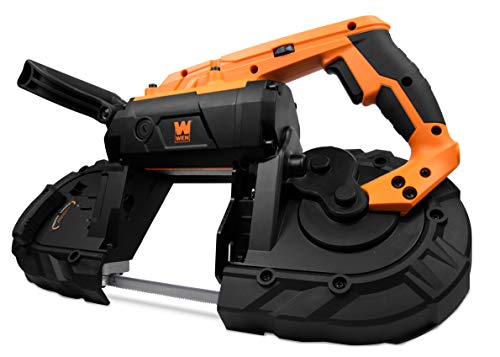
WEN Portable Band Saw 10-Amp Variable Speed (94396)

Evolution R185SMS+ Sliding Miter Saw 7-1/4″
Fiskars 10″ Folding Pruning Saw
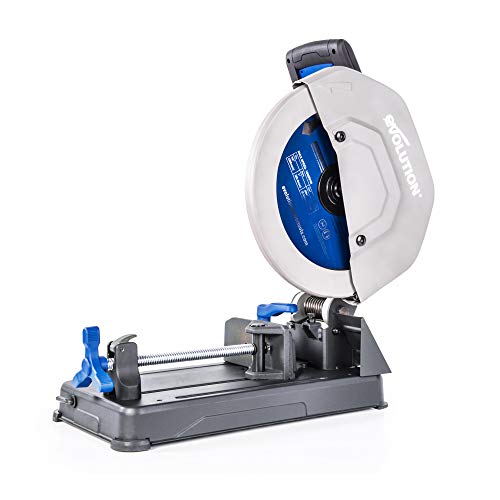
Evolution S355CPSL 14-Inch Metal Cutting Chop Saw
Evolution R230DCT 9-Inch Electric Concrete Saw
More On The Choices That Made The List
A band saw differs from a chop saw in one key way: instead of a spinning disc, a continuous looped blade slices through material, which means less wasted metal and a thinner kerf. The WEN runs on a 10-amp motor and accepts workpieces up to 5 inches wide and 5 inches deep, so conduit, angle iron, and thick-walled pipe all fit without repositioning.
In practice, that depth matters most when you’re cutting stock in place rather than at a bench. An onboard speed dial lets you slow the blade down for dense alloys and open it up for softer stock, which is the kind of control abrasive cutoff wheels simply don’t offer.
What Earns Its Place
- Variable speed dial adapts blade pace to different metals
- 5-inch by 5-inch capacity handles large-diameter pipe and structural stock
- Narrow band blade wastes less material than abrasive discs
- Handheld format reaches cuts a stationary saw can’t
Things To Consider
- Band blades need periodic tension checks and replacement, an ongoing cost some owners mention
- Corded design ties you to an outlet or generator on remote sites
Key Specs
Who It Suits Best
Plumbers, electricians, and metalworkers who regularly cut pipe and stock up to 5 inches will get the most from this one.
Where A Sibling Pick Shines
For fast repeated crosscuts on smaller stock, the Evolution S355CPSL later in this list delivers quicker cycle times.
Most miter saws force you to pick a lane: wood or metal. The Evolution R185SMS+ refuses that trade-off, shipping with a 7-1/4-inch blade that handles timber, plastic, and steel alike. Where the WEN band saw above excels at thick round stock, this one is built for framing lumber, trim, and light metalwork in the same session.
The sliding arm extends reach across wider boards, while bevel adjustments to 45 degrees and miter settings to 50 degrees cover crown molding and compound angles. For a garage workshop where every project seems to use a different material, that flexibility is hard to argue with.
What Works In Its Favor
- One blade cuts wood, plastic, and metal without swapping tools
- Sliding mechanism widens crosscut capacity on boards
- 45-degree bevel plus 50-degree miter range handles compound angles
- Blade ships included, so it’s ready out of the box
Small Caveats
- The 7-1/4-inch blade caps thickness compared to full-size 12-inch miter saws
- Dust collection on multi-material cuts tends to need frequent emptying, per common owner feedback
Built With In Mind
Home DIYers juggling decking, trim, and occasional steel brackets benefit most from this do-everything approach.
Swap It Out When
Anyone cutting heavy steel plate daily should step up to the dedicated Evolution S355CPSL instead of stretching a generalist tool.
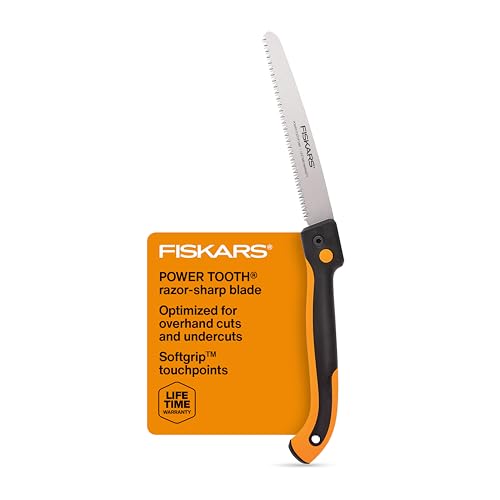
Not every cutting job needs a motor. The Fiskars folding pruning saw is the quiet entry here, built around a 10-inch triple-ground blade whose teeth are sharpened on three faces for aggressive bites into green wood. Compared to the powered picks around it, there’s nothing to plug in, fuel, or maintain beyond keeping the blade clean.
The dual-position lock is the detail worth understanding: the blade locks at two open angles, so overhand cuts on low branches and undercuts on thicker limbs both get proper leverage. A non-slip grip keeps things secure with damp hands or gloves on.
Why It Works Well
- Triple-ground teeth pull through thick branches with less effort
- Two locking positions suit both overhead and undercut cuts
- Folds shut for safe pocket or glove-box storage
- No power source needed, ever
Points To Note
- Manual effort limits it to branches, not dimensional lumber or metal
- Sap buildup on the blade calls for occasional cleaning to keep cuts smooth
Whose Shelf It Belongs On
Backyard gardeners, campers, and trail crews who prune by hand will reach for this constantly.
Another Choice May Suit
Larger storm cleanup jobs go faster with the powered Evolution R230DCT covered below.
This is the serious steel cutter of the group. Dry-cut technology pairs a tungsten carbide-tipped blade with a 15-amp motor, slicing mild steel with minimal heat and sparks. Unlike abrasive wheels, which burn through discs and leave ragged edges, a cold-cut finish comes off the saw ready to weld or handle bare-handed.
The pressed steel base keeps weight manageable for a 14-inch machine, so moving it between truck and bench stays realistic. A chip deflector throws swarf away from your line of sight, and the head miters to 45 degrees for angled fabrication work.
Good Reasons To Consider
- Carbide-tipped blade leaves cool, burr-free edges ready for welding
- 15-amp motor holds torque under sustained steel cutting
- 45-degree miter head supports angled fabrication
- Chip deflector directs debris away from the operator
- Pressed steel base balances sturdiness against portability
Trade Offs To Consider
- Carbide blades cost more upfront than abrasive discs, though they last far longer
- At 14 inches, it demands more bench space than the compact WEN band saw
Feature Rundown
Right Fit For
Fabricators, welders, and contractors cutting steel daily will find this the most productive tool on the list.
Consider Something Else When
Occasional DIY metal cuts are better served by the lighter WEN Portable Band Saw reviewed first.
Concrete usually means a gas-powered cut-off machine, complete with fumes, pull cords, and fuel mixing. The Evolution R230DCT skips all of that: a 15-amp electric motor drives a 9-inch diamond blade through brick, block, stone, and roof tile with a 3-1/2-inch cut depth, enough to clear most pavers and slabs in a single pass.
Blade coverage and body posture are designed to feel steadier than wrestling an angle grinder over the same material, which shows up most on long straight cuts along patio edges. No gas also means it works indoors near open windows, something a combustion engine can’t claim.
Well-Handled Touches
- Electric motor produces no exhaust fumes during operation
- High-concentration diamond blade ships with the saw
- 3-1/2-inch depth clears brick and block in one pass
- More controlled posture than an angle grinder on flat surfaces
Honest Caveats
- Cord length and outlet access shape where you can work outdoors
- Diamond blades wear faster on reinforced concrete, a replacement cost worth budgeting
Quick Facts
Who Should Grab It
Hardscape installers and homeowners tackling patio, retaining wall, or driveway projects get the clearest value here.
Look Elsewhere When
Your work involves steel rather than stone, in which case the Evolution S355CPSL is the better-matched sibling.
What Matters Most Before Choosing Hand Held Chop Saws
Match The Tool To The Material
Steel, wood, and masonry each demand different blade technology. Carbide-tipped blades excel on metal, diamond blades on stone, and triple-ground teeth on green wood. Buying a generalist for specialized daily work leads to frustration, so lead with the material you cut most often.
Capacity And Depth Of Cut
Cut depth determines what fits in a single pass. A 3-1/2-inch depth handles standard pavers, while 5-inch band saw capacity covers large pipe. Measure your typical workpiece before committing, since undersized capacity forces slow, repeated cuts.
Power Source And Portability
Corded electric models deliver steady torque but tether you to outlets. Manual saws go anywhere but trade speed for effort. Job sites without reliable power favor either cordless options or manual tools, while bench-bound workshops can run high-amperage machines freely.
Blade Costs Over Time
The sticker price tells only part of the story. Abrasive discs wear quickly, carbide blades last far longer per dollar, and diamond blades vary with material hardness. Factor replacement costs into any comparison across these five.
Key Considerations Across These Picks
Traps First Timers Fall Into
The most common mistake is buying on raw amperage alone. A 15-amp motor paired with the wrong blade type still cuts poorly. Another frequent slip is ignoring cut depth, then discovering mid-project that a 7-1/4-inch blade won’t clear a thick beam. Check both figures against your actual materials before ordering.
What Separates Premium From Basic
Higher-tier models spend their extra cost on blade quality, motor durability, and features like chip deflection or variable speed. Those additions pay off for anyone cutting weekly or professionally. Weekend users doing a handful of projects a year often get everything they need from simpler, less expensive options.
Frequently Asked Questions
Can a chop saw cut wood as well as metal?
Only multi-material models like the Evolution R185SMS+ are designed for both. Dedicated metal saws use blades and speeds unsuited to clean woodworking.
How does a band saw differ from a chop saw?
A band saw uses a continuous looped blade for thin-kerf cuts, while a chop saw uses a rotating disc for fast crosscuts. Band saws waste less material; chop saws cut quicker.
Do dry-cut metal saws really produce fewer sparks?
Yes, carbide-tipped blades shear steel at lower temperatures than abrasive grinding. You’ll still see some sparks, just far fewer than with an abrasive wheel.
Is a folding pruning saw enough for yard work?
For branches up to several inches thick, absolutely. Larger limbs or storm debris call for a powered option like the R230DCT.
What maintenance do these saws need?
Keep blades clean and sharp, check band saw blade tension periodically, and clear dust and swarf after sessions. Diamond and carbide blades need eventual replacement based on usage.
Closing Thoughts
The right choice comes down to honest self-assessment about what you actually cut. Steel fabricators should look hard at the Evolution S355CPSL, gardeners at the Fiskars folder, and mixed-material DIYers at the R185SMS+. Whatever you land on, matching the blade to the material matters more than any other spec on the page. Take your time, measure your typical workpiece, and the right saw will make itself obvious.