Sanding by hand eats hours and leaves your arms burning before the surface is even close to paint-ready. The right sander changes that completely, whether you’re refinishing a thrifted dresser or smoothing a fresh batch of cutting boards. This shortlist covers both ends of the spectrum: powered orbital sanders for big flat panels and manual blocks for corners, curves, and detail work. Each option below earns its spot through specific strengths, and each comes with honest trade-offs so you can match the tool to your actual projects.
How The Shortlist Stacks Up

S SATC Hook and Loop Sanding Blocks 2 PCS

BOSCH GSS20-40 Orbital Finishing Sander 1/4-Sheet

lvanji 90PCS Micro Detail Sander Kit
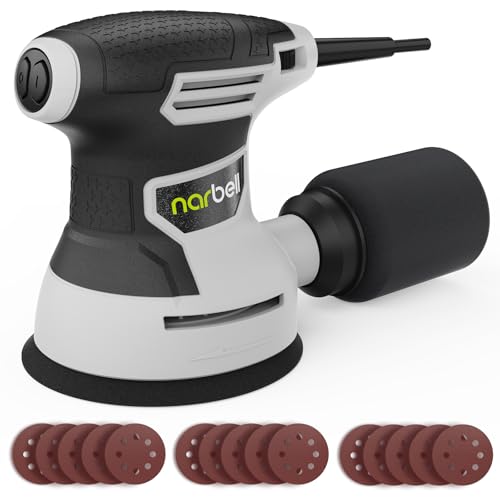
NARBELL 360W Random Orbit Sander with Dust Bag

Afruxy Sanding Sponge 4-Pack with Gloves
A Breakdown Of The Leading Choices
Restoring furniture means fighting two battles at once: flat panels and stubborn 90-degree edges. This two-piece set from S SATC handles both, pairing a round five-inch pad with a mouse-shaped block whose hook-and-loop backing works on either side. That dual-sided design is what makes inside corners manageable without folding sandpaper into a crumpled mess.
The hook-and-loop system, which grips abrasive discs like Velcro, lets you swap grits in seconds and keeps pads from sliding or spinning mid-stroke. Both blocks are shaped to sit naturally in your palm, so longer sessions on a dresser top or cabinet door stay comfortable.
Positive Points
- Mouse block sands vertical 90-degree corners cleanly, saving you from hand-folding paper.
- Hook-and-loop attachment means quick grit changes and no pad slippage during strokes.
- Two complementary shapes cover broad surfaces and detail edges in one purchase.
- Palm-friendly contours reduce hand fatigue on longer restoration sessions.
Things To Consider
- Manual effort only, so large tabletops will take considerably longer than with a powered sander.
- Hook-and-loop backing can collect dust over time; a quick brush-out keeps discs seating properly.
Who It Suits Best
A smart choice for furniture restorers and crafters who want precise control on trim, corners, and smaller pieces.
Where A Sibling Pick Shines
For wide, flat panels where speed matters more than corner access, the BOSCH GSS20-40 finishes the job far faster.
Where the S SATC blocks rely on your arm, this Bosch brings a 2-amp motor turning out up to 12,000 oscillations per minute. A quarter-sheet orbital design moves the pad in tiny circles rather than aggressive swirls, which is exactly what you want before stain or clear coat. Compared with the NARBELL later in this list, it’s the lighter-touch option built purely for finish work.
The included dust collector matters more than most first-timers expect. Sawdust drifting across a freshly sanded surface ruins the final look, and a bagged system keeps your workspace noticeably cleaner.
What It Does Well
- 12,000 OPM delivers fast, smooth passes ideal for pre-finish preparation.
- Built-in dust collection keeps particles off your workpiece and out of the air.
- Quarter-sheet format accepts standard sandpaper sheets, easy to source anywhere.
- Compact palm grip suits overhead work like door frames and shelving.
Minor Gripes
- No variable speed control, so heavy stock removal calls for coarser paper instead of more power.
- The dust bag needs emptying regularly; owners commonly report reduced suction once it fills.
At A Glance
Made For
Woodworkers and DIYers focused on fine finishing who value a clean surface over raw removal speed.
Consider Something Else When
Shoppers wanting adjustable speed and stronger stock removal should look at the NARBELL orbital sander instead.
Ninety sheets of sandpaper spanning 60 through 400 grit is the headline here, and honestly, that range alone covers nearly every hand-sanding scenario a hobbyist meets. Coarse 60-grit strips away old finish, while 400 leaves surfaces ready for polish or sealer. Unlike the S SATC pair, this kit bundles everything, so there’s nothing extra to buy on day one.
The mini block itself uses lightweight PU foam shaped for small hands and awkward angles. Carving spoons, model builds, jewelry boxes, spindle turnings: anywhere a full-size sander can’t reach, this one goes.
A Few Strong Suits
- Nine grit levels from 60 to 400 handle stripping through final polishing in one kit.
- Compact foam block reaches grooves, carvings, and tight joints larger tools miss.
- Works beyond wood too, including plastic and metal polishing tasks.
- Ergonomic, featherweight design keeps detail work from tiring your grip.
Small Caveats
- Sheets wear faster than disc-backed abrasives since there’s no hook-and-loop retention.
- Small block size means big surfaces become slow going; pair it with a powered pick for panels.
Quick Facts
Right Fit For
Craft makers, model builders, and anyone doing detailed hand-finishing on small wooden pieces.
Swap It Out When
For full-size furniture surfaces, the Afruxy sponge pack offers broader coverage per pass.
This is the power option of the group. A 3-amp, 360-watt motor spins a five-inch random orbit pad at up to 14,000 RPM, and six speed settings let you dial output to the task. Low speeds suit delicate veneer; high speeds chew through paint on an old table. That flexibility is something neither the Bosch nor any manual block here offers.
A random orbit action combines spinning with offset movement, which minimizes visible swirl marks even at higher settings. Fifteen starter sandpapers come in the box, plus a dust bag for cleanup, so the kit feels complete out of the package.
Noteworthy Benefits
- Six variable speeds adapt one tool to stripping, shaping, and finishing alike.
- 360-watt copper-wound motor sustains power through long sessions.
- Five-inch pad clears tabletops and doors quickly compared with hand blocks.
- 15 included sandpapers mean you can start working immediately.
- Dust bag captures debris, keeping finished surfaces clean.
Points To Note
- More power demands a steadier hand; beginners may find high speeds aggressive on soft woods.
- Corded operation ties you to an outlet, unlike battery-powered alternatives.
Who Will Love This
Serious DIYers tackling furniture makeovers and larger woodworking jobs who want speed control in one affordable machine.
Another Choice May Suit
Those prioritizing refined, low-vibration finishing over raw power may prefer the BOSCH GSS20-40.
Sanding sponges occupy a sweet spot between loose paper and rigid blocks: the foam conforms to profiles while still spreading pressure evenly. This four-pack spans 60, 80, 120, and 220 grit, covering rough prep through fine finishing, and the included work gloves protect your hands during longer sessions. They also handle wet use, which helps control dust indoors.
Rinsing revives them between jobs, and owners commonly report a single sponge outlasting several sheets of standard paper. For drywall seams, painted trim, and quick wood touch-ups, that reusability adds real value over time.
Key Advantages
- Four grits from coarse 60 to fine 220 cover most household prep and finishing.
- Wet or dry use lets you suppress dust when sanding indoors.
- Conforming foam reaches curves and profiles rigid blocks can’t follow.
- Bonus gloves keep hands protected throughout the job.
Worth Noting
- Sponges need rinsing and thorough drying after wet use to prevent grit degradation.
- Four grits offer less range than the lvanji kit’s nine-level spread.
Core Details
Whose Shelf It Belongs On
Homeowners handling drywall patches, painted trim, and occasional wood refreshes who want a low-cost reusable set.
Look Elsewhere When
Detail carvers needing extreme fine grits down to 400 will get more mileage from the lvanji micro kit.
What Matters Most Before Choosing Hand Sanders For Wood
Match The Tool To Your Project Size
Big, flat surfaces reward powered sanders. A quarter-sheet or random orbit model clears a tabletop in minutes where a hand block would take an hour. Reserve manual blocks and sponges for edges, corners, moldings, and anything with curves. Most well-equipped shops end up owning one of each.
Understand Grit Before You Buy
Grit numbers describe abrasive particle size: lower numbers cut aggressively, higher numbers smooth. Stripping old paint starts around 60 to 80, general shaping sits near 120, and pre-finish work lands at 180 to 220. Kits with a wide spread save repeat purchases, though you’ll pay slightly more upfront.
Dust Management Deserves Attention
Fine wood dust irritates lungs and settles into every crack of your workshop. Powered models with collection bags keep surfaces cleaner and reduce airborne particles, though bags require regular emptying. Wet sanding with sponges offers another route for indoor jobs.
Comfort Determines Consistency
Ergonomics sound trivial until hour two of a restoration project. Palm-sized grips, foam padding, and balanced weight all reduce fatigue, and a tired hand produces uneven pressure and uneven results.
Key Considerations Across These Picks
Traps First Timers Fall Into
The classic error is buying one sander for every job. A powerful orbital unit marrs delicate carvings, while a detail block turns a tabletop project into a weekend ordeal. Skipping grit progression causes problems too: jumping straight to fine paper over deep scratches just polishes them into view.
What Separates Premium From Basic
Higher-tier sanders buy motor quality, vibration control, and durability. Copper-wound motors run cooler and last longer, and better dust systems actually capture particles instead of scattering them. Casual users won’t notice the difference; anyone sanding weekly will.
Frequently Asked Questions
What grit should I start with on bare wood?
Begin around 80 to 120 grit depending on roughness. Move progressively finer, never skipping more than one level, to avoid visible scratches under finish.
Can I use a random orbit sander for finishing?
Yes, that’s precisely its strength. The offset pad motion minimizes swirl marks, leaving a surface ready for stain or clear coat.
Are sanding sponges reusable?
They are, often outlasting disposable sheets significantly. Rinse after wet use, let them dry fully, and they’ll serve through many projects.
Do I need dust collection for small projects?
It’s less critical for tiny crafts but still worthwhile. Even modest sanding releases fine particles you’d rather not breathe in an enclosed room.
Hand blocks or power sanders for furniture restoration?
Both, typically. Power handles broad panels efficiently, then a controllable hand block refines edges, corners, and detailed areas.
Closing Thoughts
Every pick here solves a different slice of the sanding problem. Powered users get serious value from the NARBELL’s six speeds, while finish-focused woodworkers will appreciate the Bosch’s smooth, collected approach. Crafters should lean toward the lvanji kit, and the Afruxy sponges earn a permanent drawer spot in almost any home. Start with the tool matching your next project, not the one covering every hypothetical, and you’ll spend less and sand smarter.