Overgrown fence lines, thorny saplings, and waist-high weeds don’t care how tired your back is. The right hand tool turns a weekend of brutal clearing into an afternoon of steady work, and the wrong one turns into blisters and a dull blade by lunch. This roundup covers five options across the full range: traditional Japanese sickles, a modern brush axe, a long-handled scythe-style cutter, and a multi-purpose machete. Whether you maintain a small garden border or reclaim a neglected acreage, there’s a fit here for your situation.
The Essentials At A Glance

Tomerry Japanese Weeding Sickle Nejiri Kama Long Handle

Fiskars 19″ Brush Axe with 10″ Curved Blade
YEELOR Weeding Sickle 51-Inch Adjustable Handle
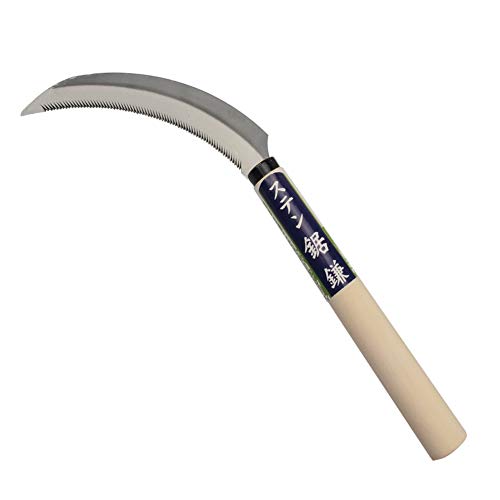
KEYI Grass Sickle with Wooden Handle
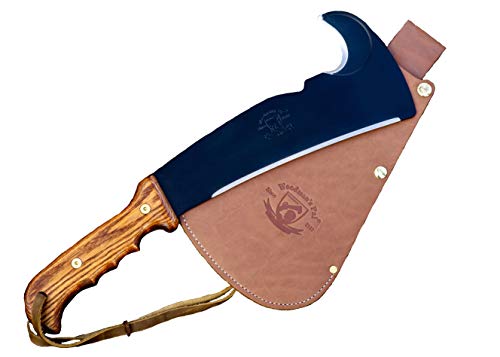
Woodmans Pal Multi-Use Axe Machete with Sheath
The Strengths Of Each Pick
This sickle comes out of a working blacksmith shop rather than a mass-production line, and that shows in the edge quality. The Nejiri Kama shape angles the blade flat against the ground, so it slices grass at the soil line instead of hacking at it.
In practice, that geometry suits tight garden beds where a swing-heavy machete would tear up neighboring plants. Compared to the KEYI hand sickle later in this list, the longer handle keeps you upright while you work along borders.
What Pays Off
- Forged by an actual blacksmith factory, so the steel holds a keen edge through repeated sharpening cycles
- The horizontal blade orientation cuts cleanly at ground level, which means less strain per pass in dense growth
- A design Japanese gardeners have refined over generations, so nothing about the ergonomics feels experimental
- Long handle keeps your hands clear of thorny stems and stinging plants
Things To Consider
- Carbon-style forged edges like this one respond well to honing but will rust without a quick wipe-down after damp sessions
- You may find the reach awkward in very narrow raised beds compared to a short-handled option
Key Specs
Who It Suits Best
Home gardeners who want a traditional, precision-focused weeding tool for beds and borders rather than raw clearing power.
Where A Sibling Pick Shines
For thick woody brush beyond a sickle’s pay grade, the Fiskars 19-inch Brush Axe is the stronger match.
Where the Tomerry sickle trims, this one clears. A 10-inch curved blade paired with a 19-inch FiberComp handle gives you enough leverage to drop small trees, strip logs, and cut walking trails through overgrowth.
FiberComp is Fiskars’ glass-fiber-reinforced composite, and its low weight matters more than it sounds: faster swing speed translates directly into less fatigue over an afternoon of chopping. Campers and trail crews get obvious value here, though suburban gardeners may find it more tool than most yards demand.
Features That Help
- The curved 10-inch blade concentrates force at the bite point, so branches fall with fewer strokes than straight-edge designs typically need
- A low-friction coating helps the edge glide through green wood, leaving cleaner cuts that heal faster on living trees
- The lightweight composite handle resists cracking and won’t splinter the way bare wood can after wet-season storage
- Comfortable grip geometry reduces hand slip during full-power swings
- Versatile enough for felling saplings, stripping bark, and clearing campsites with one tool
Small Caveats
- At 19 inches overall, it offers far less precision around delicate plantings than the Tomerry sickle reviewed above
Made For
Landowners, hikers, and campers who regularly face thick brush, fallen limbs, and small-tree removal.
Reach For A Different Pick When
Weekly lawn-edge trimming calls for something lighter, and the KEYI Grass Sickle handles that job with far less effort.
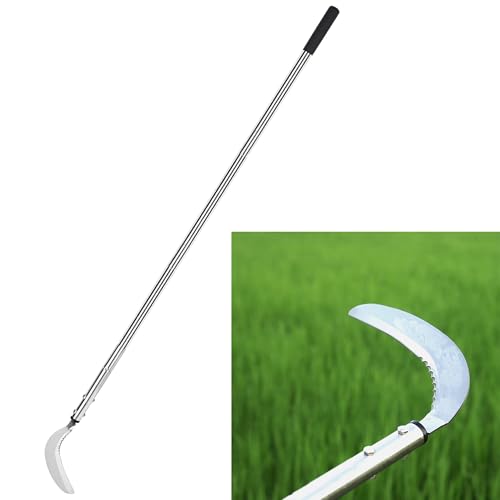
Flimsy shafts are the usual failure point on long-handled weeders, and YEELOR attacks that problem head-on with a high-strength stainless steel handle rated to resist bending. Stainless also shrugs off rain and morning dew, a real advantage over bare carbon steel tools left outside overnight.
The scythe-style structure lets each swing carry through dense weed stands in one motion, so a weekly backyard pass takes noticeably fewer strokes. In our view, this is the pick for anyone whose knees or back have started voting against short-handled tools.
Why It Works Well
- Bend-resistant stainless construction addresses the “snapped after one season” complaint common with budget long-handled weeders
- Rust-proof shaft and blade mean minimal maintenance beyond occasional cleaning
- The 51-inch reach lets you sweep large areas standing fully upright, which adds up to real comfort during hour-long sessions
Points To Note
- A 51-inch tool stores poorly in crowded sheds; plan on wall hooks or a corner slot
- Swing-based cutting demands open space, so it’s clumsy between closely spaced vegetable rows
- Stainless edges generally need touch-up honing sooner than high-carbon blades do
Feature Rundown
Right Fit For
Anyone maintaining larger lawns, ditch banks, or field edges who wants durable, stand-up cutting without kneeling.
Another Choice May Suit
Tight ornamental beds call for the shorter, more surgical Tomerry Nejiri Kama instead of a full-length swing tool.
This is the grab-and-go option of the group. A hooked carbon steel blade around 6.7 inches sits on a wooden handle light enough to wield one-handed all morning, which makes quick work of monkey grass, vine tangles, and clumpy ornamentals.
The hook shape pulls stems into the curve as you cut, so nothing springs away from the edge. Owners commonly report it lives in a back pocket or bucket during garden sessions, something impossible with the 51-inch YEELOR. The honest trade-off is reach: everything happens at arm’s length, so stooping comes with the territory.
Useful Touches
- The hooked profile grips and slices in one motion, keeping slippery grass stems from sliding off the edge
- Ultra-light build suits extended one-handed use without forearm burn
- Wooden handle stays comfortable in both hot sun and cold mornings
Honest Caveats
- Short reach means bending or kneeling for ground-level work, which adds up over big jobs
- Wood handles benefit from occasional oiling to prevent drying and splitting over years of outdoor storage
Who Will Love This
Gardeners tackling grass clumps, vines, and border cleanup in smaller yards who value speed and portability over reach.
Skip It When
Knee or back issues make stooping painful; the upright-swinging YEELOR sickle covers the same tasks without crouching.
Built on a design the US Army carried since World War II, the Woodman’s Pal blends machete, hatchet, brush axe, and knife into one slab of high-carbon spring steel. Each blade is laser-cut, heat-treated, hand-sharpened, and assembled stateside, which puts it in a different manufacturing tier than the stamped imports elsewhere here.
A matte powder-coat finish guards against corrosion, and the included sheath makes it genuinely packable for hunting or bushcraft trips. Unlike the single-purpose Fiskars axe, this earns its spot in a truck bed year-round.
What Works In Its Favor
- Four functions in one tool replaces several separate purchases in a camp kit
- High-carbon spring steel holds an edge under hard use and re-sharpens reliably
- Heat treatment and powder coating give the blade strong wear and corrosion resistance
- Hand-sharpened, US-assembled build points to consistent quality control
Worth Bearing In Mind
- The multi-role design does no single job quite as well as a dedicated specialist such as the Fiskars brush axe
- High-carbon steel needs drying and light oil after wet conditions, or surface rust will appear within days
The Details
Whose Shelf It Belongs On
Hunters, anglers, and homesteaders who want one rugged blade covering camp chores and property clearing alike.
A Better Fit Elsewhere
Pure garden-bed weeding costs less and works better with the Tomerry Nejiri Kama than with this heavy-duty camp tool.
What Actually Matters Before You Buy
Match The Tool To The Growth
Grass and soft weeds surrender to any sharp sickle, while woody stems over thumb thickness demand a brush axe or machete profile. Buying a delicate weeder for a bramble patch wastes money, and hauling a machete into flower beds damages more than it clears. Walk your property first and catalog what actually needs cutting.
Weight And Reach Decide Comfort
A 19-inch brush axe swings fast but punishes precision work, while a 51-inch scythe saves your spine yet needs open room. Hold the length question against your typical session: twenty minutes of edging favors short and light, an hour of field clearing favors long and sweeping. Fatigue, not sharpness, ends most clearing days early.
Steel Type Sets Your Maintenance Routine
High-carbon steel takes and holds a keen edge but rusts without care, whereas stainless forgives neglect yet needs more frequent honing. Honest self-assessment helps here. Anyone who won’t wipe down a blade after rain should lean stainless, even at some cost in edge life.
Sheaths And Storage Extend Lifespan
Exposed edges dull in tool drawers and nick hands in trucks. A fitted sheath, like the one bundled with the Woodman’s Pal, protects both the blade and everything near it. Wall-mounted storage also keeps wooden handles away from damp floors where they slowly rot.
Key Considerations Across These Picks
Wrong Turns To Avoid
The classic error is buying on blade size alone. A huge machete feels capable until you spend an hour swinging it through soft grass that a half-pound sickle would have handled. The second trap is ignoring handle material: hollow tubular shafts on cheap long-handled weeders are the most commonly reported failure point in this category, so solid steel or reinforced composite deserves the priority.
The Case For Spending Up
Higher-priced tools earn their cost in metallurgy and assembly. Forged blades, heat-treated spring steel, and hand-sharpened edges hold their bite season after season, while bargain stamped steel often needs regrinding within weeks. Anyone clearing brush monthly recovers the difference quickly; once-a-year trimmers can sensibly stay in the budget tier.
Frequently Asked Questions
Can a hand sickle really handle thick brush?
Sickles excel at grass, weeds, and stems under pencil thickness. Anything woody needs a brush axe or machete.
How often should I sharpen these tools?
Light garden use typically needs a touch-up every few sessions. Heavy brush work may need honing after each outing.
Do stainless blades stay sharp as long as carbon steel?
No, stainless generally softens faster at the edge. Its payoff is rust resistance and easier care.
Is a long handle always better for my back?
It removes bending but requires open swinging space. Confined beds still favor short-handled tools.
What maintenance keeps these tools lasting years?
Wipe blades dry after use, oil carbon steel lightly, and store everything off concrete floors.
Closing Remarks
Every tool here solves the same problem differently, and the right answer depends on what’s growing on your land. Match the blade to the growth, the length to your body, and the steel type to your willingness to maintain it. Get those three decisions right, and clearing brush stops feeling like punishment. Start with your worst patch of yard and let it tell you which pick belongs in your hands.