


Anyone who has burned through a standard bit trying to drill stainless steel knows the frustration: smoke, a dulled tip, and a hole that never quite starts. Hard metal demands cobalt steel and smart tip geometry, not just more pressure. This roundup covers five options spanning single-size packs to full index sets, so whether you’re fabricating brackets in a home shop or doing occasional repairs on cast iron, there’s a match below for your drill press or handheld driver.
A Side-By-Side Look
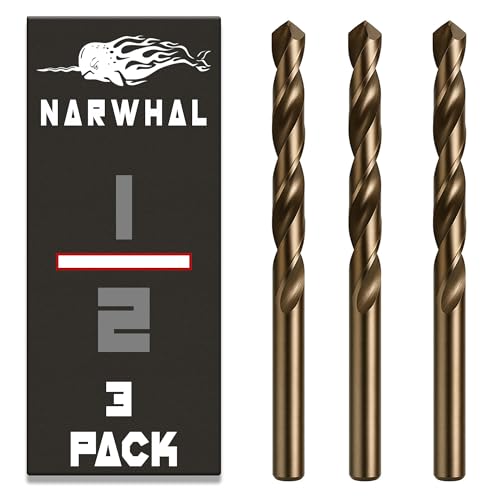
Narwhal 1/2 Inch Cobalt Drill Bits (3 Pack)

CaRoller 29Pcs Drill Bit Set

RCINDUS 9/32″ Cobalt Drill Bit (10PCS)

3/4″ Cobalt Drill Bit, 1/2″ Reduced Shank (2 Pieces)

M35 Cobalt Drill Bit Set 20PCS (1/16″-1/2″)
A Closer Look At Each Pick
Six inches of overall length is what separates this Narwhal trio from most half-inch jobbers, which typically run shorter. That extra reach matters when you’re boring through thick plate, stacked tubing, or a weld seam where the chuck would otherwise bottom out. The M35 designation means high-speed steel alloyed with about 5% cobalt, a mix that holds its edge at higher cutting temperatures than plain HSS.
The 135-degree split point deserves a mention too: instead of needing a center punch first, the angled cutting edges self-center and resist the walking you’d otherwise fight on curved or polished stock. Three identical bits in one case also means a snapped or dulled bit doesn’t stop your project mid-day.
What Makes Sense
- 6-inch total length reaches deep material and tight spots shorter bits can’t
- 4-inch flute clears chips efficiently on thick sections
- Split point starts holes without pre-punching, saving setup time
- Cobalt-alloyed steel handles heat from stainless and hardened stock
- Three-pack keeps backups on hand for long fabrication sessions
Things To Consider
- A single size only, so this complements rather than replaces a set
- The plastic case is functional but basic; owners commonly report it works best stored flat in a toolbox drawer
Key Specs
Built With In Mind
Fabricators, welders, and maintenance techs who regularly bore half-inch holes in plate steel or stainless will get the most from these.
Where A Sibling Pick Shines
Shoppers wanting a full range of diameters should look at the WildBossy M35 set instead, which covers 1/16″ through 1/2″ in one indexed case.
Twenty-nine fractional sizes from 1/16″ up to a full 1/2″ means you’ll rarely hit a project and discover the right diameter is missing. For someone stocking a first garage bench, that completeness beats owning three premium bits in one size. These are conventional high-speed steel with a 135-degree tip, so they cut cleanly in wood, plastic, and softer metals.
Honest framing here: HSS without cobalt isn’t the tool for repeated passes through hardened steel. In a home setting, though, where most jobs are aluminum brackets, mild steel hinges, or mounting hardware, this set covers nearly everything you’ll encounter. The graduated sizing also teaches good habits, letting you step up through pilot holes instead of forcing one large bit.
Why It Works Well
- Nearly complete fractional range removes guesswork on hole sizing
- 135-degree tip geometry gives steadier starts than basic 118-degree points
- Small diameters suit electronics, hinge hardware, and pilot-hole work
- One organized kit replaces piecing together individual bits over time
Worth Noting
- Plain HSS dulls faster than cobalt on stainless or hardened alloys
- Single quantities mean a broken 1/8″ bit leaves a gap until replaced
The Right Fit
New DIYers, renters assembling a starter toolbox, and homeowners handling light metal repairs benefit most from this breadth.
Reach For A Different Pick When
Regular stainless or cast-iron work calls for the RCINDUS cobalt pack, whose M35 steel tolerates far more heat before dulling.
Ten copies of one oddball size sounds niche until you’ve had a production run stall because the shop’s lone 9/32″ bit snapped. Nine thirty-seconds of an inch, about 7.14mm, sits between common letter and fraction sizes, and it’s a frequent requirement for clearance holes and tapping prep. Having ten on hand turns a consumable into something closer to inventory.
Like the Narwhal trio above, these use M35 high-speed steel with 5% cobalt, so heat resistance is the headline attribute. The manufacturer lists them for steel, stainless, cast iron, hard plastic, and wood, which makes them genuinely multipurpose despite the industrial focus. Compared with the CaRoller set, you trade versatility of size for durability per hole.
Bright Spots
- Ten-piece supply suits repetitive drilling across many workpieces
- M35 cobalt alloy stays sharp longer in stainless and cast iron
- Plastic storage case keeps an uncommon size findable in a crowded drawer
- Cross-material rating covers plastics and wood alongside metals
Points To Note
- One fixed diameter limits usefulness outside its intended tasks
- Cobalt bits are brittle compared with standard HSS; a side load can snap one, so steady perpendicular drilling pays off
Quick Facts
Who Should Grab It
Small machine shops, HVAC installers, and anyone running repeated 9/32″ holes in tough alloys will appreciate the depth of supply.
Swap It Out When
Generalists needing many diameters are better served by the CaRoller 29-piece set, which trades cobalt toughness for coverage.
Three-quarters of an inch is serious territory, the kind of hole you need for pipe pass-throughs, bolt clearances, and conduit mounts. Most handheld drills top out around a 1/2″ chuck, which is exactly why the reduced shank design exists: the cutting end measures 3/4″ while the shank steps down to 1/2″ so a standard chuck can grip it.
The three flats machined onto that shank are the detail worth understanding. A round shank can spin inside the chuck jaws under torque, marring both surfaces; those flats give the jaws a positive surface to clamp, keeping the bit seated during heavy cuts. Two pieces per order adds redundancy for a bit this large, which you’ll feel working through cast iron or thick stainless flanges.
What Stands Out
- Reduced shank fits ordinary 1/2″ chucks, no oversized chuck required
- Three-flat shank resists slipping and spinning under load
- 5% cobalt steel extends usable life in abrasive hard metals
- Two-bit pack provides a backup for a high-stakes size
Practical Considerations
- Large-diameter cuts demand low speed and firm workholding; expect slower progress than smaller bits
- Only suited to drills with enough power and rigidity for a 3/4″ bite
Right Fit For
Maintenance crews, pipefitters, and metal shop owners who occasionally need big holes but don’t want a dedicated large-chuck drill.
Not Your Match When
Light-duty users sticking to sub-half-inch holes will find better everyday value in the WildBossy 20-piece cobalt kit.
This WildBossy kit splits the difference between the CaRoller’s breadth and the single-size cobalt packs earlier in the list. You get twenty M35 cobalt bits spanning 1/16″ to 1/2″, with duplicates concentrated in the small diameters that break most often. The alloy combines molybdenum and cobalt for a noticeably harder cutting edge than commodity HSS, which shows up as cleaner holes in stainless and fewer regrinds over a year of use.
An indexed storage case rounds out the package, and honestly, organization matters more than people admit. Digging through a loose pile for a 5/64″ bit wastes time and invites damage. Jobber length keeps these compatible with both handheld drills and benchtop presses, covering garage repair work and light fabrication alike.
Noteworthy Benefits
- Cobalt-molybdenum alloy holds sharpness through hot, hard-metal cuts
- Doubled-up small sizes survive the breakage-prone early holes
- Indexed case sorts sizes at a glance and protects cutting edges
- Jobber length works in handheld drills and drill presses
- Full 1/16″-to-1/2″ span handles fasteners, pilots, and clearance holes
Small Caveats
- Larger diameters appear once each, so a lost 1/2″ bit means sourcing a replacement separately
- Case latches on budget kits tend to loosen over years; some owners add a rubber band for transport
Core Details
Made For
Home mechanics, hobbyist welders, and general repair folks who want cobalt performance across a whole size range rather than one specialty diameter.
Another Choice May Suit
Deep-hole work beyond standard jobber reach points back to the Narwhal 6-inch bits, built specifically for thick stock.
What Matters Before Choosing Hard Metal Drill Bits
Match the Alloy to the Material
Cobalt content is the dividing line in this category. Standard HSS works fine in aluminum, mild steel, and wood, but hardened steel, stainless, and cast iron generate enough cutting heat to soften plain HSS edges quickly. M35-grade steel, alloyed with roughly 5% cobalt, resists that softening and holds a working edge far longer. Paying attention to the grade printed on the packaging tells you more than any marketing line.
Understand Tip Geometry
The angle where the cutting edges meet determines how a bit behaves at contact. A conventional 118-degree point needs a center punch to avoid wandering, while a 135-degree split point bites immediately and stays put on curved or slick surfaces. For overhead work or drilling into rounded tubing, that self-centering behavior saves real frustration.
Think About Shank and Chuck Fit
Sizes above 1/2″ usually need either a reduced shank or a larger-capacity chuck. Check your drill’s maximum capacity before ordering a 3/4″ bit, and prefer shanks with flats where offered, since they grip more securely under torque.
Balance Sets Against Single Sizes
Full sets win on versatility; multi-packs of one size win on production work. Most workshops eventually need both, so start with whichever matches your current projects.
Key Considerations Across These Picks
Traps First Timers Fall Into
The classic error is buying cheap bulk sets for hardened steel, then blaming the drill when tips blue and dull within minutes. Another slip is running too fast: cobalt bits last longest at lower RPM with steady feed pressure, especially above 1/4″ diameter. Skipping pilot holes on large sizes stresses both bit and motor unnecessarily.
Where The Extra Money Goes
Higher-tier cobalt bits cost more because of the alloying elements and precision grinding behind them. Fully ground flutes cut truer holes and run cooler than rolled alternatives. For occasional household drilling, that premium buys little; for weekly stainless or cast-iron work, it repays itself in replaced-bit savings alone.
Frequently Asked Questions
Can cobalt drill bits be sharpened?
Yes, and that’s part of their appeal. Because the cobalt runs through the entire bit rather than a coating, regrinding exposes fresh alloyed steel instead of removing the wear-resistant layer.
What speed should I use in stainless steel?
Slow speeds win here, generally the lowest range your drill offers for larger diameters. Heat is the enemy of both the bit and the workpiece hardening further under friction.
Do I still need cutting oil with cobalt bits?
It’s strongly recommended on steel and stainless. Oil carries heat away and flushes chips, extending edge life noticeably even on premium bits.
Why did my new bit walk off the mark?
Plain-point bits wander on smooth surfaces unless a 135-degree split point is used. A quick center-punch dimple solves it regardless of tip style.
Are these bits suitable for wood and plastic too?
They are, though you may notice slightly rougher holes in soft materials. Dedicated wood bits remain the better choice for clean finish work in timber.
Bottom Line
Hard metal punishes the wrong bit quickly, so match the tool to the task before anything else. The Narwhal trio earns its place for deep, heavy bores, the CaRoller set equips a starter bench affordably, and the RCINDUS pack solves repeat-hole production. Add the reduced-shank 3/4″ pair for oversized holes and the WildBossy kit for all-around cobalt coverage, and your drill will rarely meet metal it can’t handle. Start with the pick closest to your next actual project.




