


Hooking an old hard drive up to a modern Mac or a USB-C laptop sounds simple until you’re staring at three different port shapes and a drawer full of adapters that don’t quite fit. That’s the problem this list solves. Whether you’re archiving footage, reviving drives from an older machine, or building a fast external backup rig, one of these five will get your storage talking to your computer without drama.
The Choices Worth Comparing

Silkland 80Gbps USB 4 for Thunderbolt 5 Cable, 4FT
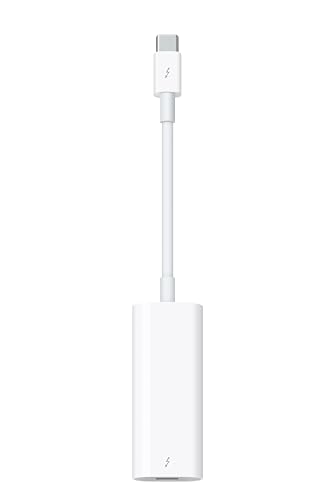
Apple Thunderbolt 3 to Thunderbolt 2 Adapter
ORICO Hard Drive Docking Station 2.5/3.5 Inch HDD SSD

Cable Matters USB C to SATA Adapter, 10Gbps

SABRENT USB-C Hard Drive Docking Station DS-UC1B
A Breakdown Of The Leading Choices
A cable is usually the boring part of a setup, but this one is the reason the rest of your hardware can breathe. It’s built to the USB4 Version 2.0 standard with 80Gbps bidirectional data transfer, and it carries USB-IF certification, which means it passed official compliance checks rather than just claiming speed on a box.
The four-foot length suits desk-bound rigs where your drives and displays sit within arm’s reach. Video editors pushing multiple high-resolution monitors off a single port are the clearest beneficiaries here, though anyone future-proofing a new Thunderbolt-capable machine gets value too.
The Practical Payoff
- 80Gbps data throughput moves large backup jobs in a fraction of the time older cables need
- USB-IF certification (TID listed) gives you confidence the spec claims hold up on real hardware
- Handles multi-display arrays, including several 4K screens at high refresh rates for editing or gaming
- Four feet is long enough to route behind a monitor arm without excess slack
- Doubles as a charging cable for laptops that accept high-wattage USB-C power delivery
Small Caveats
- You’ll only see top speeds when both devices support USB4 v2 or Thunderbolt 5; otherwise it runs at whatever the slowest link allows
- Coiled tightly in a bag for months, any braided cable can develop kinks worth straightening out gently
Quick Facts
Who Will Love This
Video editors, colorists, and power users running Thunderbolt 5 or USB4 v2 machines who want headroom for tomorrow’s drives and displays.
Where A Sibling Pick Shines
Shoppers with older Thunderbolt or Thunderbolt 2 drives should reach for the Apple Thunderbolt 3 to Thunderbolt 2 Adapter instead, since raw bandwidth won’t help legacy ports communicate.
Plenty of people still own perfectly good Thunderbolt and Thunderbolt 2 drives from the early 2010s, and this small adapter is the official way to keep them alive on a modern Mac. It converts a Thunderbolt 3 (USB-C) or USB 4 port down to the older mini DisplayPort-style connector, so your existing enclosure keeps working instead of heading to a shelf.
Because it’s bidirectional, it also works in reverse: newer Thunderbolt 3 accessories can connect to an older Mac running a compatible macOS version. In most home studios, that two-way flexibility is exactly what makes this worth keeping in a desk drawer.
Notable Gains
- Connects legacy Thunderbolt hard drives and docks to current USB-C Macs without replacing hardware
- Bidirectional design also brings newer Thunderbolt 3 gear to older Macs
- First-party build quality tends to hold up better than generic converters over years of plugging and unplugging
- Tiny footprint slips into a laptop sleeve alongside the drive it serves
Things To Consider
- It carries no extra cable length, so heavy adapters hanging directly off a port can stress the connector over time
- Reverse compatibility depends on the macOS version installed on the older machine, worth checking before you commit
Right Fit For
Mac owners migrating from an older workstation who want their existing Thunderbolt drives and docks to survive the upgrade intact.
Swap It Out When
If your drives are plain SATA rather than Thunderbolt, the ORICO Hard Drive Docking Station handles bare 2.5 and 3.5-inch disks more affordably.
A docking station is the tool you want when drives come and go constantly, and this ORICO unit takes the friction out of that routine. You slide a bare SATA drive into the slot, no screws, no enclosure, and the computer sees it instantly. Hot-swapping means you can pull one disk and seat another without rebooting.
Compared with the pocket-sized Cable Matters adapter later in this list, the dock trades portability for convenience at a desk. Anyone doing drive imaging, batch backups, or recovering data from retired machines will find the workflow far smoother here.
Features That Help
- Tool-less insertion gets a drive connected in seconds, ideal for repeated swap sessions
- UASP support accelerates transfers beyond standard USB speeds where the host allows
- TRIM passthrough helps connected SSDs maintain write performance over time
- Accepts both 2.5-inch laptop drives and larger 3.5-inch desktop disks
Potential Sticking Points
- Top speeds cap around the USB 3.0 ceiling, well below what Thunderbolt-class cables deliver
- Large capacity drives benefit from stable external power, so plan desk space for the adapter brick
Details At A Glance
Best Suited To
Home technicians, photographers, and IT hobbyists who cycle through bare drives weekly and want a set-and-forget desk companion.
Skip It When
Frequent travelers should look at the Cable Matters USB C to SATA Adapter, whose short cable and bus-powered design pack down to almost nothing.
This is the minimalist option of the group: a short adapter cable that turns any 2.5-inch SATA SSD or HDD into a temporary external drive. At roughly ten inches long, it barely registers in a tech pouch, and because it draws power from the USB-C port itself, there’s no wall adapter to forget.
Where the ORICO dock wins on desk convenience, this one wins on portability. Field technicians cloning client drives, students rescuing files from an old laptop disk, and anyone working across Windows, Mac, or Chrome OS machines all fit its profile neatly.
What Pays Off
- Bus-powered operation means one less charger in your bag
- Works across Windows, macOS, and Chrome OS with no driver fuss in typical cases
- Short cable keeps the drive anchored near the laptop instead of dangling
- Quick-connect design makes one-off drive reads painless
Worth Noting
- Designed around 2.5-inch drives; larger 3.5-inch disks generally need external power this cable doesn’t supply
- With no dock body to rest in, a connected drive sits loose on the desk, so keep drinks elsewhere during long transfers
Made For
Mobile professionals and students who occasionally need bare-drive access and refuse to carry anything bulkier than a cable.
Another Choice May Suit
For sustained 3.5-inch desktop-drive work, the SABRENT DS-UC1B dock offers powered stability this adapter can’t match.
Sabrent has a long track record in budget storage gear, and this dock leans into reliability over flash. Its headline advantage is the external power supply, which keeps hungry 3.5-inch mechanical drives spinning steadily through hours-long archive jobs, something bus-powered options struggle with.
Backward compatibility reaches all the way down to early SATA generations, so even decade-old drives pulled from a retired tower should mount without complaint. Against the ORICO dock earlier in the list, you’re paying for that dedicated power delivery and Sabrent’s reputation for consistent firmware behavior; against the Silkland cable, you’re trading raw bandwidth for universal SATA practicality.
What Works In Its Favor
- External power supply sustains large 3.5-inch drives through extended transfers
- Accepts both 2.5-inch and 3.5-inch SATA SSDs and HDDs
- Supports older SATA-I era drives, handy for data rescue projects
- USB-C connection pairs cleanly with modern laptops and Thunderbolt-equipped machines
- Simple plug-and-play behavior reported widely by long-term owners
A Few Limitations
- The power brick adds a cord and outlet dependency that travel-oriented picks avoid entirely
- Speed tops out at the 10Gbps class, so it won’t showcase what a Thunderbolt 5 link can do
Feature Rundown
The Right Fit
Archivists, media hoarders, and home-server builders who run big mechanical drives for hours and value steady power over maximum speed.
Reach For A Different Pick When
Users chasing cutting-edge transfer rates on a Thunderbolt 5 machine will get far more from the Silkland 80Gbps USB 4 Cable paired with compatible hardware.
What Matters Most Before Choosing Hdds To Thunderbolt
Match The Link To Your Slowest Device
A Thunderbolt-rated chain performs at the pace of its weakest component. Pair an 80Gbps cable with a 5Gbps dock and you’ll see dock speeds, nothing more. Before spending on premium cabling, confirm what your machine and enclosure actually negotiate.
That said, buying headroom isn’t foolish. A certified high-bandwidth cable often outlives two or three computer upgrades.
Power Delivery Changes Everything
Bus-powered adapters shine for 2.5-inch SSDs, which sip current. Mechanical 3.5-inch drives draw considerably more at spin-up, and underpowered connections are a common source of dropped mounts and failed clones. A dock with its own power supply removes that variable entirely.
Portability Versus Permanence
Decide honestly how often drives move. Weekly fieldwork favors a short adapter cable; a fixed backup station at home favors a weighted dock. Owning both is common among people who manage drives professionally, and neither costs much.
Compatibility Homework Pays Off
Legacy gear deserves special attention. Older Thunderbolt drives need protocol conversion, not just a physical adapter, and macOS versions matter for reverse-direction setups. A few minutes checking model numbers prevents a return shipment later.
Key Considerations Across These Picks
Traps First Timers Fall Into
The biggest mistake is assuming any USB-C cable does everything. Charging cables frequently lack data lines entirely, and unbranded ones may skip certification. Stick to products that state their data rate and standards explicitly, as every item above does.
Second slip: forgetting power requirements for desktop-size drives. A dock without external power will frustrate you quickly.
The Case For Spending Up
Certified high-speed cables and powered docks cost more for concrete reasons: compliance testing, better shielding, and stable power circuitry. For occasional file copies, budget options serve fine. For daily professional workflows, the upgrade eliminates the stalls and disconnects that eat billable time.
Frequently Asked Questions
Will a Thunderbolt cable work in a regular USB-C port?
Yes, Thunderbolt cables are backward compatible with USB-C ports and will run at whatever speed those ports support. You simply won’t reach Thunderbolt-level throughput.
Do I need a special adapter for old Thunderbolt 2 drives?
On a modern Mac, a Thunderbolt 3 to Thunderbolt 2 adapter bridges the different connectors and protocols. Generic USB-C adapters won’t carry the Thunderbolt signal.
Can a docking station read both HDDs and SSDs?
Most SATA docks handle both, since they share the same connector standard. Confirm the stated size range covers your 2.5-inch and 3.5-inch drives.
Why do some adapters include external power?
Larger mechanical drives draw more current than a laptop port reliably supplies. External power keeps spin-up and long transfers stable.
Is UASP important in a dock or adapter?
UASP streamlines command handling between the computer and drive, improving transfer efficiency on supported hardware. It’s a quiet but meaningful performance boost.
Wrap Up
Your choice comes down to honest self-assessment. Power users on current-generation machines should start with the Silkland cable, while Mac households keeping legacy drives alive need the Apple adapter. Desk-based drive juggling points to the ORICO dock, travelers to the Cable Matters adapter, and heavy archival work to the SABRENT. Match the tool to the job and each one earns its spot.




