A good air hammer turns an hour of grinding with a chisel into ten minutes of clean work. Whether you’re cutting exhaust bolts in a home garage, driving pins on a job site, or breaking up a patio slab, the wrong tool fights you the whole way. This shortlist covers five options that span pneumatic hammers, chisel sets, and one electric jackhammer, so you can match the tool to the actual work rather than the label on the box.
How The Shortlist Stacks Up
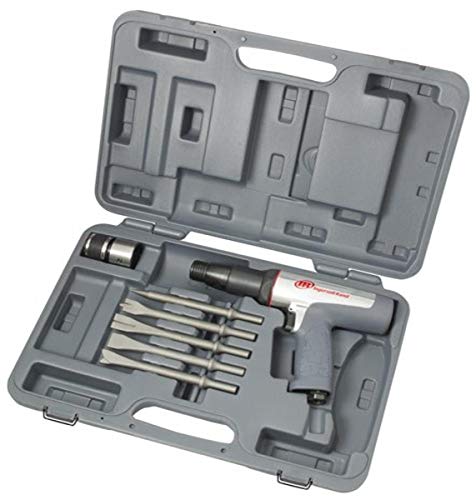
Ingersoll Rand 118MAXK Long Barrel Air Hammer Kit

Mayhew Tools 31982 Pneumatic Hammer 1″ x 4″

Performance Tool M550DB Pneumatic Air Hammer with 4 Chisels

VEVOR Demolition Jack Hammer 1400W Concrete Breaker

Astro Pneumatic Tool 4980 Super Duty Air Hammer/Riveter
What Each Pick Brings To The Table
The extended barrel on this Ingersoll Rand gives you more reach than a standard-length hammer, which matters when you’re working inside wheel wells or behind suspension components where your hands can’t follow. The brand’s vibration-reduction design cuts felt shake by over 30 percent compared with conventional hammers in its class, so your wrists take less punishment during long sessions.
In practice, that combination suits exhaust teardowns, front-end jobs, pin driving, and body shearing. A 3/8-inch inlet keeps it compatible with typical shop air setups.
Points In Its Favor
- Vibration reduction over 30 percent means noticeably less hand fatigue on hour-long jobs
- Long barrel reaches fasteners tucked behind panels and frames
- Kits together, so you’re not hunting down separate accessories
- Suited to exhaust, bolt cutting, pin driving, and sheet-metal shearing in one tool
- Backed by a brand with deep roots in professional air tools
Things To Consider
- You’ll need a compressor with adequate output; a small pancake unit may struggle to keep up
- Regular oiling of the air inlet is part of ownership, as with any pneumatic hammer
Who It Suits Best
Weekend mechanics and shop techs who spend real time on suspension and exhaust work will get the most from this kit.
Reach For A Different Pick When
Garage newcomers on a tighter budget will find the Performance Tool M550DB easier to justify since it bundles four chisels at a friendlier entry point.
This isn’t a hammer itself but the business end of one: a chisel bit made to run in a pneumatic tool. The 1-inch blade with a concave profile handles scaling, chipping, and masonry cleanup, and the compact 4-inch overall length lets you work close to walls and corners where longer bits can’t swing.
The black oxide finish adds a layer of rust protection, which matters more than it sounds. Bits live in damp garages and truck boxes, and unprotected steel starts pitting within months. At roughly 0.30 pounds, it’s light enough to control precisely, and the round 0.401-inch shank fits standard hammers without adapters.
Where It Excels
- Made in the USA with steel quality that holds an edge through repeated impact work
- Black oxide coating slows rust between jobs
- Standard 0.401-inch round shank drops straight into most pneumatic hammers
- Concave blade concentrates force for cleaner material removal
Small Caveats
- It’s a single bit, so you’ll want additional profiles for varied tasks
- Owners should still wipe it down and lightly oil it before storage to maximize finish life
Feature Snapshot
Right Fit For
Metalworkers and masonry hobbyists who already own a decent hammer and need a dependable, edge-holding bit.
Swap It Out When
Anyone starting from zero should look at the Performance Tool M550DB instead, since it pairs a hammer with four bits out of the box.
Most budget air hammers make you buy bits separately, which quietly erases the savings. The M550DB skips that trap by shipping with four chisels alongside the tool itself. Under the hood you get a 2-5/8-inch stroke running at 4500 blows per minute, plenty for rivet removal, panel cutting, hole punching, and exhaust work around a home garage.
The standout detail is the built-in air regulator. Instead of walking back to the compressor dial mid-job, you adjust speed right at the tool, which makes delicate tasks like punching starter holes far more forgiving. Compared with the Astro 4980 later in this list, this one trades brute force for versatility, and for general repair duty that’s usually the smarter trade.
The Value In It
- Four included chisels cover rivet, panel, and exhaust tasks immediately
- On-tool regulator gives precise speed control without touching the compressor
- 4500 BPM stroke rate moves through soft metals quickly
- An approachable choice for anyone building a first serious tool collection
Points To Note
- Lighter-duty internals than pro-grade hammers, so constant daily commercial use may wear it sooner
- Bit retention relies on a standard retainer spring, worth inspecting periodically
Who Will Love This
Diyers outfitting a home garage who want one purchase to cover several jobs will find this the easiest yes on the list.
Look Elsewhere When
Truck fleet maintenance calls for the heavier Astro Pneumatic Tool 4980, whose larger bore handles king pins and bushings this tool wasn’t built for.
Everything else here runs off compressed air. The VEVOR plugs into a wall outlet, which changes the calculus entirely if you don’t own a compressor. Its 1400-watt motor delivers up to 2900 blows per minute with substantial impact energy, enough to chew through concrete slabs, old footings, and stubborn masonry that would stall a smaller rotary hammer.
The package is unusually complete: two chisel bits, a carrying case, and gloves come standard. An upgraded shock-absorbing handle structure with added springs tames some of the recoil, though no tool in this weight class is gentle. Assuming a standard household circuit, you won’t need special wiring, but plan on a dedicated outlet for sustained runs.
Positive Points
- Corded electric power means no compressor investment or air hose drag
- 2900 BPM rate clears slab sections in fewer passes
- Case, gloves, and two bits included, so it’s job-ready on arrival
- Spring-loaded handle damping eases operator strain versus basic designs
Honest Caveats
- It’s heavy; overhead or vertical work gets tiring fast for smaller-framed users
- Brushed motors in this class benefit from periodic carbon-brush inspection
- Loud by nature; hearing protection isn’t optional
Quick Facts
Made For
Homeowners tearing out patio slabs and contractors doing occasional demo work without compressor access.
Not Your Match When
Precision automotive work belongs with the Ingersoll Rand 118MAXK, whose lighter touch and vibration control suit panel and exhaust jobs far better.
Where the Performance Tool M550DB aims at versatility, the Astro 4980 aims squarely at mass. A 3/4-inch bore drives a 2-11/16-inch stroke at 1800 RPM, and that combination exists for one reason: moving hardware that ordinary hammers bounce off. Truck bushings, leaf springs, king pins, and I-beam suspension rivets all fall into its lane.
The dual identity as hammer and riveter matters too. Installing or pulling rivets on work-site equipment and heavy trailers normally means renting specialized gear; here it’s one tool with a 1/4-inch air inlet that hooks into standard shop lines. Off-road rig builders doing axle and suspension surgery are arguably its natural audience.
Practical Advantages
- Oversized 3/4-inch bore delivers the force needed for seized truck components
- Handles rivet installation and removal on I-beam suspension without rental gear
- Long 2-11/16-inch stroke drives pins fully in fewer hits
- Standard 1/4-inch inlet integrates with existing shop compressors
Trade Offs
- Demands a compressor with serious CFM output; small home units will lag badly
- More tool than most driveway projects require, both in size and air appetite
Core Details
Whose Shelf It Belongs On
Commercial truck technicians and off-road fabricators servicing heavy suspension will consider this money well spent.
Another Choice May Suit
General automotive users should stay with the Ingersoll Rand 118MAXK, whose lighter frame and vibration damping fit everyday repair work better than this heavyweight.
What Matters Most Before You Commit
Match The Power Source To Your Shop
Pneumatic hammers deliver the best power-to-weight ratio, but they assume you own a compressor with adequate CFM, the airflow measure that determines whether a tool sustains full speed. Running a heavy hammer off an undersized compressor leaves you pausing every few minutes. Electric models like the VEVOR sidestep that entirely at the cost of extra weight and cord management.
Stroke, Blows, And Bore Explained
Three numbers define these tools. Stroke is how far the piston travels per hit; longer strokes drive pins deeper. BPM counts impacts per minute, useful for surface work like scaling. Bore diameter indicates cylinder size, and bigger bores generate harder strikes. Riveting and king-pin work favor bore and stroke, while panel cutting favors BPM.
Weight And Vibration Decide Endurance
You’ll feel every ounce after twenty minutes overhead. Tools with vibration damping, such as the Ingersoll Rand’s reduced-shake design, let you work longer with steadier hands. Heavier demolition units trade comfort for raw output, so honest self-assessment about job length beats spec-sheet bravado.
Key Considerations Across These Picks
Traps First Timers Fall Into
The classic error is pairing a powerful hammer with a compressor that can’t feed it, then blaming the tool. Another is skipping bit variety: buying a bare hammer and discovering the one included bit doesn’t fit the job. Check shank compatibility, most consumer hammers use the 0.401-inch standard, before adding accessories.
Where The Extra Money Goes
Higher-tier hammers pay for vibration control, tighter machining tolerances, and durable internal components that survive daily commercial use. Occasional users rarely recoup that premium. Anyone swinging a hammer professionally several days a week will find the upgrade pays for itself in reduced fatigue and fewer rebuilds.
Frequently Asked Questions
What size compressor do I need for a heavy duty air hammer?
Most pro-grade hammers want a compressor delivering at least 4 to 5 CFM at 90 PSI. Smaller pancake compressors run them in bursts only, forcing frequent pauses.
Can an air hammer cut through rusted bolts?
Yes, with a sharp cutter bit and steady pressure it slices through corroded fasteners far faster than hand tools. Penetrating oil applied beforehand speeds the process considerably.
Is an electric jackhammer better than a pneumatic one?
Neither is universally better. Electric units suit locations without compressors and continuous demolition, while pneumatic hammers win on weight, control, and precision work.
How often should I oil my air hammer?
Add a few drops of pneumatic tool oil into the air inlet before each use session. Consistent lubrication is the single biggest factor in motor longevity.
Will one air hammer accept different brands of chisels?
Generally yes, provided the shank matches. The 0.401-inch round shank dominates consumer and light-commercial hammers, making cross-brand bits widely interchangeable.
Closing Remarks
The right choice comes down to honest questions about your work. Garage repairs and exhaust jobs point toward the Ingersoll Rand 118MAXK, budget-conscious first-timers land happily on the Performance Tool M550DB, and serious demolition justifies the VEVOR’s corded muscle. Whatever direction you go, matching the tool to the job beats chasing the biggest number on the box.