


A good utility knife is the tool you reach for without thinking, and that’s exactly why a cheap one wears out its welcome fast. Loose blades, sticky locks, and grips that turn slippery with sweat all show up in week three of real jobsite or garage use. This roundup focuses on five knives built to hold up, from a compact flip folder to a heavy-duty snap-off cutter. Whether you strip cable, break down boxes, or cut flooring all day, one of these should earn pocket space.
A Closer Look At The Lineup

Milwaukee FASTBACK Compact Flip Utility Knife

Milwaukee 48-22-1985 Fastback Hawk Bill Folding Knife
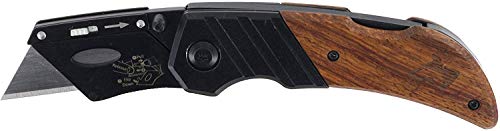
Husky 97211 Wood Handled Lock Back Utility Knife

OLFA 25mm Extra Heavy-Duty Utility Knife XH-1

OKNIFE U1 Pro Multitool Folding Utility Knife
A Deeper Look At The Lineup
The FASTBACK line exists for one reason: getting a blade open in under a second while your other hand holds the box shut. That flip mechanism is what separates it from a traditional two-handed utility knife, and it matters most when you’re opening cartons at a steady clip during a move or a delivery-heavy workday.
Because it folds closed, it rides safely in a pocket instead of demanding a sheath. Milwaukee positions it in its hand tools range alongside trade-grade gear, so the fit and finish generally reflect jobsite expectations rather than drawer-tool standards.
Features That Help
- One-hand flip opening keeps your free hand on the material you’re cutting
- Folds flat, so pocket carry feels far less bulky than a fixed-handle knife
- Compact footprint suits tight tool bags where every inch counts
- Backed by a brand whose hand tools see daily tradesman abuse
Worth Noting
- Folding mechanisms collect debris over time; a quick blast of compressed air keeps the hinge smooth
- You may find the compact body less comfortable during long, heavy cuts than a full-size handle
Who It Suits Best
Delivery drivers, warehouse staff, and anyone who opens packages dozens of times a day and wants speed without bulk.
Where A Sibling Pick Shines
Shoppers who want a traditional wood-handled feel at a friendlier cost should look at the Husky 97211 instead.
A hawk bill blade curves downward like a bird’s beak, and that shape is the whole point here: you pull the edge toward you along cable sheathing, rubber, or linoleum and it shears in one clean pass. Electricians have favored this profile for decades because it bites into insulation without wandering.
This version runs stainless steel construction at roughly 7-1/4 inches opened, which gives it more heft than the compact FASTBACK above. The pointed tip digs into a surface and holds its position, useful for piercing shrink wrap or starting a cut exactly where you want it.
Strengths Worth Knowing
- Curved hawk bill edge excels at pull-cutting cable jacketing, carpet, and sheet material
- Precise tip anchors into the surface so the blade doesn’t skip off hard plastics
- Belt clip keeps it accessible without hogging a pouch slot
- Lanyard hole adds a drop-protection option on ladders or scaffolding
- Stainless body shrugs off moisture better than painted carbon steel frames
Small Caveats
- The curved profile is specialized; straight slicing tasks feel awkward compared to a standard blade
- Owners commonly report the metal frame shows scuffs quickly, purely cosmetic but noticeable
At A Glance
Made For
Electricians, cable installers, and flooring crews who make the same pulling cut hundreds of times a week.
Reach For A Different Pick When
General-purpose users doing mixed cutting chores will get more versatility from the OKNIFE U1 Pro.
There’s something satisfying about a wood handle in a plastic world, and Husky leans into that here with steel accents reinforcing the frame. A lockback mechanism means the spine locks the blade open until you deliberately release it, a simple, proven safety approach that’s harder to disengage accidentally than a slip joint.
Husky includes one disposable trapezoid blade in the box, so the knife works the day it arrives. Compared to the hawk bill above, this is the generalist of the group: carpet ripping, wire stripping, box duty, whatever the afternoon throws at it.
Useful Highlights
- Wood-and-steel build feels substantial in hand without adding much weight
- Ergonomic shaft shaping helps you keep an accurate grip through long cutting sessions
- Tough side-mounted belt clip secures it to pockets or a work belt
- Lockback design holds the blade rigidly open under pressure
- Ships ready to cut with a disposable blade included
Things To Consider
- Wood handles need occasional conditioning in dry climates or they can crack near the steel fittings
- The included blade is single-use stock; keeping spares on hand is part of ownership
Quick Facts
Right Fit For
Home DIYers stocking a first serious toolbox who want classic materials and dependable locking at an entry-level spend.
Another Choice May Suit
Tradespeople needing a curved cutting edge will serve their daily work better with the Milwaukee Fastback Hawk Bill.
OLFA invented the snap-off blade concept, and this 25mm model is their extra heavy-duty take on it. Snap-off blades are scored segments: each time the edge dulls, you snap the worn tip away with pliers or the handle end and expose a fresh one underneath. No sharpening, no blade swaps mid-task.
The ratchet lock is the detail worth understanding. Unlike a simple slide, a ratcheted mechanism advances in small steps and resists blade push-back under heavy downward force, which is exactly what happens when you’re scoring thick foam board or drywall. The fiberglass-reinforced handle with rubber grip is designed for sustained control, and OLFA notes chemical resistance in the housing, helpful around solvents and adhesives.
Positive Takeaways
- Wide 25mm Japanese tool steel blade arrives preloaded and razor sharp
- Seven snap-off segments per blade stretch one blade across many projects
- Ratchet lock holds the blade extension firmly against heavy cutting pressure
- Rubberized fiberglass-reinforced handle stays comfortable through long scoring sessions
- Chemically resistant housing suits adhesive-heavy workshop environments
Potential Drawbacks
- Snap-off tips are small and sharp; safe disposal takes a dedicated container or care
- The broad blade won’t fit standard trapezoid replacement stock, so you’re committed to OLFA refills
- No folding design means pocket carry needs a holster or pouch
Who Will Love This
Framers, drywall hangers, sign makers, and warehouse crews who score dense material all day and value a fresh edge over carrying spare blades.
Swap It Out When
Pocket-first users doing light package work will find the folding Milwaukee FASTBACK Compact far more convenient day to day.
Two tools in one pocket is the pitch here, and OKNIFE executes it with a dual-locking setup rather than a single flimsy latch. The blade deploys on a rail lock, a sliding track that extends the blade and locks it positively, while a separate button lock secures the folding screwdriver so neither tool moves unexpectedly.
That combination covers most desk-to-garage reality: cardboard, leather, PVC, cloth, foam, and the occasional loose screw. Next to the single-purpose Husky above, the U1 Pro asks slightly more of your wallet but replaces a second pocket tool entirely, which many everyday carriers consider a fair exchange.
What Works In Its Favor
- Rail lock deploys the blade smoothly and holds it secure under load
- Independent button lock fixes the screwdriver firmly in place
- Handles a wide material range, from cartons and paper to leather and foam
- Folding screwdriver covers quick fastener jobs without digging out another tool
- Two functions in one folded body lighten your everyday carry
Points To Keep In Mind
- Two locking mechanisms mean two things to inspect and clean over years of pocket lint exposure
- The integrated screwdriver is a convenience driver, not a substitute for a proper bit set on stubborn fasteners
Core Details
The Right Fit
Everyday carriers and apartment dwellers who want one capable pocket tool covering both cutting and light repair duties.
Look Elsewhere When
Industrial crews scoring thick sheet stock will get far more muscle from the OLFA 25mm XH-1.
What Matters Most Before Choosing High End Utility Knives
Match The Blade To The Material
Start with what you actually cut most often. Trapezoid disposable blades suit general box work and accept cheap refills everywhere. Snap-off designs favor long scoring runs through foam, board, and film. Curved hawk bill profiles dominate pull-cutting tasks like cable sheathing and flooring. Buying the wrong blade geometry for your main task is the fastest route to disappointment.
Locking Mechanism Deserves Scrutiny
The lock is the difference between confidence and hesitation on every single cut. Lockback spines are proven and simple. Ratchet locks resist push-back under heavy force. Rail and button locks offer smooth modern deployment. Whichever style you choose, check how easily it can be released with gloves on, since cold-weather work changes everything about small controls.
Carry Style Shapes Daily Use
A knife you don’t carry is a knife you don’t use. Folders with clips disappear into a pocket; fixed-body snap-off knives demand a holster but reward you with rigidity. Honest self-assessment here saves regret later.
Replacement Blade Economics
Consider the ongoing supply chain, not just the purchase. Standard trapezoid blades are available at any hardware counter. Proprietary snap-off widths lock you to one brand’s refills, usually at higher per-blade cost but with consistent quality.
Key Considerations Across These Picks
Wrong Turns To Avoid
The most common mistake is buying a specialty blade shape for general chores, then wondering why straight cuts feel clumsy. Another frequent misstep is ignoring lock quality entirely and focusing only on blade steel. Also check refill availability before committing to an unusual blade width.
The Case For Spending Up
Higher-tier knives justify their cost through lock precision, handle materials, and blade consistency. A ratchet lock or dual-lock system simply performs better after a year of pocket lint and jobsite grit than a bargain slider. For anyone cutting daily, that durability gap pays for itself in replaced cheap knives avoided.
Frequently Asked Questions
Are snap-off blades actually sharper than disposable trapezoid blades?
Snap-off segments start extremely sharp because each fresh section is factory-ground Japanese tool steel. Trapezoid blades hold an edge well too, but refreshing a snap-off blade takes seconds versus swapping the whole blade.
Can I bring a folding utility knife on commercial flights?
No, utility knives of any kind are prohibited in carry-on baggage on commercial airlines. Packed properly in checked luggage, they’re generally permitted, though confirming current regulations before travel is wise.
How often should I replace a utility knife blade?
Replace or snap the blade whenever cutting starts requiring noticeably more pressure, since a dull blade slips and causes most injuries. Heavy cardboard users typically refresh blades weekly; light household users may go months.
Do wood-handled knives hold up in wet conditions?
Wood handles tolerate occasional damp work fine but degrade faster than polymer if stored wet or left outdoors. A periodic wipe-down and occasional conditioning oil keeps them stable for years.
Is a multitool utility knife as strong as a dedicated one?
For typical cutting materials like cardboard, leather, and plastic, yes, provided the lock engages solidly. Dedicated knives retain an advantage in leverage-heavy tasks such as scoring dense board or prying.
Bottom Line
Your cutting habits should drive the choice more than any ranking. Speed-driven package work points to the FASTBACK Compact, cable and flooring pros belong with the hawk bill, and budget-minded DIYers get honest value from the Husky. Scoring crews need the OLFA, while everyday carriers will appreciate the OKNIFE’s two-in-one layout. Match the blade to the task and any of these will serve you well.




