


Over-tightening a bolt doesn’t announce itself until something cracks. A good torque wrench takes the guesswork out of that moment, clicking or breaking at a preset value so your bike stem, wheel lug nuts, and engine fasteners all land where the manufacturer intended. This roundup covers five options across the range, from inch-pound precision tools for delicate components to half-inch drive wrenches built for heavy chassis work. Whether you wrench on bicycles in a small apartment garage or rotate tires in a home shop, there’s a fit here.
A Quick View Of The Lineup

YIYEIE Click Torque Wrench Set with Adapters (8-Piece)

VANPO 1/4-Inch Drive Bike Torque Wrench 20-240 in.lb

LEXIVON LX-180 Inch Pound Torque Wrench 10~150 in-lb

GEARWRENCH 85066 Micrometer Torque Wrench 30-250 ft/lbs.
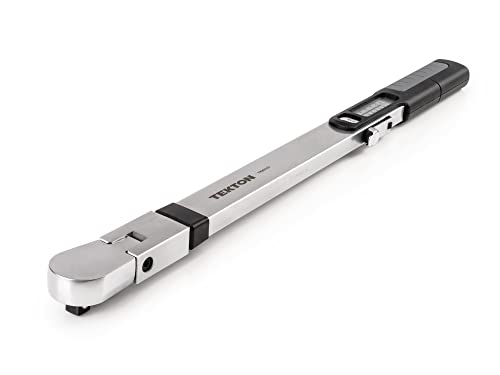
TEKTON TRQ62203 Split Beam Torque Wrench 40-250 ft.-lb.
A Deeper Look At The Lineup
Most households don’t need one torque wrench; they need three, because a bike stem wants inch-pounds while lug nuts want foot-pounds. The YIYEIE set answers that with three click-type wrenches covering 1/4, 3/8, and 1/2-inch drives, spanning roughly 10-230 in.lb up to 180 ft.lb depending on the tool you grab. That’s the whole range of a typical home garage in one case.
The advertised ±3% accuracy sits at the tighter end of what click wrenches commonly claim, which matters when carbon fiber parts are involved. Extension bars and a universal joint round out the kit, so recessed bolts stop being a problem.
A Favorable Mix
- Three drive sizes mean one purchase covers bikes, motorcycles, and cars instead of three separate tools.
- The ±3% accuracy rating gives confidence on sensitive fasteners like seatpost clamps.
- Five included adapters and extension bars reach deep or awkward bolt locations without extra spending.
- A molded plastic case keeps all eight pieces organized between jobs.
Things To Consider
- Owning more tools means more to maintain; owners commonly report click-type wrenches need storage at their lowest setting to protect internal spring tension.
- The 72-tooth ratchet head is fine for general use, though tight engine-bay clearances may still favor a flex-head design.
Key Specs
Who It Suits Best
A DIYer who works across bikes, motorcycles, and cars and wants one organized kit instead of a drawer of single-purpose wrenches.
Where Another Pick Shines
Someone focused purely on bicycle maintenance will get finer low-end control from the LEXIVON LX-180 below.
Bicycle bolts live in a narrow window: too loose and things creak, too tight and aluminum threads strip. The VANPO targets exactly that zone with a 20-240 in.lb (2.3-27.1 Nm) range, which covers handlebars, stems, derailleurs, and most MTB hardware. Its dual-scale markings show both inch-pound and Newton-meter values side by side, so you can match whatever unit your bike’s manual prints.
The click mechanism is the friendly part here. You feel and hear a distinct break when the preset value arrives, which teaches proper technique quickly even if this is your first torque tool. An adapter and a short extension bar come along for recessed fittings.
Bright Spots
- Dual-range scales eliminate conversion math mid-job, useful when manuals mix units.
- The audible click gives immediate feedback, a genuine confidence builder for newcomers.
- Included 1/4-to-3/8 adapter and 10cm extension bar extend usefulness beyond the bare wrench.
Small Caveats
- The 20 in.lb floor skips the most delicate carbon components rated below that threshold.
- Like any spring-based click wrench, owners are advised to back it off to minimum before storing to preserve calibration.
Made For
A new cyclist or weekend rider assembling and maintaining an MTB who wants clear readings and forgiving handling.
Swap It Out When
Riders working near the bottom of the inch-pound scale will find the wider 10 in.lb floor of the YIYEIE set more accommodating.
Where the VANPO starts at 20 in.lb, the LEXIVON LX-180 reaches down to 10, and that difference is exactly why it earns a spot. Carbon seatposts, bar clamps, and small electronics fasteners often sit in that lower band, and a wrench that can’t get there quietly forces guesswork. Micro-adjustment lets you dial in single-digit increments instead of hunting between coarse clicks.
The build leans premium for its size: chrome-molybdenum alloy steel body with a hardened, heat-treated ratchet head, plus a 72-tooth gear for a short swing arc in cramped frames. Dual-direction clicking means left-hand-threaded bolts are handled without flipping the tool around. A zippered case protects it in a toolbox drawer.
Well-Handled Touches
- The 10~150 in-lb span reaches the lowest-rated carbon components other picks here skip.
- Micro-adjustment gives fine control over small increments, the detail that separates careful work from approximate work.
- Chrome-molybdenum construction with a heat-treated head suggests long service life under regular use.
- Dual-direction operation handles reverse-thread fasteners cleanly.
Points To Note
- This is a specialist; its 16.9 Nm ceiling won’t touch lug nuts or suspension bolts, so plan on owning another wrench alongside it.
- Owners commonly recommend periodic recalibration for any precision click wrench used heavily.
Feature Snapshot
Right Fit For
A serious cyclist or hobbyist mechanic working with carbon fiber and lightweight alloy components who values fine adjustment over brute coverage.
Consider Something Else When
Anyone needing foot-pound capability for car work should step down the list to the GEARWRENCH 85066.
Half-inch drive is where automotive torque lives, and the GEARWRENCH 85066 speaks the language fluently. Its 30-250 ft/lbs range handles lug nuts, ball joints, and most suspension hardware on passenger vehicles, which is precisely the territory where a cheap wrench causes warped rotors or snapped studs. Micrometer-style adjustment, meaning you twist the handle end to set the value against an etched scale, keeps settings quick to change between jobs.
GEARWRENCH builds its micrometer line in fixed-head configurations across several drive sizes, and this fixed-head version trades a little flexibility for straightforward durability. In our view, that’s the right call for wheel work, where a rigid head transmits the click clearly through thick gloves.
Useful Highlights
- The wide 30-250 ft/lbs span covers virtually every passenger-car chassis fastener.
- Micrometer adjustment makes switching between wheel and suspension settings fast.
- Fixed-head construction tends to hold up well under repeated shop use.
Honest Caveats
- No low-inch-pound capability here; bike and small-engine work needs a companion tool like the LEXIVON.
- As with all click wrenches, storing it under load risks drifting calibration, so wind it down after each session.
Who Will Love This
A home mechanic rotating tires and doing brake or suspension jobs on a personal vehicle, ideally someone already comfortable with basic hand tools.
Reach For A Different Pick When
Professionals logging daily wrench hours may prefer the serialized calibration paperwork that ships with the TEKTON split beam below.
Split beam is a different animal from click type. Instead of a spring-loaded clutch inside the head, a pivoting beam deflects until it snaps past a detent, producing the signal. The practical payoff shows up in daily use: this wrench can be stored at any torque setting without losing accuracy, removing the single biggest maintenance habit every other pick on this list demands.
TEKTON backs the TRQ62203 with serialized calibration traceable to the ASME B107.300-2010 standard, and the test certificate ships in the box alongside a torque conversion chart. Accuracy holds to ±4% across the full 40-250 foot-pound range, ample for heavy automotive and equipment work. The 72-tooth head keeps swing arc reasonable in engine bays.
Notable Gains
- No winding-down ritual before storage, a real time-saver for anyone grabbing the wrench weekly.
- Serialized calibration with documented results supports professional accountability requirements.
- Split beam internals have fewer wearing parts than spring-driven click mechanisms.
- Includes a fitted case and conversion chart for organized, informed use.
Trade Offs To Consider
- The 40 ft.-lb floor leaves lighter fasteners untouched, so it complements rather than replaces smaller wrenches.
- Depending on your workflow, the audible signal on some split beam designs reads subtler than a hard click, worth knowing before committing.
Core Details
Whose Shelf It Belongs On
A working technician or dedicated enthusiast who torques heavy fasteners often enough to value calibration documentation and low-maintenance internals.
Look Elsewhere When
Occasional DIYers doing one brake job a year will find the simpler GEARWRENCH 85066 easier to justify.
What To Weigh Before Choosing
Match The Range To Your Fasteners
Torque specs are non-negotiable numbers printed by manufacturers, so your wrench’s scale must bracket them. A cyclist needs inch-pound sensitivity down near 10-20 in.lb, while anyone touching wheels needs 80+ ft.lb. Buying a wrench whose range barely covers your spec means working at the extreme ends, where accuracy claims matter least.
Understand The Mechanism
Click wrenches use an internal spring and cam that releases audibly at the preset value; they’re affordable but demand storage at low settings to protect the spring. Split beam designs pivot a physical beam instead, tolerating storage anywhere. Beam-style wrenches, the simplest type, show deflection visually but offer no click at all.
Accuracy And Calibration Claims
Tolerances around ±3-4% are standard among quality brands, and anything tighter rarely changes outcomes on consumer fasteners. Documentation matters more for professionals: serialized calibration certificates provide proof of accuracy that shops and clients sometimes require.
Case And Accessories
Extension bars, adapters, and universal joints determine whether the wrench actually reaches the bolt. A molded or zippered case protects calibration-critical internals during transport, especially in a truck bed or crowded toolbox.
Key Considerations Across These Picks
Wrong Turns To Avoid
The classic error is buying one wrench for everything. A 1/2-inch drive tool cannot tighten a carbon stem, and a 1/4-inch bike wrench cannot snug a lug nut. Another frequent misstep is ignoring storage habits; leaving a click wrench wound up in a hot garage slowly shifts its calibration. Check your vehicle or component manual first, then buy to the spec sheet rather than to price.
When Paying More Pays Off
Higher-tier wrenches earn their cost through calibration documentation, harder-wearing internals, and finer adjustment steps. Daily professional use justifies the TEKTON’s serialized certification. Weekend projects rarely do. Spend up only when frequency, accountability, or delicate materials make precision failures expensive.
Frequently Asked Questions
What does in.lb versus ft.lb mean?
Inch-pounds measure small twisting force, typically for bikes and electronics, while foot-pounds measure much larger force for automotive work. One foot-pound equals twelve inch-pounds, so the scales never overlap.
How often should a torque wrench be recalibrated?
Heavy-use click wrenches benefit from annual recalibration, while occasional home use stretches that considerably. Split beam models generally drift less because fewer internal parts wear.
Can I store my click torque wrench at its highest setting?
No, keeping the spring compressed degrades its tension over time and shifts accuracy. Wind it back to its lowest setting before putting it away.
Is a higher tooth count on the ratchet better?
More teeth shorten the swing arc needed between clicks, which helps in tight spaces. It doesn’t affect torque accuracy, only access and convenience.
Do I need both a 1/4-inch and a 1/2-inch wrench?
Almost certainly yes for mixed use, since bike components and car wheels occupy entirely different ranges. Multi-piece kits like the YIYEIE exist precisely for this reason.
Closing Remarks
Every wrench here solves a specific problem well. Match the range to the bolts you actually touch, respect the storage rules, and any of these five will keep your fasteners honest for years. Start with your manual, not the toolbox.




