A good jobsite air compressor is the difference between a smooth trim install and a day spent waiting on tank recovery. Whether you’re hanging crown molding in a finished home, inflating tires between deliveries, or running a one-man framing crew, the wrong compressor gets in your way with noise, weight, or slow refill times. The five units below cover the realistic spread: a high-pressure trim machine, an ultra-quiet indoor option, two cordless portables, and a stationary shop tank. Each earns its spot for a specific kind of work, so match the tool to your typical day rather than chasing raw numbers alone.
A Closer Look At The Lineup

DEWALT DWFP55130 Trim Air Compressor, 200-PSI Max

Metabo HPT EC28M Quiet Air Compressor, 1 Gallon

Makita DMP181ZX 18V LXT Cordless Inflator
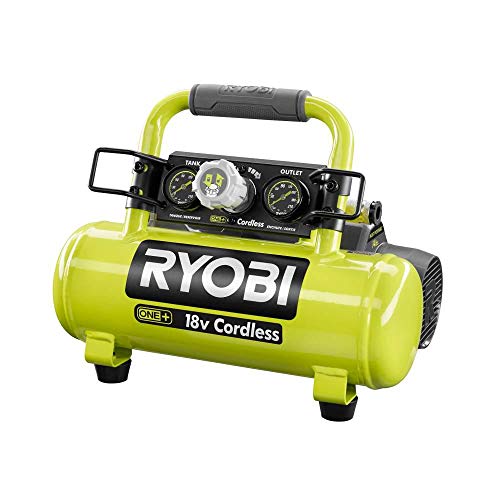
RYOBI 18V 1 Gal. Portable Air Compressor, 120 PSI

Klutch 20-Gallon Air Compressor, 2 HP, 175 PSI
Meet The Standout Selections
Trim carpentry punishes compressors that can’t keep up, because every pause to refill breaks your rhythm mid-run of baseboard. The DEWALT DWFP55130 pushes a maximum of 200 PSI into a 2.5-gallon tank, which means more stored air per cycle and fewer restarts than typical lower-pressure pancake units.
The oil-free pump delivers around 3.0 SCFM at 90 PSI, enough to feed finish nailers continuously through a door-hanging afternoon. It can also run or sit in either vertical or horizontal orientation, a small detail that matters enormously when you’re wedging gear into a van or a tight corner of a garage.
Practical Advantages
- Higher 200-PSI ceiling stores more usable air, so nailers fire longer between motor cycles
- Roughly 3.0 SCFM at 90 PSI supports steady trim-nailer runtime without constant recovery waits
- Oil-free pump design removes oil checks and spill worries from your maintenance routine
- Dual vertical or horizontal operation lets you stash it upright beside a workbench or lay it flat under a bench
- Quieter running character suits occupied homes where clients are still living through the remodel
Things To Consider
- The 2.5-gallon tank won’t satisfy high-demand tools like sanders or impact wrenches for long stretches
- Owners commonly report draining the tank after each use is essential to prevent internal rust over time
Key Specs
Made For
Professional trim and finish carpenters who need sustained nailer performance inside finished homes without waking the neighborhood.
Where Another Pick Suits Better
Shop-based users running continuous air tools will get far more capacity from the Klutch 20-gallon unit further down this list.
Noise is the dealbreaker nobody budgets for until they’re nailing baseboards in a nursery at 8 a.m. The Metabo HPT EC28M runs at roughly 59 dB, quiet enough that a normal conversation continues while the motor cycles, which changes how you schedule interior work entirely.
It’s also genuinely portable: a 1-gallon tank, oil-free pump, and lightweight build mean you carry it one-handed between rooms. A universal quick coupler speeds up swaps between brad, finish, and roofing nailers, so you’re not threading fittings every time you change tools.
Strengths Worth Knowing
- About 59 dB output lets you work near sleeping kids or in shared office buildings without complaints
- Universal quick coupler cuts tool-change time across different nailer brands
- Oil-free pump means zero lubrication upkeep, ever
- Lightweight, compact form factor fits easily in a car trunk or under a workbench
Small Caveats
- The 1-gallon tank cycles frequently under sustained nailing, so expect more frequent motor restarts than larger tanks
- Not built for air-hungry tools; it’s a trim-and-tack solution, nothing heavier
Who Will Love This
Interior finish workers, remodelers in occupied homes, and hobbyists who share garage space with family members sensitive to noise.
Consider Something Else When
Anyone needing higher pressure reserves should step up to the DEWALT DWFP55130, whose 200-PSI ceiling outlasts this smaller tank considerably.
This isn’t a nailer compressor, and pretending otherwise would waste your money. The Makita DMP181ZX is a high-pressure cordless inflator that tops off car and light-truck tires, bike tires, and sports balls using any Makita 18V LXT battery you already own.
The standout feature is auto-stop: set your target pressure and the pump shuts off when it’s reached, so there’s no hovering over a gauge or risking an overfilled tire. Its Makita-built motor reaches up to 160 PSI, and the high-volume mode moves air quickly for faster fills than cheap 12V gadgets.
Where It Delivers
- Auto-stop function halts inflation at your preset pressure, protecting tires from overfill
- Runs on existing Makita 18V LXT batteries, adding capability without new platform costs
- Up to 160 PSI max handles high-pressure road bike tires, not just car rubber
- Fits in a truck door pocket, ready for roadside top-offs
Points To Note
- Sold as tool only, so budget for battery and charger separately unless you’re already on the LXT platform
- Battery drain adds up on large truck tires, so keep a charged pack handy for multiple vehicles
Feature Snapshot
Right Fit For
Tradespeople and homeowners already invested in Makita’s 18V lineup who want fast, accurate tire inflation on the go.
Another Choice May Suit
Corded workshop users needing continuous pneumatic tool supply will find the RYOBI 18V compressor below a better fit for nailers and light tools.
Small jobs don’t justify dragging a cord across a yard, and that’s exactly where this RYOBI earns its shelf space. Running on the brand’s 18V battery system, it pairs a 1-gallon horizontal tank with a 120 PSI max rating, enough headroom for brad nailers, staplers, and quick inflation tasks.
Output sits around 0.5 CFM at 90 PSI, which translates to short bursts of tool work rather than marathon sessions. That’s fine for punch lists, picture-hanging days, and blowing dust out of saw tracks. You may find the runtime limited on bigger projects, but for grab-and-go convenience it’s hard to argue with.
Everyday Wins
- Cordless 18V operation frees you from extension cords on decks, attics, and crawl spaces
- Horizontal 1-gallon tank slides into tight storage spots most compressors can’t fit
- 120 PSI max covers common finish-nailer pressure requirements comfortably
- Shares batteries with other RYOBI ONE+ tools, trimming overall kit cost
Honest Caveats
- Roughly 0.5 CFM at 90 PSI limits you to intermittent, low-demand tools only
- Battery and charger are typically sold separately, so confirm what’s included before ordering
- Frequent cycling on extended use is commonly reported with tanks this size
Who Should Grab It
DIYers and RYOBI ONE+ owners handling occasional trim touch-ups, crafts, and inflation chores around the house.
Look Elsewhere When
High-pressure tire work calls for the Makita DMP181ZX, whose 160 PSI ceiling and auto-stop handle road-bike pressures this unit can’t reach.
Everything above this point is about portability. The Klutch flips the priority: a 20-gallon vertical tank fed by a 2 HP motor on standard 120V power, delivering up to 175 PSI and 4.2 SCFM at 90 PSI. In plain terms, that’s a week’s worth of shop air for impact wrenches, ratchets, spray guns, and grinders without the compressor gasping between tasks.
The oil-free pump skips lubrication maintenance entirely, and thermal overload protection guards the motor during long sessions. Large wheels make repositioning manageable despite the size, and the easy-access tank drain addresses the single most neglected maintenance habit among owners.
A Few Highlights
- 4.2 SCFM at 90 PSI sustains continuous-duty air tools the portable picks simply cannot
- Oil-free pump design eliminates routine oil changes and floor stains
- Thermal overload protection extends motor life during extended runs
- Vertical 20-gallon footprint conserves floor space in crowded garages
- Easy-access tank drain makes the moisture-drain ritual less of a chore
Trade-Offs To Consider
- At this capacity it’s a stay-put machine, not something you toss in a truck bed daily
- Its 75% duty cycle means planned rest periods on very heavy continuous draws
Core Details
Whose Shelf It Belongs On
Serious DIY mechanics, woodworkers, and small-shop operators who need dependable high-volume air from a fixed corner of the garage.
Skip It When
Mobile contractors working on-site will be better served by the DEWALT DWFP55130, which trades capacity for genuine portability.
What Matters Most Before Choosing Jobsite Air Compressors
Match Output To Your Actual Tools
SCFM (standard cubic feet per minute) measures how much air a compressor delivers at a given pressure, usually 90 PSI. Every pneumatic tool lists its own SCFM demand, and your compressor must exceed that figure to run continuously. A brad nailer sips air; a die grinder drinks it. Check the tool label first, then buy capacity above it rather than guessing.
Tank Size Shapes Your Workflow
Bigger tanks store more compressed air, which means the motor cycles less often and your work rhythm stays intact. Small 1-gallon units suit short bursts and inflation duty, while 10 to 20 gallons support sustained nailing, spraying, and mechanical work. Portability shrinks as capacity grows, so decide whether the compressor travels or lives on a bench.
Noise And Power Reality Checks
Jobsites in occupied homes, apartments, and early mornings reward quieter oil-free pumps, some running near conversation level. Also confirm your electrical situation: most portable units run on standard 120V outlets, but sustained high-draw use assumes a healthy 15-amp circuit. Cordless models trade runtime for freedom from cords entirely, ideal for rooftops and remote spots.
Key Considerations Across These Picks
Traps First Timers Fall Into
The classic error is buying on tank size alone while ignoring SCFM, then discovering a sander stalls the motor within minutes. Another common slip is skipping the drain valve routine; moisture accumulates inside every tank, and neglecting it leads to internal rust that shortens the unit’s life dramatically. Confirm included accessories too, since several cordless models ship without batteries.
What Separates Premium From Basic
Higher-tier compressors pay for stronger motors, higher PSI ceilings, and features like thermal overload protection and auto-stop controls. Those additions translate directly into longer tool runs, fewer interruptions, and less babysitting. Spending up makes sense once your workload involves continuous-demand tools; for occasional nailer bursts, a basic portable handles the job well enough.
Frequently Asked Questions
What does SCFM mean on a compressor?
It measures the volume of air delivered per minute at a stated pressure, typically 90 PSI. Your tools’ combined SCFM requirements should stay below the compressor’s rated output.
Can a small 1-gallon compressor run a framing nailer?
Occasionally, yes, but expect frequent pauses as the tank refills. Framing work moves much faster with a larger tank or higher-output pump.
Do oil-free compressors need any maintenance?
They skip oil changes entirely, which is their main appeal. You still need to drain tank moisture regularly and check fittings for leaks.
Are cordless compressors powerful enough for job sites?
For tire inflation, brad nailers, and short tasks, absolutely. Continuous high-demand tools remain the territory of corded, larger-tank units.
How often should I drain the tank?
After each use is the widely recommended habit, since condensation builds up every time air compresses. An easy-access drain valve makes this far likelier to actually happen.
Closing Thoughts
The right choice comes down to honest self-assessment of your workload. Trim carpenters get the most from the DEWALT DWFP55130’s high-pressure reserve, noise-sensitive interiors suit the Metabo HPT EC28M, and Makita or RYOBI owners gain real value from the cordless options. Shop-based users should look straight at the Klutch. Match the machine to the work you actually do, and it’ll earn its corner of the garage for years.