A dull knife slows down every meal and makes cutting riskier, not safer. Whether you cook nightly or just want your blades to stop mashing tomatoes, the right sharpening tool fixes that in minutes. This roundup covers five distinct approaches: a pocket-sized suction sharpener, a classic honing rod, a folding diamond plate, a guided precision system, and a ceramic rod with built-in angle guides. Each suits a different skill level and kitchen routine, so match the tool to how you actually cook.
The Main Contenders

HOMELIA Mini Pocket Knife Sharpener with Suction Cup
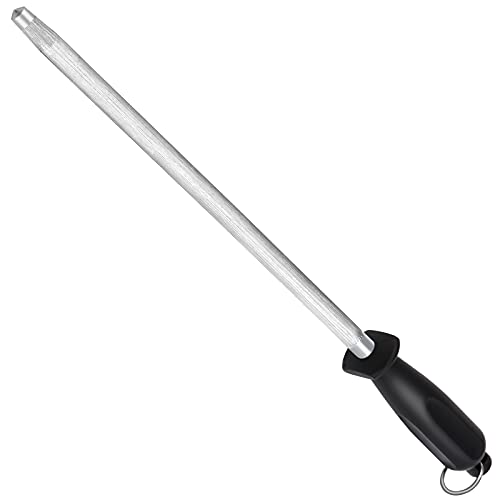
AcoWELL 12 in. Fine Steel Honing Rod

Honoson 2 Pack Diamond Knife Sharpener

XARILK GEN3 Guided Knife Sharpening System

sharpeak 3000-Grit Ceramic Honing Rod
The Strengths Of Each Pick
This is the smallest tool here, and that’s the whole point. It’s a non-electric manual sharpener sized for a pocket or camp kit, aimed at standard non-serrated kitchen knives rather than heavy restoration work.
The suction base is what separates it from a bare stone. Press it onto any smooth surface, like a countertop or picnic table, and you get a stable platform without a vise or second hand. Renters and van-lifers will appreciate that nothing gets mounted permanently.
Standout Benefits
- Pocket-sized body slips into a camping bag or junk drawer without taking up shelf space.
- Suction cup locks onto smooth counters for hands-free stability during strokes.
- No power needed, so it works at campsites, cabins, and tailgates alike.
- Works on most straight-edged kitchen knives, covering everyday prep blades.
Things To Consider
- The suction grip depends on a clean, flat surface; textured stone or wood may not hold well.
- Not intended for serrated edges, so bread knives stay off the menu.
Who It Suits Best
Campers, travelers, and apartment dwellers who want a light-touch touch-up tool instead of a full bench setup.
Swap It Out When
Anyone doing serious weekly edge work will get more from the AcoWELL 12 in. Fine Steel Honing Rod’s longer stroke length.
Honing rods don’t grind away metal; they realign the microscopic edge that folds over during normal cutting. That distinction matters, because a few quick strokes before each cooking session keeps blades performing far longer between true sharpenings. The AcoWELL’s fine steel construction and generous 12-inch length make it a natural fit beside the cutting board.
In practice, this is the tool professional kitchens reach for between services. The extra rod length gives chef’s knives room for long, sweeping passes without the heel scraping your knuckles, something shorter rods can’t manage comfortably.
Notable Upsides
- Fine steel surface realigns edges in seconds, extending time between actual sharpening sessions.
- 12-inch reach accommodates full-size chef’s knives with smooth, uninterrupted strokes.
- Durable build stands up to near-daily use in busy home kitchens.
- No learning curve beyond basic rod technique, unlike guided systems.
Minor Gripes
- It maintains an edge but won’t rescue a genuinely dull blade; pair it with a sharper for full care.
- Rod technique takes some repetition before angles feel automatic.
Key Specs
Made For
Home cooks who prep meals several times a week and want a fast pre-cooking ritual.
Reach For A Different Pick When
Total beginners often get better results from the sharpeak 3000-Grit Ceramic Honing Rod, whose angle guides do the aiming for them.
Where the HOMELIA targets one job, this two-pack widens the net considerably. Each unit pairs a titanium-plated diamond abrasive plate with a lightweight ABS handle, and the folding design closes around the working surface for pocket or tool-bag storage. Getting two units means keeping one in the kitchen drawer and one with the garden gear.
Diamond abrasives (tiny industrial diamonds bonded to a plate) cut faster than conventional stones and handle very hard steels. That makes these plates useful well past the kitchen drawer, on pruners, scissors, and mower blades.
Bright Spots
- Diamond-coated plates restore and hone knives, scissors, and assorted garden tools with one abrasive.
- Folding form factor protects the plate and tucks into pockets or tool bags easily.
- Two units per pack lets you stage sharpeners where you actually need them.
- Lightweight ABS handles keep the whole thing comfortable during longer sessions.
Points To Note
- Freehand use means angle consistency rests entirely on your wrist; expect a short learning period.
- The honeycomb plate surface collects metal filings, so occasional cleaning keeps abrasion effective.
Right Fit For
Gardeners, DIYers, and anyone maintaining a mixed collection of blades and edged tools.
Another Choice May Suit
Kitchen-only users after finer finishing will prefer the sharpeak ceramic rod’s smoother 3000-grit surface.
Everything before this point asks something of your technique. The XARILK GEN3 removes that variable entirely by clamping the blade and holding the stone at a fixed, repeatable angle through precisely machined components. High-strength aluminum alloy construction gives the frame rigidity that plastic-bodied kits tend to flex away.
This is the closest thing to a workshop fixture on the list, and it treats sharpening accordingly. Fixed-angle systems produce consistent bevels across the entire edge, which is why knife enthusiasts gravitate toward them once freehand results plateau. Kitchen, outdoor, and folding knives all fit within its clamp range.
Strong Points
- Precisely machined parts deliver repeatable angles from session to session.
- High-strength aluminum alloy frame resists flex and wear over years of use.
- Accommodates kitchen, outdoor, and folding knives in one system.
- Clamped blades mean steadier, more controlled strokes than freehand methods.
Small Caveats
- Setup takes longer than grabbing a rod, so casual touch-ups feel like a project.
- More components to store, clean, and keep organized between uses.
Feature Rundown
Who Will Love This
Hobbyists and edge enthusiasts who enjoy the process itself and want repeatable, controlled results.
Where A Sibling Pick Shines
People wanting a thirty-second routine should stick with the AcoWELL honing rod instead of committing to a full setup.
The sharpeak answers the biggest complaint about honing rods: nobody knows if their angle is right. Built-in 20-degree guides sit against the blade and physically enforce the correct position, while a hexagonal hand guard stops the rod from rolling off the counter and shields your fingers. For first-timers, that combination flattens the learning curve dramatically.
Ceramic also outperforms plain steel on hard blade materials, since the material resists abrasion and wears slowly. Compared with the AcoWell steel rod earlier in this list, it both aligns and lightly hones, thanks to its fine 3000-grit surface.
A Few Strong Suits
- Built-in 20-degree guides guarantee consistent angles without guesswork.
- Hexagonal guard prevents rolling and adds a layer of hand protection.
- Ceramic hardness handles steels too tough for conventional sharpening steels.
- 12-inch rod plus 17.5-inch total length gives large knives plenty of stroke room.
Trade Offs To Consider
- Ceramic is brittle next to steel, so a drop onto tile can chip or crack the rod.
- The fixed guide angle won’t suit knives ground at noticeably different bevels.
Details At A Glance
Best Suited To
Beginners and cautious cooks who want guided accuracy without investing in a clamped system.
Look Elsewhere When
Field users needing rugged portability will favor the Honoson folding diamond pack’s tougher, fold-flat design.
What Matters Most Before Choosing
Match The Tool To Your Blade Care Routine
Honing rods maintain edges already in decent shape; sharpeners rebuild edges that have gone truly dull. Most kitchens benefit from owning one of each, using the rod weekly and the sharpener occasionally. Decide honestly how often you’ll actually pull the tool out, because an unused precision system helps nobody.
Think About Skill And Time
Guided systems like the XARILK reward patience and deliver the most consistent geometry, but each session demands setup. Freehand tools take seconds yet lean on your wrist memory. Beginners usually progress fastest starting with angle-guided or assisted designs, then graduating later.
Consider Materials And Longevity
Diamond plates cut aggressively and suit hard steels; ceramic finishes finely but demands careful handling; steel rods last decades with zero maintenance beyond a wipe-down. Storage space matters too, since a 17-inch rod needs drawer depth a pocket folder doesn’t.
Key Considerations Across These Picks
Traps First Timers Fall Into
The classic mistake is buying a coarse sharpener when a honing rod would solve the problem, grinding away blade life unnecessarily. Another common slip: ignoring maintenance, since diamond plates clog with metal residue and lose bite until cleaned. Check your knives’ factory angles before assuming one universal setting fits everything.
What Separates Premium From Basic
Higher-tier tools spend their budget on rigidity and repeatability: machined aluminum frames, precisely machined joints, harder abrasives. That translates into edges you can reproduce identically months apart. Casual cooks rarely notice the difference; enthusiasts sharpening weekly absolutely will, which makes the upgrade a matter of habit intensity, not status.
Frequently Asked Questions
How often should kitchen knives be honed?
Most home cooks benefit from a few passes on a honing rod once or twice a week. Heavy daily cooks may touch up edges before each session.
Can a honing rod replace a sharpener?
No, they serve different jobs. A rod realigns an existing edge, while a sharpener grinds new metal to restore a dulled blade.
Are ceramic rods better than steel?
Ceramic is harder and lightly abrades, so it refines edges further than steel alone. The trade-off is brittleness, since ceramic can crack if dropped.
Do guided sharpening systems work for beginners?
Yes, and many beginners find them easier than freehand stones. The clamp enforces a consistent angle, removing the hardest part of learning.
Can one tool sharpen scissors and garden shears?
Only multi-purpose options like diamond plates are designed for that range. Dedicated kitchen honing rods aren’t suited to thick or serrated tool edges.
Closing Thoughts
The right choice comes down to honest self-assessment about habits. Frequent cooks should anchor their drawer with a quality rod, the AcoWELL or the guided sharpeak being strong candidates. Tinkerers and tool-shed owners get genuine value from the Honoson diamond duo, while dedicated enthusiasts will find the XARILK GEN3 worth the counter space. Start with the tool matching your current routine, not the one matching an imagined future one.