Home baking lives or dies on small gear. A sticky dough ball that won’t release from the bowl, a loaf you can’t score cleanly, a crust torn apart by the wrong blade: these are the moments where the right tool earns its drawer space. This roundup covers five kitchen tools for baking bread that solve those exact problems, from scraping and cutting to scoring and transferring hot loaves. Each one suits a different stage of the bake, so most serious home bakers will end up wanting more than one.
The Leading Options At A Glance

SAPID Silicone Dough Scraper with Metal Core

Woodever 16” Bow Bread Knife (2 Pack)

RICCLE Bread Lame with 15 Razor Blades (Brown)

Koolstuffs Silicone Bread Sling for Dutch Oven, Red (2 PCS)
Vovoly Stainless Steel Bench Scraper
The Picks, Examined More Closely
Most plastic bowl scrapers flex too much and crack within a season of weekly baking. The SAPID takes a different route: a stainless steel sheet inside gives the tool structure, while a food-grade silicone skin keeps the working edge soft enough to hug curved bowls.
In practice that combination handles two jobs at once. You can sweep stiff sourdough off a counter without the blade bending, then flip to the flexible side and clean every last bit of dough from a mixing bowl. It also tolerates heat better than plain plastic, so resting it near a warm oven isn’t a concern in most kitchens.
Well-Handled Touches
- The internal stainless core resists bending, cracking, and wear far longer than all-plastic scrapers commonly do
- Silicone covering stays gentle on nonstick bowls and coated surfaces, protecting finishes you paid good money for
- Heat-resistant material means it holds up around warm ovens and hot cookware without warping
- One tool covers counter scraping and bowl cleanup, trimming clutter from an already crowded utensil drawer
Things To Consider
- The silicone edge is softer than bare metal, so very firm, chilled dough may need a stiffer blade to cut through cleanly
Who It Suits Best
Weekend bakers who mix in glass or nonstick bowls and want one scraper that survives years of routine use.
A Better Fit Elsewhere
Bakers who divide heavy dough into portions regularly will get sharper cuts from the Vovoly Stainless Steel Bench Scraper instead.
Tall sourdough loaves are where ordinary serrated knives fail: the handle bottoms out before the blade reaches the board, and the crust tears. The Woodever sidesteps that with a bow design, a frame that lets the roughly 10.6-inch serrated stainless blade glide through crusty rounds at full height without knuckles hitting the counter.
You get two knives in this set, which is genuinely useful in a busy household where one lives in the dishwasher rotation while the other stays sharp for bagels and baguettes. The long reach also helps with even slices on wide sandwich loaves, something short blades struggle with.
What Helps Most
- The bow frame lets tall boules be sliced top to bottom without the handle colliding with the cutting board
- Premium stainless steel serrations bite through hard crusts without shredding the soft crumb inside
- A two-pack means a spare is always clean and ready during weekend baking marathons
Worth Noting
- The bow shape takes up more storage room than a straight bread knife, a real factor in cramped drawers
- Wooden-frame construction calls for hand washing rather than dishwashing to keep the frame in good condition over time
Key Specs
Made For
Serious sourdough bakers who slice tall, crusty boules several times a week and value clean crumb over speed.
Consider Something Else When
Casual bakers who mostly cut sandwich bread will find the RICCLE Bread Lame more useful for shaping than slicing.
Scoring, the quick slashes cut into dough just before baking, controls how a loaf expands in the oven. Skip it and your boule bursts wherever it wants. A lame (pronounced lahm) is the razor-on-a-handle built for exactly this job, and the RICCLE version pairs a sharp blade with an ergonomic grip that keeps your fingers well clear of the edge.
What sets this one apart is the generous supply of 15 replacement razor blades. Dull blades drag and tear dough instead of slicing it, so having spares on hand keeps every score crisp. First-timers often report that a confident, single-motion slash feels far easier with a proper lame than with a kitchen knife.
Real Benefits
- Fifteen included razor blades mean months of sharp scoring before replacements enter the picture
- An ergonomic handle gives steady control for both simple slashes and decorative wheat-stalk patterns
- Clean cuts let loaves expand predictably, giving homemade bread that open-oven-spring bakery look
- Approachable enough for first-time scorers yet precise enough for experienced bakers chasing consistent results
Small Caveats
- Razor blades demand careful handling and safe storage away from curious hands in family kitchens
Quick Facts
The Right Fit
New sourdough bakers ready to move past jagged knife scores, plus hobbyists who decorate their loaves.
Reach For A Different Pick When
Your main frustration is dough sticking during transfer, where the Koolstuffs Silicone Bread Sling solves the problem directly.
Anyone who bakes in a Dutch oven knows the tense moment: lowering shaped dough into a screaming-hot pot without burning yourself or deflating the loaf. This sling replaces disposable parchment with reusable silicone mats fitted with extra-long handles, so the whole transfer happens in one controlled motion.
Getting two mats matters more than it sounds. While one loaf bakes, the second proofed dough sits ready on its own sling, and the used mat goes straight into the dishwasher. Owners commonly find the nonstick surface releases cleanly, preserving the loaf’s shape and crust, which is where cheap mats tend to disappoint.
Notable Gains
- Extra-long handles keep hands away from scorching Dutch oven walls during transfers
- The nonstick surface releases dough cleanly, protecting loaf shape and crust integrity
- Reusable silicone replaces roll after roll of parchment paper, cutting waste and ongoing cost
- Dishwasher-safe cleanup makes post-bake tidying nearly effortless compared with scrubbing stuck-on parchment bits
Points To Note
- The round shape fits standard Dutch ovens, so oval pots may leave the corners of the mat exposed
- Silicone mats store best flat or loosely rolled; tight folding can leave creases over time
Feature Snapshot
Built With In Mind
Regular Dutch oven bakers who bake weekly and are tired of buying parchment by the case.
Where Another Pick Shines
Bakers still building a basic kit may prefer starting with the SAPID Silicone Dough Scraper, which costs less attention and covers daily prep work.
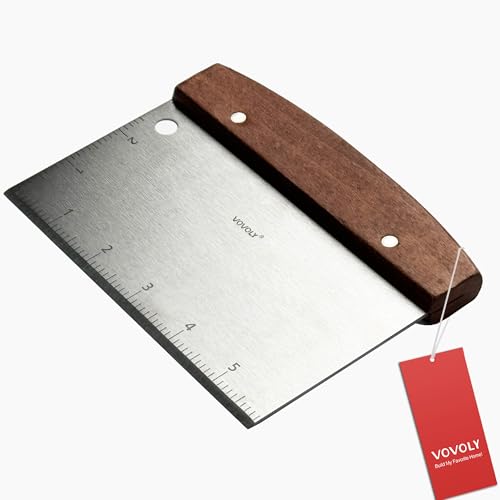
Where the SAPID scraper leans soft and flexible, the Vovoly goes the opposite direction: thickened stainless steel with a precisely beveled edge made from knife-grade stock. That rigidity is what dividing dough demands. One firm push cuts through sticky ciabatta portions cleanly, something flexible scrapers simply can’t manage.
The wooden handle adds a comfortable, nonslip grip for repeated chopping motions, and the steel itself is rust-resistant and hygienic. Beyond bread duty, the listing positions it for flat-top griddles too, so it pulls double duty cleaning outdoor cooking surfaces. In our view, that range makes it the most versatile single item here.
What Works In Its Favor
- Thickened, rust-free stainless steel stands up to heavy daily use without bending or corroding
- The precision-beveled edge balances sharpness between easy cutting and safe scraping
- Ergonomic wooden handle stays comfortable and secure during long prep sessions
- Doubles as a griddle scraper and chopper, earning its drawer slot outside baking season
Honest Caveats
- The rigid steel edge can scratch delicate nonstick pans, so reserve it for counters, boards, and griddles
- Wooden handles need occasional drying care to stay smooth through humid summers
Core Details
Whose Shelf It Belongs On
Bakers who portion and divide wet dough often, especially those who also cook on griddles or flat tops.
Swap It Out When
Gentle bowl cleanup on coated bakeware is the priority, since the SAPID Silicone Dough Scraper’s soft edge protects those surfaces better.
What Matters Before Choosing Kitchen Tools For Baking Bread
Match The Tool To Your Loaf Style
Sourdough bakers need scoring and high-heat transfer gear above all else. Sandwich-bread makers get more value from a quality slicer and a sturdy bench scraper. Write down what you actually bake each month, then buy toward that list rather than accumulating gadgets for loaves you never make.
Material Determines Lifespan
Silicone offers flexibility and heat tolerance, stainless steel delivers rigidity and hygiene, and wood brings comfort at the cost of some maintenance. Mixed constructions, like a silicone scraper over a steel core, aim for both worlds. Cheap all-plastic tools tend to warp or crack within a year of weekly use, so treat build material as the primary filter.
Think About Storage Reality
Bow-handled knives and oversized slings solve real problems but occupy real drawer space. Apartment kitchens and shared cabinets reward compact, stackable choices. Measure your drawer depth before ordering anything longer than twelve inches.
Count How Often You’ll Use It
A lame used twice monthly justifies modest spending, while a bench scraper touched daily deserves the durable upgrade. Frequency should drive budget allocation more than any feature list does.
Key Considerations Across These Picks
Traps First Timers Fall Into
New bakers often grab the cheapest plastic scraper and a generic serrated knife, then wonder why dough sticks and crusts tear. Another common slip is buying scoring tools before mastering basic shaping. Start with the two or three tools your current recipe actually requires.
Where The Extra Money Goes
Higher-tier tools spend on materials: knife-grade beveled steel, food-grade silicone over stainless cores, extra blade supplies. Those upgrades show up as years of service instead of seasons. Paying up pays off on anything you touch every bake day.
Frequently Asked Questions
Do I really need a bread lame?
For crusty artisan loaves, yes, because scoring controls how the loaf expands. Soft sandwich bread doesn’t require it.
Can a bench scraper replace a bowl scraper?
Not entirely. Rigid scrapers divide dough well but can’t flex along curved bowl walls. Many bakers own both.
Why choose a bow-style bread knife?
The frame provides clearance so tall sourdough rounds can be sliced fully without the handle hitting the board.
Are silicone slings safer than parchment paper?
The long handles keep your hands farther from hot Dutch oven walls, which reduces burn risk during transfers.
How do I keep these tools lasting longer?
Hand wash wooden parts, dry steel promptly, and store razor blades cased. Routine care stretches lifespan considerably.
Closing Thoughts
Good bread comes down to fermentation, heat, and handling, and these five kitchen tools for baking bread cover the handling half of that equation. Match each pick to how often you bake and what you bake, start with the scraper or sling that fixes your biggest current annoyance, and add the rest as your skills grow. Your future loaves will thank you.