


Gutter cleaning season has a way of exposing the gap between what your step ladder can do and what your roofline demands. That’s where a telescoping ladder earns its spot in the garage: it collapses small enough to stash behind shelving, then extends tall enough to reach second-story eaves. The five options below cover a range of heights and build styles, all capped at a 330-pound load rating, so you can match the ladder to your actual roofline instead of guessing.
How The Shortlist Stacks Up

SINMEIRUN Telescoping Ladder 16.5 FT (Orange)
SINMEIRUN Telescoping Ladder 12.5 FT (Orange)
SINMEIRUN Telescoping Ladder 16.5 FT Pro (Orange)

SINMEIRUN Telescoping Ladder 20.3 FT (Orange)

UC UP CLIMBER 12.5 FT Telescoping Extension Ladder
A Breakdown Of The Leading Choices
Sixteen and a half feet covers most single-story homes with room to spare, and it brushes the eaves on plenty of two-story builds. The aluminum frame keeps the carried weight manageable, which matters more than you’d think once you’re hauling it around the yard’s perimeter.
The orange finish is more than styling; against grass, mulch, and gray siding, you’ll spot it from a distance. Each rung locks independently, so you can stop at twelve feet for a shed roof or run it fully out for gutter work without overextending.
What Pays Off
- Meets EN131 standards, the European benchmark for portable ladder safety, which signals a tested load path rather than guesswork
- Rubberized foot pads grip concrete driveways and wet grass better than bare metal ends
- A double height-locking latch on every rung prevents the pinch-and-slide that cheaper telescoping designs are known for
- Collapse it down and it slides into a trunk or a narrow garage shelf
- Aluminum construction shrugs off rain exposure far better than unfinished steel
Things To Consider
- Telescoping tubes collect grit over time; owners commonly report that a quick wipe-down before collapsing keeps the retraction smooth
- At full extension there’s some flex under load, normal for this style but worth knowing before leaning hard sideways
Key Specs
Made For
Homeowners handling seasonal gutter clears, window washing, and occasional roof-edge inspection on their own schedule.
Where A Sibling Pick Shines
Anyone wanting a heavier trade rating should look at the SINMEIRUN 16.5 FT Pro, which adds an ANSI Type IA classification to the same working height.
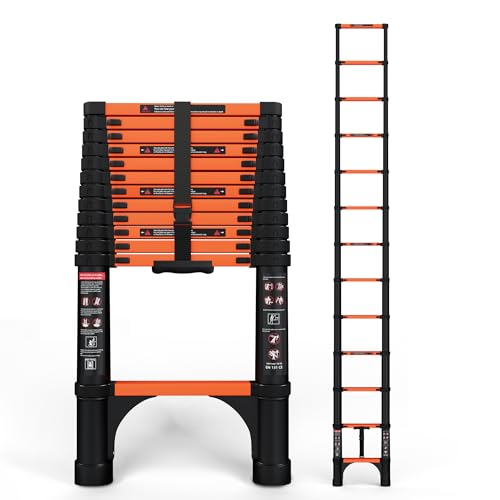
This shorter sibling trades reach for livability. Twelve and a half feet handles low-slope roofs, carports, and tall interior work, and the collapsed package tucks into an apartment closet or an SUV cargo area without a fight. The step spacing runs about 11.8 inches, a touch roomier than typical telescoping rungs, and that difference shows up in your legs on longer jobs.
It carries the same ANSI A14.2 Type IA heavy-duty rating as its bigger relatives, so you’re not sacrificing structural confidence by going smaller. In our view, that combination makes it the easiest pick here to actually store and grab often.
Everyday Advantages
- Type IA heavy-duty classification means the frame is built for daily professional abuse, not just weekend chores
- Wider rung spacing reduces the cramped, tiptoe feeling common on compact extension ladders
- Double locking latches on each section hold your chosen height firmly while you work
- Light enough that one trip from the car to the backyard stays a one-trip job
Small Caveats
- Twelve and a half feet falls short of most second-story gutter lines, so measure your roofline before committing
- Fully extended sections benefit from an occasional silicone wipe so retraction doesn’t stick mid-season
Right Fit For
Apartment dwellers and first-time homeowners tackling low roofs, RV maintenance, and high shelving with limited storage space.
Swap It Out When
Gutter-heavy properties need more height, and the SINMEIRUN 16.5 FT covers that gap while keeping the same locking design.
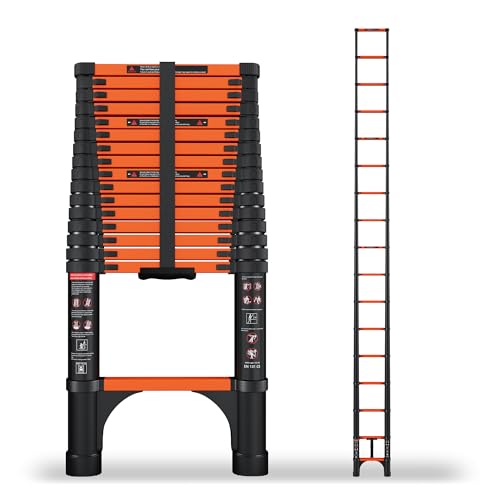
The Pro sits alongside the standard 16.5 FT model at the same working height, but the paperwork tells a different story: an ANSI A14.2 Type IA heavy-duty rating aimed squarely at trade use. Painters, electricians, and handymen who climb several times a day will notice the tighter tolerances and firmer lock feel compared with lighter-duty frames.
Like its sibling, it uses roughly 11.8-inch rung spacing, so long climbs stay comfortable. For anyone billing by the hour, that comfort compounds quickly across a workweek.
The Good Stuff
- ANSI A14.2 Type IA rating signals a frame engineered around sustained professional loads
- Same 330-pound capacity as the rest of the list, with hardware tuned for repeat extension cycles
- Generous rung spacing keeps balance steady when you’re carrying tools up with you
- Collapses to a size that rides in a van or truck bed without hogging cargo room
Potential Sticking Points
- You pay a premium over the standard model for a rating many homeowners won’t ever stress
- Locking mechanisms see heavy cycles in trade use; a periodic check of each latch is smart ownership practice
Feature Snapshot
Who Should Grab It
Working pros and serious DIYers who want a documented heavy-duty rating behind every climb they make.
Another Choice May Suit
Occasional users doing light chores will find the SINMEIRUN 12.5 FT delivers similar everyday function at a friendlier commitment level.
Nearly twenty-one feet puts this one in a different league entirely. Tall gables, steep lot grades, and second-story gutter runs that leave the 16.5 FT model straining are comfortably inside its range. The trade-off shows up in weight and wobble: at this height, telescoping flex is real, and you’ll want firm footing and a slow, deliberate climb.
It still meets EN131 standards and keeps the anti-slip foot pads and safety lock design from the rest of the family. Contractors who need one ladder to span multiple property types tend to gravitate here.
A Strong Showing
- The tallest reach on this list, covering rooflines the other four simply cannot
- EN131 compliance backs the frame’s stability claims with an independent standard
- Anti-slip pads anchor the base on wet lawns and smooth concrete alike
- Still collapses down despite the height, so storage stays realistic
- One purchase replaces separate short and tall ladders for mixed-property crews
Less Ideal Details
- Extended sections sway more than shorter models; expect a learning curve before you’re comfortable near the top
- More tube segments means more surfaces to keep clean, since dirt between stages causes sticky retraction
- Carrying and setting up this length solo takes practice and clear ground
Who Will Love This
Owners of taller two-story homes, or pros servicing varied properties who refuse to carry two ladders.
Look Elsewhere When
Single-story chores dominate your list, and the SINMEIRUN 16.5 FT gets you there with noticeably less bulk to manage.
Every other ladder here leans on aluminum; this UC UP CLIMBER goes stainless steel, and that choice changes the ownership math. High-strength steel resists rust naturally, which makes it a sensible call for coastal homes, rainy climates, or anyone storing gear in a damp garage. The cost is heft: expect a noticeably heavier carry than the SINMEIRUN models reviewed above.
At twelve and a half feet with a 330-pound rating, it matches the compact SINMEIRUN on paper and suits RV setups, low roofs, and household repairs. The honest read is that this one favors durability over portability, and that’s a fair trade depending on where you live.
What Helps Most
- Stainless steel construction holds up in humid or salty air where aluminum finishes eventually pit
- Retracts to a fraction of its extended size for closet or trunk storage
- 330-pound capacity matches the pricier picks on this list
- Adjustable stopping points suit everything from indoor ceiling work to outdoor RV access
Points To Note
- Steel weighs more than aluminum, so frequent car-to-yard hauling gets tiring faster
- No third-party safety standard is listed in the product details, unlike the EN131 and ANSI models above
Quick Facts
Built With In Mind
Coastal and wet-climate households prioritizing corrosion resistance over featherweight carrying.
Not Your Match When
Portability drives your decision, and the SINMEIRUN 12.5 FT offers the same reach in a much lighter aluminum frame.
What Matters Most Before Choosing Ladders For Roof
Match Height To Your Actual Roofline
Measure from the ground to your eaves, then add clearance. A ladder that just barely reaches forces risky overreaching at the top, which is where most accidents happen. Single-story homes rarely need more than 12.5 feet; two-story gutter lines usually demand 16.5 feet or the 20.3-foot option above.
Weight Is A Feature, Not A Footnote
The lightest aluminum models get used more because getting them out feels effortless. Stainless steel lasts beautifully in damp climates but costs you pounds on every carry. Decide honestly how often you’ll move the thing.
Standards And Locking Hardware
EN131 and ANSI ratings indicate independent testing of load paths and stability. Pair that with double-locking latches on each rung stage, and the ladder holds its set height without creep. Skip both, and you’re trusting marketing copy.
Key Considerations Across These Picks
Traps First Timers Fall Into
The classic error is buying for the tallest job you might someday do, then wrestling an oversized ladder for routine chores. Another common miss: ignoring collapsed dimensions. A 20.3-foot model that doesn’t fit your garage defeats its own purpose. Measure both your roofline and your storage spot before ordering.
What The Upgrade Pays For
Higher-tier models buy third-party ratings, tighter latch tolerances, and wider rung spacing. For weekly trade use, those add up to real comfort and documented safety margins. For a twice-yearly gutter clean, a well-built standard model delivers nearly identical results at less spend.
Frequently Asked Questions
How tall does a ladder need to be for a two-story roof?
Most two-story eaves sit between 18 and 20 feet off the ground, so a 20.3-foot telescoping ladder covers them with safe clearance. A 16.5-foot model typically reaches first-story roofs and lower two-story edges.
Are telescoping ladders safe for roof work?
Modern models with EN131 or ANSI ratings, anti-slip feet, and locking latches are engineered for exactly this use. Always set the base on firm, level ground and maintain three points of contact while climbing.
Aluminum or stainless steel, which is better?
Aluminum wins on weight, making frequent moves easier. Stainless steel resists rust more naturally, which suits humid or coastal environments.
Do telescoping ladders need maintenance?
Yes, minimal but real: wipe the tube sections occasionally so grit doesn’t jam retraction, and inspect the locking latches periodically. Owners commonly report that a clean track keeps operation smooth for years.
Can one person set up a 20-foot telescoping ladder?
It’s doable with practice, though the extended height and sway demand patience and solid footing. Many people prefer a helper for the first few uses.
Closing Remarks
The right choice comes down to your roofline and your storage reality. The 16.5 FT SINMEIRUN hits the sweet spot for most homeowners, the Pro variant serves working trades, and the 20.3 FT model answers calls the others can’t. Measure first, buy once, and your gutters stop being a dreaded chore.




