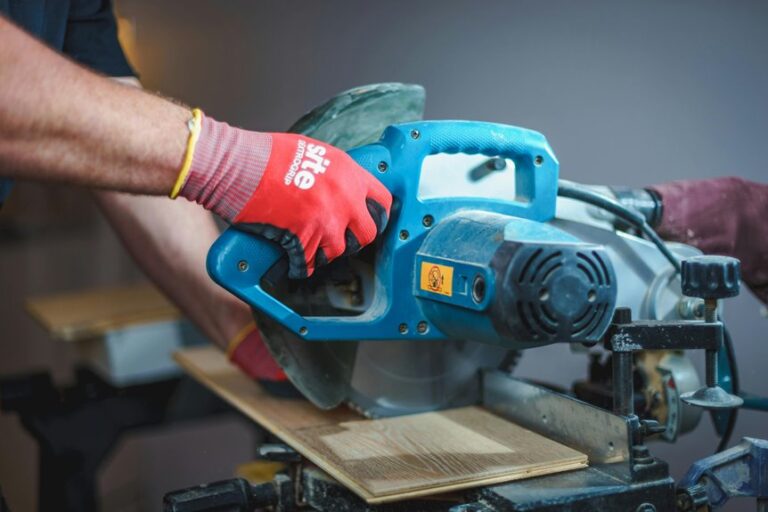
Anyone who has fed rebar, angle iron, or a fat 4×4 through the wrong saw knows the frustration: burned blades, glowing sparks, and cuts that need an hour of cleanup. The right large chop saw fixes all of that in one pull of the trigger. This shortlist covers dry-cut metal saws, multi-material sliders, and precision miter saws for framing and finish work alike. Whether you’re building steel frames in a shop or trimming baseboard on a job site, there’s a match here for how you actually work.
The Choices Worth Comparing

Evolution R185SMS+ Sliding Miter Saw 7-1/4″
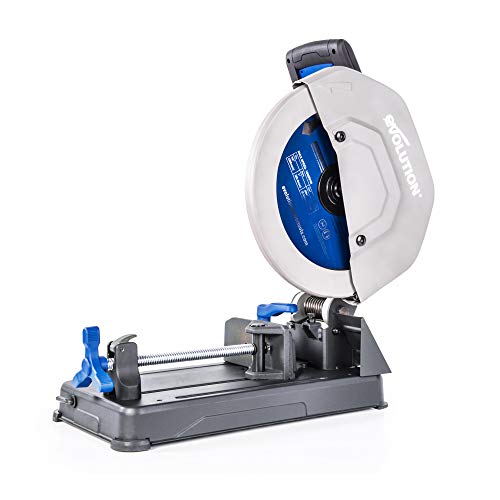
Evolution S355CPSL 14-Inch Metal Cutting Chop Saw

DEWALT DCS361M1 20V MAX Cordless Miter Saw

DOVAMAN 10-Inch Sliding Miter Saw

BOSCH CM10GD 10 In. Dual-Bevel Glide Miter Saw
A Closer Look At Each Pick
A 7-1/4-inch sliding saw sounds small until you realize it swings through wood, plastic, and mild steel without a blade swap. The 45-degree bevel and 50-degree miter range give you more angle room than most compact saws bother to offer, which matters when you’re cutting odd joinery or angled brackets.
The 210 mm slide extends your crosscut capacity well past what a fixed-head saw this size manages. For garage-based DIYers who bounce between decking boards and steel tubing, that versatility is the whole point. Compared with the dedicated metal saws further down this list, you trade raw cutting depth for flexibility.
Key Advantages
- One blade handles multiple materials, so project transitions take seconds instead of a tool change
- Bevel tilts to 45 degrees and miter reaches 50 degrees, covering angles many larger saws can’t hit
- The slide mechanism adds meaningful crosscut width despite the compact blade size
- Blade ships included, so the saw is ready to cut out of the box
- Light footprint suits crowded garages and shared workshop benches
Honest Caveats
- Owners commonly report the stock blade dulls faster in thick steel than a dedicated carbide metal blade would, so budget for a replacement if metal is your main material
- Small chip clearance means regular vacuuming keeps the pivot points moving smoothly
Quick Facts
Who Will Love This
Weekend builders and hobbyists who want a single saw covering lumber, PVC, and light steel work.
Where A Sibling Pick Shines
Straight metal fabrication calls for the Evolution S355CPSL instead, whose 14-inch carbide blade chews through steel far faster.
This is the one you buy when steel is the job. Dry-cut technology means a tungsten carbide-tipped blade slices mild steel with little heat and few sparks, leaving an edge smooth enough to weld or paint right away. No coolant, no abrasive wheel dust, no post-cut grinding session.
The 15-amp motor drives that big 14-inch blade through stock that stalls smaller saws. A pressed steel base keeps weight reasonable for a machine this size, so hauling it between the truck and the site stays manageable. Where the R185SMS+ dabbles in metal, the S355CPSL commits to it fully.
Advantages To Know
- Dry-cut design leaves burr-minimized finishes, saving you deburring time on every piece
- Carbide-tipped blade lasts dramatically longer than abrasive wheels, cutting cost per slice over a season
- Integrated chip deflector throws debris away from your line of sight and keeps cleanup shorter
- 45-degree miter capability handles angled steelwork without a separate cutoff setup
Points To Keep In Mind
- It’s built for metal only; running lumber through it will wreck the blade, so plan on a second saw for wood
- Metal chips accumulate fast around the base, and owners suggest a magnet sweep after each session
- The 15-amp draw assumes a standard household circuit, but long extension cords can sap cutting power
Right Fit For
Fabricators, welders, and contractors cutting structural steel, tubing, and angle iron daily.
Swap It Out When
General-purpose users mixing materials should stay with the Evolution R185SMS+, which switches between wood and metal on one blade.
Cordless changes where a miter saw can go. Trim crews carry this DEWALT up ladders, into attics, and down unfinished hallways where no outlet exists, and the kit battery means it runs straight from the case. For punch-list days and closet installs, nothing else here matches that freedom.
The integrated cut-line positioning system lights your cut line without calibration, and the stainless steel detent plate offers eleven positive stops for repeatable angles. Capacity covers nested crown at 3-5/8 inches and vertical base at 3-1/2 inches, which handles most residential trim packages.
Useful Touches
- Battery power delivers hundreds of trim cuts per charge under typical pine workloads, per manufacturer figures
- Adjustment-free cut-line indication speeds up accurate placement on every board
- Eleven positive miter stops make crown and casing repetition quick and consistent
- Compact frame fits in a van alongside other tools without hogging cargo space
Small Caveats
- Blade capacity is smaller than the 10-inch saws here, so wide dimensional lumber is off the menu
- Runtime drops noticeably in dense hardwood, so keep a charged spare battery nearby on big jobs
Made For
Finish carpenters and remodelers working trim, casing, and small stock away from fixed power.
Another Choice May Suit
Shop-bound woodworkers wanting bigger capacity will get more from the BOSCH CM10GD’s 10-inch dual-bevel platform.
Two speed settings are the detail most people skip past, and they shouldn’t. The lower 3200 RPM setting suits soft metals and PVC where high speed burns material, while 5000 RPM tears through wood cleanly. Three TCT blades ship in the box, including 40-tooth and 48-tooth options, so you’re covered for several material types before spending another dollar.
The 13-inch sliding rail pairs with extendable side tables to support stock up to 4 x 13 inches. Against the DEWALT above, you give up cordless freedom and gain serious cutting width plus multi-material range at a friendlier entry point. For a first serious workshop saw, the math is easy.
The Practical Payoff
- Dual-speed motor lets you match RPM to material instead of forcing one setting on everything
- Three included blades mean wood, PVC, and soft-metal work start immediately
- Extended side tables support long boards, reducing sag and improving cut accuracy on wide stock
- 13-inch rail travel accommodates large cross-sections like 4x material in a single pass
- Strong value proposition for shoppers equipping a workshop from scratch
Things To Consider
- Brand support and replacement-part availability are thinner than established names offer, worth weighing for long-term ownership
- Sliding rails need occasional cleaning and light lubrication to keep travel smooth, a routine some owners neglect
Who Should Grab It
Home workshop builders wanting maximum material range and capacity without stretching the budget.
Look Elsewhere When
Precision-focused furniture makers should step up to the BOSCH CM10GD, whose glide system holds alignment tighter over years of use.
Bosch’s Axial-Glide arm replaces conventional sliding rails with a hinged linkage, and the difference shows up in two places. First, the saw needs roughly 10 inches less front-to-back depth than a rail slider, a real gift in shallow shops. Second, the glide motion resists the play and slop that rails develop over time, keeping cuts square year after year.
The 15-amp motor spins at 4800 no-load RPM with enough torque for dense hardwood. Dual bevel lets you tilt left or right without flipping crown molding, which finish carpenters will appreciate immediately. Next to the DOVAMAN, you’re paying for alignment durability and brand backing rather than extra blades.
What It Does Well
- Glide mechanism maintains smoother, truer movement than exposed rails, especially over years of dusty shop use
- Compact front-to-back profile frees up nearly a foot of bench depth versus typical sliders
- Dual-bevel head handles both tilt directions, speeding up crown and trim workflows considerably
- 15-amp motor sustains consistent power in hardwood and repeated production cuts
The Fine Print
- The glide linkage collects fine dust and benefits from periodic blowouts, a habit worth forming early
- Wood-only platform means metalworkers still need a dedicated saw from earlier in this list
- Premium pricing puts it above casual-DIY budgets, in our view
Who It Suits Best
Dedicated woodworkers and finish pros who value long-term cut accuracy over a low sticker figure.
Not Your Match When
Tight budgets stretch further with the DOVAMAN 10-Inch Sliding Miter Saw, which includes three blades at a lower tier.
What Matters Most Before Choosing Large Chop Saws
Match the Blade to Your Material
The single biggest mistake in this category is buying a wood saw for steel or a metal saw for framing lumber. Dry-cut carbide blades and abrasive-style wheels behave completely differently, and running the wrong material ruins both the blade and the cut quality. Decide what percentage of your work is metal versus wood, then commit.
Cutting Capacity and Slide Travel
Capacity numbers describe the largest board a saw accepts in one pass, and slide length determines how wide a crosscut you can make. A 7-1/4-inch blade with a long slide often out-cuts a bigger fixed-blade saw on wide stock. Measure the actual dimensions of your common materials before comparing spec sheets.
Power Draw and Workspace Reality
Most 15-amp saws assume a standard household circuit, but long or thin extension cords choke performance noticeably. Shop layout matters too: glide-arm designs save nearly a foot of bench depth compared with rail sliders, which decides the purchase in cramped garages.
Corded Versus Battery
Cordless models trade peak power and runtime for placement freedom. Finish carpenters working away from outlets gain enormously, while shop-based users rarely miss the cord.
Key Considerations Across These Picks
Wrong Turns To Avoid
Shoppers frequently overspend on blade size they’ll never use, then underspend on the accuracy features they touch daily. Detent plates, fence quality, and cut-line visibility affect every single cut, while an extra inch of blade affects very few. Also check what ships in the box; a saw without a blade adds cost and delay.
The Upgrade Payoff
Higher-tier saws spend their extra cost on alignment hardware, bearing quality, and dust management rather than raw speed. Those traits compound over years: cuts stay square, adjustments hold, and resale value survives. Occasional users won’t feel the difference, but anyone cutting weekly will.
Frequently Asked Questions
Can one chop saw really handle wood and metal?
Multi-material models like the Evolution R185SMS+ use blades rated for several material types on a single arbor. Dedicated metal saws still outperform them on thick steel, so heavy fabrication deserves its own machine.
What does dry-cut mean on a metal chop saw?
Dry-cut saws use carbide-tipped teeth instead of abrasive friction to remove metal. The result is less heat, fewer sparks, and a finish that typically needs no grinding afterward.
Is a sliding miter saw better than a fixed one?
Sliders add crosscut width for wider boards, which matters for decking and shelving work. Fixed-head saws cost less and weigh less, suiting trim-only tasks.
Do cordless chop saws have enough power?
Modern battery platforms handle trim and dimensional lumber comfortably within their blade capacity. Dense hardwood and continuous production cutting drain packs faster, so a spare battery helps.
How much bench space does a large chop saw need?
Rail sliders demand deep benches for full slide extension, while Bosch’s glide design trims roughly 10 inches off front-to-back depth. Measure your bench before ordering either style.
Bottom Line
Your material list should drive this decision more than any feature sheet. Steel workers belong with the Evolution S355CPSL, mixed-material DIYers fit the R185SMS+, and trim carpenters gain the most from the cordless DEWALT. The DOVAMAN rewards budget-conscious workshop builders, while the BOSCH CM10GD serves those who plan to own their saw for a decade. Match the machine to the work in front of you, and any of these five will earn its bench space.