


Anyone who has hung a TV mount or a row of shelves knows the drill: guess where the stud is, drill, miss, patch the hole, repeat. That’s the exact frustration this category solves. The five tools below combine wall scanning with laser guidance so you mark once and hit solid framing the first time.
Some lean toward scanning accuracy, others toward layout lines, and a couple try to do both in one body. Whether you’re a weekend picture-hanger or someone mounting cabinets on a regular basis, there’s a fit here for your skill level and your walls.
A Closer Look At The Lineup

PREXISO 2-in-1 Stud Finder with Laser Level

Zircon StudSensor A100 Stud Finder

FNIRSI WD-01 6 in 1 Rechargeable Stud Finder

OFIRCREATION Stud Finder Wall Scanner With Laser Level
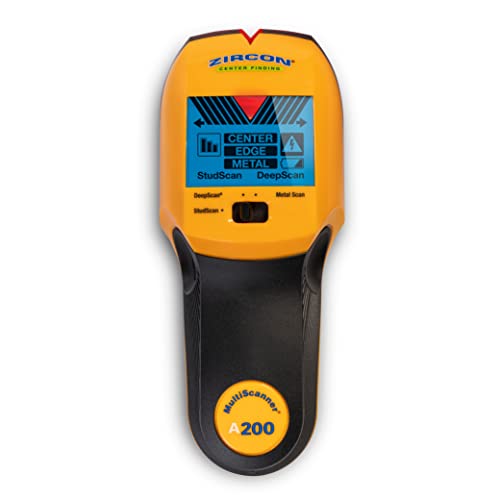
Zircon MultiScanner A200 Stud Finder
The Picks, Examined More Closely
Most tools here do one job well; this one carries two. The PREXISO pairs a cross line laser with a wall scanner in a single rechargeable body, which means one device in the toolbox instead of two. For apartment dwellers and anyone short on storage, that consolidation is the main draw.
The laser side is manual-leveling rather than self-leveling, so you align it using bubble vials instead of letting the tool find level itself. That adds a small learning step, though plenty of owners appreciate the simplicity since fewer moving parts tend to mean fewer failures over years of use.
Positive Takeaways
- Rechargeable battery cuts down on disposable-cell costs across a year of projects.
- Cross line projection lets you align multiple frames or brackets against one continuous reference.
- Bubble vials stay lit during laser mode, making hand-leveling quicker on dim walls.
- Two tools in one housing means less rummaging mid-project.
Things To Consider
- Manual leveling takes practice; expect slower setup than self-leveling units until you get the feel.
- The adhesive mounting strips commonly struggle on textured or dusty surfaces, so plan for screws or careful placement.
Who It Suits Best
A renter or hobbyist who wants scanning and straight-line layout from one compact, rechargeable device.
Where Another Pick Suits Better
Shoppers who want zero calibration fuss may prefer the Zircon MultiScanner A200, a dedicated scanner built purely for fast, accurate wall reads.
Zircon has been making wall scanners longer than most of this list has existed, and the A100 shows that experience. Center finding means the tool signals the middle of a stud rather than just an edge, which removes the guesswork that trips up first-timers. Live wire detection adds a safety net before any drilling.
This is the pick you hand to someone who has never scanned a wall before. The operation stays simple: calibrate flat against the surface, slide slowly, mark the signal. Compared to the PREXISO above, you give up the laser entirely, but the scanning workflow itself feels more forgiving.
A Few Highlights
- Center finding pinpoints the stud’s midpoint, so anchor placement needs less trial and error.
- Live AC wire alerts warn you before a drill bit meets wiring behind drywall.
- Lightweight body makes overhead scans, like ceiling joist checks, less tiring.
Small Caveats
- No laser component, so horizontal alignment still requires a separate level.
- Recalibrating before each scan is part of the routine; skipping it is the most common cause of false readings owners report.
At A Glance
Made For
First-time homeowners tackling straightforward jobs like hanging mirrors, shelves, or a single TV bracket.
Consider Something Else When
You need layout lines along with scanning, in which case the PREXISO 2-in-1 covers both tasks in one purchase.
Six modes sounds like marketing padding until you actually renovate. The FNIRSI WD-01 separates wood, metal, and live wire detection into distinct scan settings, plus an exact mode for pinpointing both edges and centers of studs. On older walls with mixed materials, that granularity matters more than raw speed.
The positioning hole is the detail worth noticing: it sits at the detection point so you can mark directly through the tool without shifting your hand. Small thing, but it keeps your pencil marks honest. Recharging via USB means no battery drawer raids before a project, unlike the Zircon models further up this list.
What Works In Its Favor
- Six detection modes cover wood, metal, pipes, and live AC wiring behind walls and floors.
- Positioning hole allows direct marking at the exact detection spot.
- Rechargeable design avoids recurring battery purchases.
- Edge-and-center readouts in exact mode speed up anchor placement.
Points To Keep In Mind
- More modes mean more buttons; expect a brief learning curve compared to the two-button Zircon A100.
- Dense plaster or lath construction can confuse consumer-grade scanners generally, and this unit is no exception.
Right Fit For
Renovators and renters working varied walls who want material-specific scans without buying several tools.
Look Elsewhere When
Your projects are simple drywall-only shelf hangs; the Zircon StudSensor A100 handles those with less fuss.
Hanging a gallery wall is where this OFIRCREATION earns its keep. Three laser line modes, vertical and horizontal bubble vials, and a printed metric ruler live on the same body as the stud scanner, so spacing frames evenly becomes a one-tool job. The Class IIIA laser runs at 3.5mW maximum output, a standard low-power rating for indoor layout work.
Think of it as a picture-hanging kit that happens to scan walls. Against the PREXISO’s cross line approach, this one leans harder into measurement and alignment extras, trading some scanning depth for layout convenience.
Real-World Strengths
- Three laser line modes handle vertical, horizontal, and combined layout references.
- Integrated metric ruler speeds up frame spacing without hunting for a tape measure.
- Bubble vials on both axes keep lines true during tile work or beam marking.
- Serves personal, professional, and commercial use cases per its multipurpose design.
Trade Offs
- Laser output tops out at 3.5mW, so bright sunlit rooms can wash out the lines.
- Jack-of-all-trades design means no single function matches a dedicated specialist tool.
Quick Facts
Best Suited To
Decorators and DIYers planning multi-frame arrangements, tile layouts, or craft builds where alignment tools matter most.
A Better Fit Elsewhere
Heavy-duty TV and cabinet installs call for the Zircon MultiScanner A200, whose deeper stud data suits structural loads better.
Where the A100 tells you where a stud is, the A200 tells you more about it. This scanner reports the center, both edges, and the direction of wood and metal framing, information that changes how you plan a heavy mount. Mounting a 60-pound TV onto a single edge reading versus confirmed dual-stud backing is the difference between confidence and crossed fingers.
Metal and live wire detection round out the picture before any hole gets drilled. Installers who work daily with TVs, cabinets, handrails, and fixtures will find the extra data pays for itself in avoided callbacks. It’s the most capable pure scanner on this list, and it behaves like it.
A Favorable Mix
- Reports stud center, edges, and direction, not just a beep at an edge.
- Simultaneous metal and live wire awareness protects against hidden hazards.
- Suits demanding mounts like TVs, cabinets, and handrails where framing knowledge counts.
- Zircon’s long track record in wall scanning backs the platform.
- Works for homeowners and trade professionals alike.
Softer Spots
- No laser layout features, so pairing with a level remains necessary for aligned installs.
- Consistent flat contact and pre-scan calibration are required habits; angled sweeps are a frequent source of missed readings among owners.
The Key Facts
Who Will Love This
Frequent installers and serious DIYers mounting heavy items who want maximum framing intelligence before drilling.
Swap It Out When
Casual users hanging the occasional frame will be happier with the simpler, lighter Zircon StudSensor A100.
What Matters Most Before Choosing
Match The Tool To Your Walls
Standard drywall over wood studs is easy territory; nearly every tool here handles it. Older homes with plaster, lath, or metal framing demand stronger detection modes like those on the FNIRSI WD-01. Concrete and tile fall outside what these scanners can read, so know your surface first.
Scanner Depth Versus Layout Features
A pure scanner gives you framing data and nothing else. Combination units add lasers, rulers, and bubble vials but usually compromise somewhere. Decide honestly whether you hang things weekly or twice a year; frequency should drive how much versatility you pay for.
Calibration Habits
Every scanner on this list performs best after a quick calibration pass on the wall itself. Skipping that step produces phantom readings, and it’s the complaint that dominates owner feedback across all brands. Build the habit and even budget units behave well.
Power Source Practicality
Rechargeable models like the PREXISO and FNIRSI suit frequent use, while battery-powered units such as the Zircons sit ready in a drawer for months without losing charge. Your usage rhythm decides which wins.
Key Considerations Across These Picks
Traps First Timers Fall Into
The biggest mistake is trusting a single sweep. Slow, flat, calibrated passes catch what rushed ones miss. Second trap: assuming every beep is a stud. Metal conduit and wiring trigger sensors too, which is exactly why live wire detection earns its place. Finally, don’t buy combination tools for jobs a $10 tape measure already handles.
Where The Extra Money Goes
Higher-tier scanners add edge-and-center resolution, direction reporting, and material-specific modes. Those features matter when mounting something heavy, because knowing a stud’s full width prevents anchors landing near fragile edges. Occasional hangers gain little from that precision; regular installers gain a lot.
Frequently Asked Questions
Do stud finder and laser level combos work as well as separate tools?
For typical home projects, yes, with minor compromises in each function. Dedicated specialists still edge them out on very demanding scans or large-scale layout work.
Why does my stud finder beep in spots with no stud?
Metal pipes, conduit, wiring, and dense wall patches all trigger sensors. Switching to a metal or wire mode helps identify what the tool actually found.
How deep can these scanners detect?
Consumer models typically read standard half-inch drywall over wood framing reliably. Thicker walls, plaster, or tile exceed their range.
Are manual-leveling lasers hard to use?
They take a few tries to master since you align bubbles by hand. Once calibrated, they hold their line steadily for indoor tasks.
Can I use these on ceilings?
Yes, for locating joists, though holding any scanner overhead tires your arm quickly. Lightweight models make ceiling work noticeably easier.
Closing Remarks
Pick based on your walls and your workload, not on feature lists. Renters and occasional hangers do fine with the Zircon A100, while anyone mounting TVs regularly will value the A200’s deeper data. Combination tools reward people who want one drawer instead of three. Whatever lands in your cart, calibrate before each scan and measure twice; your walls will thank you.




