


Anyone who has stretched a sagging steel tape across a long room knows the frustration: it bows, it slips, and someone has to hold the other end. A laser distance meter ends that routine by bouncing a beam off the far wall and returning a number in under a second. The five options below cover a wide range, from a dual-laser pro tool to simple hybrid units that keep a physical tape on board. Whether you hang shelves on weekends or quote jobs for a living, there’s a match here for your toolkit.
A Side-By-Side Look

Inkerma Dual Laser Measurement Tool 393Ft/120M

Inkerma Laser Tape Measure 2-in-1 130Ft & 16Ft
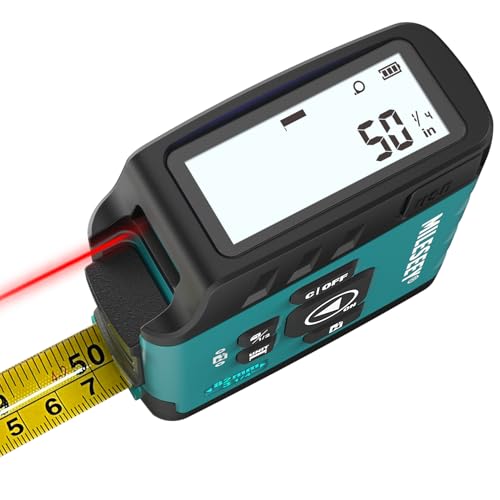
MILESEEY DT20 3-in-1 Digital Laser Tape Measure

MiLESEEY D9 PRO Smart Laser Tape Measure 330 ft

PREXISO Laser Measure 215Ft with Diagonal Measuring
The Details Behind The Selections
Most laser meters shoot one beam at a time, which means walking back and forth across a room for every reading. This Inkerma fires bilaterally, so you can capture distances in two directions from a single standing point. On a job site, that difference adds up fast.
The 393-foot range covers full building interiors without repositioning, and Pythagorean mode handles indirect height calculations when you can’t reach the top of a wall. Rechargeable power means no hunting for coin cells mid-project either.
Practical Advantages
- Dual-laser layout lets you take multiple readings from one position, cutting walk time on large floors dramatically.
- A built-in tilt angle sensor measures slopes and angles directly, useful for stair stringers and roof pitch work.
- Pythagorean mode computes hard-to-reach heights, so ceilings and gables need no ladder climb just to get a number.
- Area and volume functions turn room dimensions into paint or flooring quantities instantly.
- Rechargeable battery plus Ft/in/M unit switching keeps it flexible across different project types and plans.
Points To Note
- Owners commonly report that bright outdoor sunlight washes out the laser dot past roughly half its rated range, so plan exterior work for overcast conditions.
- Keep the lens clean and capped between uses; dust on the emitter is the usual culprit behind inconsistent readings.
Key Specs
Who It Suits Best
Remodelers, estimators, and serious DIYers working in large spaces will get the most from its two-way measuring.
Where A Sibling Pick Shines
For smaller rooms where a physical tape still comes in handy, the Inkerma Laser Tape Measure 2-in-1 pairs a shorter laser with a 16-foot blade.
Sometimes you want a laser, and sometimes you just want to hook a tape on a board edge. This hybrid carries both in one pocketable body, so there’s no second tool to dig out of a bag. For furniture assembly, curtain rods, and closet builds, that convenience is the whole appeal.
The 130-foot laser handles room-scale work while the 16-foot blade covers close-up marks. Compared with the larger Inkerma dual-laser model above, this one trades range and advanced modes for simplicity and everyday portability.
What Pays Off
- Two tools in one housing mean fewer trips back to the toolbox during a single project.
- Unit switching across meters, inches, feet, and feet-plus-inches matches whatever format your plans use.
- Automatic shutoff after idle periods preserves battery life when the tool rides in a drawer between weekends.
- A Class II low-power laser keeps household use safe around kids and pets.
Small Caveats
- The 16-foot blade falls short for deck framing or long-wall layout, so bigger projects push you toward laser-only readings.
- Hybrid bodies are slightly bulkier than a plain tape, which some users notice in tight pockets.
The Right Fit
Weekend DIYers furnishing apartments and handling interior tasks benefit most from this grab-and-go pairing.
Swap It Out When
If your work involves long spans and indirect measurements, step up to the Inkerma Dual Laser Measurement Tool instead.
The DT20 takes the hybrid idea further than the Inkerma 2-in-1 by adding a digital readout to the tape itself. Instead of squinting at tiny blade markings in dim corners, you get live figures on screen as the blade extends. Anyone who has measured alone in a dark basement will appreciate that immediately.
You get three measurement styles in one device: a 131-foot laser for long throws, a digital tape for precise short pulls, and standard blade marking. It’s a sensible middle ground between basic hybrids and full smart meters.
What Stands Out
- The digital display shows real-time blade readings, removing the guesswork of halfway-between millimeter lines.
- Three measurement methods in one body cover everything from cabinet reveals to full-room spans.
- Patented PowerBrust-style digital technology delivers fast, stable figures rather than flickering numbers.
Trade Offs
- Electronics inside the tape mechanism add weight compared with an ordinary steel tape, noticeable over long handheld sessions.
- Owners should avoid dropping it; the digital module is more fragile than a plain tape’s simple spring drum.
Quick Facts
Made For
Hobbyist woodworkers and solo renovators who measure alone and want clear digital numbers will feel right at home.
Reach For A Different Pick When
Screen-driven users wanting app connectivity and point-to-point math should look at the MiLESEEY D9 PRO below.
This is the tool for people who think their phone interface is a feature, not a compromise. A 2.4-inch IPS touchscreen replaces button menus, rotating or locking between horizontal and vertical orientations as the job demands. The 330-foot range also doubles anything else on this list.
Point-to-point (P2P) measuring deserves a quick definition: it calculates the straight-line distance between any two visible points from one position, no walking required. Beams, ceiling fixtures, and awkward ductwork all become one-shot readings. App syncing moves captured dimensions straight to sketches or estimates.
Reasons It Performs
- Dual reference lasers give coaxial alignment guidance, keeping horizontal and tilted shots visibly on target before you commit.
- P2P mode turns hard-to-reach spots like vaulted ceilings into single-position measurements.
- The touchscreen rotates and locks, so overhead or floor-level work stays readable without contorting your neck.
- App sync exports measurements digitally, trimming transcription errors from paper notes.
Things To Consider
- Touchscreens demand more battery than button-only meters, so frequent users should build charging into their routine.
- Gloved winter work can make touch navigation fiddly, a common complaint among cold-climate tradespeople.
Best Suited To
Professional estimators, interior designers, and tech-comfortable contractors doing complex layouts daily will justify the investment.
Not Your Match When
Occasional users who mainly measure rooms will find the PREXISO Laser Measure covers those needs at friendlier cost.
First-time laser meter shoppers rarely need 300-plus feet or app dashboards, and this Prexiso understands that. Its 215-foot range comfortably handles homes and small commercial spaces, while diagonal measuring extension handles situations where a direct shot isn’t possible. Think of it as the sensible entry point.
A dedicated mute button silences the beep entirely, which sounds minor until you’re measuring in an office, library, or naptime household. That quiet courtesy, paired with generous onboard memory, makes it a thoughtful budget choice rather than a stripped-down one.
The Helpful Details
- A mute toggle disables beeps for shared or quiet environments like classrooms and occupied offices.
- Up to 100 stored measurement groups eliminate scribbled notes and let you review figures later via add/subtract recall.
- Diagonal measuring support captures indirect spans when corners or furniture block the direct path.
- The 215-foot range suits typical residential work with headroom to spare.
Worth Noting
- There’s no physical backup tape here, unlike the Inkerma 2-in-1, so close-range marking still needs a separate tool.
- Store it dry; like most laser meters, moisture around the buttons is a commonly reported failure trigger over time.
Feature Snapshot
Who Will Love This
Renters, new homeowners, and anyone buying their first laser meter gets capable performance without paying for features they won’t touch.
Another Choice May Suit
Users who frequently mark short distances by hand will prefer the MILESEEY DT20 with its integrated 16-foot digital tape.
Factors To Consider When Choosing Laser Tape Measures
Range And Accuracy First
Range determines where you can stand, not just what you can measure. A 130-foot unit covers nearly any residential room, while 300-foot-plus models suit warehouses, exteriors, and open-plan commercial work. Accuracy matters equally: differences of a sixteenth of an inch are irrelevant for curtains but real for cabinetry. Match both numbers to your actual projects rather than aspirational ones.
Hybrid Versus Laser-Only
Hybrid models bundle a physical tape alongside the laser, which helps for short pulls, edge marking, and curved surfaces a beam can’t follow. Laser-only designs stay lighter and often add calculation modes instead. Solo workers measuring alone lean hybrid; professionals quoting large areas usually prefer laser-only range and math features.
Interface And Power
Buttons survive gloves, dust, and drops better than touchscreens, but screens show more data at once and rotate for awkward angles. On power, rechargeable batteries cut ongoing costs for daily users, while replaceable cells suit tools that sit unused for months. Consider how often the device leaves the drawer before deciding.
Memory And Modes
Stored readings, area and volume calculations, and Pythagorean functions save real time on repeat tasks. Occasional users can skip them; anyone producing estimates weekly will wonder how they managed without.
Key Considerations Across These Picks
Pitfalls Shoppers Hit
The most common mistake is overbuying range. Paying for 330 feet to measure bedrooms wastes money that could go toward accuracy or durability. Another trap is ignoring units: some listings default to metric, frustrating imperial-only users. Check the display format before committing, and skip gimmick features you’ll never open.
What The Higher Tier Buys
Premium models earn their price through faster processors, brighter lasers for sunlit sites, touch interfaces, and app ecosystems that export data directly into estimates. Frequent professional use recoups that cost quickly. Weekend projects rarely do, so spend according to frequency, not ambition.
Frequently Asked Questions
How accurate are laser tape measures?
Most consumer models measure within about 1/8 inch over their rated range, which suits interior design, flooring, and general construction layout. Precision-critical machining still calls for dedicated calipers or measuring tools.
Can I use a laser measure outdoors?
You can, though direct sunlight washes out the dot and shortens effective range considerably. Overcast days or early mornings give far better results on exterior jobs.
Do laser measures work through glass?
No, the beam reflects off glass surfaces instead of passing through, giving false readings. Aim at solid surfaces, or measure to the glass and adjust manually.
Is a hybrid tape-and-laser model worth it?
For most homeowners, yes, because short-range marking and edge hooking remain everyday needs a laser can’t handle alone. Tradespeople focused on large-area estimates usually prefer laser-only units with more calculation modes.
How long do batteries last in these devices?
Light household use typically stretches weeks between charges or cell changes, especially with auto-shutoff enabled. Heavy daily professional use means planning a nightly recharge for lithium models.
Bottom Line
A good laser tape measure removes the awkward two-person shuffle from every measuring task, and any of these five will do that reliably. Match the range to your space, choose hybrid or laser-only based on how you actually work, and don’t pay for professional features reserved for professional schedules. Start with the scenario, not the spec sheet, and the right pick becomes obvious.




