


Home charging changes everything about EV ownership. Waking up to a full battery beats hunting for a public station every time, and the right charger makes that routine effortless. This guide covers five options spanning portable plug-in units and hardwired wall stations, so apartment dwellers, road trippers, and garage-anchored commuters can all find a match.
A Snapshot Of The Selections

EVDANCE Level 1&2 EV Charger 25FT Cable
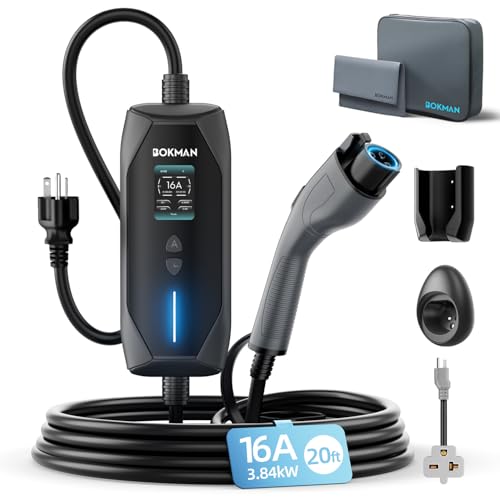
bokman Portable Level 1&2 EV Charger, 16A 20ft

Tesla Universal Wall Connector 48A 24′ Cable

EMPORIA Level 2 EV Charger 48 Amp WiFi Enabled
VDLPOWERVP Level 2 EV Charger 32A/7KW 20FT Cable
Why These Options Stand Out
Most first-time EV owners discover their garage outlet situation halfway through week one. That’s where this EVDANCE unit earns its keep: it runs at 16 amps on a 240V circuit through its NEMA 6-20 plug, then drops to 12 amps on any ordinary household outlet via an included adapter. One unit covers both scenarios without extra purchases.
The 25-foot cable reaches across two-car garages comfortably, and the J1772 connector fits every North American EV except Tesla, which needs an adapter. Renters who can’t install a wall unit will appreciate that nothing here requires an electrician beyond adding a 240V receptacle.
Reasons It Performs
- Switches between 120V and 240V power, so overnight top-ups work anywhere you park
- The long cable spans most driveways without repositioning the car
- J1772 compatibility covers virtually every non-Tesla EV and plug-in hybrid sold in North America
- ETL listing signals independent safety evaluation of the charging hardware
- A carrying bag keeps the whole setup organized in a trunk
Honest Caveats
- At 16 amps maximum, charging speed trails the 40-plus amp wall stations here by a wide margin
- Cable and control box need dry storage between uses since prolonged weather exposure isn’t its design intent
Key Specs
Who Will Love This
First-time EV owners and renters who want one charger that works at home and travels in the trunk.
A Better Fit Elsewhere
Drivers wanting app-based scheduling and faster output should look at the EMPORIA 48 Amp station instead.
Where the EVDANCE leans on raw cable length, this bokman counters with intelligence packed into a smaller package. Its built-in delay timer lets you push charging start back by up to 12 hours, which matters because many utilities charge far less overnight. Set it before bed and the session begins when rates drop, no phone required.
Current adjusts across six levels from 6A to 16A on 240V, useful in older homes where wiring may not love sustained max draw. The 20-foot cable roughly matches a parking space plus margin, adequate for most driveways though shorter than the EVDANCE’s reach.
What Stands Out
- Adjustable amperage protects older circuits while still allowing full 16A speed on healthy wiring
- Off-peak delay scheduling trims electricity bills without any subscription or app
- Lightweight design stows easily in a trunk for trips to relatives’ houses
- NEMA 5-15 adapter means a regular wall outlet works in a pinch
Points To Note
- No WiFi connectivity, so remote monitoring and software updates aren’t part of the deal
- Owners commonly report coiling the cable takes some discipline to avoid kinks over time
Right Fit For
Road trippers and apartment residents who value simple controls and cheap overnight charging over smart features.
Swap It Out When
Households wanting longer reach and dual-plug versatility out of the box are better served by the EVDANCE 25FT model.
Tesla built this station to end the connector debate entirely. The integrated handle switches between the NACS plug Tesla vehicles use natively and the J1772 plug everyone else relies on, so a mixed driveway with a Model Y and a Chevy Bolt charges from one unit. Output peaks at 11.5 kW, good for up to 44 miles of range added per hour depending on vehicle and breaker size.
Installation runs indoor or outdoor via your own electrician or Tesla’s certified installer network, and variable amperage settings from 12A up to 48A let the unit match whatever your panel supplies. Compared to the portable picks above, this is permanent infrastructure rather than travel gear.
A Few Highlights
- Dual-connector design serves both Tesla and J1772 vehicles without adapters
- Up to 44 miles of range per hour refills daily driving in under two hours for most commuters
- Six configurable amperage levels adapt to panels large and small
- Rated for outdoor mounting, opening up driveway installations
Small Limitations
- Hardwired installation adds electrician cost and removes trunk-portability entirely
- The 24-foot cable is the shortest reach among these five options
The Numbers That Matter
Made For
Multi-EV households and anyone planning a permanent, high-output garage installation.
Another Choice May Suit
Drivers who move between locations frequently will find the bokman portable far more practical.
The EMPORIA brings connectivity the portable units lack. Through its WiFi link, you schedule sessions, track energy use, and manage charging remotely, which turns into real savings on time-of-use utility plans. Hardwired at 48 amps on a 240V circuit, it delivers around 46 miles of range per hour, several times quicker than any wall outlet ever could.
It ships preconfigured for hardwired installation with a whip included, and professional installation is recommended. The 25-foot cable matches the EVDANCE’s reach while the white enclosure suits finished garages better than utilitarian portable boxes. J1772 compatibility covers all non-Tesla EVs directly.
Where It Helps
- WiFi app control enables off-peak scheduling and energy tracking from anywhere
- 48-amp hardwired output refills a daily commute in well under three hours
- Included whip simplifies the electrician’s hookup compared to bare-wire units
- Long cable handles awkward garage geometries
Things To Consider
- Hardwiring means committing to one location; there’s no unplugging and taking it along
- Professional installation adds upfront cost beyond the unit itself
Who Should Grab It
Commuters with a dedicated garage spot who want data, scheduling, and near-maximum charging speed.
Reach For A Different Pick When
Anyone needing portability between homes should choose the VDLPOWERVP plug-in unit instead.
This VDLPOWERVP occupies the sweet middle ground: twice the output of the 16-amp portables above, yet still a simple plug-in affair. Its NEMA 14-50 plug, the same receptacle used by RV parks and ranges, pushes 32 amps and up to 7 kW into any SAE J1772 vehicle. An electrician can add that outlet quickly in most garages.
The control box monitors charging status continuously and includes protective measures against lightning surges and current leakage, sensible safeguards for a unit that may live outdoors or in damp garages. You give up the app features of the EMPORIA and the adjustable amperage of the bokman, but the core job gets done fast.
The Value In It
- 7 kW output roughly doubles the charging pace of the 16-amp portable picks
- Continuous status monitoring catches faults during long unattended sessions
- Standard NEMA 14-50 outlet makes installation straightforward and reversible
- Works with every J1772 EV and plug-in hybrid on the road
Trade Offs To Consider
- Fixed 32-amp draw offers no dialing down for marginal wiring
- No smart features, so scheduling happens through the car rather than the charger
- The 20-foot cable is the joint-shortest here, worth measuring your parking spot first
Quick Facts
Who It Suits Best
Homeowners with a 14-50 outlet already in place who want strong speed without paying for connectivity they won’t use.
Look Elsewhere When
Tesla-plus-other households get more flexibility from the Universal Wall Connector’s dual plugs.
What To Weigh Before Choosing A Home Charger
Match Amperage To Your Panel
Your electrical panel sets the ceiling. A 48-amp charger needs a 60-amp breaker and headroom your panel may not have, while 16-amp portables run happily on existing circuits. Ask an electrician what your panel supports before falling in love with a spec sheet. Overloading a panel triggers nuisance breaker trips at best.
Portability Versus Permanence
Plug-in units travel, rent-friendly installs reverse cleanly, and trunk storage costs nothing. Hardwired stations like the Tesla and EMPORIA deliver higher output and cleaner aesthetics but anchor to one wall. Daily drivers with a fixed parking spot rarely regret going permanent; movers and multi-car families often prefer the flexible route.
Cable Reach Is Real Estate
Measure from your panel-side wall to the farthest charging port position you’d realistically use, then add slack. A 20-foot cable frustrates in wide driveways, and stretching a cord taut across a walkway invites trip hazards and connector strain.
Smart Features Earn Their Keep Slowly
App control, WiFi scheduling, and energy reporting matter most on time-of-use electricity plans. On flat-rate plans, a basic timer or none at all works fine, and skipping connectivity saves money for capacity elsewhere.
Key Considerations Across These Picks
Traps First Timers Fall Into
The classic error is buying amperage your wiring can’t feed, leaving an expensive unit throttled or tripping breakers nightly. Another common slip: ignoring connector type. Most non-Tesla EVs need J1772, and assuming compatibility without checking wastes a return shipment.
Where The Extra Money Goes
Higher-tier stations buy copper (heavier cables and connectors), certified safety electronics, weatherproof enclosures, and connected software. The upgrade pays off for high-mileage commuters and multi-EV homes; occasional drivers rarely recover the difference.
Frequently Asked Questions
Do Level 2 chargers work with every EV?
All five options here use the J1772 standard or include it alongside NACS, covering essentially every North American EV. Tesla models need an adapter on J1772-only units, while the Tesla Universal Wall Connector handles both natively.
Is a permit required for installation?
Most jurisdictions require a permit for new 240V circuits and hardwired charger installs. Plug-in units using existing outlets typically need none, though adding an outlet usually does.
How much does installation cost?
Costs vary widely by panel condition, distance, and local labor rates, so quotes from licensed electricians are the only reliable figure. Hardwired 48-amp installs generally cost more than adding a 14-50 receptacle.
Can I use a Level 2 charger outdoors?
The Tesla Universal Wall Connector carries an outdoor rating, and several portable units handle covered outdoor use. Always confirm the specific unit’s rating and protect connections from standing water.
Will fast charging damage my battery?
Modern EVs manage their own charge rates regardless of charger capability, tapering as the battery fills. A higher-amperage charger simply lets the car take what it’s designed to accept.
Closing Thoughts
Charging at home is the quiet luxury of EV ownership, and any of these five gets you there. Start with your panel’s capacity and your parking habits, then match the hardware to reality rather than ambition. The right choice is the one that disappears into your routine, night after night, full battery by morning.




