


A good measuring cup is one of those tools you reach for without thinking, until the markings wear off or the spout dribbles batter down your counter. Whether you bake weekly, portion stock by the quart, or just need a reliable cup for morning oats, the right one saves small frustrations every single day. This roundup covers five options across glass, plastic, and full sets with lids, so you can match capacity, material, and storage style to your own kitchen instead of guessing.
The Essentials At A Glance

Ackers Etched Graduated Glass Measuring Cup 500 ML (16 Oz)
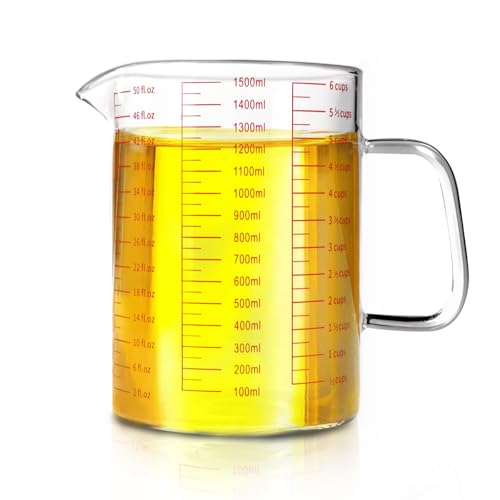
WhiteRhino Glass Measuring Cup 6 Cup/1500ml

DTDNZKN 3 Pack Plastic Measuring Cups (250ml/500ml/1000ml)
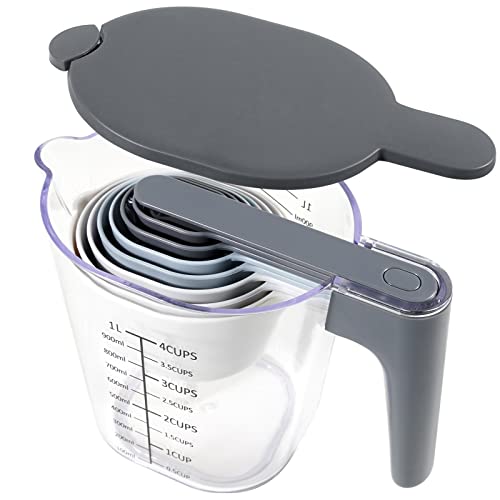
Recogwood Stackable 10-Piece Measuring Cups and Spoons Set with Lids
KOMUEE 4 Pieces Glass Measuring Cups Set with Lids
Meet The Standout Selections
Printed graduations are the first thing to fade on cheap cups, which is why etched ones matter. The Ackers carves its three scales directly into high borosilicate glass, so years of dishwasher cycles won’t blur your measurements. Borosilicate is the same heat-tolerant glass used in labware, meaning it shrugs off hot syrups and sudden temperature swings better than standard soda-lime glass.
The split-scale layout is genuinely clever in daily use. US cups and ounces sit on the front of the handle where you read them while pouring, milliliters live on the back for metric recipes, and the V-shaped spout aims liquid exactly where you point it. At 2 cups it handles most single-recipe jobs, though big-batch cooks will want more room.
Good Reasons To Consider
- Etched cup, ounce, and milliliter scales can’t rub off like printed ink tends to over time.
- Front-and-back scale placement lets you read your unit of choice without rotating the cup mid-pour.
- The thickened base adds stability on crowded counters and helps resist tipping.
- Fully dishwasher safe, so cleanup stays a non-issue after sticky honey or oil jobs.
Things To Consider
- A single 2-cup size means you’ll need a second vessel for anything larger than a cake recipe.
- Glass demands shelf space and careful handling around hard sink edges, a common breakage spot owners report.
Who It Suits Best
Home bakers who follow recipes precisely and want markings that outlast the cup itself.
A Better Fit Elsewhere
Cooks needing four-cup capacity for bread dough or stock will find the WhiteRhino Glass Measuring Cup more accommodating.
Where the Ackers stops at two cups, the WhiteRhino keeps going to six, and that difference shapes who buys each one. Six cups is enough to bloom yeast for multiple loaves, hold a full batch of pancake batter, or measure broth for a family-size soup without stopping to refill. The thick borosilicate body keeps the weight manageable despite the size.
You get the same practical trio of scales here, ounce, cup, and milliliter, plus a V-shaped spout that pours cleanly into narrow funnels. Freezer, microwave, and dishwasher compatibility round out a spec sheet built for heavy rotation. In most kitchens this becomes the workhorse you grab first, with smaller cups handling the fine-tuning.
What It Does Well
- Six-cup volume covers large batches, so you measure once instead of three times.
- Thick borosilicate construction stands up to hot liquids and thermal shocks better than thin glass.
- Microwave and freezer safe means one vessel can warm, chill, and measure.
- Lightweight relative to its size, easier on wrists during long mixing sessions than many metal bowls.
Small Caveats
- Its footprint eats cabinet depth, awkward in shallow upper cabinets common in older apartments.
- Oversized for everyday tasks like measuring a splash of vanilla.
At A Glance
Made For
Frequent bakers and batch cooks who regularly work with quarts of liquid at a time.
Swap It Out When
Apartment dwellers short on storage will prefer the nested Recogwood 10-piece set, which collapses into a fraction of this footprint.
Not everyone needs lab-grade glass. The DTDNZKN trio trades premium material for coverage, giving you one-cup, two-cup, and four-cup sizes in lightweight BPA-free plastic. That’s the whole ladder of common recipe amounts in one affordable package, and nothing shatters when a kid pulls it off the counter.
Plastic also wins on practicality for certain jobs. You can eyeball oil over the pan without worrying about weight, toss all three in the dishwasher, and nest them inside each other in seconds. The clear markings cover the usual units, though plastic surfaces do scuff and cloud eventually, something glass avoids entirely. For most starter kitchens, that trade-off is an easy call.
Practical Advantages
- Three graduated sizes mean the right vessel for everything from salad dressing to soup stock.
- BPA-free plastic survives drops and bumps that would end a glass cup’s run.
- Featherlight bodies suit kids learning to help in the kitchen and anyone with grip strength concerns.
Honest Caveats
- Plastic tends to scratch and haze with abrasive sponges, gradually dulling readability.
- These aren’t rated for microwave heating of hot contents the way borosilicate picks are.
- Lighter material can feel less stable when filled to the brim on slick counters.
Quick Facts
Right Fit For
Students, new households, and vacation rentals outfitting a kitchen affordably without breakage risk.
Reach For A Different Pick When
Anyone heating liquids directly in the cup should step up to the KOMUEE glass set, which handles microwave and oven use safely.
This is the only entry here that solves two problems at once. Ten pieces, cups and spoons together, nest into a single compact block, and the largest cup even wears a lid with a spout, turning it into a mini pitcher for water, dressings, or cream. One drawer slot replaces what usually sprawls across three.
The lids add a dust-proof seal for storage, handy in humid climates where open spoons collect grit. Everything is BPA-free plastic and dishwasher safe, matching the easy-care profile of the DTDNZKN pack but adding dry-measure spoons the others skip. Precision bakers may still want a glass cup alongside it, since plastic walls flex slightly during pours. As a complete starter kit, though, it’s hard to argue with.
Well-Handled Touches
- Nested design compresses ten tools into roughly the space of one mixing bowl.
- Lidded top cup doubles as a small pitcher for serving or storing mixed liquids.
- Dust-proof stacking keeps spoons clean between uses, no pre-rinse needed.
- Covers both liquid and dry measuring needs in a single coordinated set.
Points To Note
- Plastic construction lacks the heat tolerance and rigidity of the glass options above.
- More pieces mean more parts to keep track of once lids start migrating through the dishwasher.
Whose Shelf It Belongs On
RV cooks, studio-apartment dwellers, and anyone building a first kitchen from zero.
Another Choice May Suit
Cooks who already own dry-measure spoons get better value from the dedicated WhiteRhino six-cup beaker instead.
Lids change what a measuring cup is for. The KOMUEE set pairs four borosilicate glass sizes, 5 ounces up to 4 cups, with matching covers, so you can melt butter in the microwave, measure it, and stash leftovers without dirtying another dish. That measure-heat-store loop is why meal preppers gravitate to sets like this one.
The smallest 5-ounce cup is a quiet standout for vanilla extracts, oils, and espresso ratios where a full cup would swallow the liquid below the first line. Borosilicate glass tolerates the freezer, microwave, and even a preheated oven, giving these more range than any plastic pick in this list. Compared to the single Ackers cup, you’re paying for versatility rather than one refined tool, and for many kitchens that’s the smarter spend.
Where It Excels
- Four sizes span shot-glass portions to family-batch volumes, rarely leaving you between cups.
- Included lids enable fridge storage straight after measuring, cutting dish count.
- Borosilicate bodies handle freezer, microwave, and preheated-oven duty.
- The 5-ounce cup nails small-volume precision that larger beakers make awkward.
Trade Offs To Consider
- Four lidded glass vessels demand real cabinet real estate, more than any other option here.
- Lid seals need regular inspection, as gaskets commonly loosen or trap residue over months of use.
Key Specs
Who Should Grab It
Meal preppers and microwave-forward cooks who want measuring, heating, and storing in one vessel.
Where A Sibling Pick Shines
Minimalists wanting one flawless everyday cup will find the Ackers Etched Graduated Glass Measuring Cup simpler to love.
What Matters Most Before Choosing Liquid Measuring Cups
Material Sets The Limits
Glass, specifically borosilicate, tolerates heat, resists odors, and never clouds. Plastic costs less and survives drops but scratches and absorbs stains from turmeric or tomato over time. Your cooking style decides: hot-liquid work favors glass, rough-and-tumble households favor plastic.
Capacity Beats Versatility
Most home recipes live between half a cup and four cups. A single 2-cup vessel covers the majority, while bread bakers and stock makers benefit from a 6-cup beaker. Owning one small and one large cup beats owning three mid-sized duplicates.
Markings Decide Accuracy
Look for dual-sided or multi-unit scales so cups, ounces, and milliliters are readable from your natural pouring angle. Etched graduations outlast printed ones, which fade within a couple of years of dishwasher duty.
Storage Is The Silent Factor
Glass cups are rigid and stack poorly; nesting plastic sets vanish into a drawer. Measure your cabinet space honestly before committing to a four-piece glass collection.
Key Considerations Across These Picks
Traps First Timers Fall Into
The classic error is buying one giant cup and using it for everything, then misreading small volumes near the bottom lines. Another is ignoring spout design; a poor pour edge drips down the side and ruins your measurement. Match cup size to your most common recipe amount instead.
The Case For Spending Up
Higher-tier glass sets cost more because borosilicate itself carries a premium over soda-lime glass and plastic. You’re buying thermal tolerance, clarity that lasts decades, and markings that stay legible. Frequent cooks recoup that quickly; occasional bakers won’t notice the difference.
Frequently Asked Questions
Can I put boiling water in a borosilicate measuring cup?
Yes, borosilicate glass handles rapid temperature changes far better than ordinary glass. Avoid extreme shock like moving it straight from freezer to boiling water anyway.
Do plastic measuring cups wear out?
They scratch and haze with use, especially under abrasive scrubbing. Markings usually remain usable for years, but glass holds its clarity longer.
Why do some cups list both US and metric units?
Recipes from different regions use cups, ounces, or milliliters. Multi-unit scales let you follow any source without mental conversion.
Are lidded measuring cups actually useful?
Very, for meal prep and microwave melting. A lid turns a measured ingredient into a covered storage container instantly.
How do I keep etched markings readable?
Etched scales don’t fade, but residue can hide them. A periodic soak in warm soapy water restores visibility.
Closing Thoughts
Your kitchen habits should drive this choice, not the spec sheet. Precise bakers will appreciate the etched permanence of the Ackers, batch cooks get real value from the WhiteRhino’s six-cup body, and tight spaces belong to the Recogwood nesting kit. Whichever direction you lean, pick the cup that matches the recipes you actually cook, and it’ll earn its drawer space for years.




