


The Milwaukee M12 line has quietly become the go-to platform for anyone working in tight quarters. Whether you’re an automotive tech wrestling with engine bay fasteners or a DIYer assembling furniture in a cramped apartment corner, these 12-volt tools trade raw muscle for access and control. That trade makes sense more often than people expect.
This roundup covers five of the strongest M12 options across screwdrivers, impact wrenches, ratchets, and hydraulic drivers. Each one earns its place through a specific strength, so match the tool to your actual workload rather than grabbing the first name you recognize.
The Leading Options At A Glance
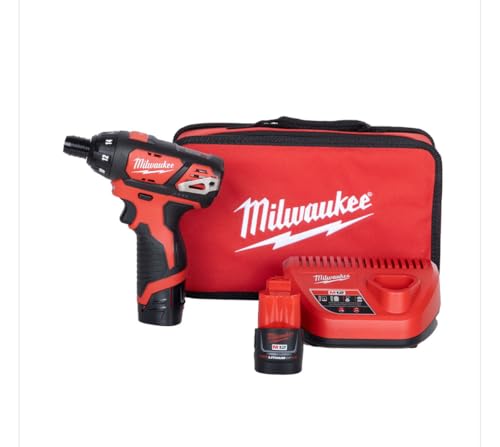
Milwaukee 2401-22 M12 Cordless Screwdriver Kit

Milwaukee 2564-20 M12 FUEL Right Angle Impact Wrench

Milwaukee 2554-20 M12 FUEL Stubby Impact Wrench

Milwaukee M12 FUEL 3/8″ High Speed Ratchet Kit

M12 FUEL Surge 1/4 in. Hex Hydraulic Driver Kit
Meet The Standout Selections
This is the gentlest entry point into the M12 platform. The 2401-22 is a 1/4-inch hex screwdriver rather than a full impact driver, which means it drives screws and light fasteners without the hammering action that can strip soft material. For cabinet installs, outlet covers, and flat-pack furniture, that restraint works in your favor.
The kit ships with batteries and a charger included, so there’s nothing else to buy before your first job. Homeowners tackling weekend projects will find the lighter duty cycle plenty.
Key Advantages
- Kit format means batteries and charger arrive in the box, ready to run
- Lighter screwing action suits delicate materials like drywall anchors and cabinet hinges
- Compact 12-volt body fits kitchen drawers and small tool bags without fuss
- Optional damage protection plans cover drops and spills at no added repair cost
Honest Caveats
- Not built for lug nuts or structural fasteners; stepping up to a true impact wrench is the smarter move there
Who Will Love This
First-time cordless tool owners and renters who need reliable screwdriving power without committing to heavier equipment.
A Better Fit Elsewhere
Anyone loosening rusted bolts should look at the Milwaukee 2554-20 Stubby Impact Wrench instead, since its impact mechanism delivers far more breakaway force.
Straight-line tools hit a wall fast in automotive work. The 2564-20 solves that with a 90-degree head that swings into spaces a stubby wrench simply cannot reach, think transmission bell housings or exhaust manifold bolts tucked behind brackets. Its 220 ft-lbs of output is genuinely respectable for a 12-volt platform.
The friction ring anvil holds sockets securely while still letting you swap them by hand, no pin punch required. Note this one ships as a bare tool, so budget for a battery if you’re not already on the M12 system.
Reasons It Performs
- Right-angle head reaches fasteners buried behind engine components
- 220 ft-lbs of torque handles suspension and drivetrain hardware
- Friction ring retention keeps sockets seated during overhead work
- Runs on shared M12 FUEL batteries already owned by many tradespeople
Points To Keep In Mind
- Bare tool only; the cost climbs once you add batteries and a charger
- The angled head adds bulk compared to a standard inline driver, so storage takes slightly more room
Feature Snapshot
Right Fit For
Automotive technicians and serious home mechanics who regularly fight for access inside engine compartments.
Where A Sibling Pick Shines
For open-frame jobs where reach isn’t the problem, the Milwaukee 2554-20 Stubby delivers more torque in a shorter overall package.
Four-point-eight inches long, yet rated to bust loose nuts with up to 250 ft-lbs of torque. That combination is the whole argument for this wrench, and it’s why the 2554-20 shows up in so many professional techs’ toolboxes. Where the right-angle 2564-20 wins on geometry, this one wins on raw breaking power per inch of length.
The four-mode drive control deserves attention too. Modes one through three step down speed and power for smaller fasteners, while auto shut-off stops rotation once a nut seats, protecting threads from over-tightening. In our view, that mode alone justifies choosing this over cheaper stubby competitors.
A Few Highlights
- 250 ft-lbs nut-busting torque rivals larger 18-volt tools
- 4.8-inch length slips between frame rails and suspension arms
- Auto shut-off mode prevents stripped threads and rounded nuts
- Brushless motor extends runtime versus older brushed designs
- Three lower modes give finesse on trim screws and small hardware
Possible Compromises
- Bare tool configuration means existing M12 battery ownership matters; new users pay extra to get running
- Owners commonly report the compact body runs warm during sustained lug-nut sessions, so brief cool-downs help longevity
Quick Facts
Built With In Mind
Working mechanics who want 18-volt-class breakaway power from a 12-volt footprint they can carry all day.
Swap It Out When
Fasteners hidden behind obstructions call for the Milwaukee 2564-20 instead, whose angled head reaches where this straight body cannot.
A ratchet won’t break bolts loose like the impact wrenches above, but it will spin them off faster than any hand tool once they’re cracked free. This high-speed version emphasizes exactly that: rapid rotation for removing and reinstalling hardware during teardown and reassembly. Brake jobs, interior panels, and valve covers are its natural habitat.
Unlike the bare-tool wrenches earlier on this list, this is a complete kit with two batteries, a charger, and a case. For someone building an M12 collection from zero, that bundled approach removes guesswork entirely.
Where It Delivers
- High-speed rotation clears repeated fasteners quickly during full disassembly
- Two-battery kit keeps one pack charging while the other works
- Included charger and case make storage and transport straightforward
- 3/8-inch drive accepts the most common socket range for general repair
Small Limitations
- Ratchets lack impact force, so seized bolts still need a breaker bar or one of the impact picks above first
- Keep grease off the head mechanism; debris buildup in the pawls is a commonly reported cause of sluggish action over time
The Right Fit
Home garages and professional shops doing repetitive disassembly work where speed matters more than breakaway muscle.
Consider Something Else When
Corroded suspension hardware calls for the Milwaukee 2554-20 Stubby, whose impact action frees stuck fasteners a ratchet physically cannot.
Traditional impact drivers announce every screw with a sharp mechanical clatter. The Surge replaces that hammer-and-anvil action with a fluid-drive hydraulic powertrain, cutting noise roughly in half while smoothing out vibration. Cabinet installers and finish carpenters working inside occupied homes tend to notice the difference within the first ten minutes.
It’s also genuinely compact, riding comfortably on a tool belt or slipping into a bag pocket. As a two-battery kit, it arrives ready for a full day’s driving without separate purchases, unlike the bare-tool wrenches covered earlier.
A Strong Showing
- Hydraulic drive operates dramatically quieter than conventional impacts
- Reduced vibration translates to steadier driving and less hand fatigue
- Compact housing balances well for one-handed overhead work
- Kit includes two batteries, covering extended sessions without downtime
- 1/4-inch hex chuck accepts standard driver bits directly
Things To Weigh Up
- Hydraulic mechanisms benefit from occasional inspection; keeping the tool clean and dry protects the fluid drive over years of service
- Peak driving force sits below what dedicated impact wrenches deliver, so lag bolts in dense lumber may push its limits
Core Details
Who It Suits Best
Finish carpenters, remodelers, and DIYers who drive hundreds of screws indoors and want neighbors and clients spared the racket.
Look Elsewhere When
Automotive fastening demands belong with the Milwaukee 2554-20, whose impact wrench output dwarfs anything a hex driver produces.
What Matters Most Before Choosing Your M12 Tool
Match The Mechanism To The Job
Screwdrivers, impact drivers, impact wrenches, and ratchets all live on the same M12 battery but do different work. A screwdriver seats fasteners gently, an impact driver hammers bits into wood, an impact wrench breaks loose large nuts, and a ratchet spins hardware quickly once it’s moving. Buying the wrong category is the most expensive mistake in this space.
Bare Tool Or Full Kit
Several picks here ship without batteries. That’s economical for tradespeople already carrying M12 packs, but newcomers should price the complete setup before deciding. Kits like the Surge and the ratchet bundle everything needed to start immediately.
Access Versus Force
The 90-degree head of the 2564-20 and the 4.8-inch body of the 2554-20 exist because real fasteners hide in awkward places. Measure your worst-case workspace before buying. A tool with more torque that cannot physically reach the bolt helps nobody.
Think About Noise And Setting
Indoor remodeling, occupied homes, and evening garage sessions all favor quieter tools. Hydraulic drive technology exists precisely for these situations, and it’s worth paying attention to how much racket your typical job site tolerates.
Key Considerations Across These Picks
Traps First Timers Fall Into
The biggest slip is assuming every 12-volt tool handles every fastener. A screwdriver will struggle on axle nuts, and an impact wrench will chew up cabinet hinges. Another common error: buying a bare tool without checking whether you own compatible batteries, then discovering the true cost after checkout.
What Separates Premium From Basic
Higher-tier M12 FUEL models add brushless motors, multi-mode controls, and auto shut-off features that protect both fasteners and the tool itself. Those extras matter most for daily professional use. Weekend users can often save money on simpler models without feeling shortchanged.
Frequently Asked Questions
Are M12 tools powerful enough for automotive work?
Yes, within limits. Models like the 2554-20 deliver up to 250 ft-lbs, enough for most suspension and brake hardware, though heavily seized bolts may still need penetrating oil or a larger tool.
Can I share batteries between these tools?
All five picks run on the same M12 lithium-ion battery platform. One charger and a couple of packs can serve the entire lineup.
What does “bare tool” mean?
A bare tool ships without batteries or a charger. It suits people who already own M12 batteries and want to expand their collection affordably.
Is the hydraulic Surge really quieter?
Its FLUID-DRIVE powertrain operates up to twice as quiet as a standard impact driver by replacing metal-on-metal hammering with fluid-cushioned pulses. Users working indoors report the difference is easy to hear.
Which pick should a beginner start with?
The Milwaukee 2401-22 kit is the friendliest starting point. It includes batteries and a charger, and its gentler screwdriving action forgives inexperience.
Closing Remarks
The M12 platform rewards matching the tool to the task. Start with the 2401-22 for household projects, add the 2554-20 when torque demands grow, and bring in the Surge when noise becomes the enemy. Whichever direction your projects pull you, there’s a compact option here built for exactly that kind of work.




