

Anyone who has bored through stacked joists or doubled-up studs knows the pain of a hole saw that stalls, burns, or binds halfway through. The M18 Hole Hawg lineup exists to end that frustration, pairing aggressive cutting geometry with cordless right-angle muscle built for tight framing bays. This roundup covers the drills, the blades that feed them, and one small accessory that keeps an entire battery fleet organized on the wall. Electricians, plumbers, and serious remodelers will find something here worth the shelf space.
An Overview Of The Picks
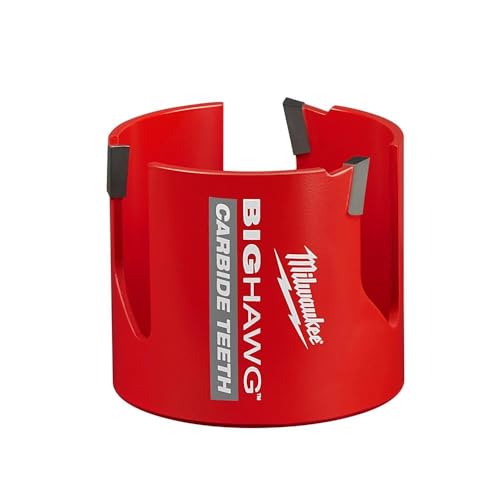
Milwaukee 49-56-9230 Big Hawg Hole Saw

Milwaukee 49-56-9290 10 PC Big Hawg Kit

Milwaukee M18 FUEL Hole Hawg Drill

12 Pack Battery Holder for Milwaukee M18

Milwaukee Right Angle Drill With Quik-Lok
The Details Behind The Selections
A single hole saw sounds like a modest buy until you consider how much work one blade does over a career. This three-inch Big Hawg sits in the sweet spot for wiring runs and plumbing penetrations, big enough for most code-required clearances without hogging out more wood than needed.
The design leans on hardened steel teeth rather than soft bi-metal edges, which matters most when hidden nails turn up inside dimensional lumber. Deep gullets between the teeth also give chips somewhere to go, so plugs pop free instead of welding themselves into the cup mid-bore.
Everyday Advantages
- Hardened teeth shrug off nail strikes that would dull a standard bi-metal blade on the first hit
- Deep chip gullets mean cleaner cuts and less binding when you’re deep into a stud bay
- Aggressive tooth geometry pulls the saw through framing lumber faster than conventional designs
- Plug removal is quick, which adds up to real time saved across a full day of rough-in work
- Holds an edge long enough that resharpening stays rare for typical residential workloads
Worth Noting
- One size covers one job; tradespeople drilling varied diameters will want the kit version below
- Carbide-style teeth cut aggressively, so steady trigger control helps avoid tear-out on finish surfaces
Key Product Details
Who It Suits Best
Rough-in electricians and framers who bore the same diameter all day and want a blade that survives job-site abuse.
A Better Fit Elsewhere
Shoppers needing several diameters for mixed trade work should reach for the Milwaukee 49-56-9290 ten-piece kit instead.
Where the single 49-56-9230 blade handles one diameter, this ten-piece set covers nearly everything a general contractor meets on a residential frame. The carbide-tipped construction carries over from the single saw, so nail strikes and dense engineered lumber stay within its comfort zone.
Owning the range changes how you bid jobs, honestly. There’s no pausing mid-install to source a two-and-a-half-inch saw for a dryer vent, and no improvising with a slightly wrong size because that’s what the truck happened to carry.
The Upside
- Ten diameters in one purchase cover venting, conduit, and plumbing penetrations without extra trips
- Carbide teeth hold their edge through the repeated drywall-lumber cycles of daily trade work
- A matched set means consistent cutting feel as you step between sizes on the same panel
Small Caveats
- The full kit costs more upfront than buying the one size you need today, so occasional DIY users may prefer the single 49-56-9230
- Storage matters; keeping all ten cups clean and rust-free requires a dry case or cabinet spot
Right Fit For
Multi-trade pros and busy remodelers who cut varied hole sizes weekly and value having the whole range on hand.
Swap It Out When
Weekend DIYers tackling a lone project get better economics from the single Milwaukee 49-56-9230 blade covered above.
This is the drill the Hole Hawg name was built around, updated for the cordless era. A brushless motor paired with a half-inch chuck delivers the sustained torque that large self-feed bits and hole saws demand, and the right-angle head reaches between studs where a standard drill simply won’t fit.
Being sold as a tool-only unit is worth planning around. Anyone already running M18 batteries slots this straight into their kit; starting from zero means budgeting for batteries and a charger separately, which catches first-time buyers off guard more often than it should.
Strengths Worth Knowing
- Brushless motor converts battery power into boring torque efficiently, stretching runtime across a workday
- Half-inch chuck accepts large shank self-feed bits and hole saw arbors common in rough-in work
- Right-angle head profile fits between closely spaced studs and joists without repositioning the workpiece
- Cordless freedom removes the extension-cord dance that made older corded Hole Hawgs a two-person chore
Potential Drawbacks
- No batteries or charger ship in the box, so total cost climbs for anyone outside the M18 ecosystem
- High-torque tools like this reward firm stance and clutch discipline; kickback is a known consideration with big bits
Quick Facts
Made For
Working electricians already invested in M18 batteries who bore holes between studs every day.
Reach For A Different Pick When
Plumbers swapping between auger bits constantly may prefer the Quik-Lok chuck version reviewed below.
Nobody budgets for battery storage, yet a drawer full of loose M18 packs is exactly what happens after a few years in the ecosystem. This twelve-slot holder mounts to a wall, workbench face, or truck bulkhead with two screws per dock, and the included screw count covers the full set.
The groove design locks each pack in place, and since the holders mount independently you can arrange them upside down, sideways, or in a vertical column depending on your space. It’s a humble accessory, but inventory visibility alone saves real minutes every morning.
Everyday Wins
- Twelve docks consolidate an entire M18 collection onto one visible wall section
- Two-screw mounting per holder makes installation a five-minute task with basic tools
- Flexible orientation suits garages, trailers, and cramped van shelving alike
Things To Consider
- No batteries are included despite the pack quantity, which surprises some shoppers skimming the listing
- Plastic construction means anchoring into solid backing matters; hollow drywall anchors alone may sag under a dozen loaded packs
- Docks hold packs individually, so spacing them takes a bit of layout thought on narrow walls
Core Details
Who Will Love This
Tradespeople with six or more M18 batteries who want a tidy charging wall in the garage or work van.
Not Your Match When
Anyone still building a starter kit should prioritize the M18 FUEL drill itself before investing in storage.
This M18 FUEL model shares its brushless platform and right-angle body with the drill at position three, but swaps the half-inch chuck for a 7/16-inch Quik-Lok hex. That single change reshapes the workflow: bits snap in and out by hand, no chuck key, no arbor threading, no fumbling in a dark cavity.
For plumbers and low-voltage installers cycling between auger bits dozens of times a shift, that speed difference compounds fast. The trade-off is accessory compatibility, since round-shank hole saw arbors favor the keyed chuck on the standard model instead.
Benefits That Matter
- Quik-Lok hex chuck accepts bits one-handed, cutting changeover time dramatically during repetitive runs
- Brushless M18 FUEL motor sustains torque through dense framing without cord drag
- Same compact right-angle reach as its sibling, fitting tight joist bays and closet corners
Points To Note
- The 7/16-inch hex format excludes some traditional round-shank hole saw arbors, so check your existing bits first
- Tool-only packaging means batteries and a charger come separately unless your M18 fleet already exists
Feature Rundown
Who Should Grab It
Plumbers and cable pullers running hex-shank auger bits who value rapid changeovers over universal chuck flexibility.
Another Choice May Suit
Users with a drawer full of round-shank hole saws will find the keyed-chuck Milwaukee M18 FUEL at number three more versatile.
What Matters Most Before Choosing M18 Hole Hawgs
Match the Tool to Your Trade
Electricians live between studs, which makes the right-angle format non-negotiable. Plumbers and HVAC installers care just as much about bit changeover speed, since a shift full of auger work punishes slow chucks. Decide which bottleneck actually slows your day before spending.
DIY users finishing a basement once may find a corded drill and a couple of hole saws entirely sufficient. The M18 premium buys jobsite-grade endurance, and that value shows up over hundreds of holes, not twenty.
Chuck Type Changes Everything
The 1/2-inch keyed chuck accepts nearly any arbor or self-feed bit you’ll encounter, making it the flexible choice. The 7/16-inch Quik-Lok hex trades that universality for speed, suiting crews standardized on hex-shank bits. Neither is wrong; they serve different rhythms.
Account for the Battery Ecosystem
Both drills ship tool-only, so the true entry cost depends on whether M18 packs already sit in your toolbox. Existing owners effectively get a discount; newcomers should price the full kit mentally before committing. The same logic applies to the hole saws, which pair best with a drill capable of feeding them steadily.
Don’t Skip Support Accessories
Blades dull, batteries multiply, and organization quietly determines whether gear gets used or lost. A quality hole saw kit and a simple storage rack extend the life of everything else on this list for modest money.
Key Considerations Across These Picks
Traps First Timers Fall Into
The most common mistake is buying a tool-only drill without checking battery stock first, leaving a new purchase benched for weeks. Another frequent slip is matching a large hole saw to an underpowered drill, which overheats both. Confirm chuck compatibility with your existing bits before checkout.
What Separates Premium From Basic
Higher-tier M18 FUEL tools justify their cost through brushless motors, sustained torque under load, and housings built for daily jobsite drops. Occasional users pay for endurance they won’t exhaust; full-time tradespeople recover the difference in saved labor within months.
Frequently Asked Questions
Do these Hole Hawg drills include batteries?
No, both M18 FUEL models ship as tool-only units. You’ll need compatible M18 batteries and a charger purchased separately.
Can the Big Hawg hole saws cut metal?
They’re designed primarily for wood framing and similar materials. For metal work, a dedicated bi-metal or carbide grit saw is the safer match.
What’s the difference between Quik-Lok and a keyed chuck?
Quik-Lok uses a 7/16-inch hex receiver that locks bits in place by hand for fast swaps. A keyed chuck tightens around round shanks with a key and accepts a broader range of accessories.
Will the battery holders fit older M18 packs?
The docks accommodate the standard M18 18V battery series, including widely used packs like the 48-11-1850. Slide-in fitment matches the tool’s own battery interface.
Is a right-angle drill really necessary for home projects?
For open-wall work, a standard drill usually suffices. Between closely spaced studs or joists, the right-angle head reaches spots a conventional drill physically cannot.
Closing Thoughts
Build the system around your actual workload. Full-time electricians should start with the M18 FUEL drill that matches their bit collection, add the ten-piece hole saw kit, and let the storage rack follow naturally. Weekend renovators can solve most problems with a single Big Hawg blade and patience. Whatever your pace, matching the tool to the work beats chasing specs every time, and any of these picks will earn its keep.