A good axe earns its place in your gear the slow way, one campfire and one fallen limb at a time. The problem most people run into is simple: the market splits between heirloom-grade forged tools and budget utility blades, and it’s hard to tell which one actually fits how you work outdoors. A backpacker needs something light enough to carry all day, while a homeowner clearing storm damage wants raw swing weight and a blade that shrugs off knots.
This roundup covers both ends of that divide, plus the middle ground where most shoppers land. You’ll find German-forged classics built around traditional patterns, a compact survival hatchet sized for a pack, and a modern composite-handled chopper made for weekend yard duty. Each entry breaks down strengths, honest trade-offs, and the specific kind of user who’ll get the most out of it, so you can match the tool to your actual workload instead of guessing.
The Shortlist At A Glance
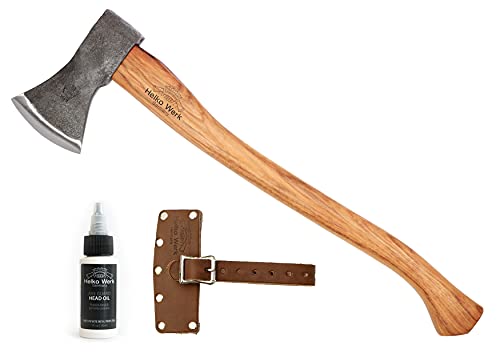
1844 Helko Werk Black Forest Woodworker Axe

1844 Helko Werk Classic Journeyman Pack Axe

1844 Helko Werk Vario Heavy Universal Axe

Schrade Delta Class Bedrock Survival Axe

Fiskars A-Series Chopping Axe 28-Inch
A Deeper Look At The Lineup
Helko Werk’s flagship sits at the top of this list because it does the rare thing: it’s compact enough to pack yet genuinely capable of felling and chopping work. The Rheinland-pattern head, a cutting profile named for Germany’s Rhein River Valley, is shaped for clean bites into green and seasoned wood alike.
In practice, this is the axe you bring when the trip matters. Anyone who’s hauled an oversized tool ten miles into camp already understands the value of a lighter cutting platform that still swings with authority.
What Makes Sense
- Hand-forged in Germany, giving you a head with consistent grain structure rather than a mass-stamped blank
- Compact footprint makes it a realistic packing tool instead of a vehicle-only axe
- Lightweight build reduces arm fatigue during long kindling sessions
- Versatile enough for felling, limbing, and chopping without swapping tools
- A traditional pattern that holds resale appeal if you ever pass it along
Points To Keep In Mind
- The head will need periodic sharpening and a light oiling on the handle, standard care for any forged carbon tool left in damp conditions
- Premium forging shows up in cost, so casual users may not recoup the investment
Key Specs
Who It Suits Best
Experienced woodsmen and dedicated campers who want one forged tool covering felling through kindling.
Where A Sibling Pick Shines
Carrying weight matters more than heritage, the Schrade Delta Class Bedrock shaves pounds and cost while staying pack-friendly.
Think of the Journeyman as the gap-filler between a belt hatchet and a full-length axe, a category hybrid that solves a real problem for anyone moving on foot. It’s larger than a small hatchet yet deliberately lightweight, sized so you can swing it one-handed for kindling or two-handed when a bigger cut demands leverage.
Compared to the Black Forest Woodworker above, the Journeyman trades some chopping authority for easier carry, which is exactly the trade a backpacker should make. Same German forge, different mission.
The Helpful Details
- Hybrid sizing handles both fine camp tasks and heavier cuts without a second tool
- Compact and light enough to strap to a pack for multi-day treks
- Comfortable in one or two hands depending on the job at hand
- Made in Germany with the same forging pedigree as the pricier flagship
Small Caveats
- The shorter reach means big felling jobs go slowly, so pair expectations with the tool
- Like any carbon-steel head, owners commonly report surface rust appearing after wet trips unless it’s wiped down and oiled between outings
Built With In Mind
Avid backpackers and wilderness trekkers who need real cutting ability without sacrificing pack space.
Swap It Out When
Yard work and firewood splitting are the main agenda, the Fiskars A-Series later in this list delivers far more swing per dollar.
This is the muscle of the lineup, a scaled-up take on Helko’s Vario universal design with a longer handle and a heavy five-and-a-half-pound head. That mass translates directly into striking power, which is what difficult felling jobs actually run on. The curved ergonomic handle keeps the balance point working for you rather than against your shoulders.
Nobody hikes with this one, and that’s fine. It belongs at the woodlot or the homestead, where the two compact picks above would simply bounce off dense hardwood.
Strong Points
- Five-and-a-half-pound head drives deep into stubborn grain with less effort per swing
- Longer handle adds leverage, turning body mechanics into cutting power
- Ergonomic curve minimizes fatigue across long sessions
- Universal blade geometry performs well at both cutting and general chopping duties
- German manufacture backs the tool with serious build standards
Things To Weigh Up
- The sheer weight makes it a poor travel companion, plan on vehicle transport only
- Beginners may find the swing demanding until technique settles in
- Storage space matters, since the extended handle won’t tuck into a trunk corner easily
Right Fit For
Landowners and firewood cutters tackling heavy felling who want forged quality behind every blow.
Not Your Match When
Campfire-sized tasks are the goal, the Classic Journeyman Pack Axe covers that ground at a fraction of the heft.
Schrade approaches the category from the survival side, and the Delta Class Bedrock reflects that priority. At just under twelve inches overall with a 3.8-inch blade and roughly a pound and a half of total weight, it’s built to live on a belt or inside a kit bag rather than lean against a woodshed. The 3Cr13 stainless blade carries a titanium coating, a finish applied to boost surface hardness and corrosion resistance.
The honest read: stainless steel at this class won’t hold an edge like Helko’s forged carbon heads, but it shrugs off moisture that would rust them overnight. For a glovebox or emergency kit, that trade usually wins.
A Few Highlights
- 11.8-inch overall length slips into packs, vehicles, and go-bags without fuss
- 3Cr13 stainless resists rust, a genuine advantage in humid or coastal environments
- Glass fiber filled nylon and TPR handle stays grippy and flexible in cold weather
- Included thermoplastic belt sheath gives quick, secure access on the move
Worth Noting
- Stainless at this price point typically needs touch-up sharpening more often than forged carbon
- The short handle limits two-handed power, so expect hatchet-scale results only
Quick Facts
Whose Shelf It Belongs On
Preppers, anglers, and day-hikers building a compact kit where corrosion resistance beats raw chopping muscle.
Consider Something Else When
Real felling or splitting is on the schedule, the Fiskars A-Series brings the reach and blade geometry this little tool can’t fake.
Where the Helko tools chase tradition, Fiskars chases efficiency. This 28-inch chopper pairs a balanced head-to-handle ratio with an ultra-sharp low-friction blade, a coating treatment that helps the edge slide through fibers instead of binding in them. The result is more work per swing, whether the task is dropping a small tree or breaking down campfire logs.
For most homeowners, this is the sensible entry point. It costs a fraction of the forged German options, and the composite construction means no handle-oiling routine, ever.
Why It Works Well
- Low-friction blade coating reduces sticking in green, sappy wood
- Balanced design maximizes swing speed, translating into easier cuts
- 28-inch length suits both felling small trees and splitting modest logs
- Doubles as campsite prep gear and backyard cleanup equipment
Room For Improvement
- The synthetic handle lacks the repairable, replaceable character of a wooden haft
- It won’t match the heft needed for large-diameter hardwood, so know your typical log size before committing
Details At A Glance
Who Will Love This
Suburban homeowners and casual campers wanting capable, low-maintenance chopping power at an accessible level.
Look Elsewhere When
Heirloom craftsmanship and hand-forged steel are what you’re after, the 1844 Helko Werk Black Forest Woodworker is the natural step up.
What Matters Most Before Choosing Made Axes
Match The Tool To The Task
Start with the job you’ll actually do most often. Kindling and camp cooking favor compact hatchets under two pounds, while felling anything thicker than your forearm demands a full-length handle and a head heavy enough to drive deep. Buying a felling axe for marshmallow sticks wastes money and shoulder energy alike.
Steel Type And Edge Care
Forged carbon steel, the standard on German-made heads, takes a razor edge and absorbs impact well but wants wiping down and oiling after wet weather. Stainless variants like Schrade’s 3Cr13 trade some edge life for rust resistance. Neither choice is wrong; the deciding factor is how much maintenance you’ll realistically perform.
Handle Material And Feel
Hickory hafts absorb shock and can be replaced, which is why traditionalists stick with them. Composite handles such as Fiskars’ need no seasonal care and survive neglect. Swing length matters too: a 28-inch handle suits standing work, while pack axes stay shorter for controlled one-handed cuts.
Weight Versus Endurance
A heavy head does more work per strike but taxes your arms faster. Most users settle comfortably in the middle, and honestly, technique closes more gaps than raw mass does.
Key Considerations Across These Picks
Traps First Timers Fall Into
The classic error is buying for the worst-case scenario instead of the common one, ending up with a felling monster that never leaves the garage. Another frequent misstep is ignoring steel care entirely; even premium forged heads develop surface rust when stored damp. Check the handle length against your storage space before ordering.
When Paying More Pays Off
Higher-tier axes earn their cost through hand forging, better grain alignment in the steel, and replaceable wooden hafts built to outlast decades of use. That math works for anyone swinging weekly. Occasional users get equal satisfaction from a well-designed composite model at a friendlier number.
Frequently Asked Questions
Are hand-forged axes really worth the extra money?
For regular users, yes, because forging produces tougher steel and a head that can be re-sharpened for decades. Casual users rarely notice the difference in performance.
How often should an axe blade be sharpened?
Light camp use might mean once or twice a season, while heavy woodcutting calls for touch-ups every few sessions. A dull edge bounces and glances, so sharpen at the first sign of deflection.
Can a compact pack axe fell a tree?
Small saplings, certainly, though it takes patience and many swings. Anything beyond roughly wrist-thickness deserves a full-length tool.
Do stainless steel axe heads hold up?
They resist corrosion well and handle light duty fine, but they generally soften faster than forged carbon steel under hard impact. Match the steel to the workload, not just the climate.
What’s the safest way to store an axe?
Keep it sheathed or hung high, dry, and away from foot traffic, with a lightly oiled head to prevent rust. Never leave one leaning where a fall can expose the edge.
Wrap Up
Your ideal axe depends less on brand prestige than on honest self-assessment: how often you swing, what wood you face, and how much upkeep you’ll tolerate. The Helko Werk trio rewards commitment with heirloom durability, while the Schrade and Fiskars entries cover portability and everyday yard duty without ceremony. Start with your most common task, buy for that, and let the collection grow from there.