


Anyone who has burned through a cheap bit on a stainless bracket knows the frustration: smoke, a dull point, and a hole that never quite lands where you marked it. The right metal drilling bits change that experience entirely, holding their edge through cast iron, sheet steel, and hardened stock without walking off the punch mark. This roundup covers five sets and singles that span the range, from a full professional index to a budget-friendly starter kit for weekend projects. Each entry is broken down by material, shank design, and real-world fit, with honest trade-offs noted along the way. Whether you’re fitting out a home garage or topping up a trade toolbox, one of these belongs in your drawer.
The Lineup, Simplified

CaRoller 29-Piece M35 Cobalt Steel Metal Drill Bits
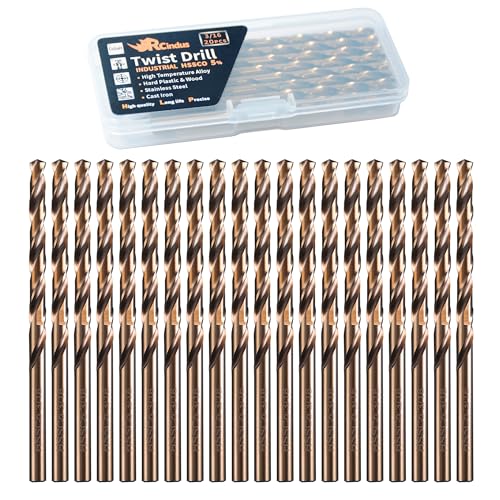
RCINDUS 20PCS 3/16″ Cobalt Drill Bit, HSS M35

AUYAARS 19 Pcs Hex Shank Drill Bit Set, 1/16″-1/4″

BECOLLO 3/4″ Cobalt Drill Bit, 1/2″ Reduced Shank

WildBossy M35 Cobalt Drill Bit Set 20PCS (1/16″-1/2″)
A Deeper Look At The Lineup
This 29-piece index covers the fractional sizes most steelwork demands, all cut from M35 high-speed steel with a cobalt alloy blend that resists the heat buildup that kills ordinary bits. An amber coating adds another layer of wear protection, and the round shanks seat cleanly in both keyed and keyless chucks.
In a working shop, that spread matters more than any single spec. Framing out a bracket, tapping an exhaust hanger, or boring plastic sheet for a grommet usually means reaching for three different diameters in ten minutes, and this set keeps them organized in a cup-type holder that sits upright on the bench.
What It Does Well
- M35 cobalt alloy holds its cutting edge in hard steel far longer than standard HSS
- 29 fractional sizes mean fewer mid-job trips to the store
- Amber coating reduces friction and slows heat-related dulling
- Cup-type holder keeps sizes visible and sorted on a crowded bench
Things To Consider
- The holder takes up more drawer depth than a flat case, worth measuring before you commit shelf space
- Cobalt bits are brittle compared to softer steel, so side loading can snap thin diameters
Who Should Grab It
Fabricators, maintenance techs, and committed DIYers who want one complete cobalt index instead of buying sizes piecemeal.
A Better Fit Elsewhere
Shoppers who mostly drill wood and light plastic will get better value from the AUYAARS 19-piece titanium set below.
Sometimes you don’t need twenty sizes, you need one size times twenty. This pack commits entirely to 3/16 inch, the diameter behind most sheet-metal screws, and builds every bit from industry-grade M35 steel containing 5% cobalt for genuine hardness gains over plain HSS.
The 135-degree split point is the detail worth understanding here: it’s a self-centering tip geometry that bites immediately instead of skating across polished surfaces. On stainless or cast iron, that difference shows up as cleaner starts and less pilot-punching beforehand.
What Works In Its Favor
- 5% cobalt content handles stainless and cast iron that softens standard bits quickly
- Split-point tip self-centers and cuts down on walk at the start of each hole
- Twenty identical bits keep production runs moving without stopping to sharpen
- Plastic storage case protects the tips between jobs
Potential Sticking Points
- A single fixed size limits versatility, so measure your common fasteners first
- Owners commonly report the plastic case hinges as the weak link, so handle it gently in a tool bag
Whose Shelf It Belongs On
HVAC installers, auto restorers, and anyone running repeated 3/16-inch holes through steel will burn through fewer bits per job.
Reach For A Different Pick When
Varied hole sizes are the priority, in which case the WildBossy 20-piece set covering 1/16 to 1/2 inch makes more sense.
Hex shanks are the quiet convenience feature of modern cordless drills. Instead of tightening a chuck around a smooth round shaft, these six-sided shanks drop straight into quick-change adapters, letting you swap from a 1/16-inch pilot to a 1/4-inch clearance hole in seconds.
The trade-off is metallurgy. These bits use 4241-grade high-speed steel with a titanium coating rather than cobalt alloy, which suits household repairs, woodworking, and plastic far better than hardened steel. Compared with the RCINDUS pack above, this set trades raw metal-cutting grit for everyday flexibility, and for most homes that’s the right call.
Useful Touches
- Hex shanks work directly with quick-change chucks, no chuck key fumbling
- Nineteen sizes from 1/16 to 1/4 inch cover furniture assembly, shelving, and hinge installs
- Titanium coating cuts friction in wood and plastic for cleaner hole walls
- Precisely ground twist flutes help chips clear instead of packing
Honest Caveats
- Not built for prolonged stainless or cast iron work, expect faster edge wear there than with cobalt options
- The small sizes demand a light touch, since 4241 steel is less forgiving of bending loads
Right Fit For
New homeowners, hobbyists, and casual builders whose drilling lives revolve around wood, drywall anchors, and light sheet metal.
Swap It Out When
Your projects regularly involve hardened steel, because the CaRoller 29-piece cobalt set above will hold up dramatically better.
Drilling a 3/4-inch hole through thick steel plate is a different sport from general-purpose boring. Most consumer drills top out around a 1/2-inch chuck capacity, which is exactly why this pair uses a reduced shank: the cutting end measures a full 3/4 inch while the shank steps down to 1/2 inch so a standard chuck can grip it.
Three flats milled into that shank matter more than they look. Smooth reduced shanks tend to spin inside a chuck under heavy torque, and flats give the jaws something positive to clamp against. With 5% cobalt steel and a 135-degree split point doing the cutting, this two-pack targets fabricators rather than casual users.
What Stands Out
- 3/4-inch cutting diameter reaches sizes standard bit sets skip entirely
- Reduced 1/2-inch shank fits common drill presses and heavy-duty drivers
- Three-flat shank design resists slipping under high torque
- Cobalt alloy and split-point geometry suit stainless and cast iron specifically
- Two pieces provide a spare for demanding production days
Small Caveats
- Large-diameter holes need slow speeds and steady pressure, so a low-RPM drill press is strongly preferred over a handheld driver
Made For
Welders, machinists, and metal fabricators who occasionally need oversized holes without investing in annular cutters.
Consider Something Else When
Everyday mixed-material drilling is the goal, since the WildBossy set below offers far broader coverage for general shop use.
Where the CaRoller set spreads 29 sizes across fine increments, WildBossy condenses the essentials into 20 jobber-length bits spanning 1/16 to 1/2 inch, with duplicates in the smaller diameters that see the most wear. Jobber length refers to the standard medium flute length that balances reach against rigidity, a sensible default for handheld and press work alike.
The alloy here is the headline: M35 steel hardened with molybdenum and cobalt, rated up to 67 Rockwell hardness, which puts it firmly in hardened-metal territory. In our view this hits the sweet spot for a general metalworking shop, though the index case does add bulk to a crowded drawer.
Strong Points
- Full 1/16-to-1/2-inch range handles everything from pilot holes to large bolt clearances
- Molybdenum-cobalt alloy cuts faster and outlasts plain HSS by a wide margin
- Duplicated small sizes extend usable life before resharpening becomes necessary
- Indexed storage case sorts sizes logically for fast selection
Points To Note
- Larger diameters demand slow spindle speeds and cutting oil to avoid overheating the edge, a habit worth building early
- The index case is bulkier than a roll pouch, so plan storage accordingly
Who Will Love This
Intermediate DIYers and small-shop operators who want genuine cobalt performance across a wide size range without paying for increments they rarely touch.
Where Another Pick Suits Better
Tight budgets focused on woodworking should lean toward the AUYAARS hex-shank set, which costs less and suits lighter duty cycles.
What Matters Before You Choose
Match The Alloy To Your Material
Plain high-speed steel handles wood, plastic, and aluminum fine, but hardened steel and stainless chew through it fast. Cobalt-alloyed bits, typically labeled M35 with about 5% cobalt, hold hardness at the higher temperatures those metals generate. Paying for cobalt when you mostly drill pine wastes money, and skipping it when you drill exhaust manifolds guarantees frustration.
Understand Tip Geometry And Shank Type
The tip angle determines how a bit starts. A 135-degree split point self-centers and resists walking on curved or polished surfaces, which saves pilot-punching time. Shank choice matters just as much: hex shanks suit quick-change chucks, while reduced shanks with flats let a standard chuck drive larger cutting diameters safely.
Think About Size Coverage Versus Duplication
Full indexes like the 29-piece CaRoller cover fine increments, useful for matching tap drills and odd fastener pilots. Duplicate-heavy packs like the RCINDUS 20-pack favor repetitive work where a fresh backup beats a resharpened edge. Honest inventory of your last dozen projects tells you which pattern fits.
Factor In Storage And Maintenance
Indexed cases protect cutting edges but eat drawer space, while rolls and pouches travel lighter. Whatever the format, keep bits dry and lightly oiled, since surface rust dulls edges long before heavy use does.
Key Considerations Across These Picks
Wrong Turns To Avoid
The most common error is buying a huge mixed-material set and then forcing it into hardened steel, which ruins edges within a few holes. Another frequent slip is ignoring chuck capacity, ordering large-diameter bits a home drill physically cannot grip. Check your drill’s maximum shank size before committing to anything over half an inch.
When Paying More Pays Off
Higher-tier cobalt sets cost more because the alloy itself is pricier and grinding tolerances are tighter. That premium pays back quickly for anyone drilling stainless weekly, where one quality bit can outlast several cheap ones. Occasional users drilling wood and light metal gain little from the upgrade, so match spend to workload honestly.
Frequently Asked Questions
Can cobalt drill bits be used on wood?
Yes, though it’s overkill. They cut wood effectively but the extra hardness offers no benefit there, so save them for metal.
What speed should I run when drilling steel?
Slow speeds win with metal, generally the lowest setting on a variable-speed drill. Heat destroys hardened edges faster than pressure ever will.
Do I need cutting oil?
For stainless, cast iron, and thicker stock, yes, a few drops extend edge life noticeably. Thin sheet metal often drills acceptably dry.
Why do my bits keep walking off the mark?
Smooth tips skate on hard surfaces until a dimple exists. Split-point bits self-center, or you can start each hole with a center punch.
Are hex shanks compatible with regular chucks?
They are, since a chuck grips the flat sides adequately. Quick-change adapters simply make swapping faster.
Closing Thoughts
Metal drilling rewards matching the tool to the task more than any other category in your toolbox. The CaRoller index serves professionals who need breadth, the RCINDUS pack serves repetition, the AUYAARS set serves households, the BECOLLO pair serves big holes in tough plate, and the WildBossy kit threads the needle between them all. Start from what you actually drill, not what looks complete on paper. The right single purchase here will outlast a drawer full of compromises.




