Tiny fasteners hide in tight corners: inside laptops, behind dashboards, under appliance panels. A full-size wrench or screwdriver simply won’t fit there, and that’s exactly where a good micro-socket set earns its spot in your drawer. This roundup covers five options built for different hands and different jobs, from electronics bench work to light automotive tasks, so you can match the tool to what you actually fix.
A Closer Look At The Lineup

LLNDEI 48-Piece Mini Socket Ratchet Wrench Set

Wiha 75965 ESD Safe Master Technician MicroBits Set

SHARDEN 1/4 Mini Ratchet Set, 28pcs

DURATECH 1/4″ Drive Metric Socket Set, 10PCS
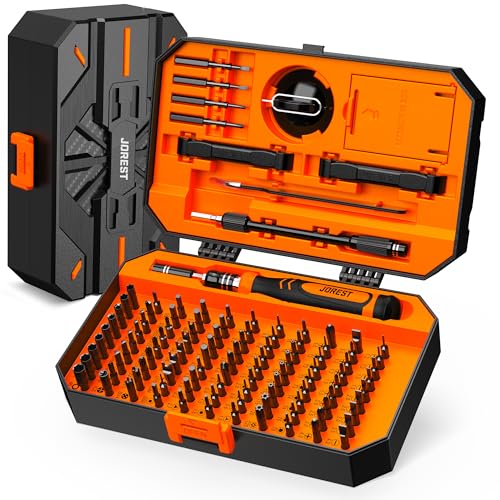
JOREST 115 in 1 Precision Screwdriver Set
Meet The Standout Selections
This set covers both sides of small-fastener work. Thirteen shallow metric sockets run from 4mm to 14mm on a 1/4-inch drive, which is the smallest common socket size and the one that fits recessed bolts best. Alongside them sit thirty driver bits, so you’re reaching for one case instead of two.
In practice, this is the kind of kit that lives in a glovebox or under the kitchen sink. A drill adapter lets you spin sockets with a power driver, and an extension bar plus universal joint help around obstructions. Compared to the DURATECH later in this list, it trades socket depth coverage for sheer versatility.
What Helps Most
- Shallow sockets in half-millimeter steps like 4.5mm catch odd-sized fasteners other sets skip
- The 72-tooth ratchet needs only a short swing arc, handy inside engine bays
- Chrome vanadium steel construction holds up to repeated torque without rounding
- A spinner handle speeds up long bolt runs once the ratchet has broken them loose
- Everything stores in one molded case, so pieces stay accounted for
Points To Keep In Mind
- Owners commonly report the case latch feels flimsy, so worth checking after transport
- With no deep sockets included, long-thread bolts may need a separate purchase
Core Details
Who Will Love This
Weekend DIYers who split time between furniture assembly, bicycle maintenance, and small appliance fixes.
A Better Fit Elsewhere
Anyone wanting only bare-bones sockets at a leaner piece count will find the DURATECH 10-piece set simpler and cheaper to keep organized.
Where the LLNDEI leans general-purpose, Wiha’s 75965 is unapologetically a bench tool. The headline feature is ESD safety, meaning electrostatic discharge protection, which stops tiny static jolts from damaging sensitive circuit boards while you work. Repair shops and IT departments treat that as non-negotiable, and hobbyists should too once they start opening motherboards.
The tip selection reads like a service manual index: Phillips down to #000, Torx from T3 upward, Pentalobe, pentalobe-style security heads, hex, slotted, and pentalobe-adjacent profiles for phones. Sizes span fractions of a millimeter, so you’re matching Apple and Samsung screws precisely rather than forcing the closest fit.
Positive Takeaways
- ESD-safe design protects delicate boards during repair work
- Extremely fine tip sizes handle modern phone and tablet screws
- Ratcheting multi-bit driver reduces wrist strain on repetitive jobs
- German-made Wiha bits have a reputation among technicians for tip durability
Small Caveats
- No sockets are included, so nut-driven fasteners need another tool entirely
- The premium positioning means casual users pay for capability they may rarely touch
- Bit organization demands discipline; losing a T5 leaves a real gap
Best Suited To
Working technicians and serious hobbyists who open electronics regularly and need static-safe, exact-fit tips.
Reach For A Different Pick When
General household tinkering calls for sockets as well as bits, which makes the LLNDEI 48-piece set the more balanced buy.
Some jobs aren’t about having more tools, they’re about fitting into a gap the width of two fingers. Sharden designed this set around exactly that problem. Its stubby ratchet measures just over three and a half inches long and roughly half an inch thick, slim enough to slip beside a sink basin or between dashboard trim where a normal screwdriver handle would jam against something.
The included 2.28-inch extension adds reach for recessed screws, and a right-angle screwdriver covers spots even the stubby body can’t swing in. You may find the small grip tires your hand faster than a full-size driver, but for occasional tight-spot duty that trade is easy to accept.
Useful Highlights
- Stubby profile reaches spaces standard drivers physically cannot enter
- Right-angle attachment solves zero-clearance screw positions
- Extension bar adds depth for countersunk fasteners
- 28 pieces keep the kit light enough for a jacket pocket or tool bag side pouch
Things To Consider
- The short handle offers less leverage, so heavily seized screws resist it
- Smaller bit count than the JOREST means fewer specialty profiles on hand
Quick Facts
Right Fit For
Appliance repairers, plumbers working under basins, and anyone whose recurring problem is clearance rather than variety.
Swap It Out When
Electronics work with dozens of exotic screw types points toward the JOREST 115-in-1 instead, since its bit library dwarfs this one.
Not every job needs forty-eight pieces. Duratech strips things back to ten shallow sockets, 4mm through 13mm, forged from hardened chrome vanadium steel with a polished, corrosion-resistant chrome finish. Six-point sockets, which grip a fastener across six flat surfaces instead of twelve, apply pressure to the flats and reduce the chance of rounding off a bolt head.
That focus is the appeal here. There’s no ratchet in the box, just sockets on a plastic rail, so this suits someone who already owns 1/4-inch drive tools and wants clean replacements. In our view, it works well as a supplement to a larger kit or a starter add-on for a first toolbox.
Where It Delivers
- Heat-treated Cr-V steel stands up to years of garage use
- Chrome plating wipes clean and resists rust in humid workshops
- Six-point walls grip stubborn fasteners more securely than twelve-point designs
- Rail storage keeps sizes visible at a glance, no rummaging
Potential Drawbacks
- No ratchet or accessories included, so budget for those separately
- Stops at 13mm, which limits some automotive applications
Who Should Grab It
Homeowners topping up an existing 1/4-inch drive collection with dependable, no-frills sockets.
Another Choice May Suit
Starting from zero makes the LLNDEI 48-piece set smarter, since it bundles a ratchet, bits, and case together.
One hundred three magnetic bits across sixteen type families make this the widest-reaching option here. Phones, laptops, tablets, game consoles, SSDs, even eyeglasses fall within its coverage, and the magnetic tips hold tiny screws steady as you lift them clear of a crowded board. That single detail saves more frustration than any spec sheet suggests.
The handle uses soft TPR rubber over a PP core, giving cushioning during longer teardown sessions. Unlike the Wiha’s focused technician layout, this kit spreads wide rather than deep, trading some tip-grade refinement for breadth. For most home repairers, that trade lands in their favor.
Useful Touches
- Magnetic bits prevent dropped screws inside device chassis
- Sixteen bit families cover nearly every consumer electronics fastener
- Rubberized handle stays comfortable through extended repairs
- Suits beginners and seasoned tinkerers equally, thanks to clear organization
Worth Bearing In Mind
- With 103 loose bits, re-sorting the case after each job takes some patience
- No socket components, so hex-nut jobs still need a dedicated mini wrench
Feature Snapshot
Made For
Households that repair their own devices and want one kit covering every brand and screw style likely to appear.
Consider Something Else When
Static-sensitive professional board work favors the Wiha 75965, whose ESD-safe design this generalist kit doesn’t provide.
Choosing Between These Kits Without Regret
Match The Tool To Your Usual Repairs
List the last five things you actually fixed. Furniture and bikes point toward socket-heavy kits like the LLNDEI or DURATECH. Phones and laptops demand fine bits, which puts the JOREST or Wiha ahead. Buying for a job you do twice a year wastes drawer space and money alike.
Drive Size And Fit Matter More Than Piece Count
A 1/4-inch drive is the standard for micro-socket work because it accepts smaller sockets and swings in tighter arcs. Check the ratchet’s tooth count too; higher counts mean shorter swing arcs, which matters inside engine compartments. A 28-piece set that fits the space beats a 115-piece set that doesn’t.
Steel Quality Predicts Lifespan
Chrome vanadium steel, heat-treated and chrome-plated, resists rounding and rust far better than plain carbon steel. Both the LLNDEI and DURATECH use it, and owners commonly report years of service from either. Cheap alloys tend to round off fasteners, turning a ten-minute job into a drilling project.
Storage Determines Whether Pieces Survive
Molded cases protect bits but take room; rails save space but expose sockets to dust. Whichever format you choose, commit to returning pieces immediately after use. Lost 4mm sockets and T5 bits are the two most commonly reported losses in this category, and replacing singles often costs more than expected.
Smart Points Worth A Second Read
Wrong Turns To Avoid
The biggest misstep is buying a precision bit set when your actual problems are nuts and bolts, or vice versa. Sockets and screwdriver bits solve different fasteners, and no single kit here does both deeply. Also skip ultra-cheap unbranded sets; rounded tips and soft sockets cost more in damaged fasteners than the savings justify.
The Upgrade Payoff
Higher-tier kits charge for metallurgy, tolerance, and specialization. Wiha’s price reflects hardened, precisely machined tips plus static-safe design that cheap kits can’t replicate safely. Pay up when electronics are your livelihood or frequent hobby; stay mid-tier when repairs are occasional household events.
Frequently Asked Questions
Can these mini socket sets handle car repairs?
Light automotive tasks like battery terminals and interior trim clips are well within reach for 1/4-inch sets. Heavy suspension or engine work needs larger 3/8-inch or 1/2-inch drives with deeper sockets.
What does ESD safe actually mean?
It means the tool dissipates static electricity gradually instead of allowing a sudden discharge. That protects sensitive circuit boards from invisible damage during repairs.
Do I need both sockets and precision bits?
Most households eventually encounter both hex-head fasteners and tiny electronic screws. Starting with one kit and adding the other later keeps initial costs sensible.
How do I stop losing tiny bits?
Return each bit to its slot immediately after use, and work over a tray or magnet mat. Magnetic bit tips also help hold screws during extraction.
Is a 72-tooth ratchet noticeably better?
Yes, in tight spaces specifically. A finer tooth count lets you advance the fastener with a smaller swing, which matters when clearance allows only a few degrees of motion.
Wrap Up
Your repair habits should drive this choice, not the biggest piece count. The LLNDEI covers the broadest middle ground, the SHARDEN wins cramped quarters, and the JOREST owns electronics benches at home. Match the kit to the fasteners you actually meet, and any of these will serve you for years of weekend fixes.